
Loading, please wait...
LOT 1279
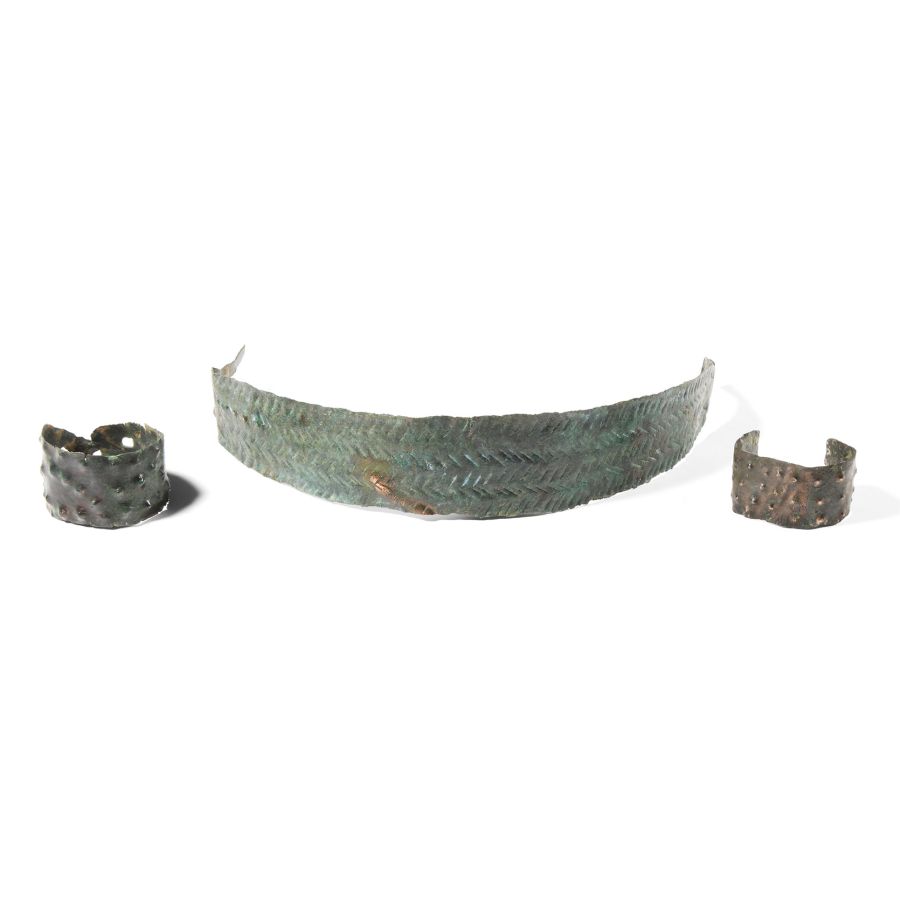
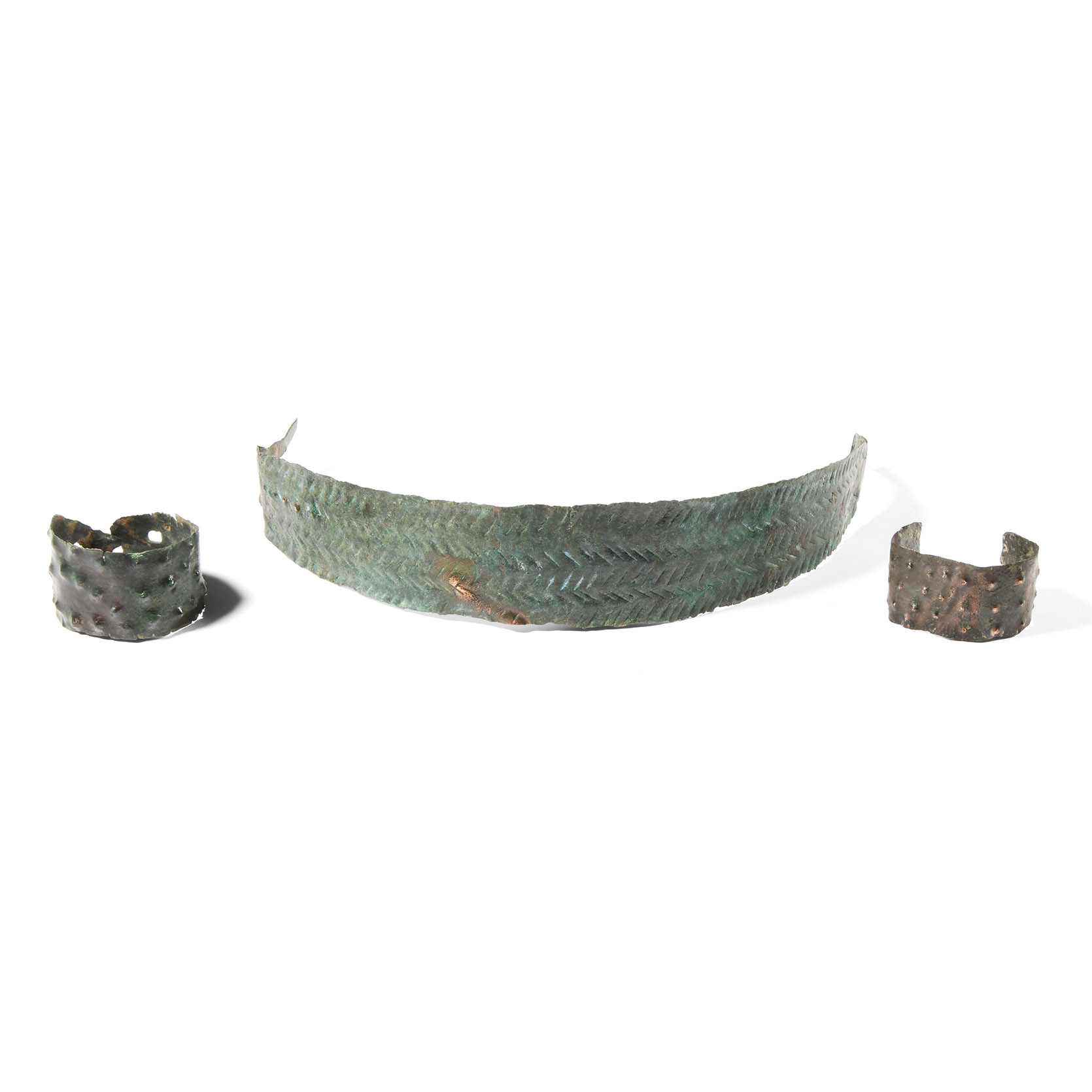
Bronze Age Diadem and Bracelet Set
10TH-6TH CENTURY B.C.
1 5/8 - 7 1/2 in. (67 grams total, 4.1-19 cm).
Comprising: a sheet bronze diadem with tapered arms, displaying multiple rows of punched chevrons imitating palm (or other) leaves; two penannular sheet-bronze bracelets, each displaying repoussé pellets and pierced terminals. [No Reserve]
ProvenanceEx old English collection.
London art market, 1980s.
TimeLine Auctions follows a vetting process to ensure the authenticity and legality of all items, reinforcing our commitment to integrity and responsible trading. Each antiquity, antique, and coin lot undergoes thorough examination by a vetting committee of at least ten external specialists, professional trade association members, scientists, and archaeologists: Our Vetting Process
AUCTIONS:
TimeLine is a leading auction house specialising in antiquities, ancient art, collectables, natural history, coins, medals, and books. Our auctions offer museums, collectors, historians, and enthusiasts the opportunity to acquire unique and historically significant pieces.
-
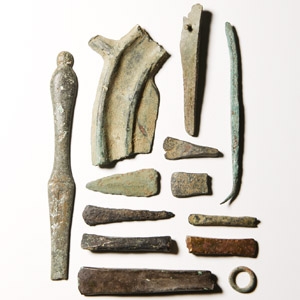
Bronze Age Artefact Group
Circa 2nd-1st millennium B.C.Sold for (Inc. bp): £33
Principally: a variety of chisels and other implements and a votive axehead, together with other items. 213 grams total, 1.4-12.6 cm
Acquired on the UK art market. Property of a Ruislip, UK, gentleman, by inheritance. -
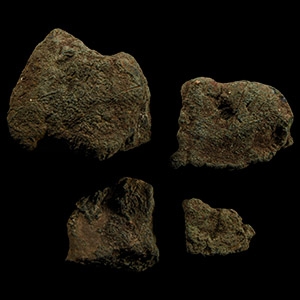
Bronze Age Pancake Ingot Fragment Group
2nd-1st millennium B.C.Sold for (Inc. bp): £65
Comprising four pieces of copper 'bun' ingot, two showing characteristic edge cross-section. 556 grams total, 28-58 mm
UK gallery, early 2000s.
These bun ingots were cast in shallow saucer depressions cut into rock where the copper ore was mined and smelted; they were then carried and traded across Europe before being broken up, melted down and having tin added to form bronze alloy; fragments such as these are frequently found as part of smith's hoards of, usually, worn out tools, weapons and raw material from the Late Bronze Age. -
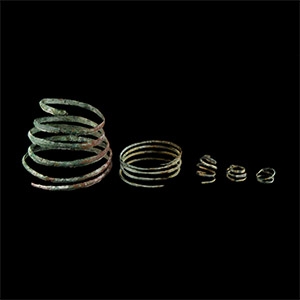
Bronze Age Coiled Bracelet and Ring Group
2nd-1st millennium B.C.Sold for (Inc. bp): £85
Two coiled bracelets with D-section and round-section bodies; three differently sized coiled rings. 62.3 grams total, 13-70 mm
Acquired on the UK art market. Property of a Ruislip, UK, gentleman, by inheritance.
