
Loading, please wait...
LOT 1668
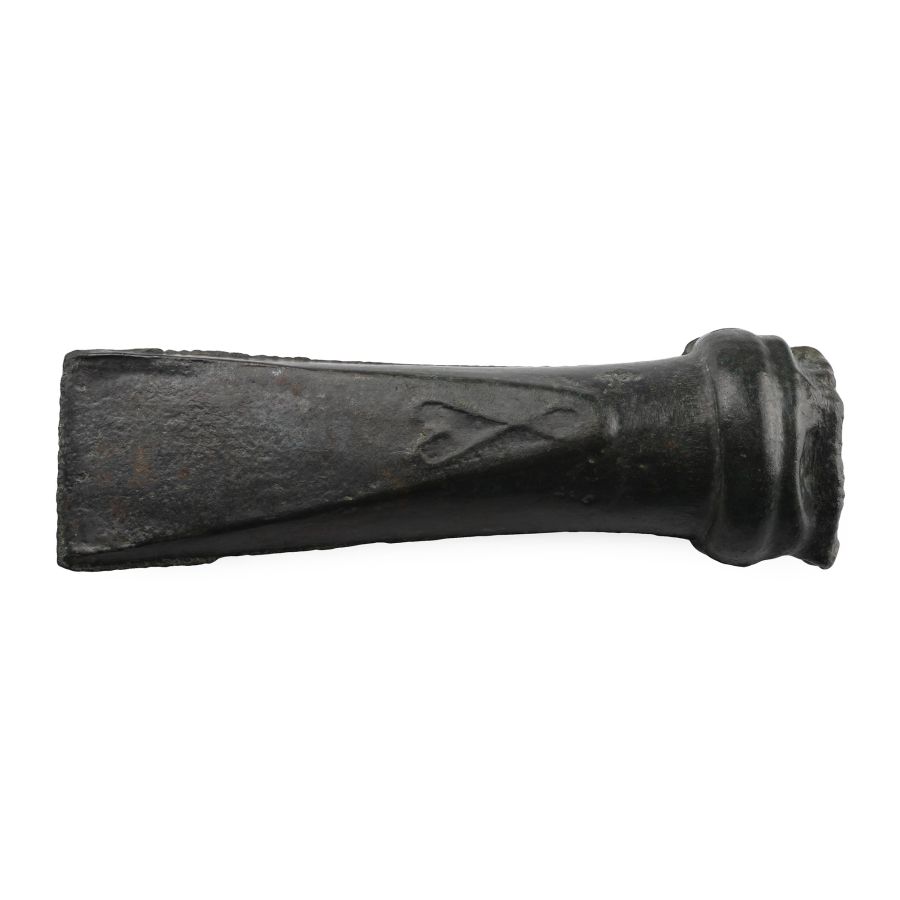
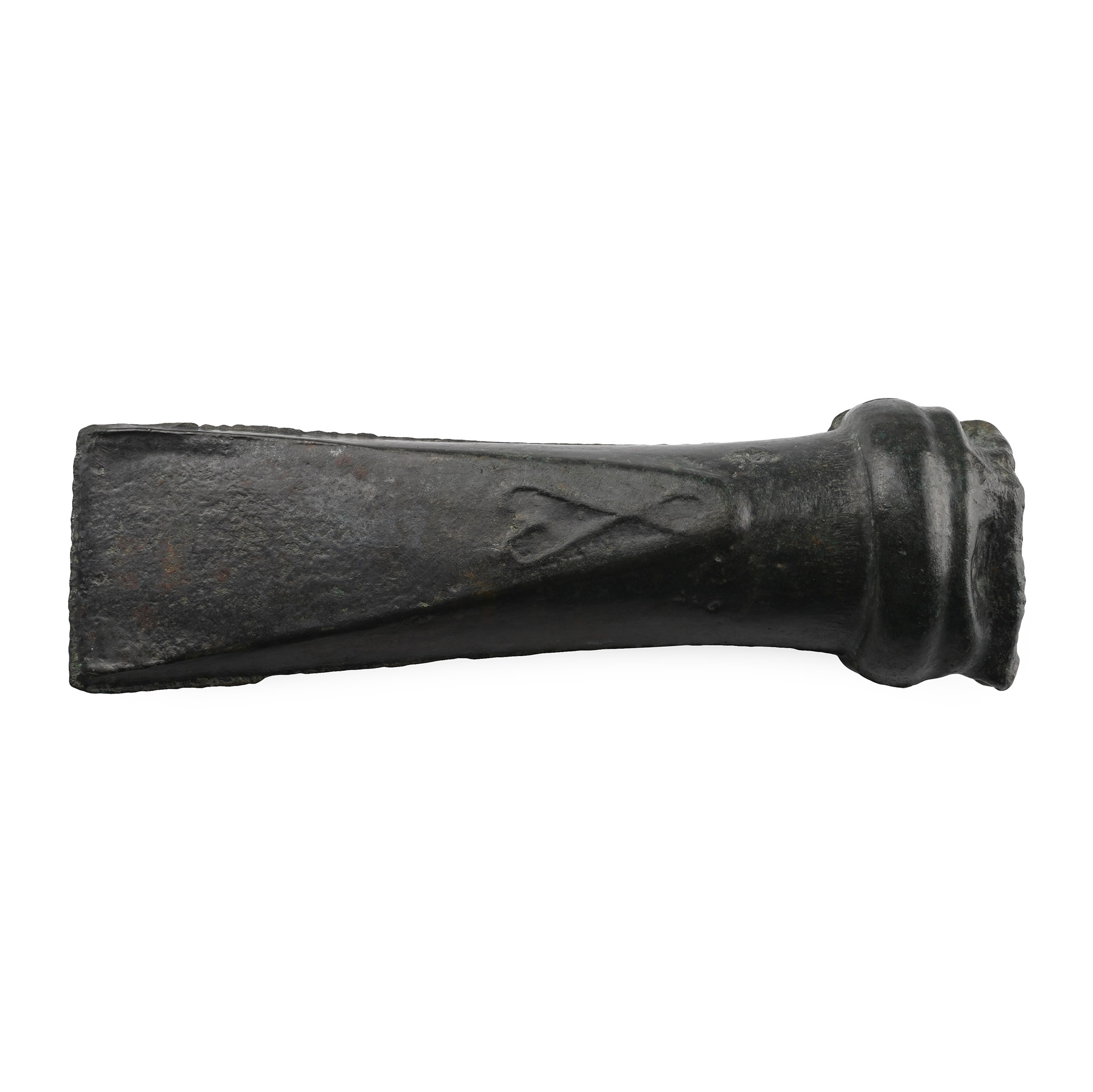
Bronze Age Currency Axehead
2ND-1ST MILLENNIUM B.C.
5 1/8 in. (640 grams, 13 cm).
With hexagonal-section shank and long chamfered blade, squared cutting edge; casting seams to long edges; solid shank in place of socket.
ProvenanceEx German art market, 2000s.
Acquired from an EU collector living in London.
From the collection of a Surrey, UK, gentleman.
TimeLine Auctions follows a vetting process to ensure the authenticity and legality of all items, reinforcing our commitment to integrity and responsible trading. Each antiquity, antique, and coin lot undergoes thorough examination by a vetting committee of at least ten external specialists, professional trade association members, scientists, and archaeologists: Our Vetting Process
AUCTIONS:
TimeLine is a leading auction house specialising in antiquities, ancient art, collectables, natural history, coins, medals, and books. Our auctions offer museums, collectors, historians, and enthusiasts the opportunity to acquire unique and historically significant pieces.
-
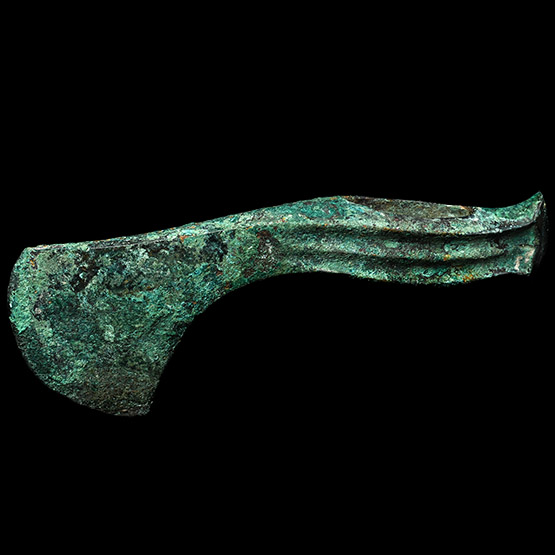
Large Bronze Age Socketted Axehead
Koban Culture, 12th-8th century B.C.Sold for (Inc. bp): £702
Substantial hexagonal-section neck developing to a broad blade with rounded edge and scooped underside; ellipsoid-section socket with three lateral ribs to each face, flared edge to rear. 458 grams, 18.5 cm
Private European collection, 1990s. Private collection, London, UK. -
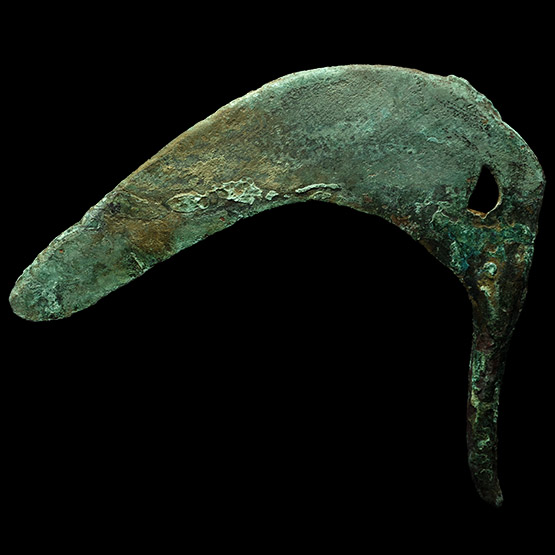
Large Bronze Age Tanged Sickle Blade
Koban Culture, 12th-8th century B.C.Estimate: £400 - 600 (+bp*)
Opening Bid: £200
Of crescentic form with thickening to the outer edge, spur and void to neck, attachment spike. 110 grams, 15.7 cm
Private European collection, 1990s. Private collection, London, UK. -
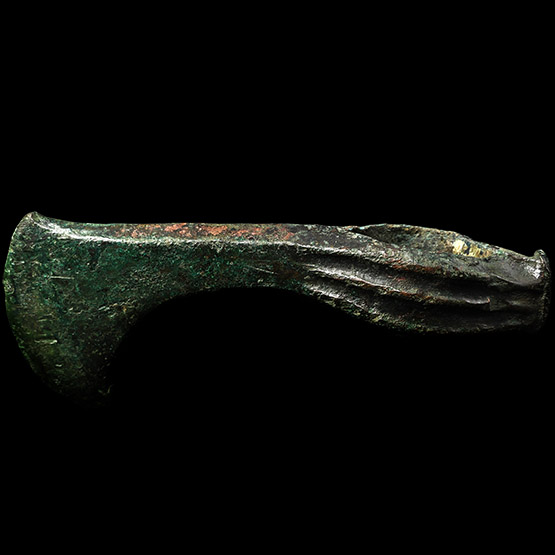
Bronze Age Socketted Axehead
Koban Culture, 12th-8th century B.C.Estimate: £400 - 600 (+bp*)
Opening Bid: £300
Comprising a hexagonal-section neck developing to a thick blade with a rounded edge and scooped underside; ellipsoid-section socket with three lateral ribs to each face, hammer-face to rear. 350 grams, 14 cm
Private European collection, 1990s. Private collection, London, UK.
