
Loading, please wait...
LOT 1143
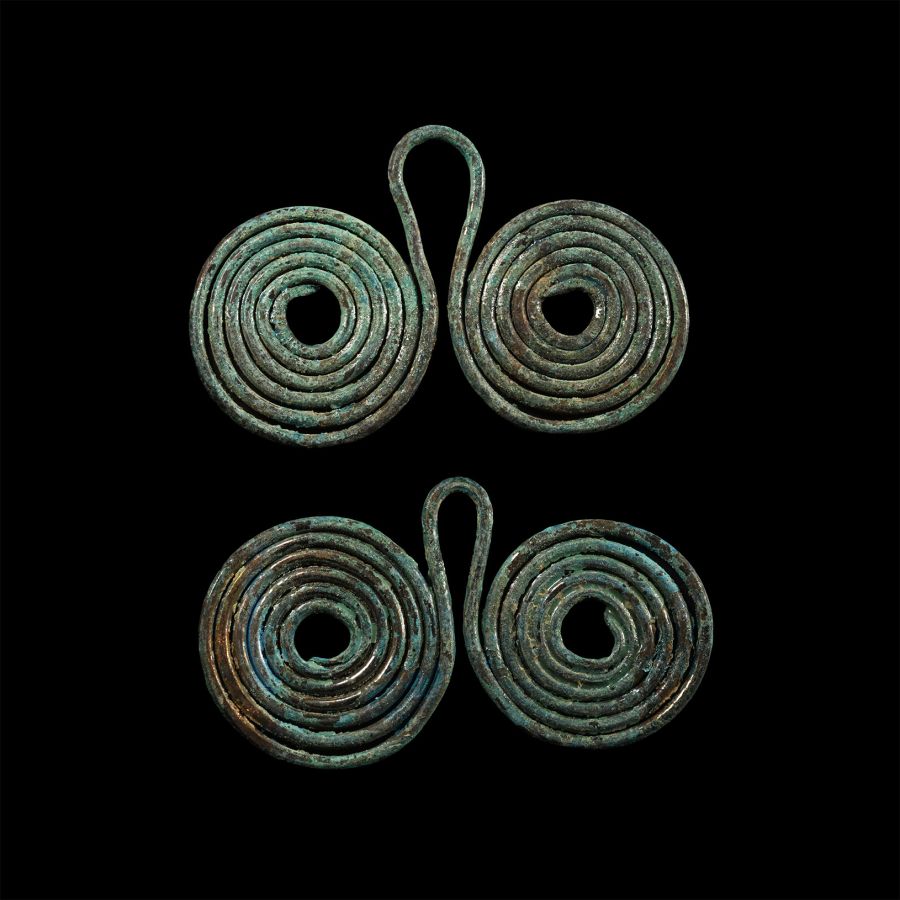
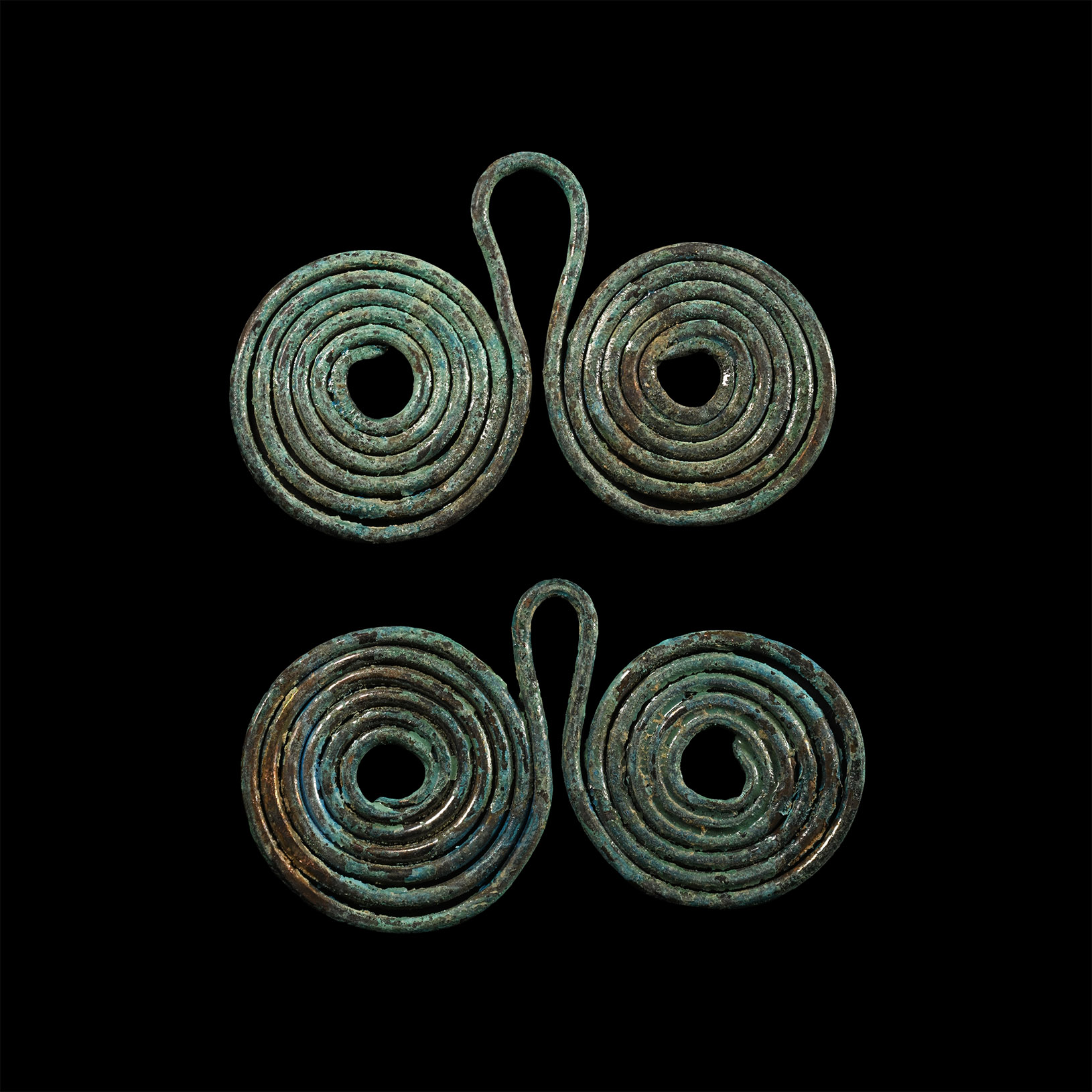
Bronze Age Coiled Spectacle Pendant Group
16TH-10TH CENTURY B.C.
1 3/4 in. (11.7 grams total, 44-45 mm).
A group of two spectacle pendants, each composed of two coiled wire circles joined by a loop. [2, No Reserve]
ProvenanceEarly 1990s London collection.
Acquired on the UK art market.
From a private collection, Lancashire, UK.
TimeLine Auctions follows a vetting process to ensure the authenticity and legality of all items, reinforcing our commitment to integrity and responsible trading. Each antiquity, antique, and coin lot undergoes thorough examination by a vetting committee of at least ten external specialists, professional trade association members, scientists, and archaeologists: Our Vetting Process
AUCTIONS:
TimeLine is a leading auction house specialising in antiquities, ancient art, collectables, natural history, coins, medals, and books. Our auctions offer museums, collectors, historians, and enthusiasts the opportunity to acquire unique and historically significant pieces.
-
Bronze Age Boat-Shaped Copper Axe Adze
5th-4th millennium B.C.Sold for (Inc. bp): £390
A bronze adze-axe head, boat shaped, fitted with double cutting edges, one parallel to the axis of the handle and the second perpendicular to the same axis. 629 grams, 16 cm
Acquired before 2000. From the collection of a European gentleman living in the UK. -
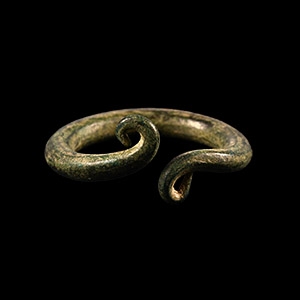
Bronze Age Ring with Coiled Terminals
3rd-2nd millennium B.C.Sold for (Inc. bp): £364
A penannular bronze ring composed of a round-section hoop tapering towards coiled terminals. 6.75 grams, 27.98 mm overall, 20.10 mm internal diameter (approximate size British U, USA 10, Europe 22.52, Japan 21)
Acquired before 2000. From the collection of a European gentleman living in the UK. -
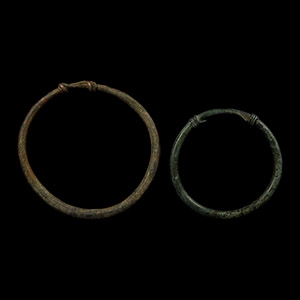
Bronze Age Large Bracelet Pair
2nd-1st millennium B.C.Sold for (Inc. bp): £195
A pair of bronze bangles of different sizes, each composed of round-section hoops and overlapping arms forming coiled terminals on the opposite shoulder. 374 grams total, 11.5-14.5 cm wide
UK private collection before 2000. UK art market. Property of a London gentleman.
