
Loading, please wait...
LOT 1281
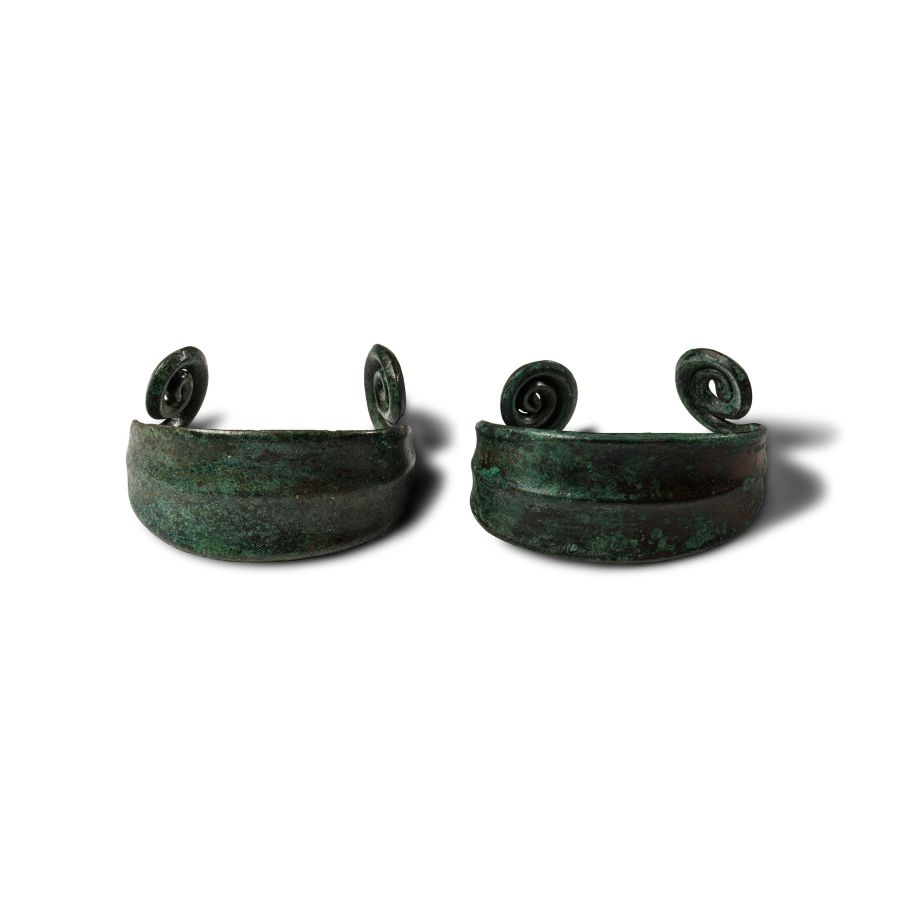
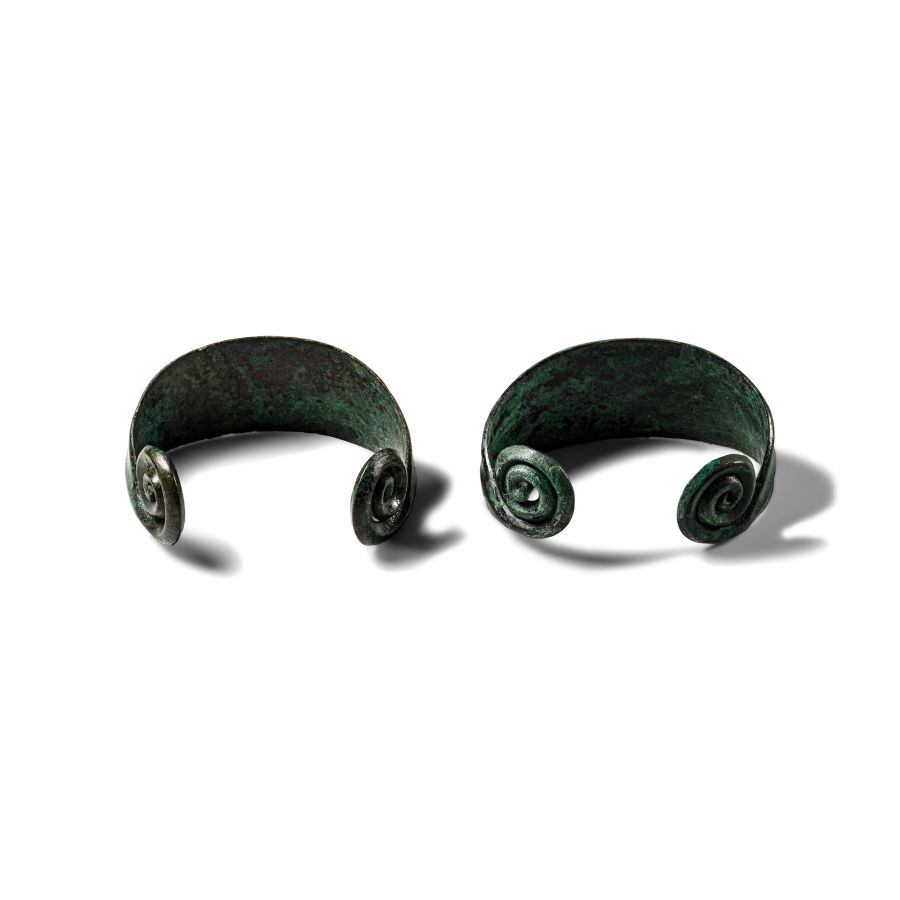
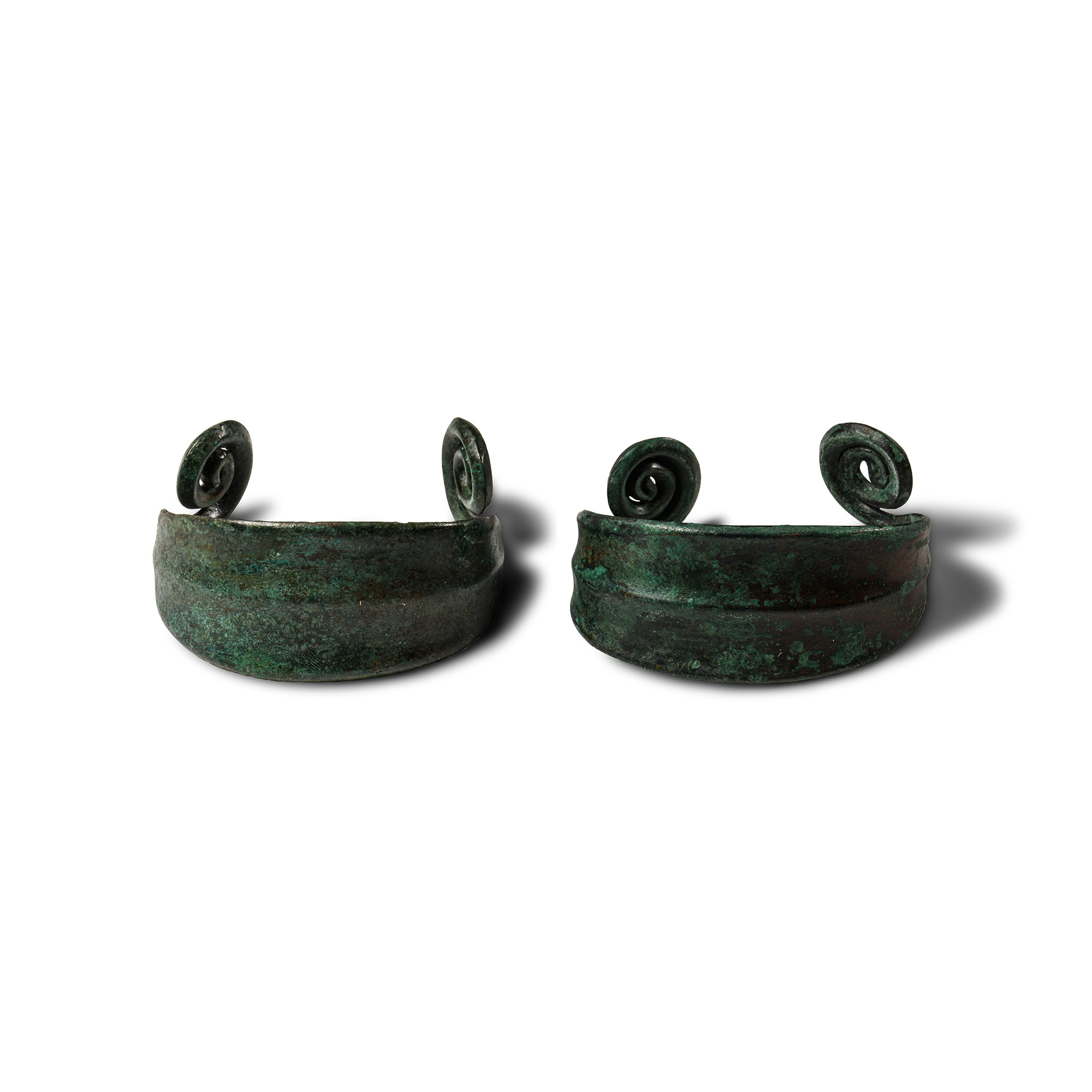
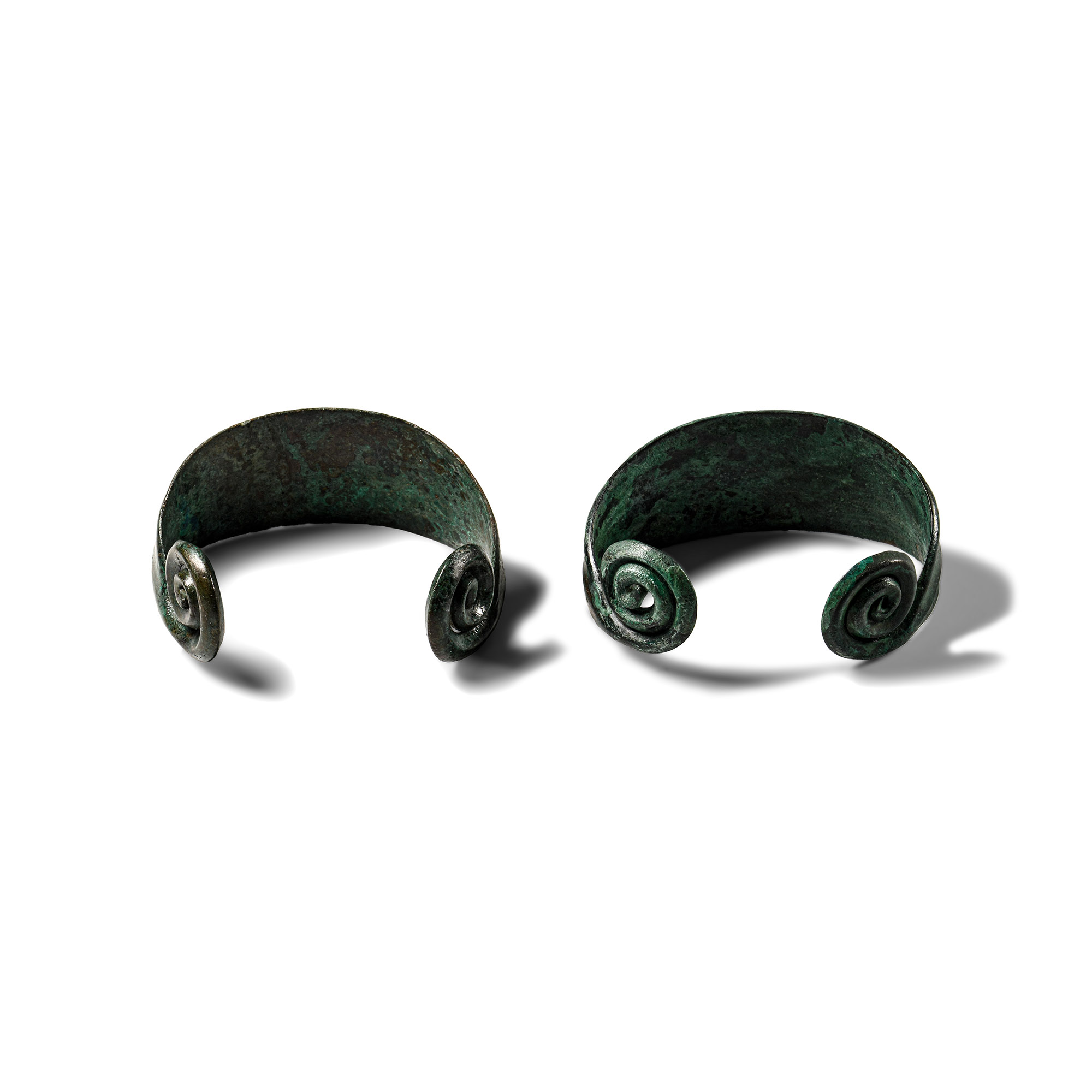
Bronze Age Coiled Bracelet Pair
8TH-6TH CENTURY B.C.
2 1/8 - 2 1/4 in. (72 grams total, 56-58 mm wide).
Each of small penannular form with a raised medial rib to the elliptical face, tapering to coiled terminals with lozengiform cross-section. [2, No Reserve]
ProvenanceFrom the private collection of a London gentleman, from his grandfather's collection formed before the early 1970s.
CONDITIONTimeLine Auctions follows a vetting process to ensure the authenticity and legality of all items, reinforcing our commitment to integrity and responsible trading. Each antiquity, antique, and coin lot undergoes thorough examination by a vetting committee of at least ten external specialists, professional trade association members, scientists, and archaeologists: Our Vetting Process
AUCTIONS:
TimeLine is a leading auction house specialising in antiquities, ancient art, collectables, natural history, coins, medals, and books. Our auctions offer museums, collectors, historians, and enthusiasts the opportunity to acquire unique and historically significant pieces.
-
Bronze Age British Socketted Axehead
Late Bronze Age, 1200-800 B.C.Sold for (Inc. bp): £156
The outer faces decorated with three parallel lines, single side loop and convex cutting edge; socket chipped at one side. 160 grams, 79 mm
Found in Norfolk before 1990. Acquired on the UK market, 1990s. Property of a retired academic. -
Bronze Age Socketted Axehead
2nd millennium B.C.Sold for (Inc. bp): £169
Wedge-shaped cheeks with faceted upper and lower faces, roughly round-section socket with gently facetted collar and inverted rim; slightly convex cutting edge. 151 grams, 99 mm
Acquired on the EU art market around 2000. From the collection of a North American gentleman. -
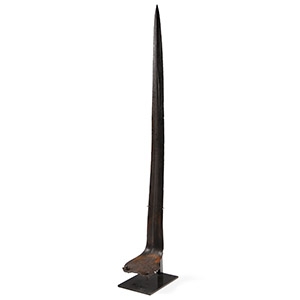
Bronze Age Sacrificed British Long Sword
1500-1100 B.C.Estimate: £5,000 - 7,000 (+bp*)
Opening Bid: £2,500
Bronze sword or rapier with gently tapering cutting edges, thick midrib with lateral beading for most of the blade's length; flared plate to the hilt with two holes at the end to accept attachment rivets; substantially complete; mounted on a custom-made stand. 918 grams total, 57 cm high including stand
Reputedly found in the River Blackwater, Bradwell, Essex. with Christie's, South Kensington, 13 May 2003, lot 259. This lot has been checked against the Interpol Database of stolen works of art and is accompanied by search certificate number no.11881-207821.
In the terminology of Bronze Age studies, a weapon of this type less than 30 cm in length is called a 'dirk' and beyond that length it is classified as a 'rapier'. The longer examples are sometimes considered to have been impractical for use as weapons due to the limitations of the casting process making the blade brittle; however, the evidence for repairs and modifications indicates that they were frequently retained in active use for some time.
