
Loading, please wait...
LOT 0282
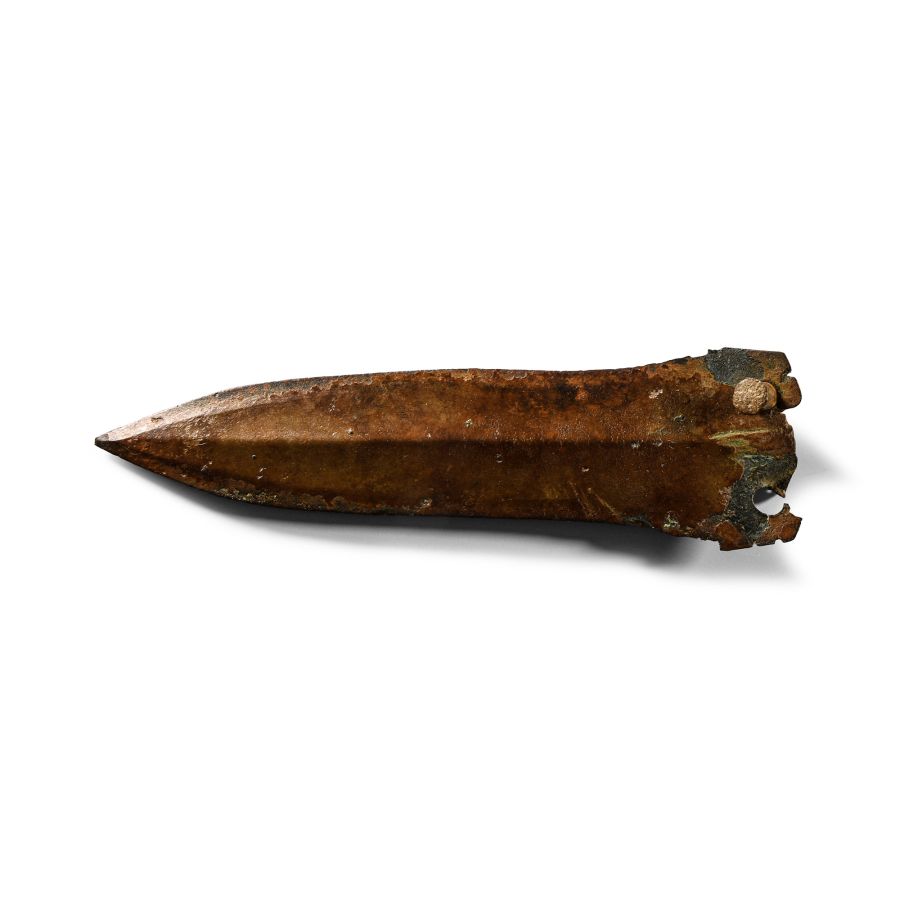
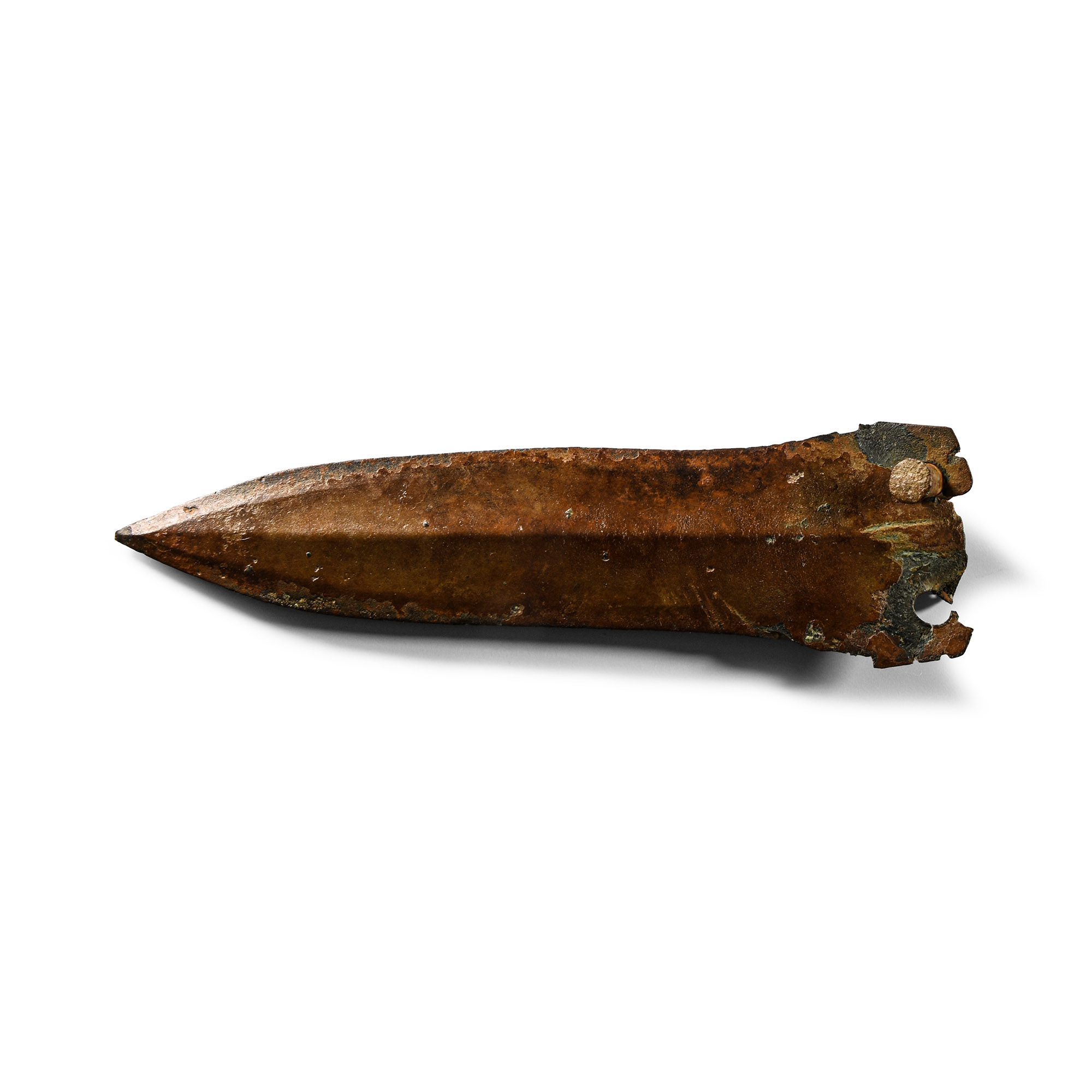
Bronze Age British Copper-Alloy Rivetted Dagger
CIRCA 13TH CENTURY B.C.
5 7/8 in. (87 grams, 15 cm).
A rapier or dirk blade; the blade roughly leaf-shaped with raised midrib to both faces, flat butt with two rivet holes, one retaining a rivet.
ProvenanceFrom an old South Coast, UK, collection.
Ex Alan Cherry, Bournemouth, UK.
TimeLine Auctions follows a vetting process to ensure the authenticity and legality of all items, reinforcing our commitment to integrity and responsible trading. Each antiquity, antique, and coin lot undergoes thorough examination by a vetting committee of at least ten external specialists, professional trade association members, scientists, and archaeologists: Our Vetting Process
AUCTIONS:
TimeLine is a leading auction house specialising in antiquities, ancient art, collectables, natural history, coins, medals, and books. Our auctions offer museums, collectors, historians, and enthusiasts the opportunity to acquire unique and historically significant pieces.
-
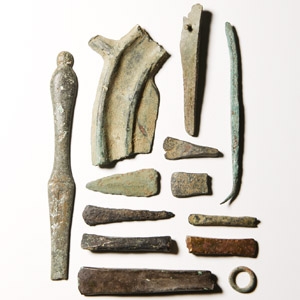
Bronze Age Artefact Group
Circa 2nd-1st millennium B.C.Sold for (Inc. bp): £33
Principally: a variety of chisels and other implements and a votive axehead, together with other items. 213 grams total, 1.4-12.6 cm
Acquired on the UK art market. Property of a Ruislip, UK, gentleman, by inheritance. -
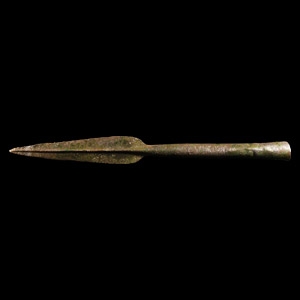
Bronze Age European Spearhead
Late 2nd-early 1st millennium B.C.Estimate: £300 - 400 (+bp*)
Opening Bid: £150
Leaf-shaped, with bevelled edges and lozenge-sectioned mid-rib, socket pierced twice. 211 grams, 37.4 cm
Acquired 1980-2015. Ex Abelita family collection.
The shape of the blade resembles a willow leaf with its widest part situated in the middle of its length. The origin of this shape is still not very clear. It was probably invented somewhere in Anatolia or the Near East. In the Aegean it appears for the first time in LH II A, before spreading around Western Europe. -
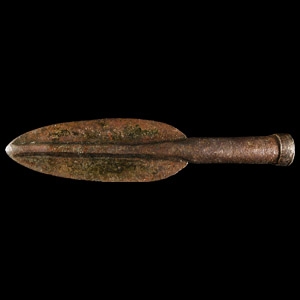
European Bronze Age Leaf-Shaped Spearhead
Circa 1st millennium B.C.Estimate: £300 - 400 (+bp*)
Opening Bid: £150
With leaf-shaped oval blade, thick short midrib, short shaft with fastening holes and circumferential ring for the opening. 242 grams, 23.5 cm
Acquired 1980-2015. Ex Abelita family collection.
This type of lanceolate spearhead is very common across the Balkans and the Carpathian basin. It originates from Hungary or possibly the Czech Republic.
