
Loading, please wait...
LOT 1130
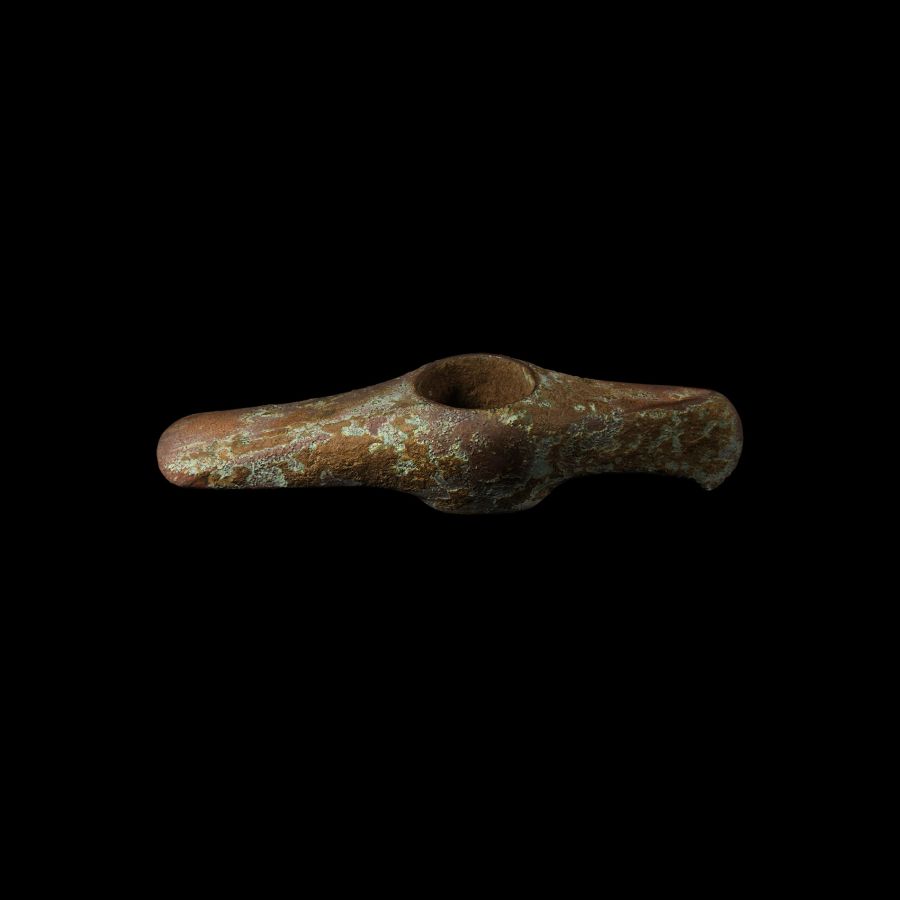
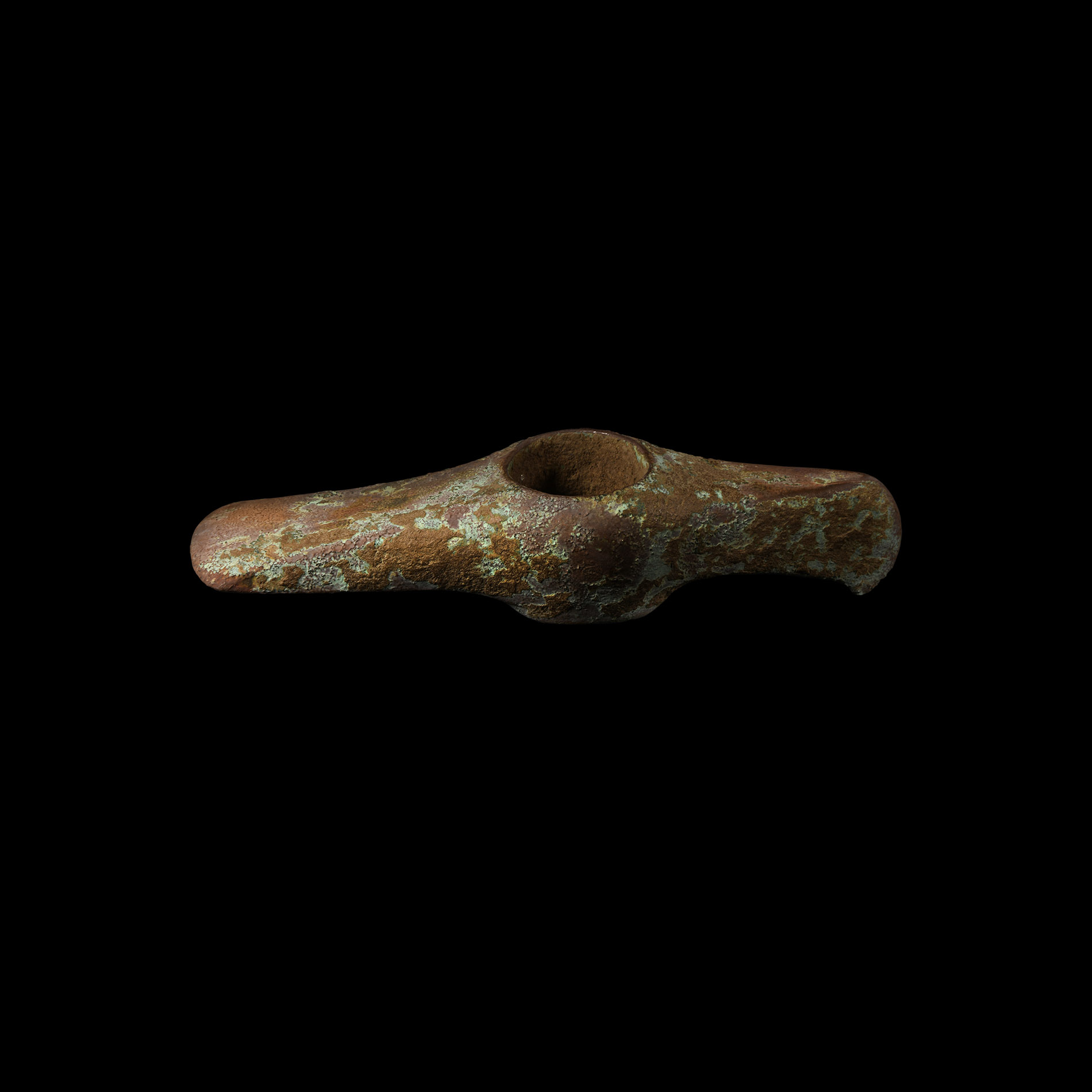
Bronze Age Boat-Shaped Copper Axe Adze
5TH-4TH MILLENNIUM B.C.
6 1/4 in. (629 grams, 16 cm).
A bronze adze-axe head, boat shaped, fitted with double cutting edges, one parallel to the axis of the handle and the second perpendicular to the same axis.
ProvenanceAcquired before 2000.
From the collection of a European gentleman living in the UK.
See similar adze-axe in Gernez, G., L’armament en métal au Proche et Moyen-Orient: des origines a 1750 av. J.C., Paris, 2007, fig.2.65, pl.243, type H-HE 1.C., for comparable example.
CONDITIONTimeLine Auctions follows a vetting process to ensure the authenticity and legality of all items, reinforcing our commitment to integrity and responsible trading. Each antiquity, antique, and coin lot undergoes thorough examination by a vetting committee of at least ten external specialists, professional trade association members, scientists, and archaeologists: Our Vetting Process
AUCTIONS:
TimeLine is a leading auction house specialising in antiquities, ancient art, collectables, natural history, coins, medals, and books. Our auctions offer museums, collectors, historians, and enthusiasts the opportunity to acquire unique and historically significant pieces.
-
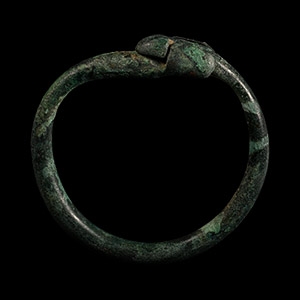
Bronze Age Closed Serpent Bracelet
1st millennium B.C.Sold for (Inc. bp): £104
A bronze bracelet composed of a tapering round-section body, one terminal formed as a stylised serpent head, the other with a U-section clasp grasping the snake's neck. 44 grams, 61 mm wide
Early 1990s London collection. Acquired on the UK art market. From a private collection, Lancashire, UK. -
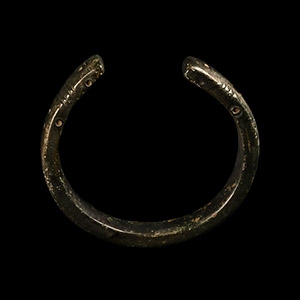
Bronze Age Punch Decorated Zoomorphic Snake Bracelet
1st millennium B.C.Sold for (Inc. bp): £85
A penannular bronze bracelet with convex outer face, terminals formed as stylised snake heads represented by punched ring-and-dot motifs and incised clusters of transverse lines. 73 grams, 67 mm wide
Early 1990s London collection. Acquired on the UK art market. From a private collection, Lancashire, UK. -
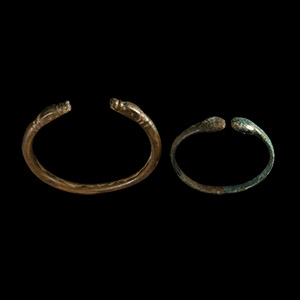
Bronze Age Decorated Bracelet Group
1st millennium B.C.Sold for (Inc. bp): £117
A group of two zoomorphic copper-alloy bracelets of penannular form, one featuring opposed stylised beast or hound head terminals, one with flattened terminals, likely representing snake heads. 37 grams total, 46-61 mm
Early 1990s London collection. Acquired on the UK art market. From a private collection, Lancashire, UK.
