
Loading, please wait...
LOT 1751
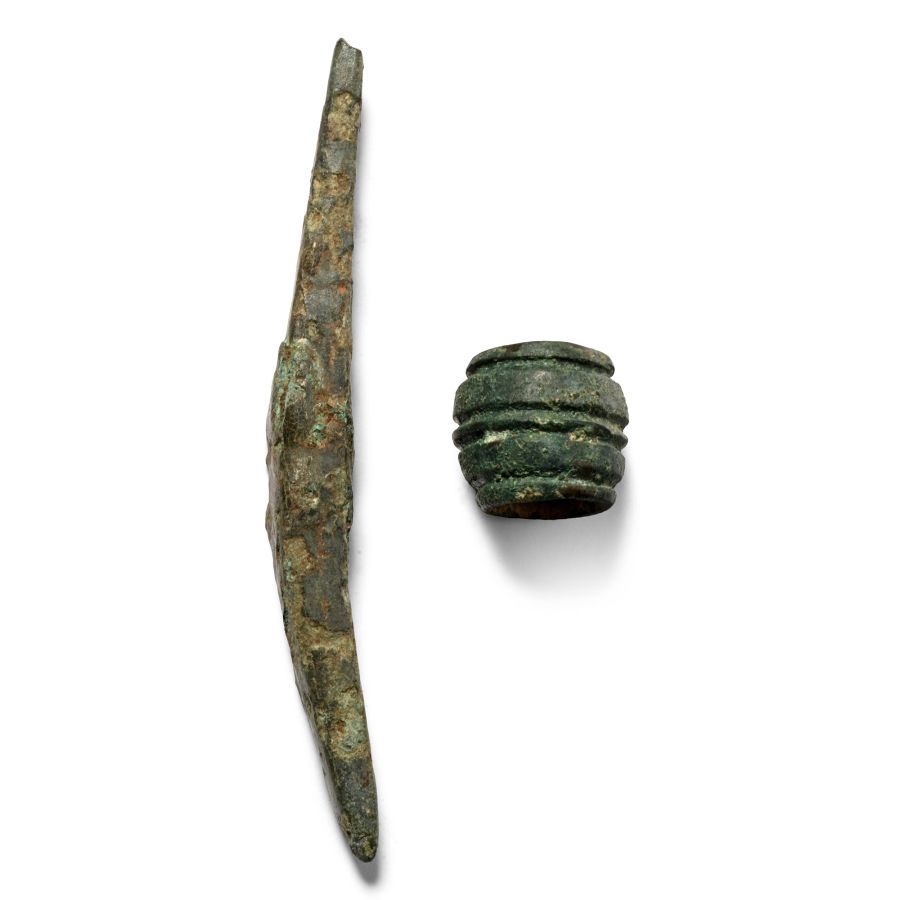
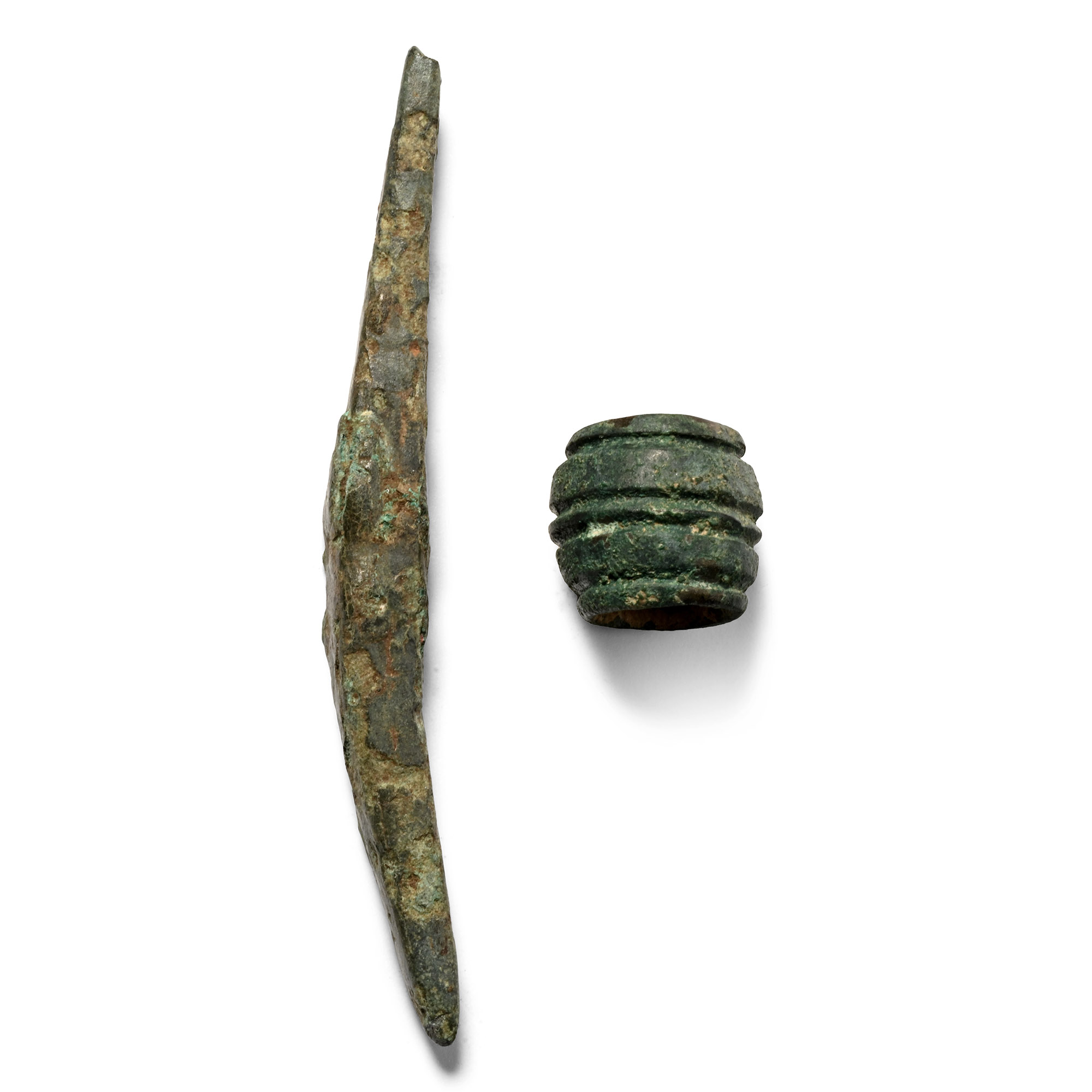
Bronze Age Bead and Awl
EARLY 1ST MILLENNIUM B.C.
3/8 - 2 in. (7.3 grams total, 10-49 mm).
Comprising: squat barrel-shaped tubular bead with incised ribbing to the outer face; square-section awl with one pointed end and one chisel. [2, No Reserve]
ProvenanceFrom the private collection of the late collection of Mr M., Waterlooville, Hampshire, UK, formed from the late 1980s to early 1990s.
CONDITIONTimeLine Auctions follows a vetting process to ensure the authenticity and legality of all items, reinforcing our commitment to integrity and responsible trading. Each antiquity, antique, and coin lot undergoes thorough examination by a vetting committee of at least ten external specialists, professional trade association members, scientists, and archaeologists: Our Vetting Process
AUCTIONS:
TimeLine is a leading auction house specialising in antiquities, ancient art, collectables, natural history, coins, medals, and books. Our auctions offer museums, collectors, historians, and enthusiasts the opportunity to acquire unique and historically significant pieces.
-
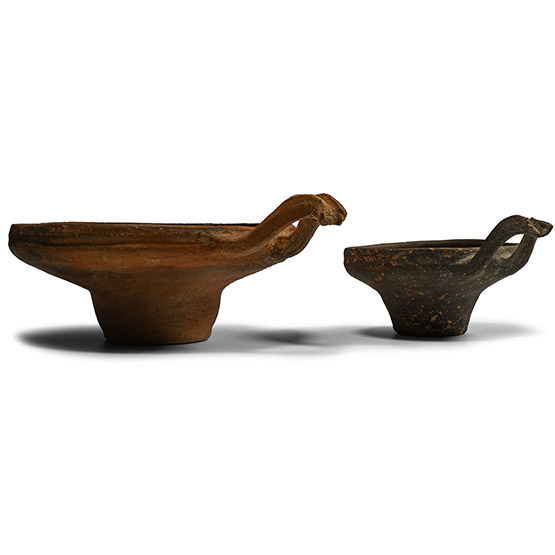
Bronze Age Single-Handled Ceramic Cup Pair
Eastern Mediterranean, 1475-1250 B.C.Sold for (Inc. bp): £390
Comprising: a broad ringware pithos with bifid handle, carinated rim, collector's labels to underside, small hole drilled at base; a similar squat pithos with narrow handle. 353 grams total, 14.7-22 cm
Ex Desmond Morris, between 1967-2001. with Christie's, London, 14-15 May 2002, no.44. Accompanied by a copy of the relevant Christie's catalogue pages. -
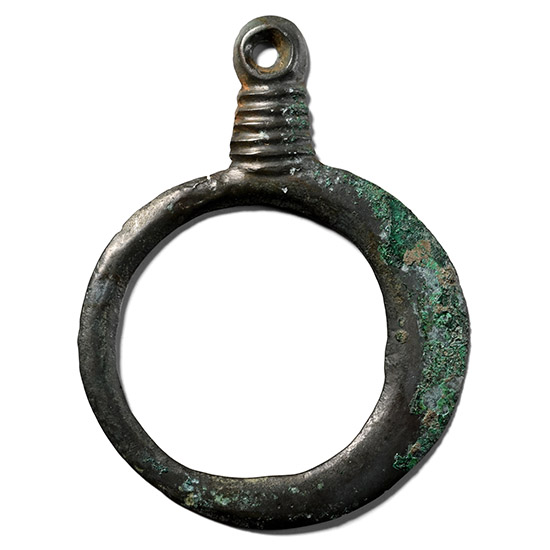
Bronze Age 'Crescent Moon' Pendant
Central Europe, 2nd-1st millennium B.C.Sold for (Inc. bp): £364
Flat-section disc with eccentrically placed circular hole, ribbing to the integral suspension loop. 11.12 grams, 72 mm
Ex German collection, 1990s. -
.jpg)
Roman and Other 'Colchester' Pottery Collection
1st-4th century A.D. and laterSold for (Inc. bp): £143
Including: mortaria, cooking vessels, tableware and other types, plus stone age axe fragments and a domestic animal jaw bone with teeth. 8.4 kg total including box, 3-32 cm
Found Colchester, UK. (UK buyers only, not for export) From the collection of a late East Anglian teacher and antiquarian who retired to the Isle of Wight in Hampshire, UK. He amassed a large collection of objects between the 1960s-1980s.
