
Loading, please wait...
LOT 0935
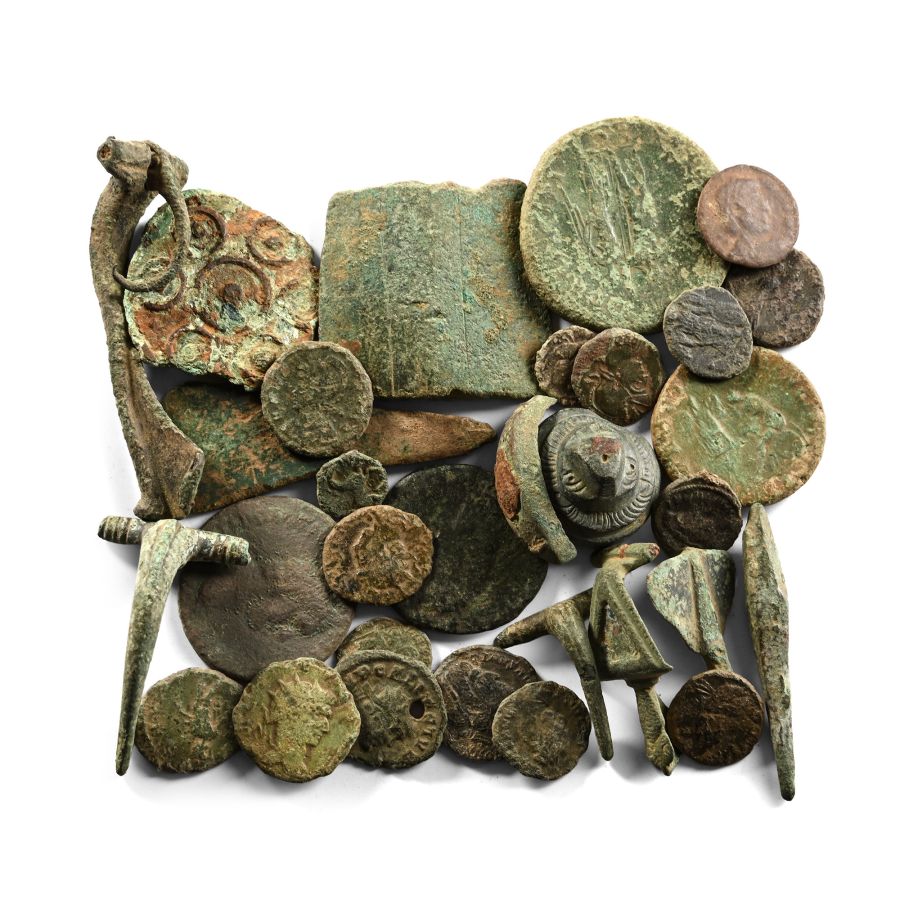
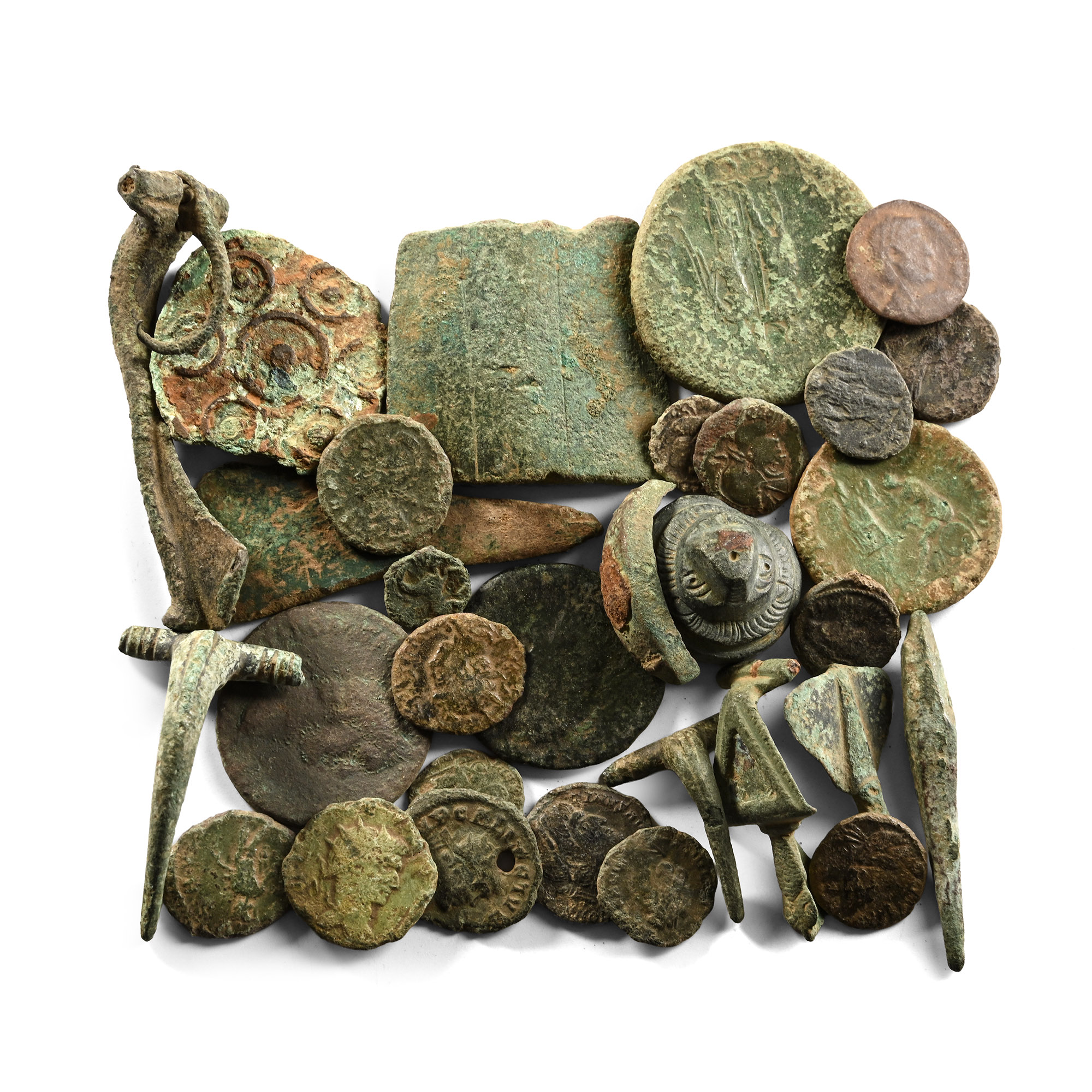
Bronze Age and Roman Artefacts and Coins
1ST-4TH CENTURY A.D.
3/8 - 2 1/4 in. (183 grams total, 10-57 mm).
Mixed group of items including a sestertius, brooch fragments, a large plate brooch fragment, a lion face mount, coins, and others. [No Reserve]
ProvenanceFound Suffolk, UK.
N.B. This lot is for UK buyers only.
TimeLine Auctions follows a vetting process to ensure the authenticity and legality of all items, reinforcing our commitment to integrity and responsible trading. Each antiquity, antique, and coin lot undergoes thorough examination by a vetting committee of at least ten external specialists, professional trade association members, scientists, and archaeologists: Our Vetting Process
AUCTIONS:
TimeLine is a leading auction house specialising in antiquities, ancient art, collectables, natural history, coins, medals, and books. Our auctions offer museums, collectors, historians, and enthusiasts the opportunity to acquire unique and historically significant pieces.
-
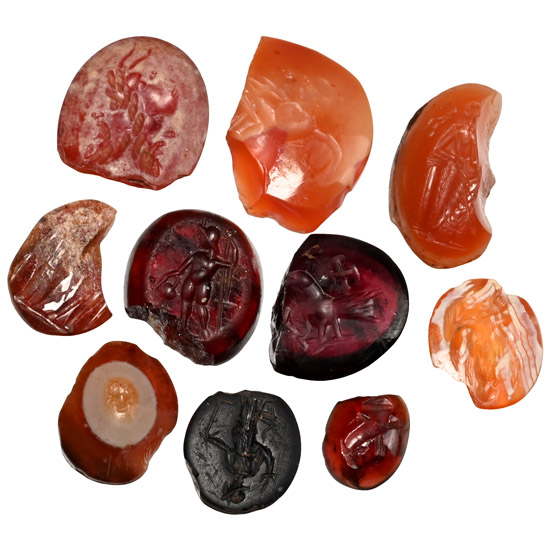
Roman Gemstone Group
2nd-3rd century A.D.Sold for (Inc. bp): £98
Including gryllus, Mars with helmet and spear, Isis-Minerva with cornucopia and other types; each supplied with a museum-quality impression. 6.25 grams total, 8-15 mm
From the private collection of a European gentleman (1942-2024), formed since the 1970s. -
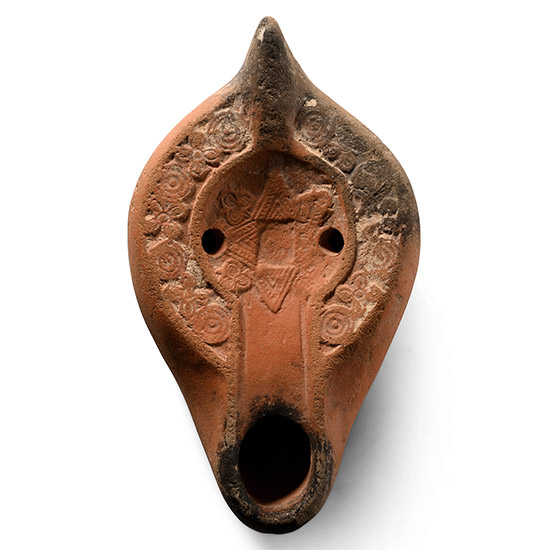
Large Late Roman Terracotta Oil Lamp with Floral Design
Circa 5th-6th century A.D.Sold for (Inc. bp): £117
Piriform body with large nozzle and a small stub handle to the rear, the edge with a band of alternating concentric circles and flowers, the discus with flowers and triangles, inked collector's number '347' on the base. 248 grams, 14.1 cm
Ex important German collection, 1960-1990. -
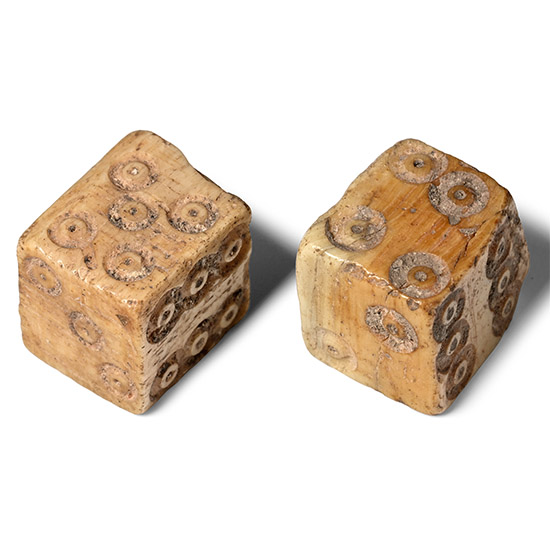
Roman Bone Gaming Dice Pair
Circa 1st-4th century A.D.Sold for (Inc. bp): £169
Pair of cuboid dice with ring-and-dot markings disposed 1:6, 2:5, 3:4. 4 grams total, 11 mm each
Ex Cambridgeshire, UK, collection, 1990s.
