
Loading, please wait...
_900x900.jpg "British Stone Age Knapped Flint Handaxe from Farnham, Greenhill")
_200x200.jpg "British Stone Age Knapped Flint Handaxe from Farnham, Greenhill")
.jpg "British Stone Age Knapped Flint Handaxe from Farnham, Greenhill")
LOT 0332
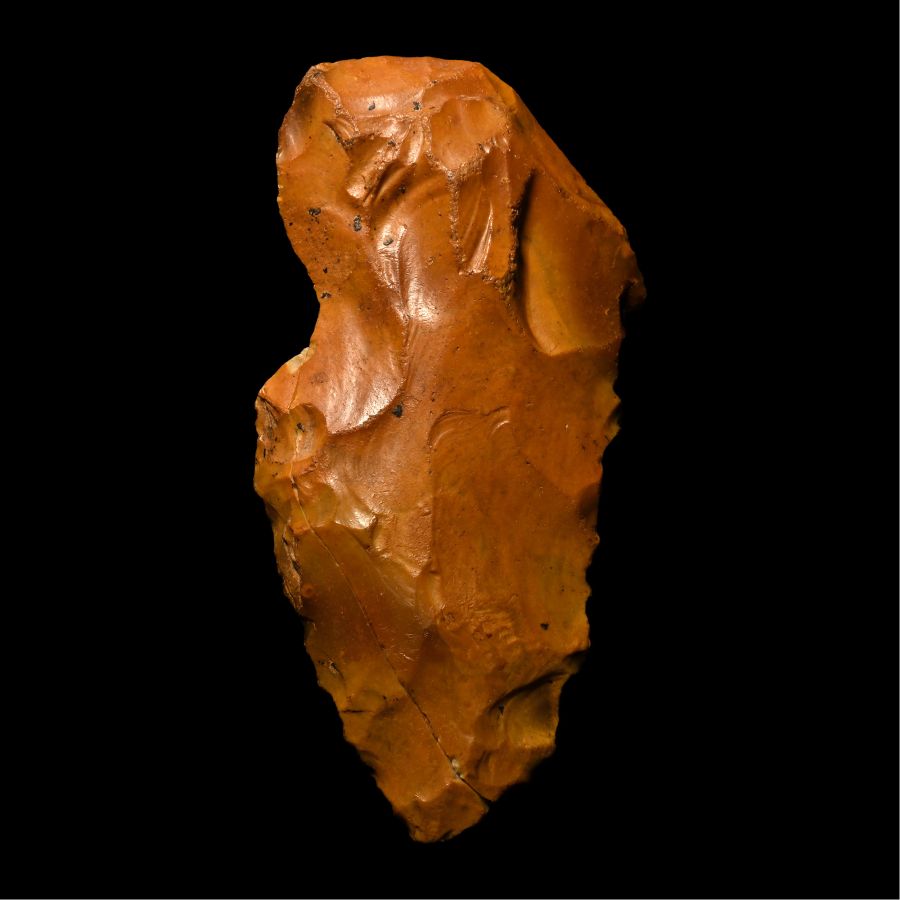
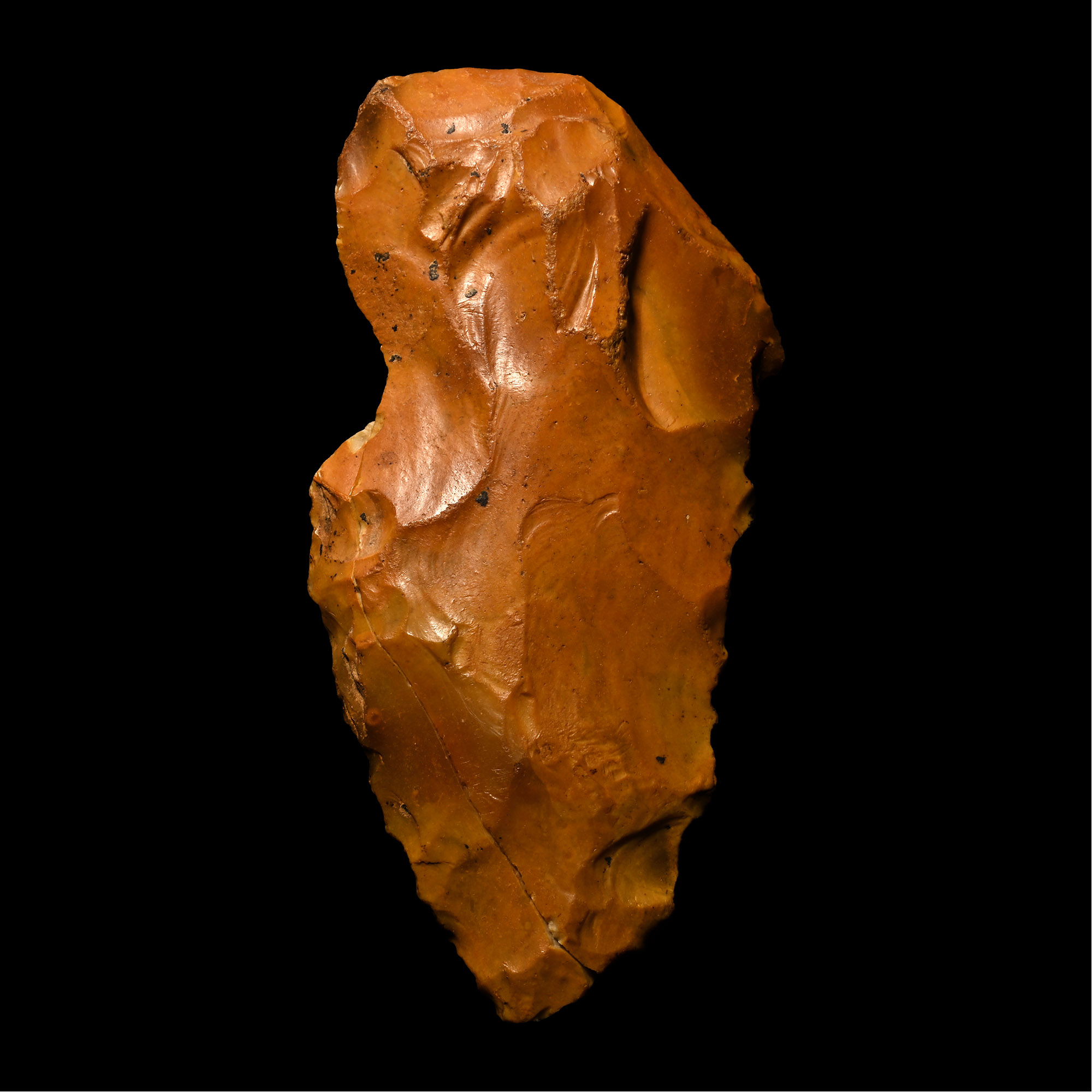
British Stone Age Knapped Flint Handaxe from Farnham, Greenhill
MIDDLE PALAEOLITHIC PERIOD, CIRCA 150,000-60,000 B.P.
6 1/8 in. (301 grams, 15.6 cm).
Lanceolate in profile with broad point; inked findspot 'Farnham 1901'; repaired.
ProvenanceFound in 1901.
From the collection of Captain Streatfield who helped to fund the archaeology excavations at Farnham, Kent.
After Captain Streatfield passed away in the 1940s, his collection was sold at auction to a gentleman in Kent.
The collection was then sold again in the 2020’s via a UK auction house.
This handaxe is one of a group of 23 handaxes originally collected by Captain Gerald Streatfield and marked with ‘’Farnham 1901’’. The discovery of these 23 handaxes is noted by Bury (1935, 68–69) as being on “the west side of the Tilford Road (Greenhill)” where Streatfield found them. Roe (1968, 286) includes them in his gazetteer under Farnham, Greenhill with general reference SU 850 457, citing Bury’s report. Greenhill is shown on the 1873 and 1898 OS maps as a wooded area, just north of the River Bourne, at c.110 m OD, centred on SU 850 456. This location lies on the south-eastern edge of Terrace A of the River Wey sequence. References for context: Bury, H. (1935). The Farnham Terraces and their sequence. Proceedings of the Prehistoric Society, 1, 60– 69. Roe, D. (1968). A Gazetteer of British Lower & Middle Palaeolithic Sites. CBA Research Report 8. Taylor, C. (2017). Five Palaeolithic handaxes from Farnham, with a comment on the Huband flint collection. Surrey Archaeological Collections, 100, 213–221.
CONDITIONTimeLine Auctions follows a vetting process to ensure the authenticity and legality of all items, reinforcing our commitment to integrity and responsible trading. Each antiquity, antique, and coin lot undergoes thorough examination by a vetting committee of at least ten external specialists, professional trade association members, scientists, and archaeologists: Our Vetting Process
AUCTIONS:
TimeLine is a leading auction house specialising in antiquities, ancient art, collectables, natural history, coins, medals, and books. Our auctions offer museums, collectors, historians, and enthusiasts the opportunity to acquire unique and historically significant pieces.
LOT 0332
British Stone Age Knapped Flint Handaxe from Farnham, Greenhill
Sold for (Inc. bp): £1,300
-
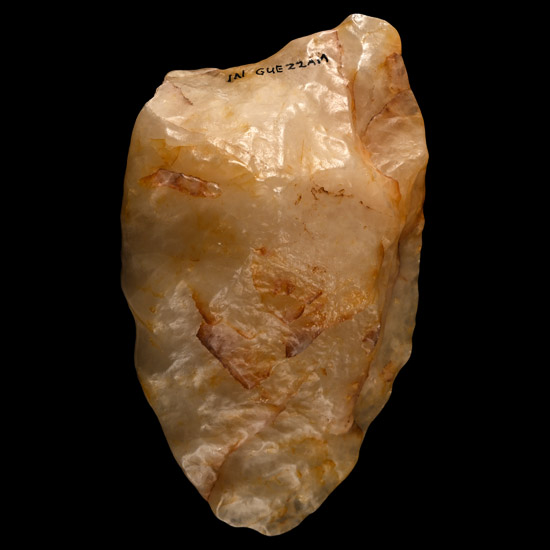
African Stone Age Homo Erectus Knapped Quartzite Handaxe
Palaeolithic Period, circa 1,000,000-500,000 B.P.Sold for (Inc. bp): £312
Knapped from translucent quartzite, weathered over hundreds of thousands of years' exposure; from the Wadi Talia, Queen area. 268 grams, 12.3 cm.
Ex old German collection formed in the 1970s. Acquired on the European art market. -
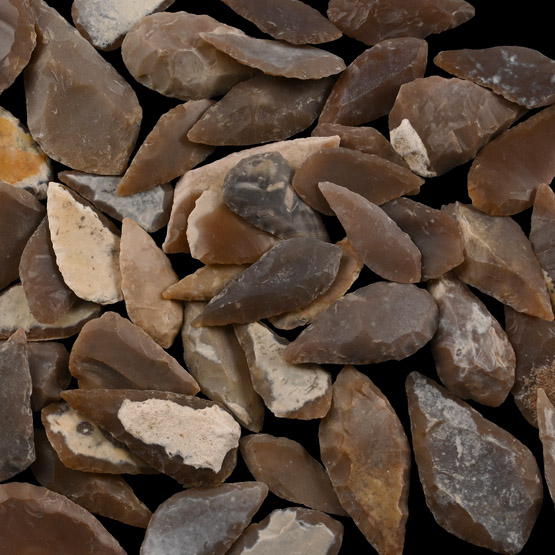
Stone Age Leaf-Shaped Arrowhead Collection
Neolithic Period, 6th-4th millennium B.C.Sold for (Inc. bp): £98
Comprising mostly bifacial and uniface leaf-shaped and piriform flint and chert arrowheads; probably from the Sahara region of North Africa. 107 grams total, 23-41 mm
UK gallery, early 2000s.
Similar specimens of arrowheads have been found in the Eastern Sahara Region of Abu Tartur Plateau. Most of the arrowheads came from the El Jarar Neolithic, c. 7700-7300 B.P. (c.6500-6100 B.C.). Other parallels occur in the region of Kharga Oasis. -
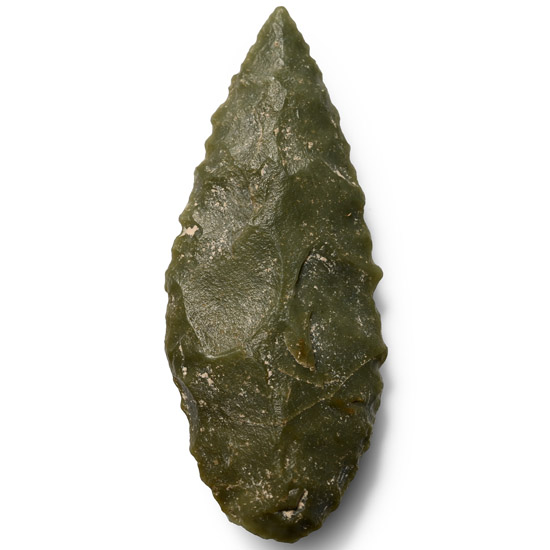
Stone Age Leaf-Shaped Arrowhead
Neolithic Period, circa 6,000 B.P.Sold for (Inc. bp): £1,430
Lentoid in section with serration to the edges. 3.02 grams, 37 mm
From the collection of a Buckinghamshire, UK, collection established from the earlier 1960s.
