
Loading, please wait...
LOT 1910
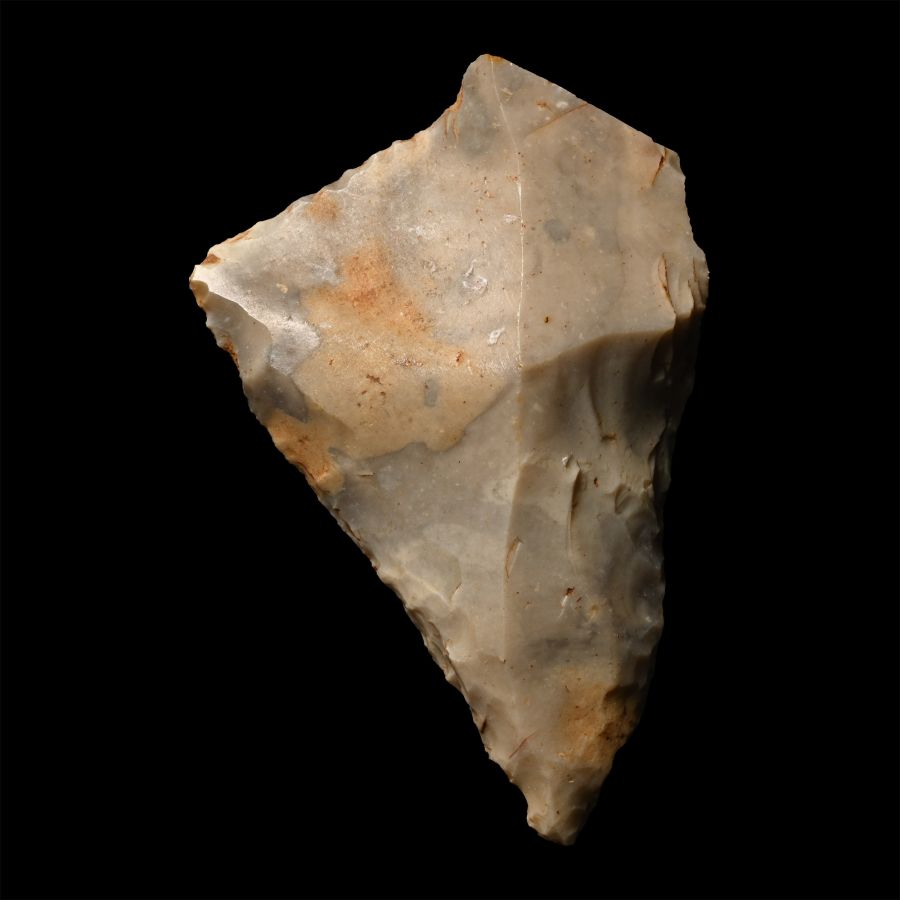
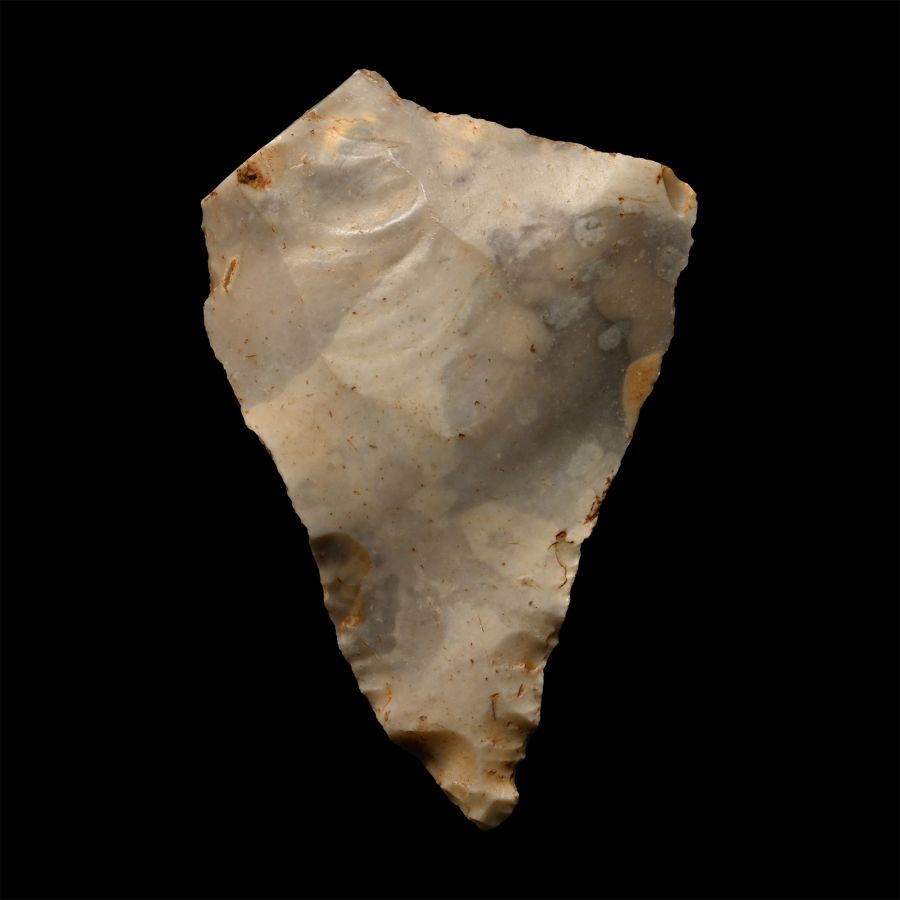
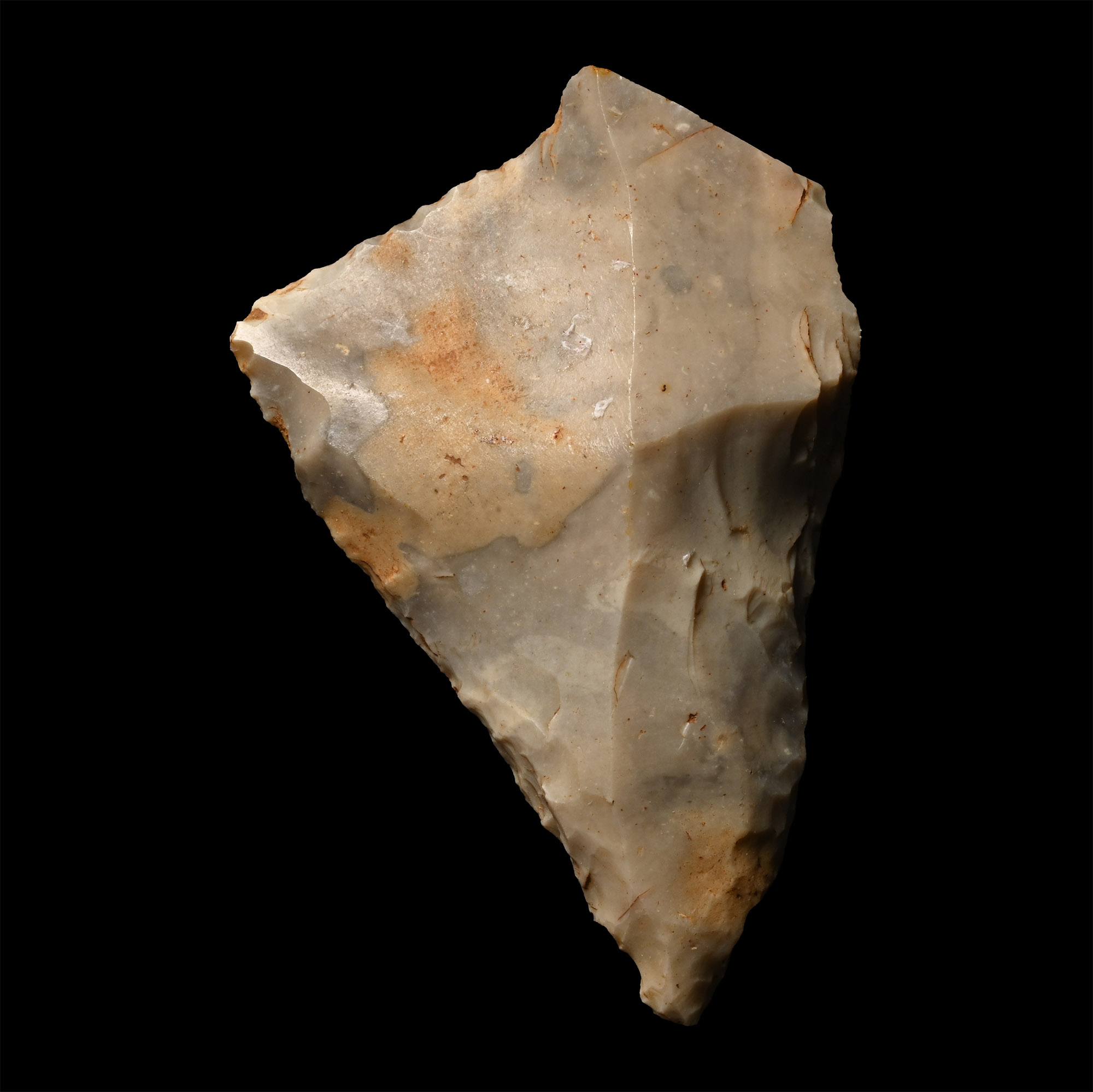
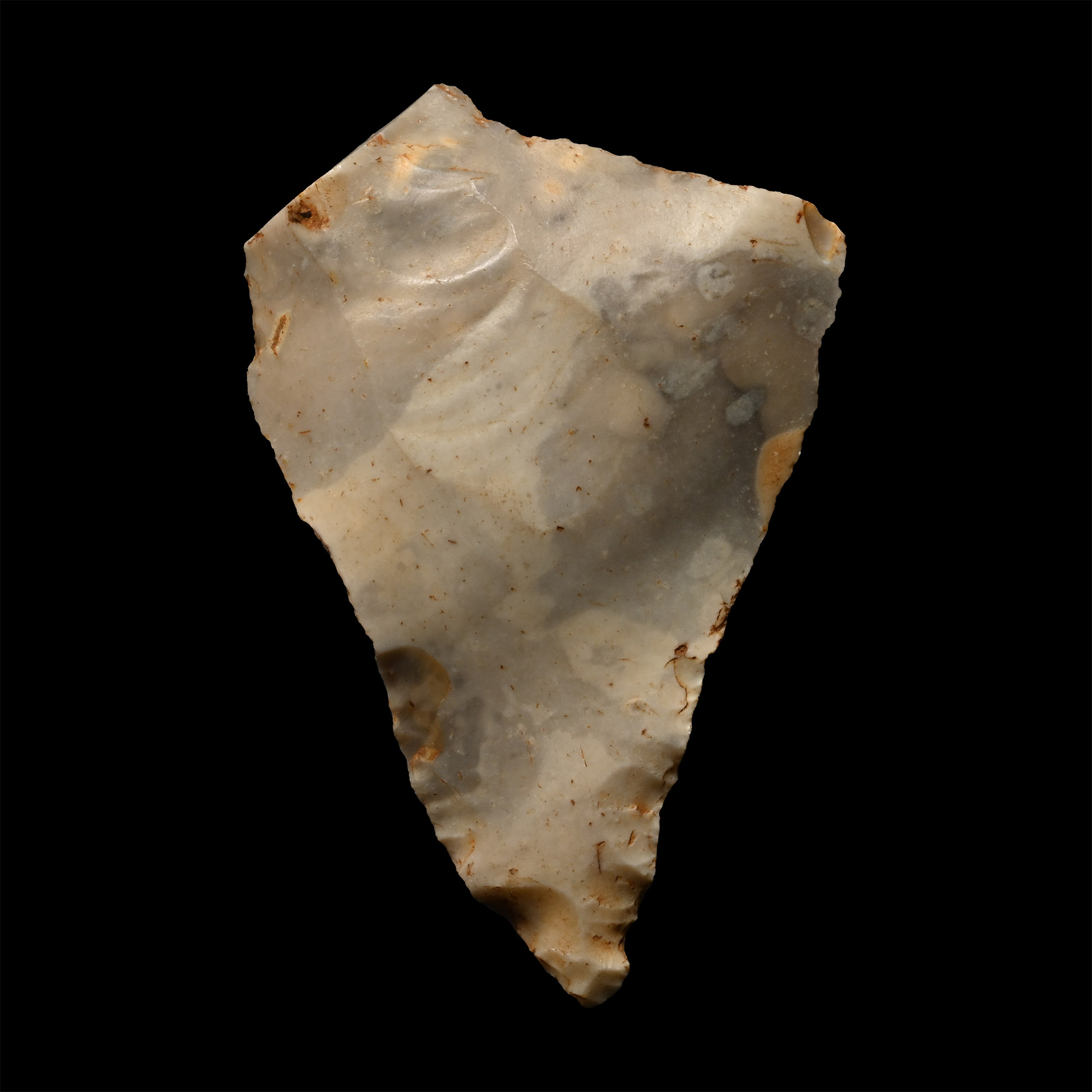
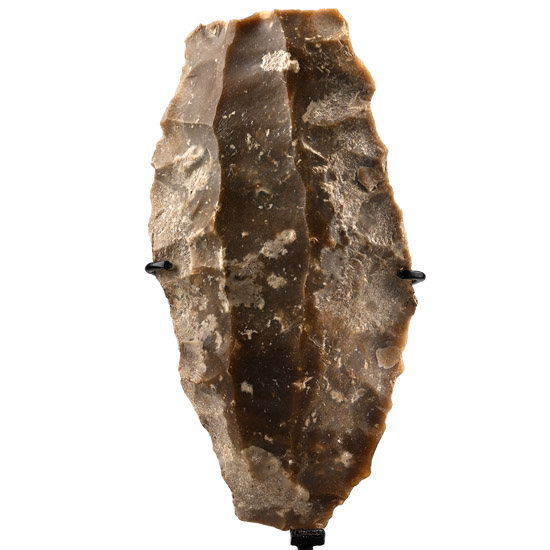
British Stone Age Knapped Flint Drill Tool from Farnham
NEOLITHIC PERIOD, CIRCA 6000 B.P.
1 3/4 in. (9.74 grams, 46 mm).
Biconvex in section with thick midrib. [No Reserve]
ProvenanceFound in 1901.
From the collection of Captain Streatfield, who helped to fund the archaeology excavations at Farnham, Kent.
After Captain Streatfield passed away in the 1940s, his collection was sold at auction to a gentleman in Kent.
The collection was then sold again in the 2020’s via a UK auction house.
TimeLine Auctions follows a vetting process to ensure the authenticity and legality of all items, reinforcing our commitment to integrity and responsible trading. Each antiquity, antique, and coin lot undergoes thorough examination by a vetting committee of at least ten external specialists, professional trade association members, scientists, and archaeologists: Our Vetting Process
AUCTIONS:
TimeLine is a leading auction house specialising in antiquities, ancient art, collectables, natural history, coins, medals, and books. Our auctions offer museums, collectors, historians, and enthusiasts the opportunity to acquire unique and historically significant pieces.
LOT 1910
British Stone Age Knapped Flint Drill Tool from Farnham
Sold for (Inc. bp): £520
-
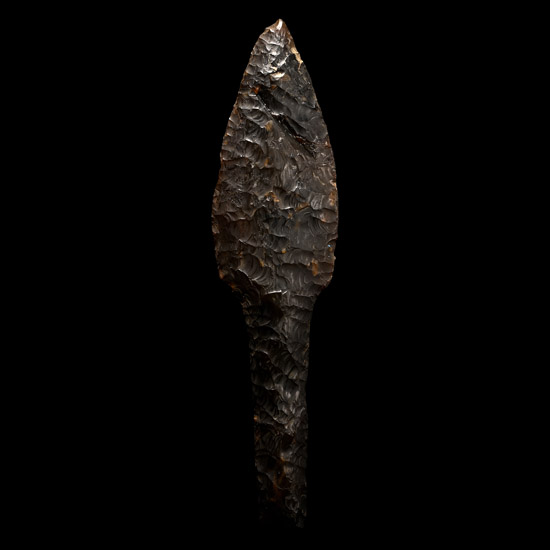
Scandinavian Type VIB Knapped Flint Dagger
Early Bronze Age, circa 1800 B.C.Sold for (Inc. bp): £260
With lentoid-section shank, leaf-shaped blade; repaired. 58.4 grams, 16.2 cm
From as European collection formed after 1968. From the private collection of a North Somerset, UK, gentleman collector. -
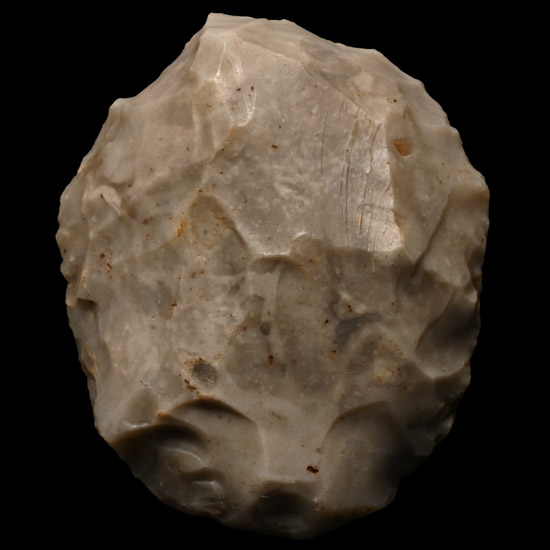
British Stone Age Knapped Flint Scraper from Farnham
Neolithic Period, circa 6000 years B.P.Sold for (Inc. bp): £26
Plano-convex in section with inked inscription to underside. 23.3 grams, 43 mm
Found in 1901. From the collection of Captain Streatfield who helped to fund the archaeology excavations at Farnham, Kent. After Captain Streatfield passed away in the 1940s, his collection was sold at auction to a gentleman in Kent. The collection was then sold again in the 2020’s via a UK auction house. -
Very Large Stone Age Flint Core
Neolithic Period, 3rd millennium B.C.Estimate: £400 - 600 (+bp*)
Opening Bid: £200
Substantial leaf-shaped core with parallel facets to one face, some cortex to reverse; mounted on a custom-made stand. 6.82 kg total, 31 cm
Found at les Pivots, le Grand-Pressigny, France. From an old collection, Mons, Belgium. Private collection London, UK.
