
Loading, please wait...


LOT 1643
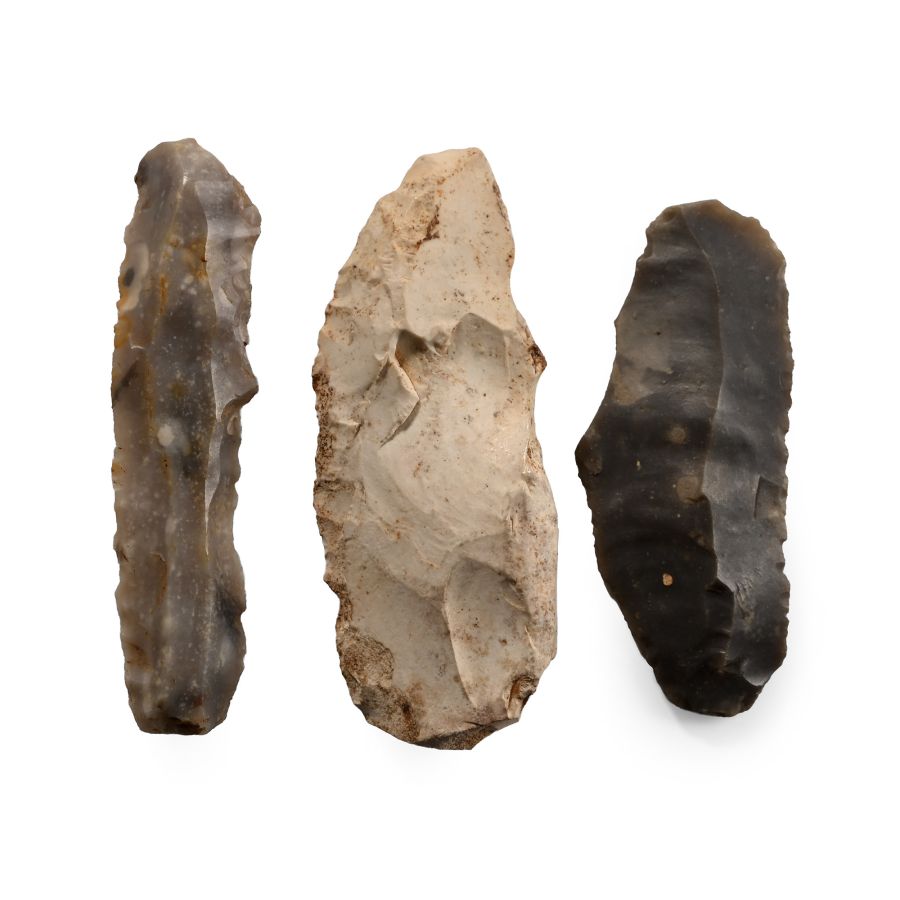
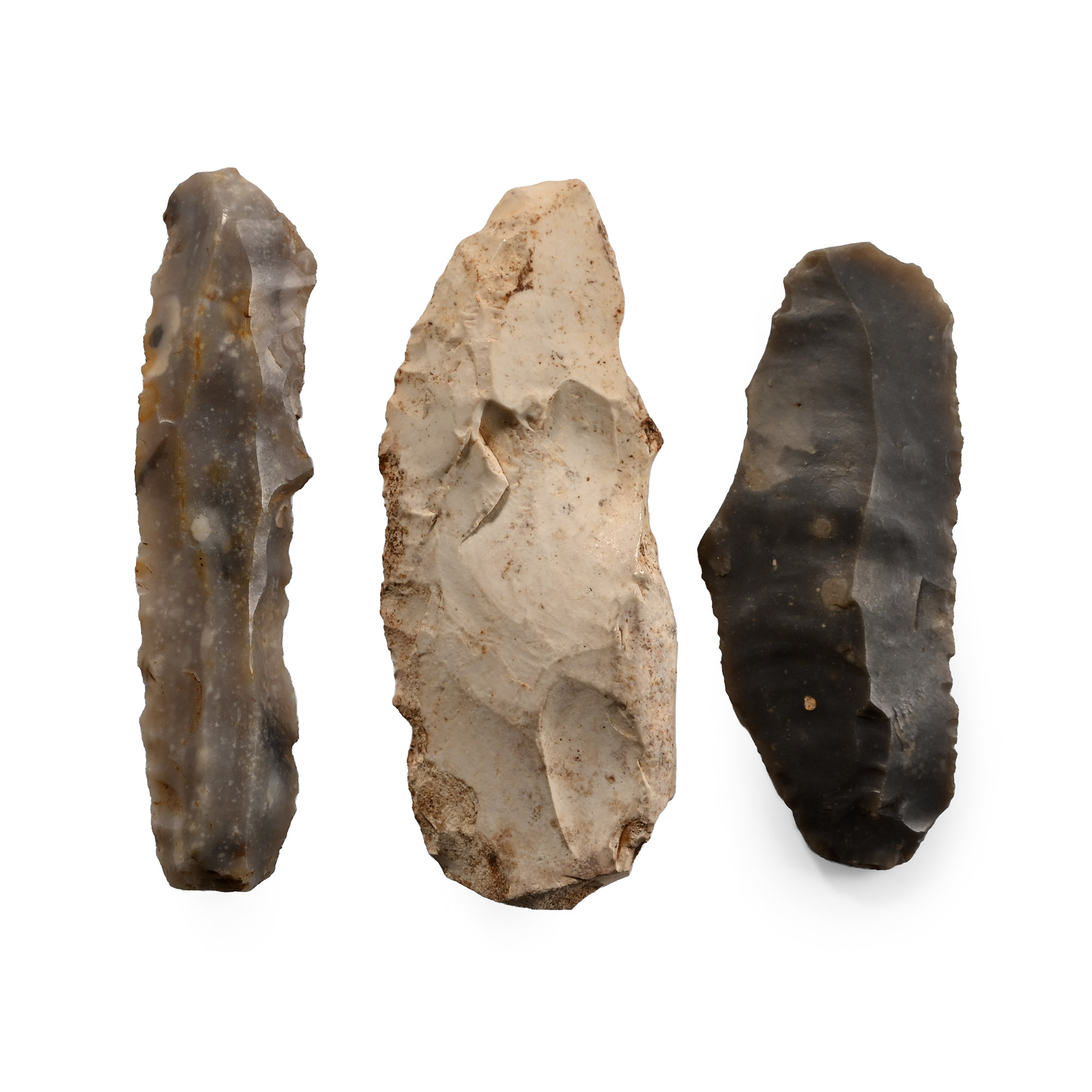
British Stone Age Knapped Flint Blade Collection
NEOLITHIC PERIOD, CIRCA 6,000 B.P.
2 - 2 1/4 in. (23 grams total, 50-58 mm).
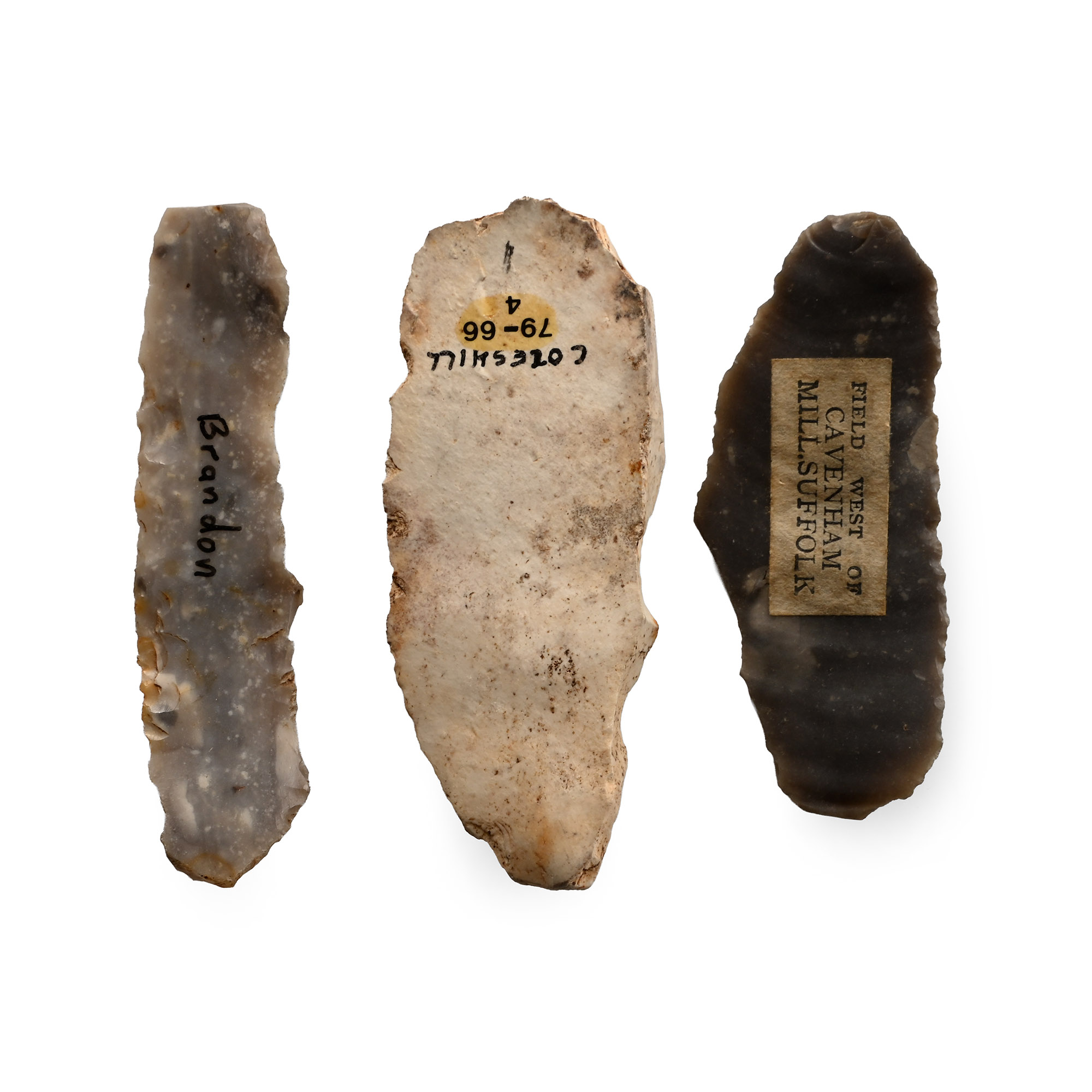
Comprising three knapped blades, each with a find location. [3, No Reserve]
ProvenanceFound Bradon, Cavesham, and Coteshill, Suffolk, UK.
From the collection of Martin Doyle, Leverstock, UK, 1980s-2000s.
TimeLine Auctions follows a vetting process to ensure the authenticity and legality of all items, reinforcing our commitment to integrity and responsible trading. Each antiquity, antique, and coin lot undergoes thorough examination by a vetting committee of at least ten external specialists, professional trade association members, scientists, and archaeologists: Our Vetting Process
AUCTIONS:
TimeLine is a leading auction house specialising in antiquities, ancient art, collectables, natural history, coins, medals, and books. Our auctions offer museums, collectors, historians, and enthusiasts the opportunity to acquire unique and historically significant pieces.
-
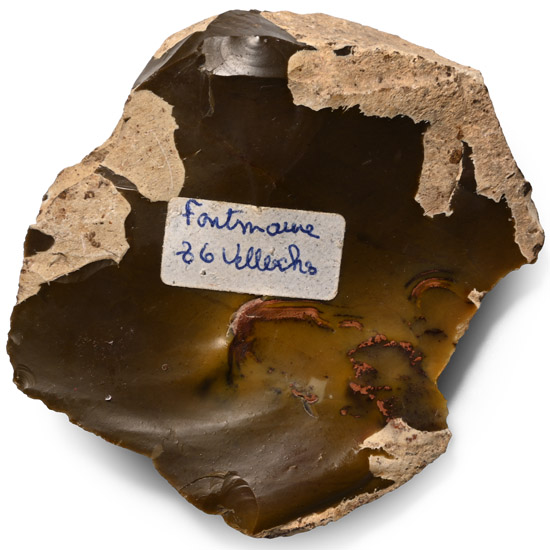
French Stone Age Fontmaure Jasper Neanderthal Knapped Flint Scraper
Middle Palaeolithic Period, circa 150,000-60,000 B.P.Sold for (Inc. bp): £20
Cordate in plan with cortex to the butt, notched cutting edge; old label 'Fontmaure, 86 Vellechs'. 110 grams, 76 mm
From the well-regarded site of Fontmaure, Vaucluse department, France. Acquired in the 1970s-1990s. From the collections of the famous UK musician and amateur archaeologist, Victor Brox (1941-2023). From a private collection. -
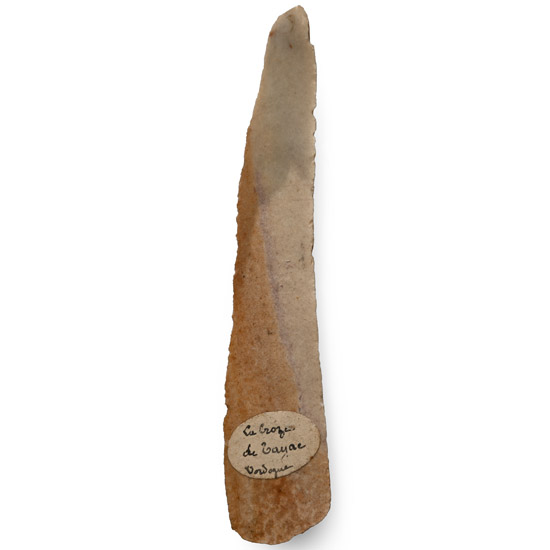
French Stone Age Knapped Flint Long Blade Scraper
Gravettian Period, circa 33,000-21,000 B.P.Sold for (Inc. bp): £390
Slender triangular-section scraper with usage wear to long edges and rounded ends; old inked label 'La Croze du Tayac, Dordogne'. 20.1 grams, 11.1 cm
From La Croze du Tayac, France. Acquired in the 1970s-1990s. From the collections of the famous UK musician and amateur archaeologist, Victor Brox (1941-2023). From the private collection of an East Anglian, UK, specialist collector. -
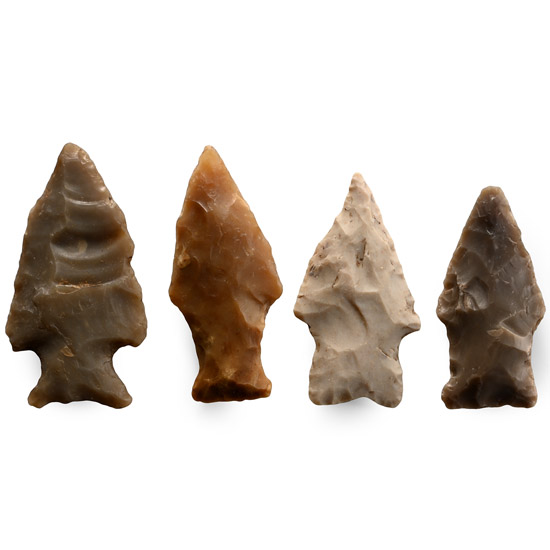
North American Stone Age Knapped Arrowhead Group
Archaic Woodland Period, circa 2500-1900 B.P. or laterSold for (Inc. bp): £26
Comprising four tanged arrowheads in grey and brown stone. 27.2 grams total, 43-51 mm
From a previous old English collection. From the private collection of a West Midlands lady collector; acquired from a UK auction house.
