
Loading, please wait...
LOT 1639
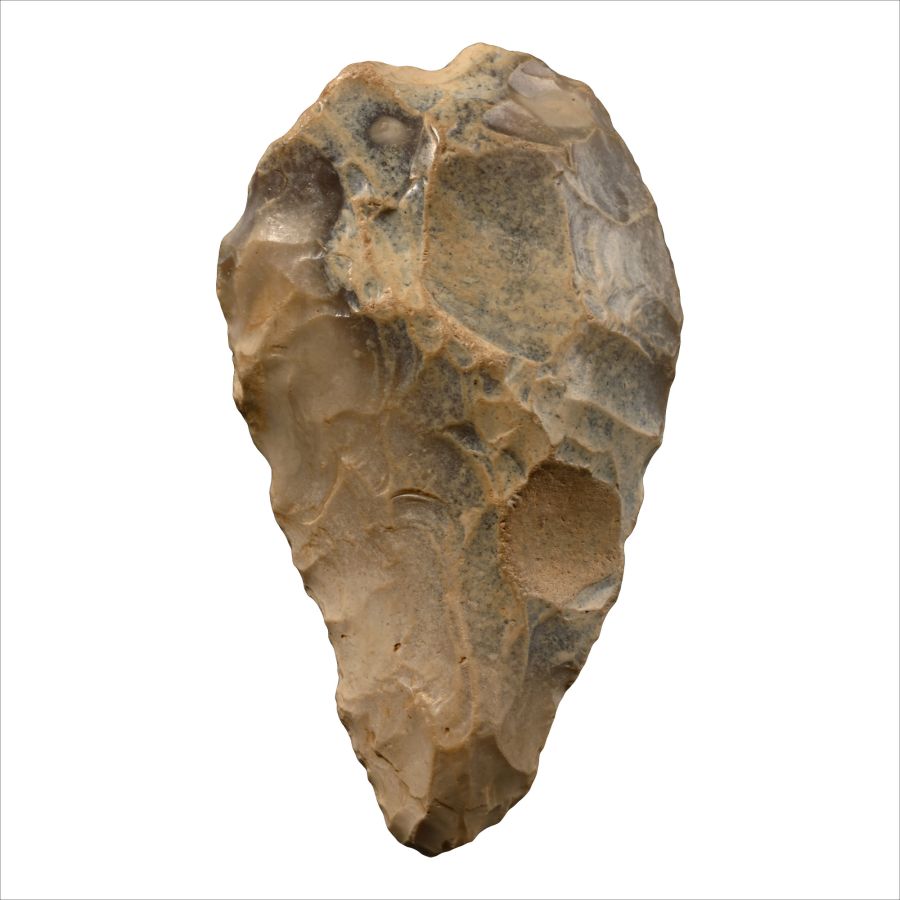
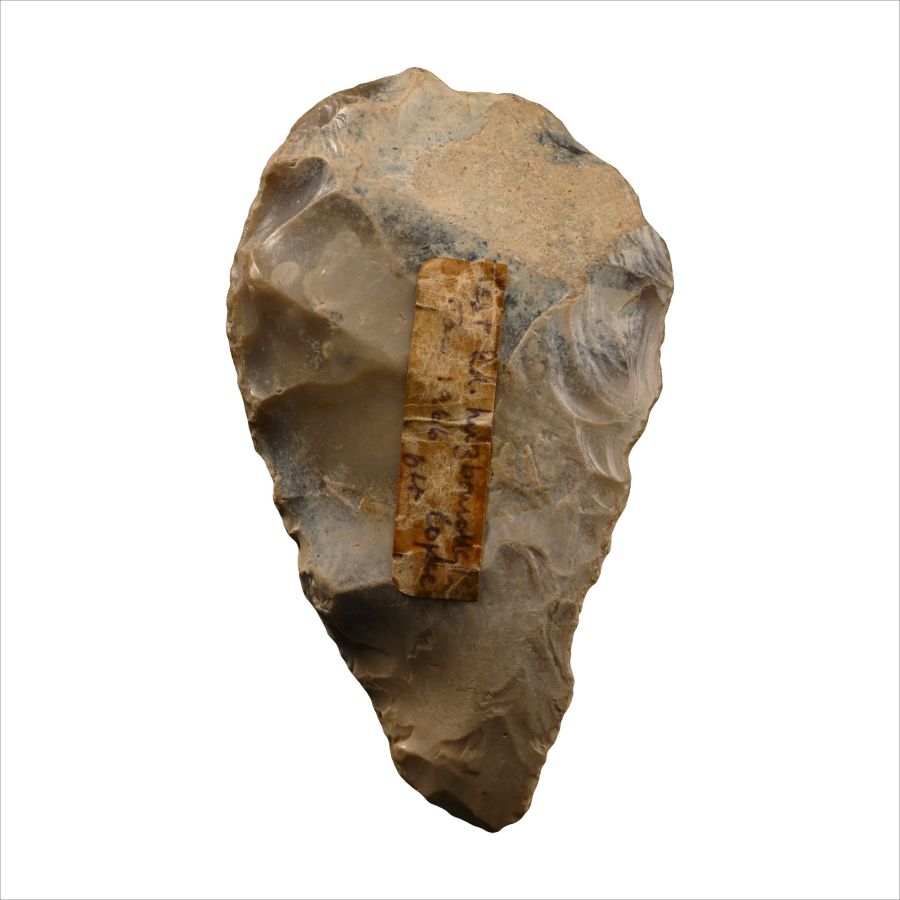
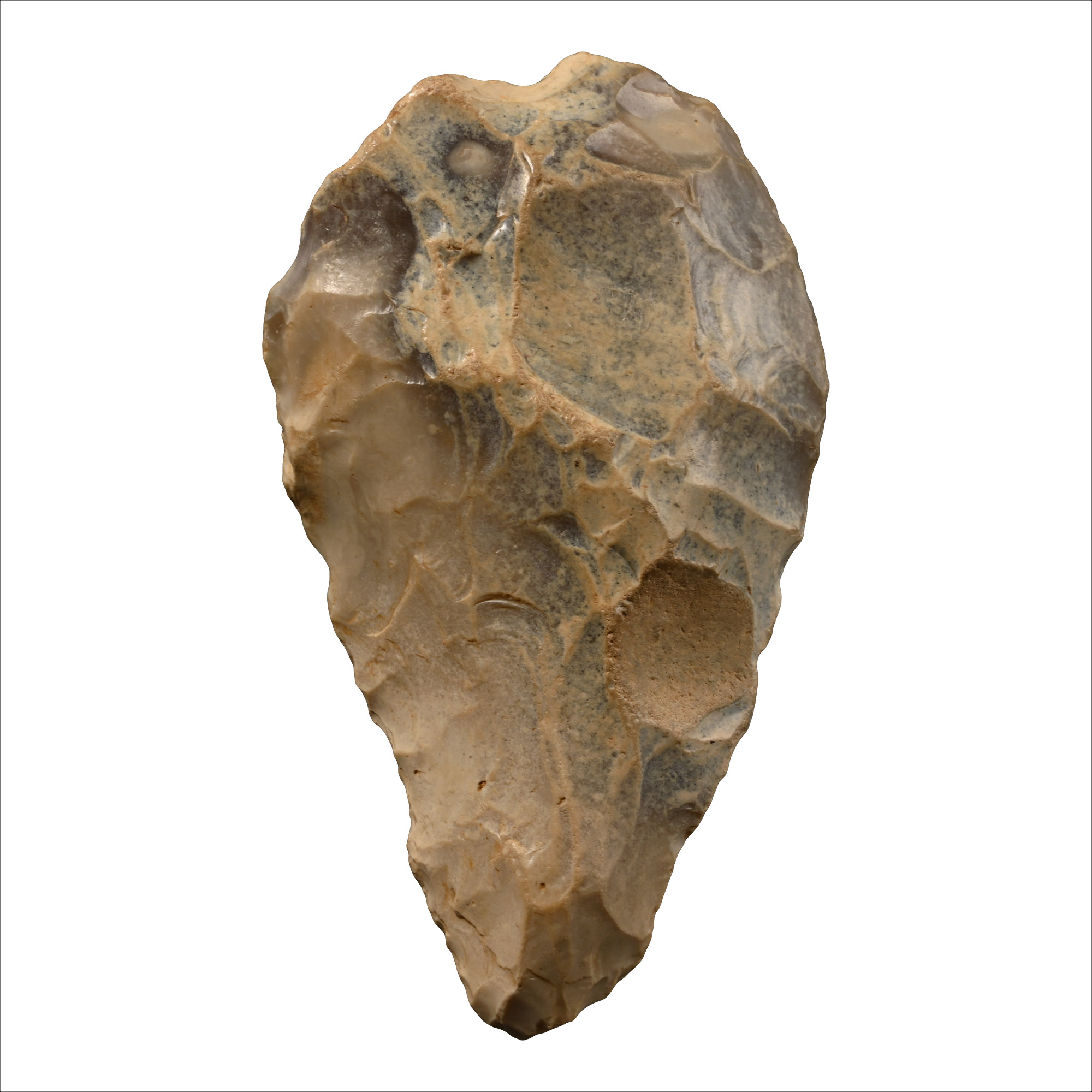
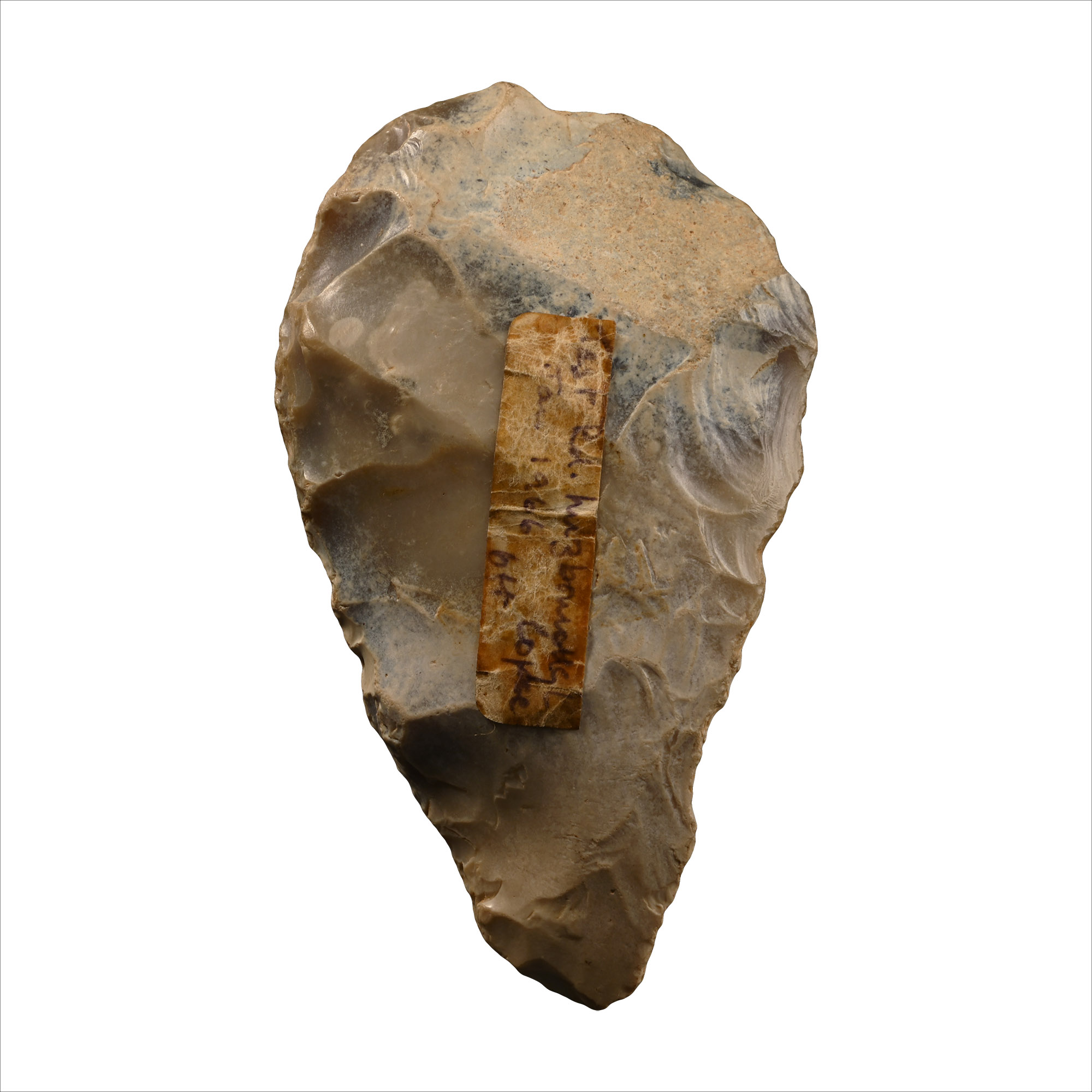
British Stone Age Knapped Flint Axe
MIDDLE PALAEOLITHIC PERIOD, CIRCA 150,000-60,000 B.P.
4 3/8 in. (192 grams, 11.2 cm).
Knapped from light grey flint and with an old handwritten label to one side. [No Reserve]
ProvenanceFound Test Road, Huzbourough Copse, Hampshire, UK, January 1966.
From the collection of Martin Doyle, Leverstock, UK, 1980s-2000s.
TimeLine Auctions follows a vetting process to ensure the authenticity and legality of all items, reinforcing our commitment to integrity and responsible trading. Each antiquity, antique, and coin lot undergoes thorough examination by a vetting committee of at least ten external specialists, professional trade association members, scientists, and archaeologists: Our Vetting Process
AUCTIONS:
TimeLine is a leading auction house specialising in antiquities, ancient art, collectables, natural history, coins, medals, and books. Our auctions offer museums, collectors, historians, and enthusiasts the opportunity to acquire unique and historically significant pieces.
-
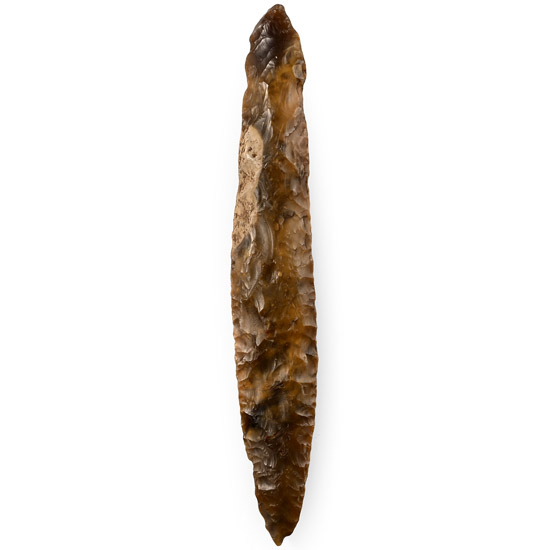
Danish Stone Age 'Type 1B' Knapped Flint Dagger
Neolithic Period, 4400-3800 B.P.Sold for (Inc. bp): £338
Slender double-edged blade with pointed ends. 40 grams, 15.1 cm
Found Denmark. From the collection of Martin Doyle, Leverstock, UK, 1980s-2000s. -
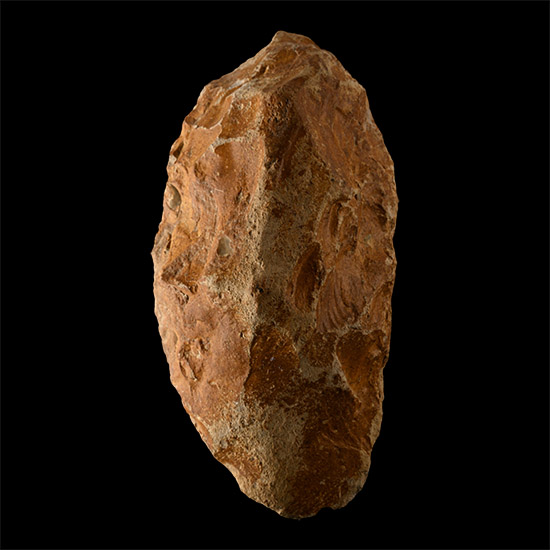
Huge Stone Age Acheulean Ovate Flint Handaxe
Lower Palaeolithic Period, circa 600,000-350,000 B.P.Sold for (Inc. bp): £676
Extremely large example of a chopping tool, likely made by Homo heidelbergensis; mounted on a custom-made display stand. 1.54 kg, 21.1 cm
From the well-regarded, long-closed quarry site of St Meme, Charente, France. From an old, large French collection. Acquired on the European art market. From a UK private collection.
Smaller handaxes continued as components of Middle Palaeolithic industries (Acheulian and Mousterian) associated with the Neanderthal and Homo sapiens. These rather crude handaxes probably reflect the coarser nature of the stone. -
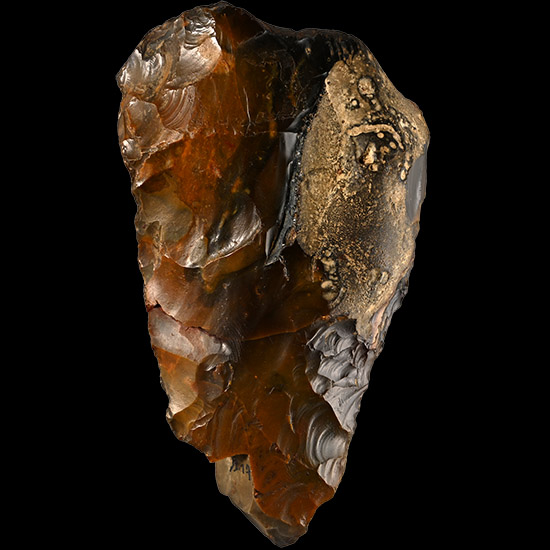
Stone Age Acheulean Handaxe
Lower Palaeolithic, circa 700,000-300,000 B.P.Sold for (Inc. bp): £520
Ovate axe in dark brown stone with some cortex visible, old collector's note ' 2 P. Abbevillier alluvions de la Somme.' 617 grams, 15.3 cm
From Abbeville, France (according to inscription). Collection of Michel C. Vaes (1934-2024), Belgium, formed 1960s-90s. Accompanied by a copy of the EU Licence no.2026 DMF 0436.
