
Loading, please wait...
LOT 1732
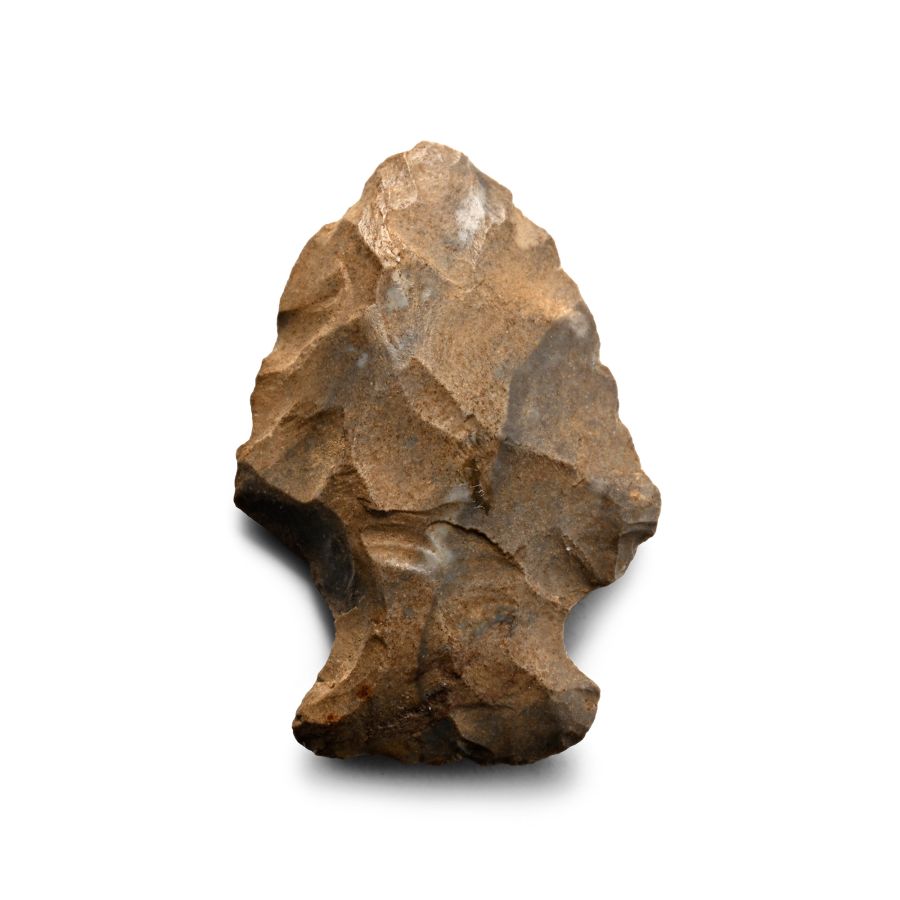
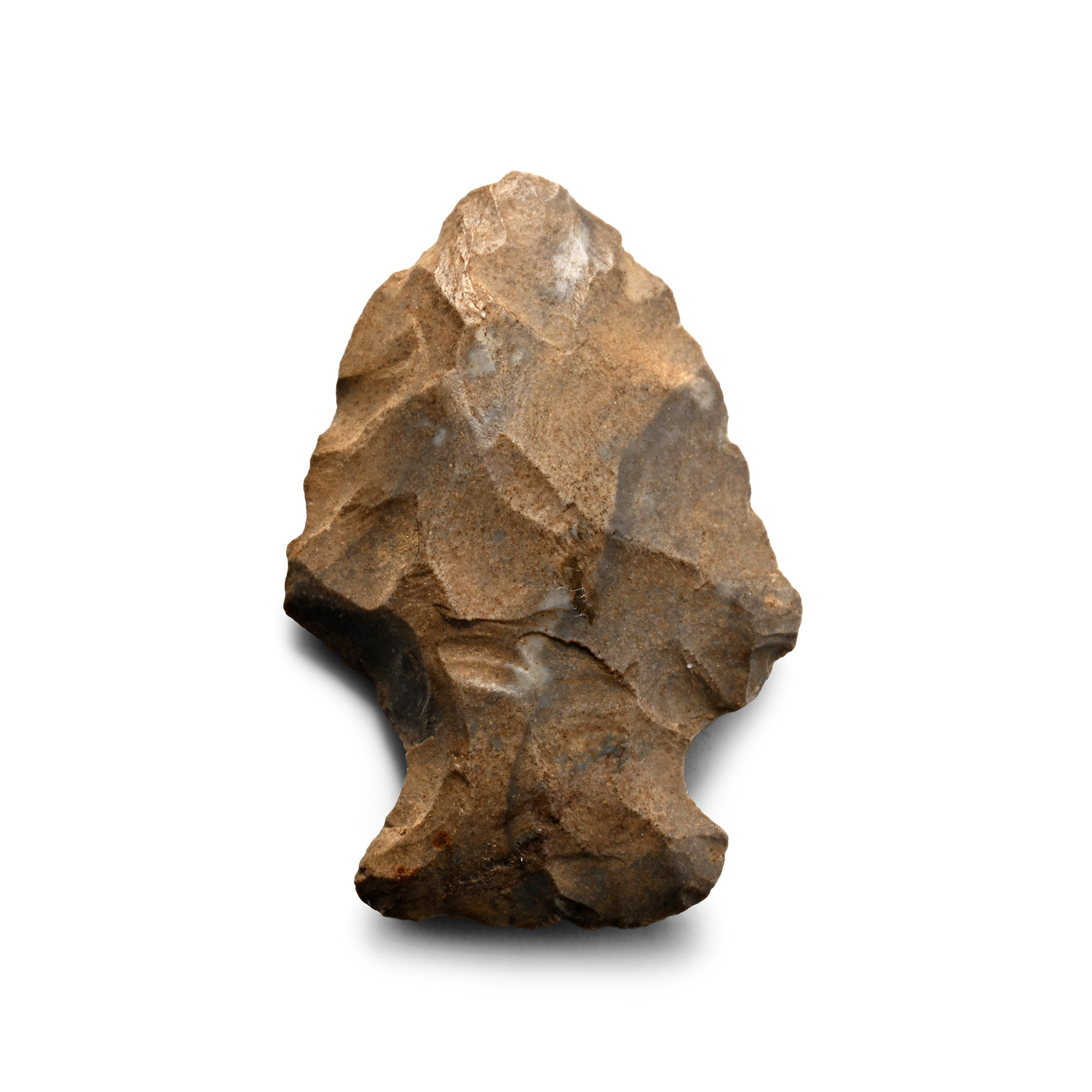
British Stone Age Knapped Flint Arrowhead
NEOLITHIC PERIOD, 4500-3500 B.P.
1 3/8 in. (5.36 grams, 36 mm).
Lentoid in section with triangular tip and fishtail tang. [No Reserve]
ProvenanceFound UK.
From the collection of a Bedfordshire, UK, lady.
TimeLine Auctions follows a vetting process to ensure the authenticity and legality of all items, reinforcing our commitment to integrity and responsible trading. Each antiquity, antique, and coin lot undergoes thorough examination by a vetting committee of at least ten external specialists, professional trade association members, scientists, and archaeologists: Our Vetting Process
AUCTIONS:
TimeLine is a leading auction house specialising in antiquities, ancient art, collectables, natural history, coins, medals, and books. Our auctions offer museums, collectors, historians, and enthusiasts the opportunity to acquire unique and historically significant pieces.
-
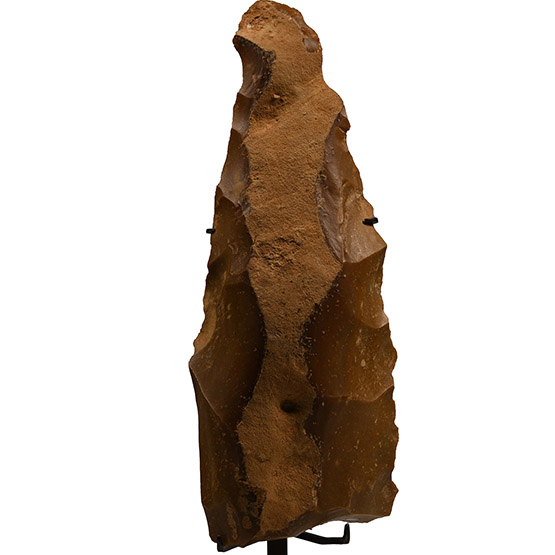
Very Large Stone Age 'Livre de Beurre' from Le Grand Pressigny
Neolithic Period, 5500-2400 B.P.Estimate: £600 - 800 (‡+bp*)
Opening Bid: £325
A substantial flint core or so-called 'Livre de Beurre' with vertical traces of blows on the work side, including one pronounced blade negative extending half way along the stone’s length; cortex remains and core preparation traces on other side; proximal end with impact surface, distal end with rounded point; two bifacial wave to chevron-shaped core edges; flat-prismatic cross-section; raw material for blade production, beige stone (silex) with yellow undertone, cream-coloured patches and spots, slightly shiny surface (origin: Le Grand Pressigny, Dép. Indre-et-Loire, France); old collector's label 'N13310'; supplied with a custom-made stand. 2.62 kg, 30.5 cm (3.79 kg total, 37.5 cm including stand)
Private collection, B.G., Southwest France. Accompanied by a copy of an Art Loss Register certificate no.S00127506. -
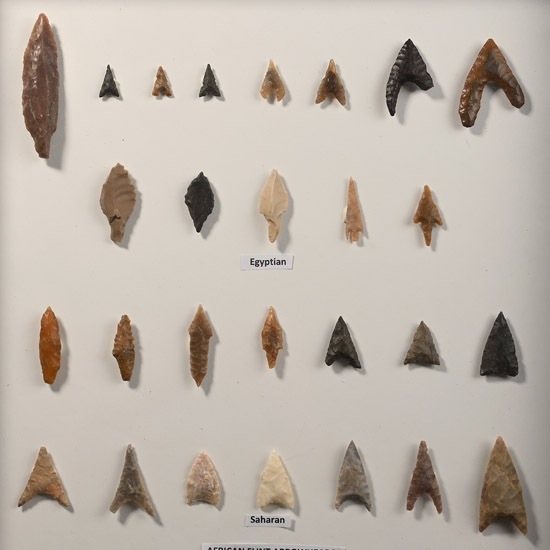
Framed African Stone Age Knapped Arrowhead Collection
Neolithic-Bronze Age Period, circa 6,000-4,000 B.P.Sold for (Inc. bp): £208
Mixed group of various types, including barbed, swallowtail-type, tanged, and others; set in a glazed box frame. 1.14 kg total, 35.5 x 35.5 cm includimg frame
From the collection of Martin Doyle, Leverstock, UK, 1980s-2000s. -
.jpg)
Very Large French Stone Age Mousterian Knapped Flint Knife
Middle Palaeolithic Period, circa 150,000-60,000 B.P.Sold for (Inc. bp): £169
Triangular in profile with remains of cortex to the broad base; made by Neanderthal. 180 grams, 11.3 cm
From Yonne, Bourgogne Franche-Compte Region of France. From a large French collection built up in the early 1900s. Acquired on the European art market. From a private collection.
