
Loading, please wait...
LOT 1609
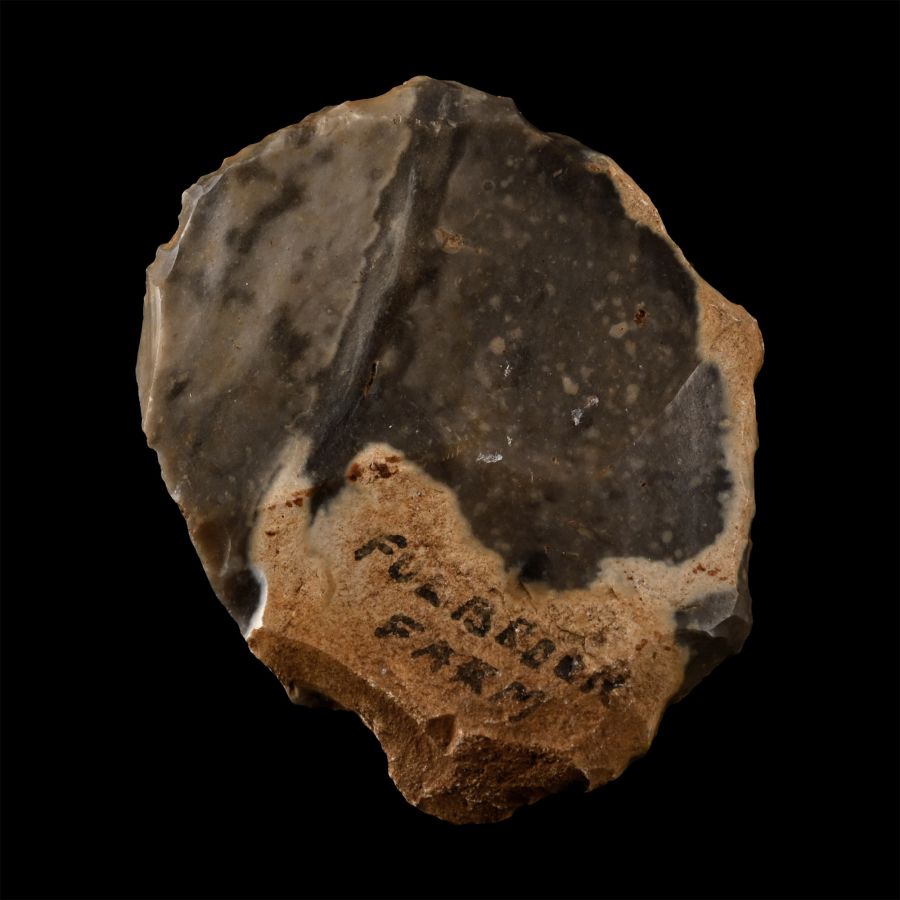
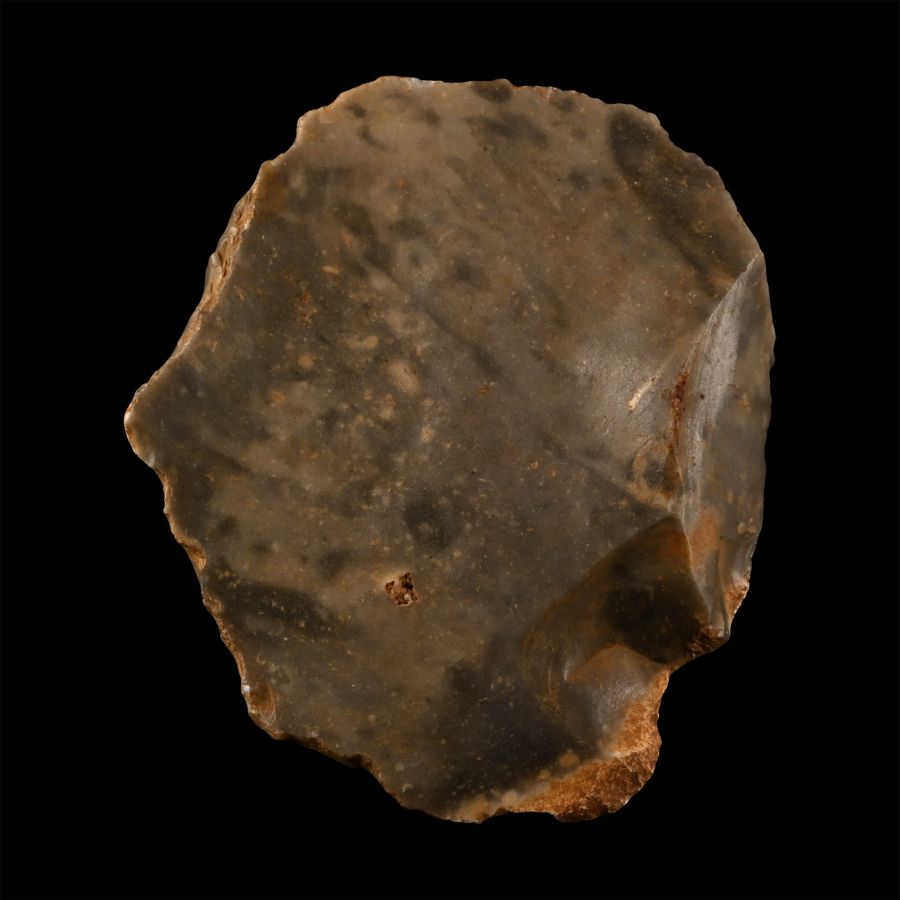
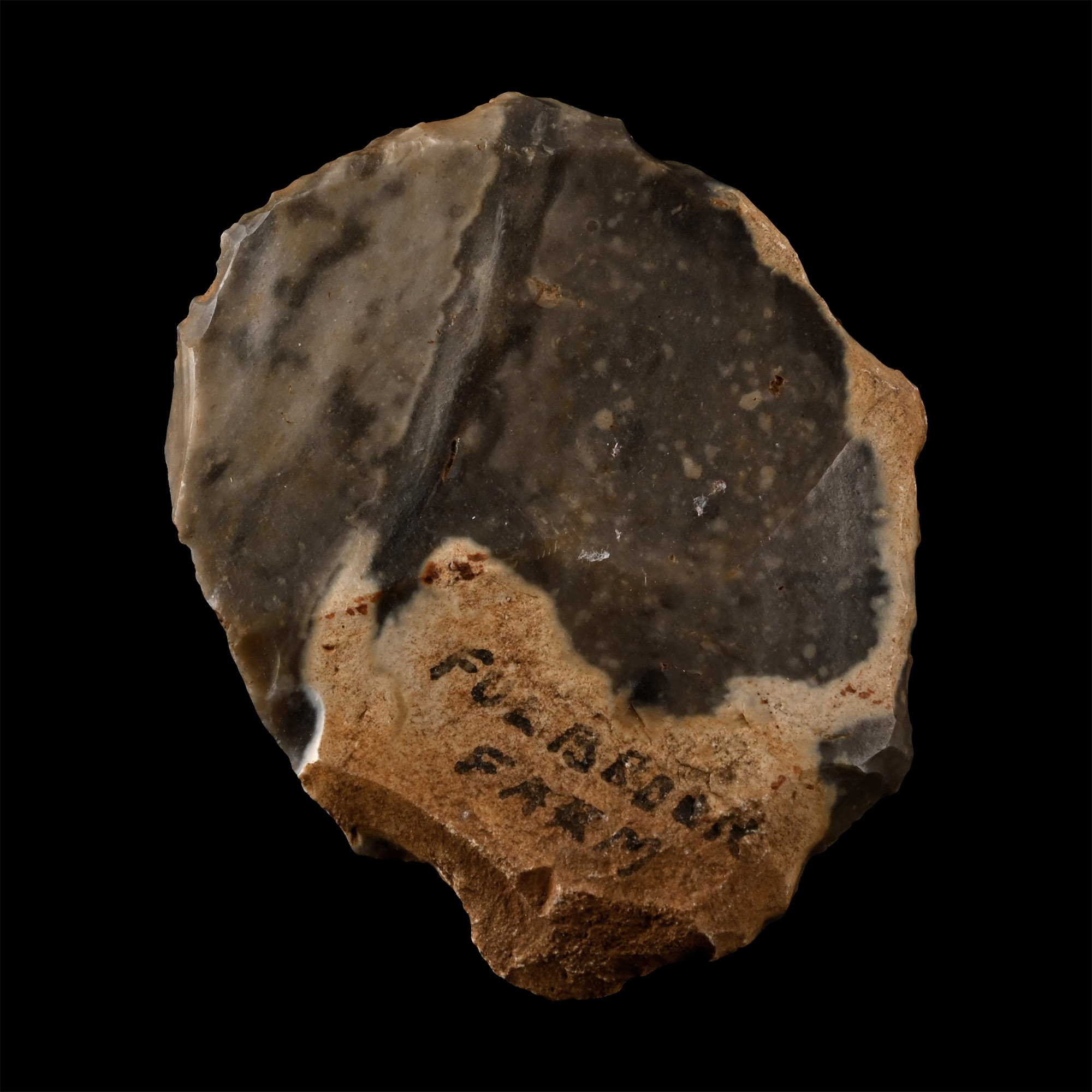
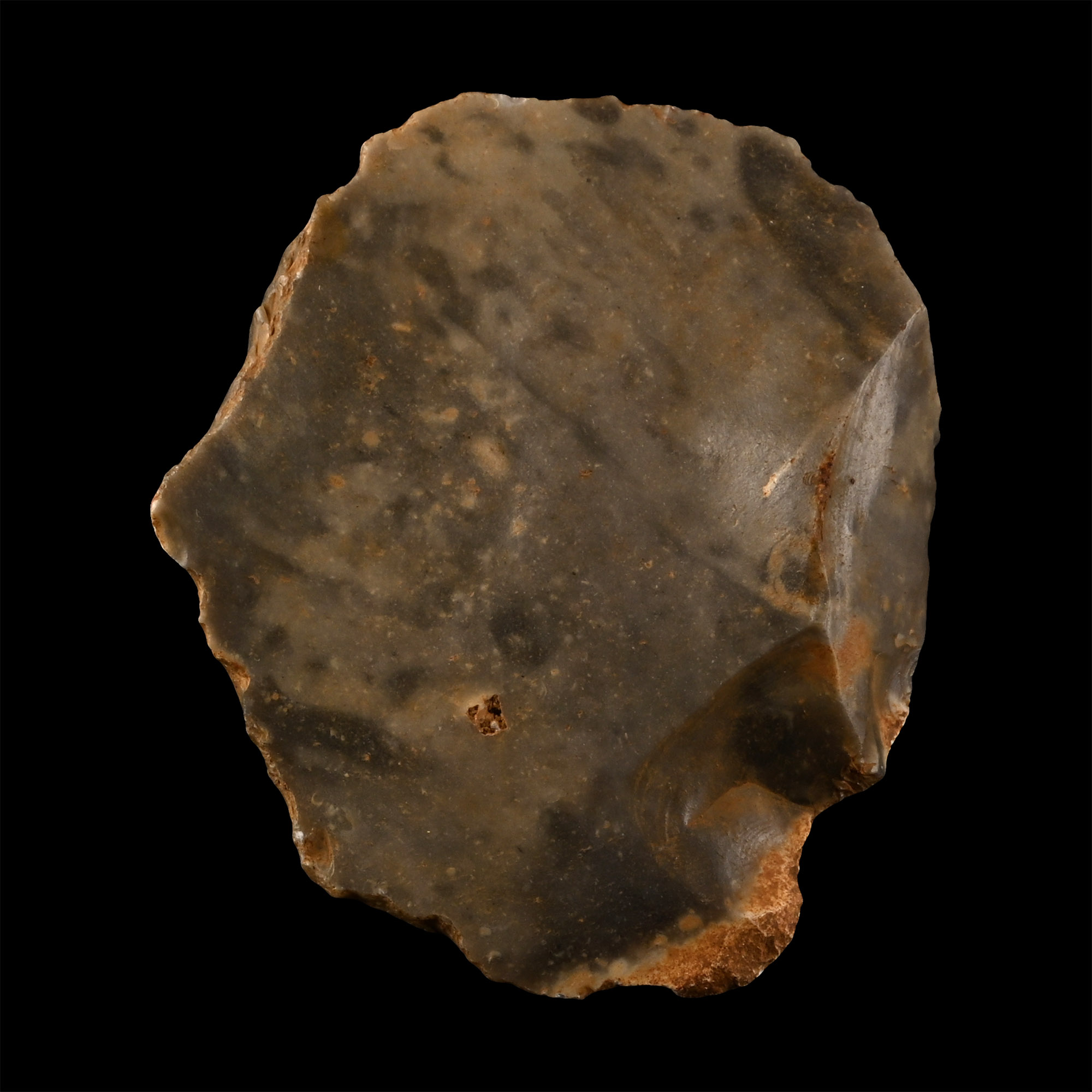
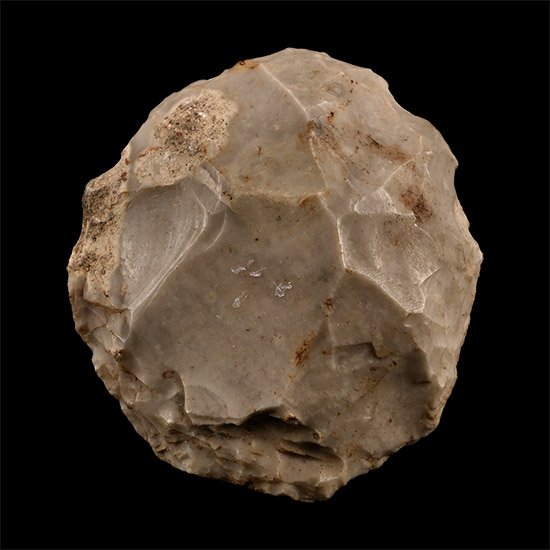
British Stone Age Crescent Flint Scraper from Fullbrook Farm
NEOLITHIC PERIOD, CIRCA 6,000 B.P.
2 in. (20.9 grams, 50 mm).
Flat in section with gentle scoop to the underside; cortex to edge marked 'Fulbrook Farm' [No Reserve]
ProvenanceFound Fullbrook Farm, Surrey, UK, in 1901.
From the collection of Captain Streatfield who helped to fund the archaeology excavations at Farnham, Kent.
After Captain Streatfield passed away in the 1940s, his collection was sold at auction to a gentleman in Kent. The collection was then sold again in the 2020’s via a UK auction house.
CONDITIONTimeLine Auctions follows a vetting process to ensure the authenticity and legality of all items, reinforcing our commitment to integrity and responsible trading. Each antiquity, antique, and coin lot undergoes thorough examination by a vetting committee of at least ten external specialists, professional trade association members, scientists, and archaeologists: Our Vetting Process
AUCTIONS:
TimeLine is a leading auction house specialising in antiquities, ancient art, collectables, natural history, coins, medals, and books. Our auctions offer museums, collectors, historians, and enthusiasts the opportunity to acquire unique and historically significant pieces.
LOT 1609
British Stone Age Crescent Flint Scraper from Fullbrook Farm
Sold for (Inc. bp): £312
-
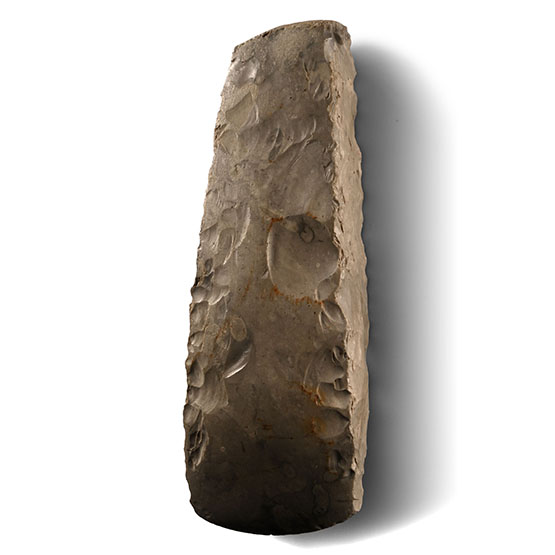
Stone Age Thick-Butted Knapped Axe Head
Nordic Neolithic Period, circa 4000-2000 B.P.Estimate: £350 - 550 (‡+bp*)
Opening Bid: £180
Dressed on all faces, symmetrical in profile with elongated, trapezoidal plan and rectangular cross-section; slightly curved broad sides, slanting neck with slightly rounded cutting edge; narrow faces with traces of retouching, broad faces partly polished at forward end, rear retouched for attachment of the haft; grey flint (silex), marbled in various shades of grey. 663 grams, 18 cm
Ex Dr Siegfried Zimmer, circa 1950. -
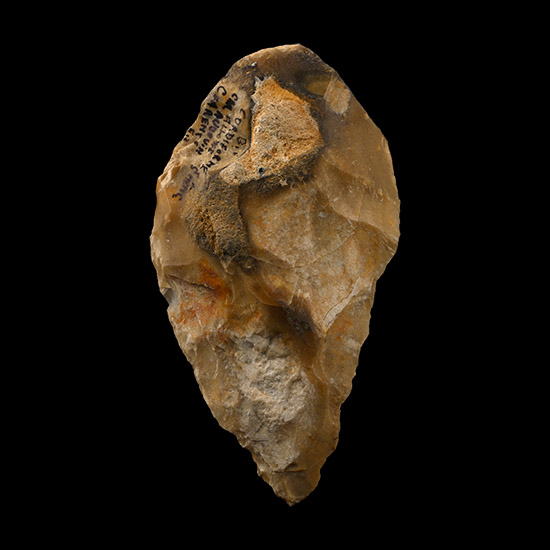
Stone Age Acheulean Flint Handaxe
Lower Palaeolithic Period, circa 600,000-350,000 B.P.Sold for (Inc. bp): £468
Well made with a thin sharp profile, likely made by Homo Heidelbergensis; marked at the butt 'Bif Cordiforme Allonge St. Même Audoin Charente'; mounted on a custom-made stand. 235 grams, 13 cm without stand
From the well regarded long closed quarry site of St Meme, Charente, France. From an old large French collection. Acquired on the European art market. From a UK private collection. -
British Stone Age Turtle Back Flint Scraper from Fullbrook Farm
Neolithic Period, circa 6,000 B.P.Sold for (Inc. bp): £572
Plano-convex in section with intricate retouch around the majority of the piece; marked to the underside 'FP 1921 Fullbrook Farm'. 47.8 grams, 55 mm
Found Fullbrook Farm, Surrey, UK, in 1901. From the collection of Captain Streatfield who helped to fund the archaeology excavations at Farnham, Kent.
Named 'Turtle Back' due to the whole top being worked into a dome. After Captain Streatfield passed away in the 1940s, his collection was sold at auction to a gentleman in Kent. The collection was then sold again in the 2020’s via a UK auction house.
