
Loading, please wait...
LOT 0566
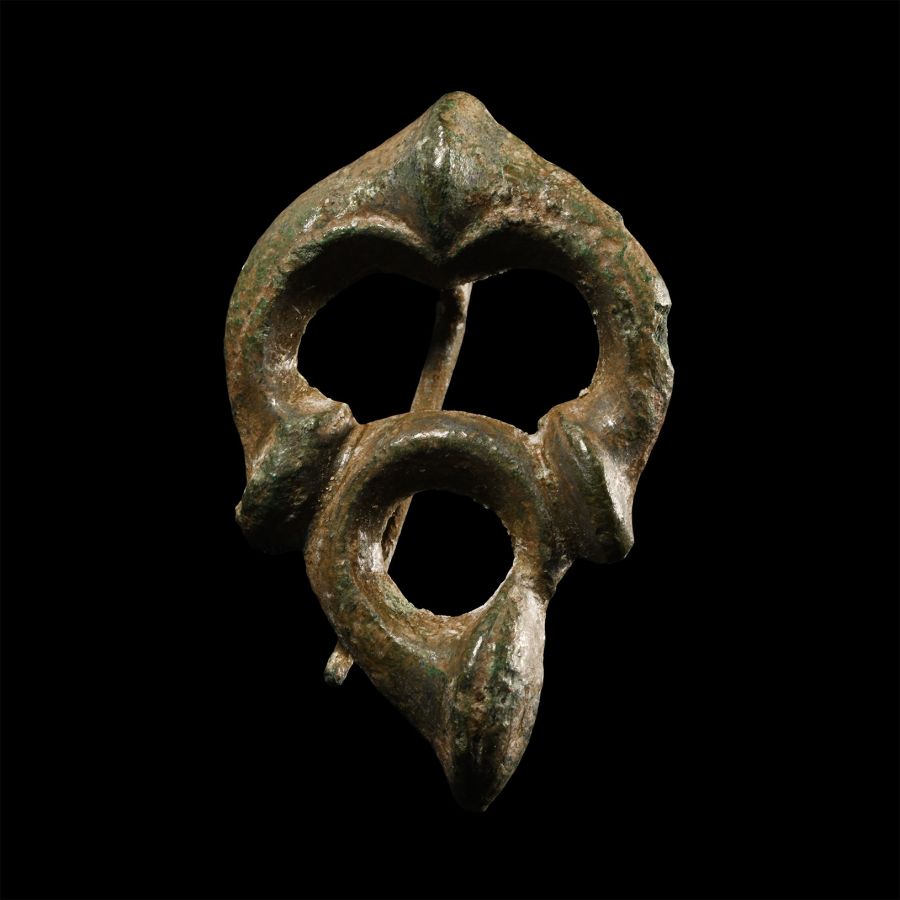
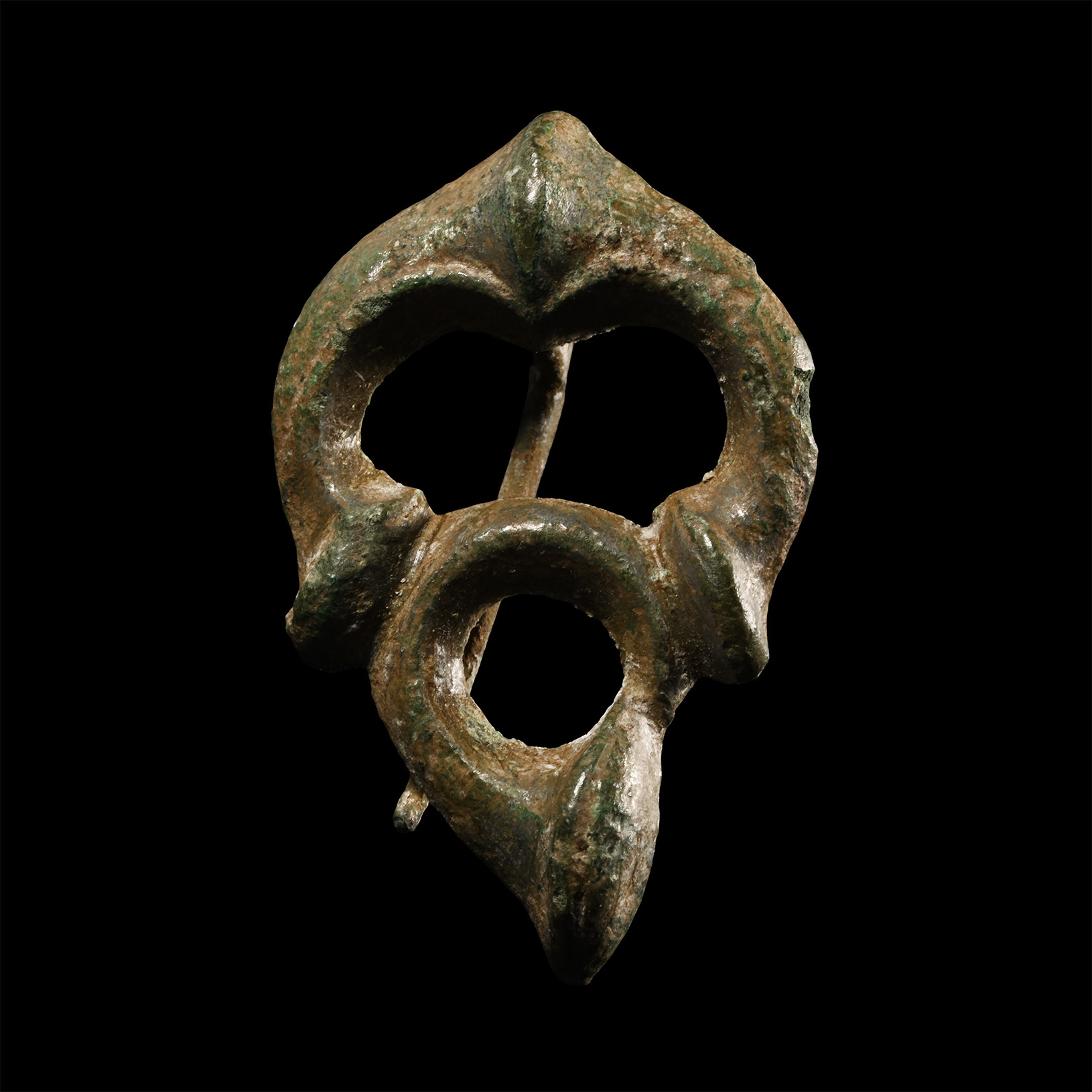
British Roman Military Bronze Trumpet-Whorl Plate Brooch
1ST-2ND CENTURY A.D.
1 3/8 in. (7.19 grams, 35 mm).
With openwork sub-triangular body made up of three curved trumpets motifs; to the reverse the double pin lug supporting the hinged copper alloy pin, and, at the opposite end is a flat longitudinal catch plate. [No Reserve]
ProvenanceFound whilst searching with a metal detector near Conistone with Kilnsey, North Yorkshire, UK, early 2022.
This is a find of note and has been designated to be of Regional importance.
Accompanied by a copy of the British Museum's Portable Antiquities Scheme (PAS) report no.SWYOR-A187CC.
This brooch appears to be related to Mackreth no.11664 (Mackreth 2011, p. 172-173, Type 7c, no.11664, pl.115), which is noted to be uncommon in Britain.
CONDITIONTimeLine Auctions follows a vetting process to ensure the authenticity and legality of all items, reinforcing our commitment to integrity and responsible trading. Each antiquity, antique, and coin lot undergoes thorough examination by a vetting committee of at least ten external specialists, professional trade association members, scientists, and archaeologists: Our Vetting Process
AUCTIONS:
TimeLine is a leading auction house specialising in antiquities, ancient art, collectables, natural history, coins, medals, and books. Our auctions offer museums, collectors, historians, and enthusiasts the opportunity to acquire unique and historically significant pieces.
LOT 0566
British Roman Military Bronze Trumpet-Whorl Plate Brooch
Sold for (Inc. bp): £98
-
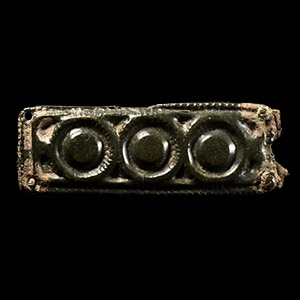
Romano-British Bronze Strap End with Bosses
1st-2nd century A.D.Sold for (Inc. bp): £20
Sheet bronze plaque with pelletted border, three roundel within raised rims, rivet to each corner attaching to the securing plate beneath; old inked collector's find-spot legend 'GRIMSBY'. 6.97 grams, 54 mm
Found Grimsby, UK. -
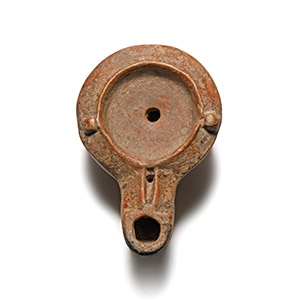
Roman FORTIS Terracotta Oil Lamp
Late 1st century A.D.Sold for (Inc. bp): £124
A factory lamp with flat-topped oval body, broad flat shoulder and small concave plain discus; flat bottom with Latin inscription 'FORTIS'. 77.7 grams, 96 mm
From the collection of a High Wycombe, Buckinghamshire, UK, gentleman, circa 2000.
At the end of the 1st century B.C., in the Po Valley, began the industrial production of Firmalampen, i.e. lamps signed on the bottom in relief noting the place of production or fabrica. The signature FORTIS, visible on this specimen, is one of the most documented and is attributable to the workshop of L. Aemilius Fortis, recently discovered to have been in Mutina (Modena). -
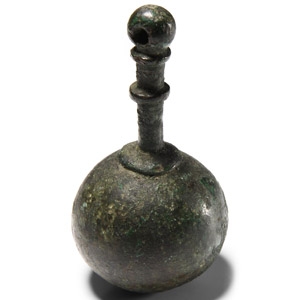
Roman Bronze Trade Weight
Circa 4th-6th century A.D.Sold for (Inc. bp): £91
Comprising a spherical body with shank and pierced knop finial; old collector's label with inked 'ancient Roman / 1st cent. / Exe. minster'. 351 grams, 10.4 cm
From a North London, UK, collection. Ex Simmons Gallery, London E11, UK.
The weight was inserted inside the shaft of a steelyard arm, calibrated on three or more sides with lines and Roman numerals, each providing different scales of pondera (weights).
