
Loading, please wait...
_900x900.jpg "British Roman Bronze Votive Beneficiarius Sceptre")
_200x200.jpg "British Roman Bronze Votive Beneficiarius Sceptre")
.jpg "British Roman Bronze Votive Beneficiarius Sceptre")
LOT 0164
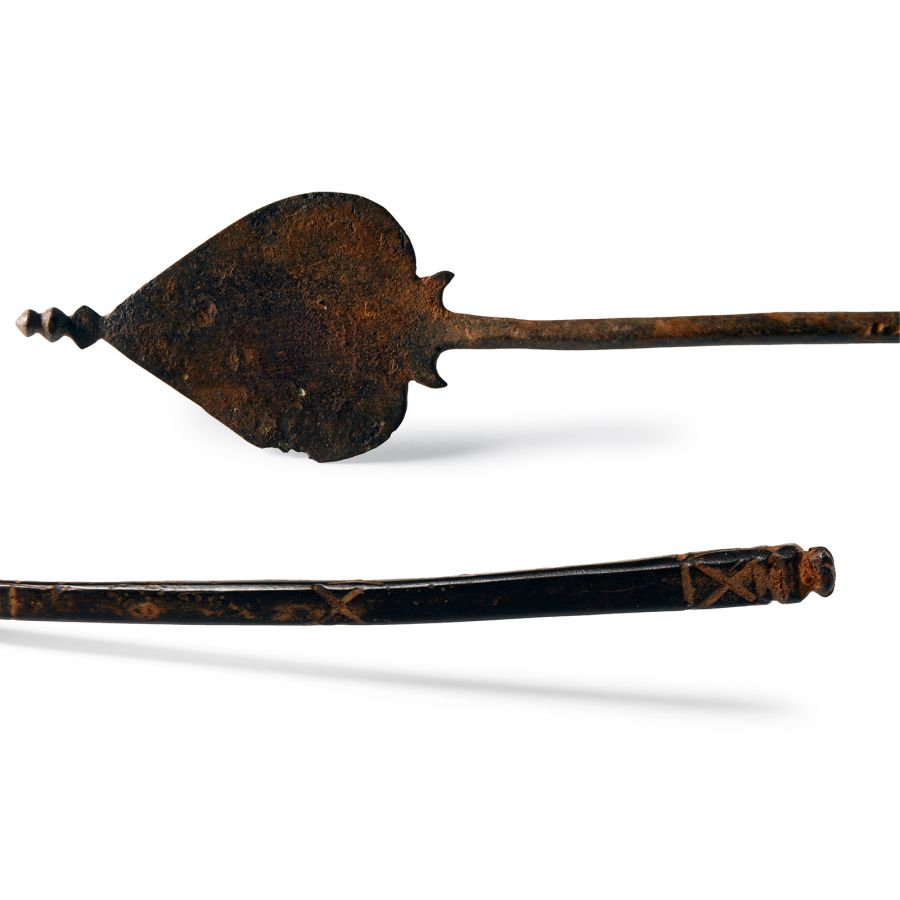
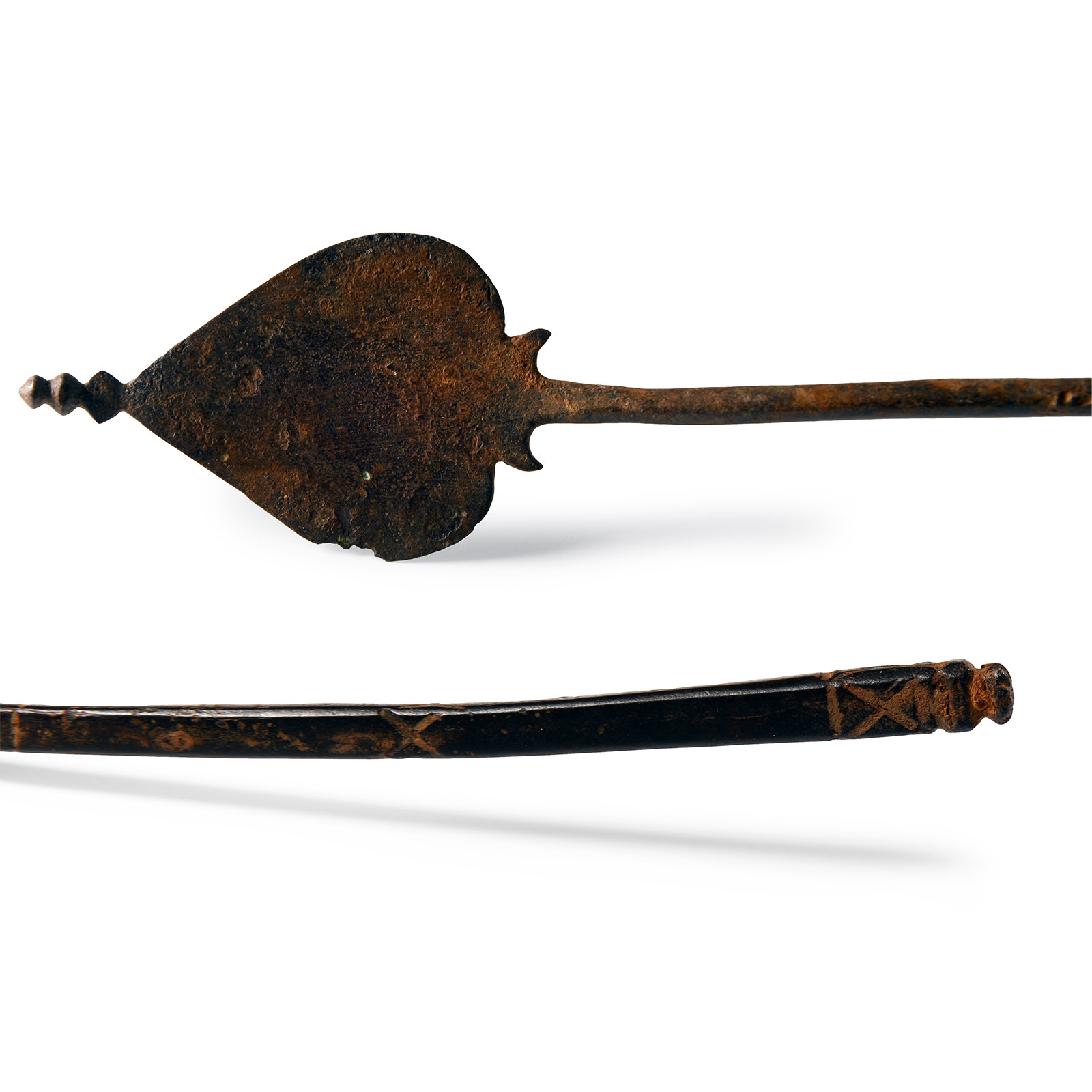
British Roman Bronze Votive Beneficiarius Sceptre
2ND-3RD CENTURY A.D.
19 1/4 in. (62 grams, 49 cm).
The upper part of a Beneficiarius dedicatory spear or sceptre, comprising a circular-section shaft with an ivy leaf finial, a crescent (lunula) below and the point with triple acorn-shaped spheres; the lower end of the shaft square-section and with a rosette for attaching it to the wooden part, engraved with X-motifs and circumferential lines.
ProvenanceFound Cambridgeshire, UK.
Accompanied by an academic report by Dr Raffaele D’Amato.
Cf. Klein M. J., ‘Votivwaffen aus einem Mars-Heiligtum bei. Mainz’, in JRMES,10 (1999), pp. 87–94, fig.1 and 9, for similar votive spearheads; Kovács, P., ‘Beneficiarius Lances and Ring-Pommel Swords in Pannonia’, in Limes XIX, Procedings of the XIXth International Congress of Roman Frontier Studies, Pécs, 2005, pp. 955–70, fig.5 (similar spear represented on the Altar of Müllendorf); D’Amato, R., Sumner, G., Arms and Armour of the Imperial Roman Soldier: From Marius to Commodus, 112 BC-AD 192, London, 2009, fig.258, p.179, for similar specimen; Gaiu, C., ‘The Beneficiarius spearhead from Arcobadara’ in Journal of ancient Art and Archaeology, No.1.3/2014, pp.22-30.
FootnotesThe beneficiarii, within the Roman army, were soldiers exempted from menial duties and acting as orderlies of senior officers; they were also charged with particular duties by governors and generals. Their distinctive insignia were decorated spears, often with a point shaped like an ivy leaf. The military stela from Perinth depicting a 3rd century beneficiarius shows a very similar spear, mounted over a particular structure on the midshaft of the spear.
CONDITIONTimeLine Auctions follows a vetting process to ensure the authenticity and legality of all items, reinforcing our commitment to integrity and responsible trading. Each antiquity, antique, and coin lot undergoes thorough examination by a vetting committee of at least ten external specialists, professional trade association members, scientists, and archaeologists: Our Vetting Process
AUCTIONS:
TimeLine is a leading auction house specialising in antiquities, ancient art, collectables, natural history, coins, medals, and books. Our auctions offer museums, collectors, historians, and enthusiasts the opportunity to acquire unique and historically significant pieces.
-
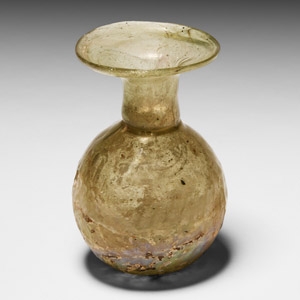
Roman Pale Green Mould Blown Glass Flask
3rd-5th century A.D.Estimate: £250 - 350 (+bp*)
Opening Bid: £125
With bulbous-bodied bearing a chevron motif in relief to the body; the vessel has a short cylindrical neck and broad flange rim; iridescent surfaces. 55 grams, 91 mm high
Fine condition.
Paris collection, 1990s. From an important Paris gallery, France. Ex private Parisian collection. -
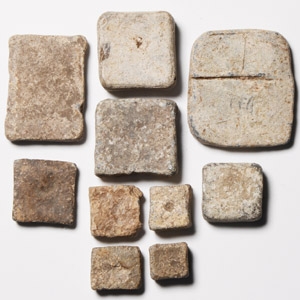
Roman Lead Weight Group
1st-4th century A.D.Sold for (Inc. bp): £33
Tabular in form with punched dimple, incised lines and other markings. 160 grams total, 9-30 mm
Ex Simmons Gallery, London E11, UK, in the 1990s. From a North London collection. -
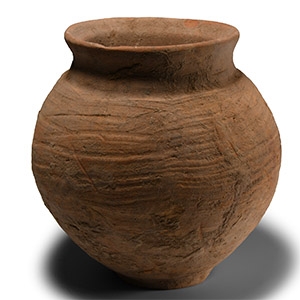
Roman Terracotta Jar
1st-4th century A.D.Sold for (Inc. bp): £72
With globular profile and broad everted rim, roughened circumferential banding to the shoulder. 896 grams, 17 cm wide
Acquired 1980-2015. Ex Abelita family collection.
