
Loading, please wait...

LOT 2621
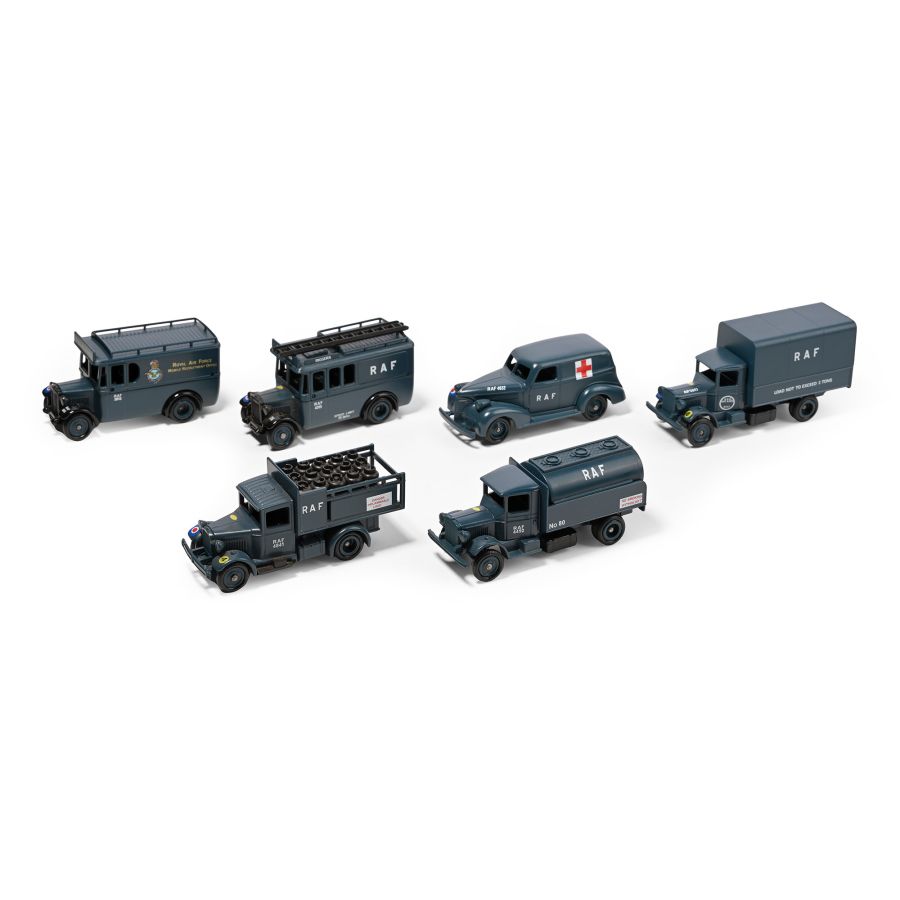
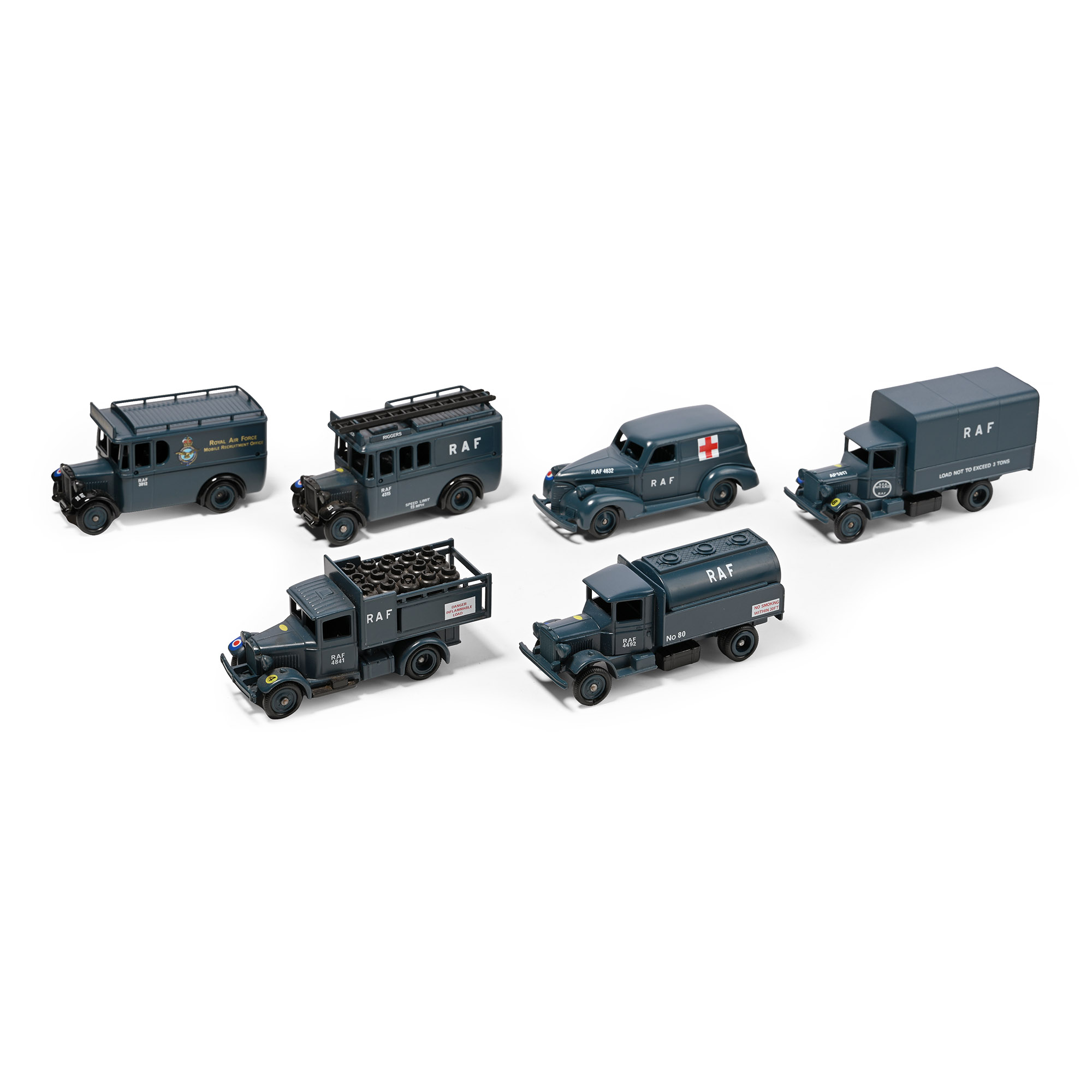
British RAF WWII Die Cast Toy Vehicle Group
20TH CENTURY A.D.
3 1/4 - 3 3/4 in. (450 grams total, 81-97 mm).
Comprising six Lledo Days Gone army vehicles, including an ambulance, workshop delivery truck, RAF recruitment office, and others. [6, No Reserve]
ProvenanceAcquired on the UK art market.
Property of an Essex militaria collector.
From the private collection of a Kent, UK, gentleman.
TimeLine Auctions follows a vetting process to ensure the authenticity and legality of all items, reinforcing our commitment to integrity and responsible trading. Each antiquity, antique, and coin lot undergoes thorough examination by a vetting committee of at least ten external specialists, professional trade association members, scientists, and archaeologists: Our Vetting Process
AUCTIONS:
TimeLine is a leading auction house specialising in antiquities, ancient art, collectables, natural history, coins, medals, and books. Our auctions offer museums, collectors, historians, and enthusiasts the opportunity to acquire unique and historically significant pieces.
LOT 2621
British RAF WWII Die Cast Toy Vehicle Group
Estimate £20 - 30€23 - 35 (for guidance only)$27 - 41 (for guidance only)
Opening Bid
£5 (EUR 6; USD 7) +BP*
-
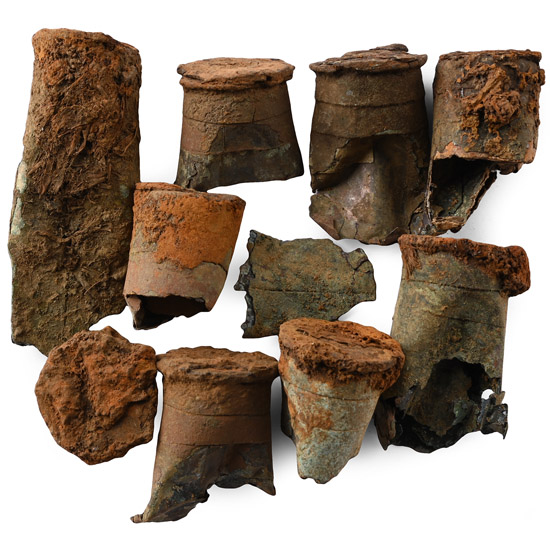
Anglo-Zulu War Artefacts from the Battle of Khambula
Circa 29th March 1879 A.D.Estimate: £30 - 40 (+bp*)
Opening Bid: £5
A collection of nine Boxer .450 brass cartridge bullet cases, used in Martini-Henry rifles during the battle between British forces and the main Zulu army. 79 grams total, 18-54 mm
Found by local Zulu People living at Khambula, South Africa, 1990s-early 2000s. Ian Wilkinson collection, Nottinghamshire, UK, formed since 1985.
The battle resulted in a heavy defeat for the Zulus, who had been full of confidence from their earlier victories against the British at Isandlwana and Hlobane. -
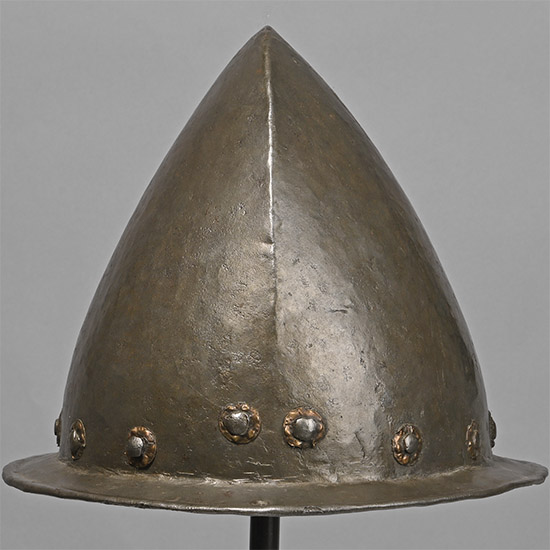
A 'Spanish' Iron Morion-Cabasset Style Helmet
20th century A.D.Estimate: £500 - 700 (+bp*)
Opening Bid: £5
With tall carinated bowl, wide brim with rolled edge and punched 'A' proof-mark at the brow; row of domed rivets above the brim, each with a rosette washer to the outside and a small rove to the inside, securing a (fragmentary) fabric liner to the inner face of the bowl; old repair to the inner face at the apex. 1.25 kg, 26 cm wide
From the private collection of Peter Clayton, FCILIP, Dip, Arch, FSA, FRNS, Hemel Hempstead, Hertfordshire, UK; formed since the late 1950s.
The cabasset-morion was worn by infantry and light cavalry from the mid-sixteenth century to the seventeenth century. It is characterised by its flared brim and ridged bowl. The cabasset usually features a hooked spike at the apex, the morion a tall comb; the present piece combines elements of both designs. -
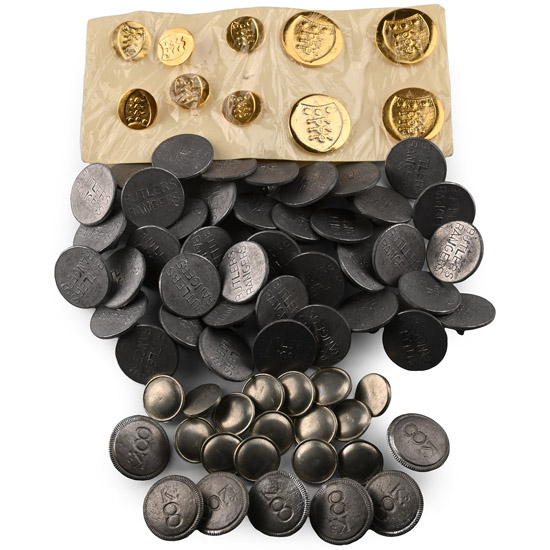
American Civil War and Other Re-enactment Pewter Button Group
20th century A.D.Estimate: £20 - 30 (+bp*)
Opening Bid: £5
Including American Loyalist Butler's Rangers [40 pieces], British Royal Artillery [10 pieces], and others plain [15 pieces]. 561 grams total, 15-24 mm
From the private collection of author and historian Dr DeWitt Bailey, one of the global authorities on the confederate army in the US civil war; thence by descent to his grandson.
Butler's Rangers was a Loyalist provincial military unit of the American Revolutionary War, raised by John Butler.
