
Loading, please wait...


LOT 1979
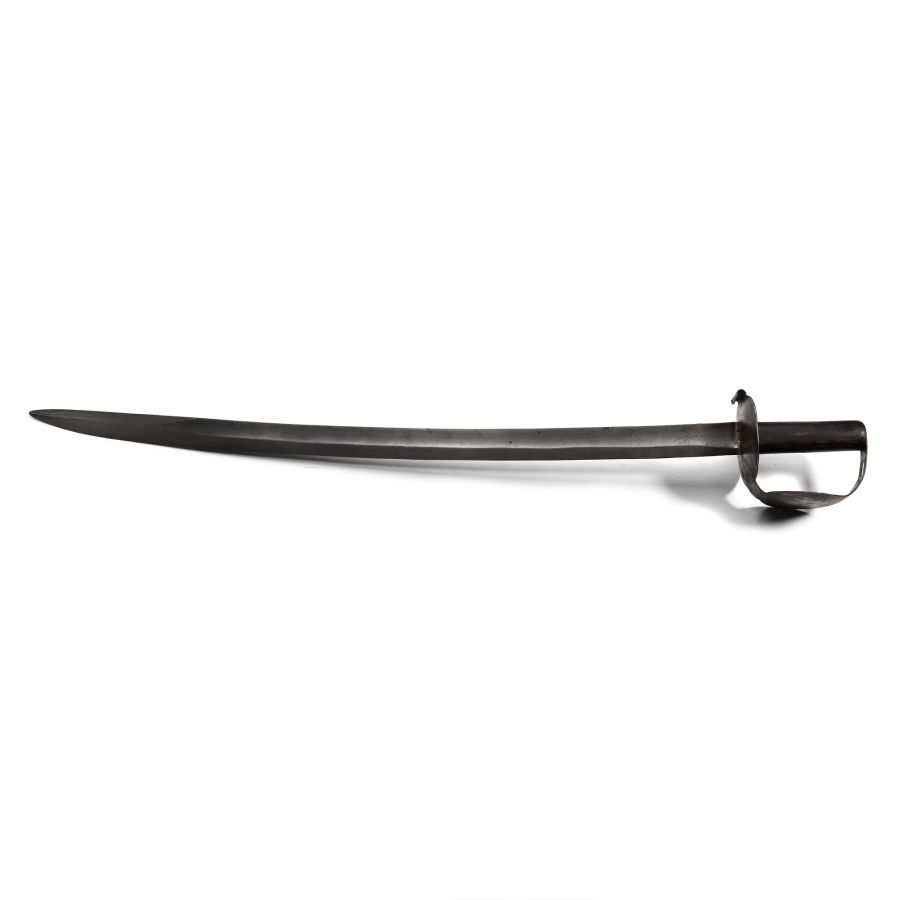
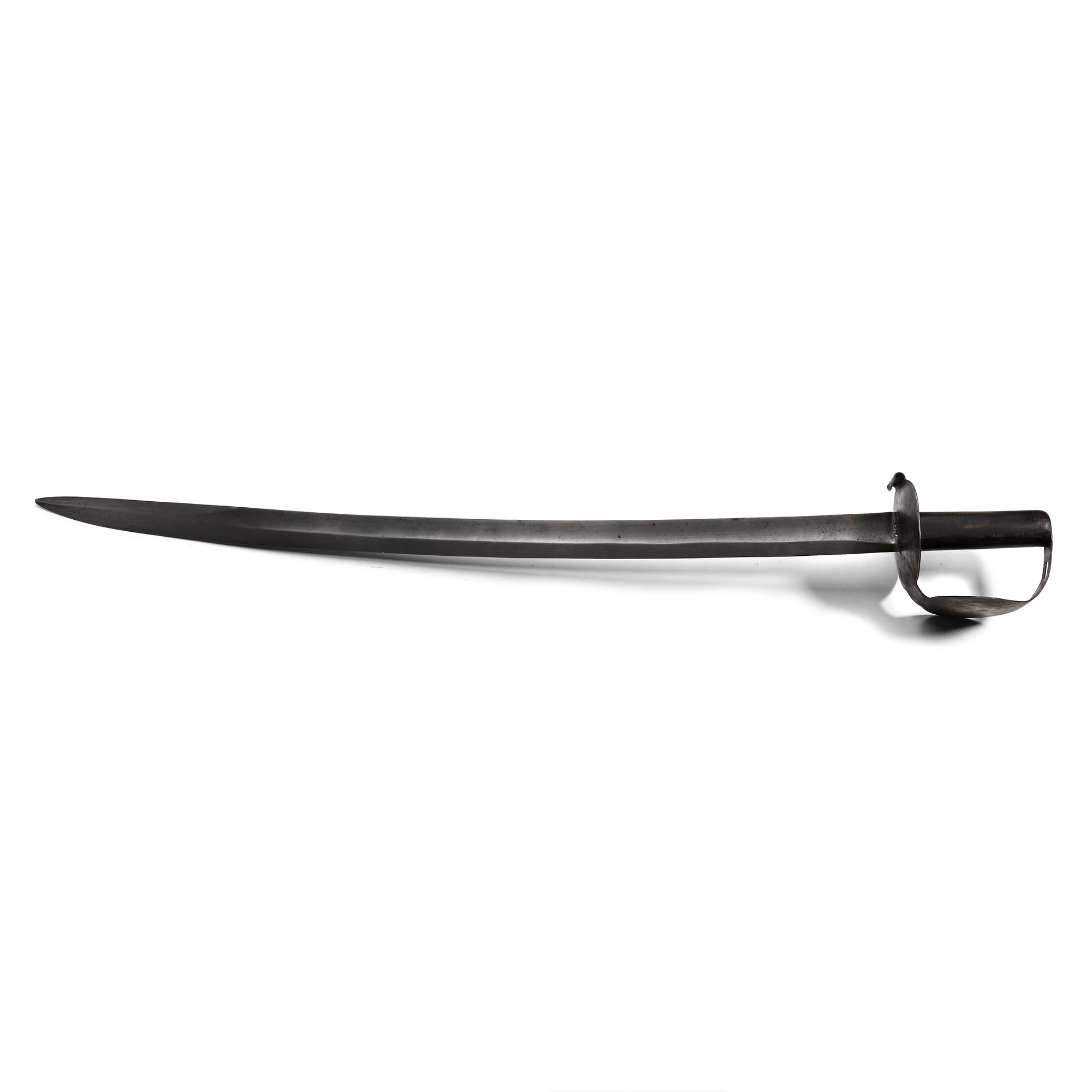
British Napoleonic 'Battle of Trafalgar Period' Naval Boarding Cutlass
1801-1840 A.D.
82 5/8 in. (883 grams, 83 cm).
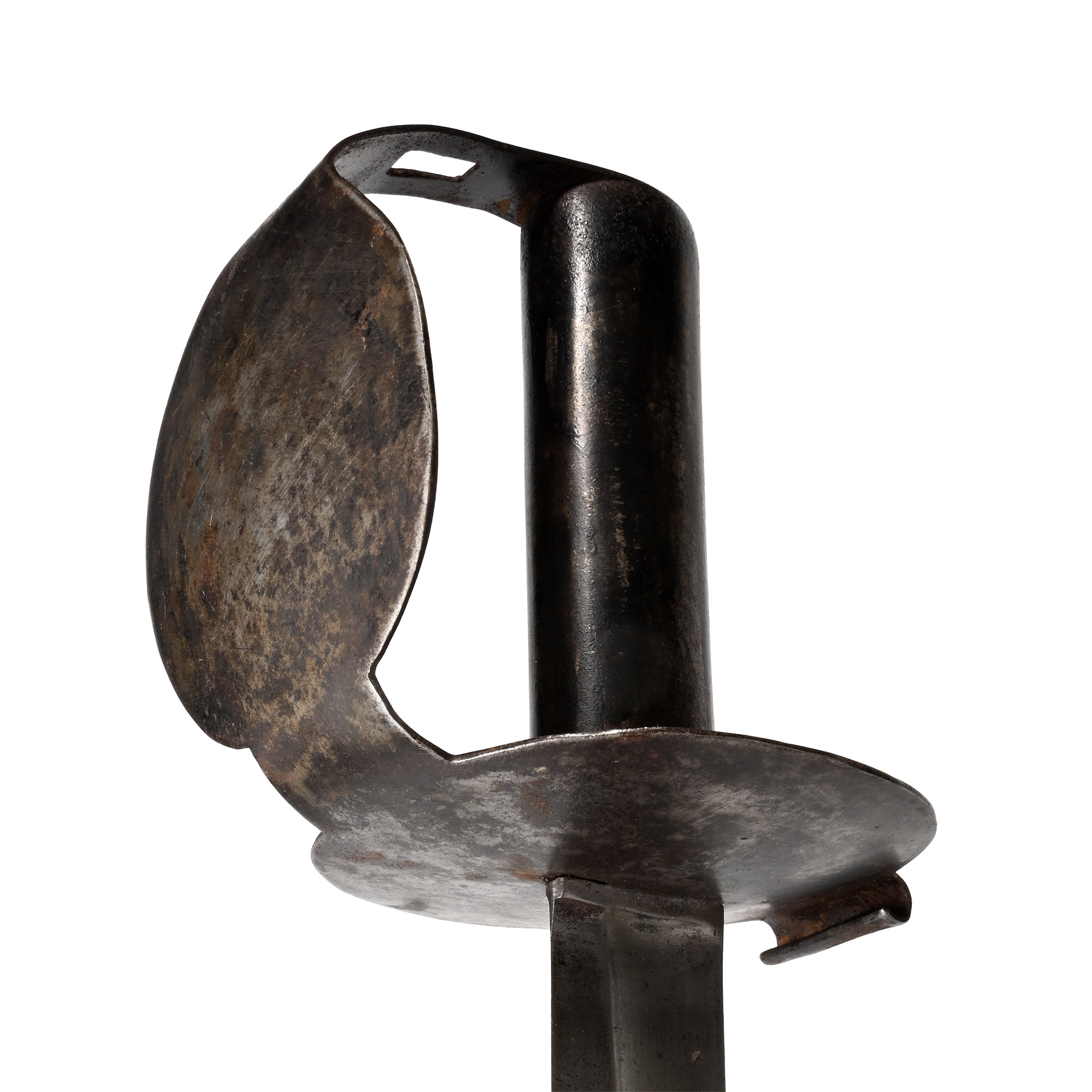
Broad slightly curved blade with thick back and shallow fuller, narrow pointed tip; hollow iron grip with 'figure-of-eight' guard protecting the gripping hand and the knuckles; 1801-4 patent type; with old collector's tag 'British Figure of Eight Naval boarding cutlass - smooth grip pattern 1801-4 (then corrugated grip 1840)' [No Reserve]
ProvenanceFrom the private collection of Peter Clayton, FCILIP, Dip, Arch, FSA, FRNS, Hemel Hempstead, Hertfordshire, UK; formed since the late 1950s.
PublishedExhibited at the Harwich Museum, Harwich, Essex, UK, 7th October 2026-9th December 2026; accompanied by a copy of a photograph of the artefacts on display.
FootnotesThe hilt pattern was replaced in 1840 by a type with similar guard but with a ribbed grip.
CONDITIONTimeLine Auctions follows a vetting process to ensure the authenticity and legality of all items, reinforcing our commitment to integrity and responsible trading. Each antiquity, antique, and coin lot undergoes thorough examination by a vetting committee of at least ten external specialists, professional trade association members, scientists, and archaeologists: Our Vetting Process
AUCTIONS:
TimeLine is a leading auction house specialising in antiquities, ancient art, collectables, natural history, coins, medals, and books. Our auctions offer museums, collectors, historians, and enthusiasts the opportunity to acquire unique and historically significant pieces.
LOT 1979
British Napoleonic 'Battle of Trafalgar Period' Naval Boarding Cutlass
Estimate £500 - 700€580 - 810 (for guidance only)$680 - 950 (for guidance only)
-
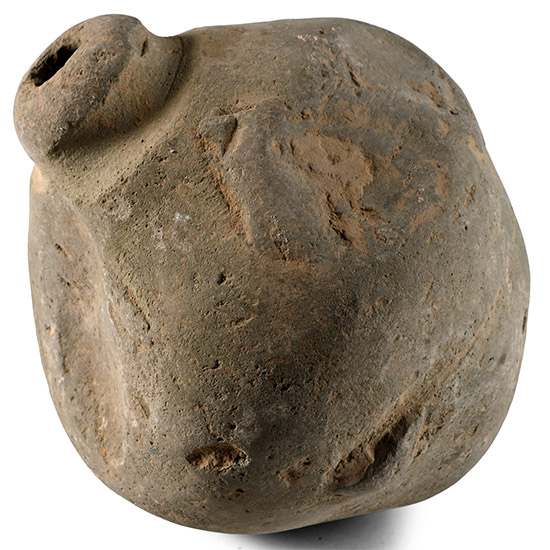
Byzantine 'Greek Fire' Ceramic Fire Bomb or Hand Grenade
9th-11th century A.D.Estimate: £70 - 90 (+bp*)
Bids: 1 | Current Bid: £5
Bulbous body with rounded base and domed filler hole; intended to be filled with explosive liquid and a wick, and used as a hand grenade. 590 grams, 10.3 cm
Ex important collection of weaponry, London, UK, 1980-1990s. Accompanied by an academic paper by military specialist Dr Raffaele D'Amato, dated 15 July 2019 and titled 'Eastern Roman Empire - Greek Fire Bomb or Hand Grenade (μεσαίον kακάβιον) 9th-11th century AD'.
Apart from the use of siphons or manual flame-throwers called cheirosiphona, special corps of Roman soldiers employed terracotta grenades, in the form of small jars, abundantly evidenced in archaeological excavations. They were called μεσαία kακαβιά or κυτροκακάβια, where the former had a bulbous shape and the latter a more cylindrical form. -
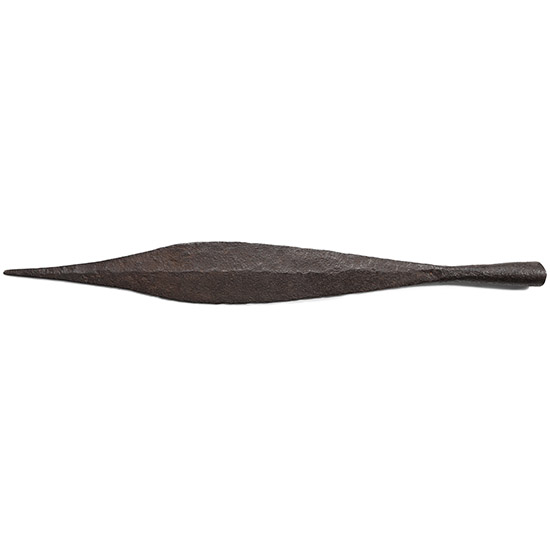
Large Sudanese Socketted Spearhead
Late 19th-early 20th century A.D.Estimate: £60 - 80 (+bp*)
Opening Bid: £5
Large leaf-shaped blade with extended and rounded tip, thick neck, hand-forged split socket with rounded lip. 935 grams, 60 cm
From the private collection of Peter Clayton, FCILIP, Dip, Arch, FSA, FRNS, Hemel Hempstead, Hertfordshire, UK; formed since the late 1950s. -
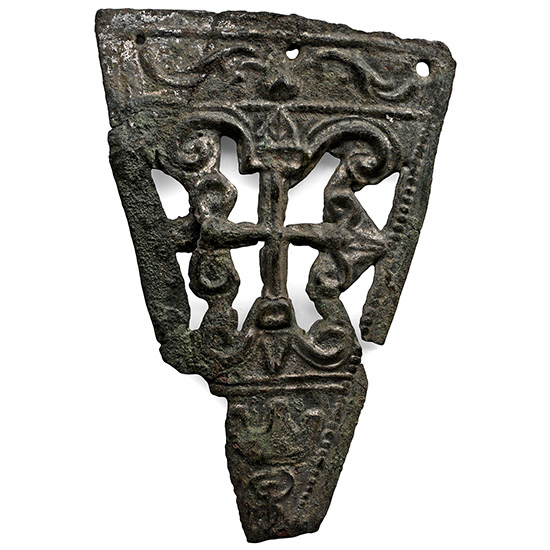
Roman Tinned Bronze Mainz-Type Gladius Sword Chape
Circa 1st century A.D.Estimate: £400 - 600 (+bp*)
Opening Bid: £75
Triangular in plan with repoussé ornament; outer frame with bands of pellets enclosing decorative panels: above, acanthus scrolls with tendrils emanating from a central vase; in the middle, openwork cross with acanthus scrolls; in the base, a pelta and other motifs; three fixing holes at the upper edge, apex absent; inked '693' notation. 11.84 grams, 83 mm
Ex Wiltshire, UK, collection, 1990s.
