
Loading, please wait...
LOT 1147
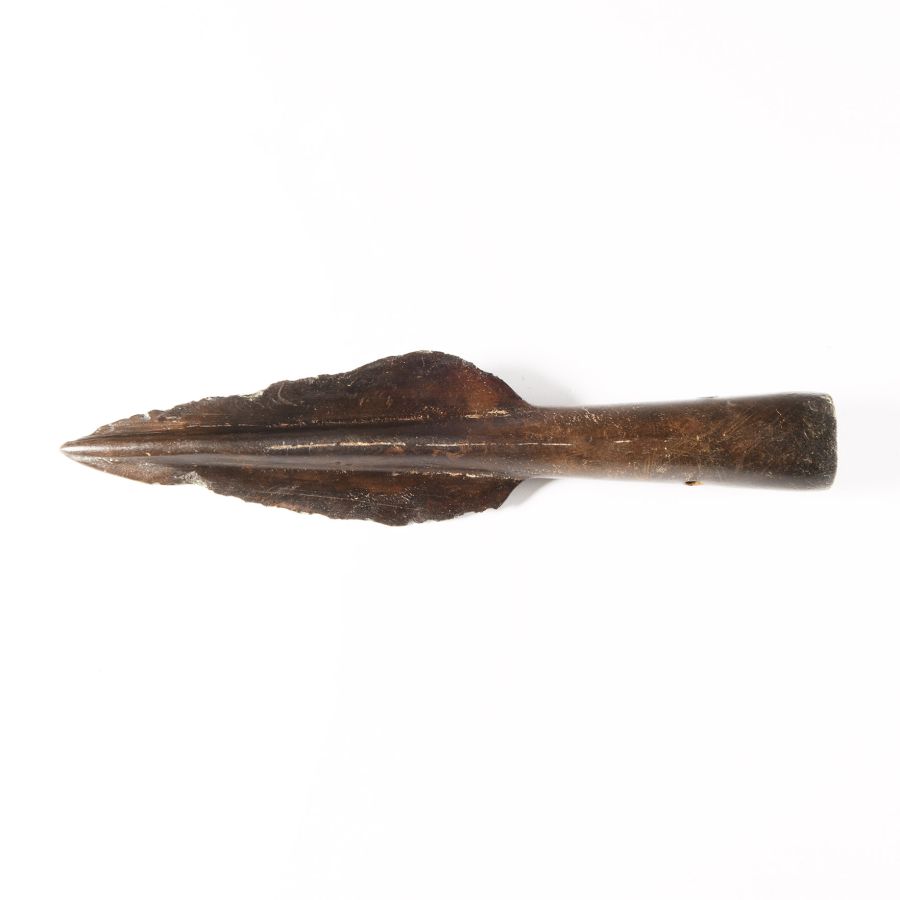
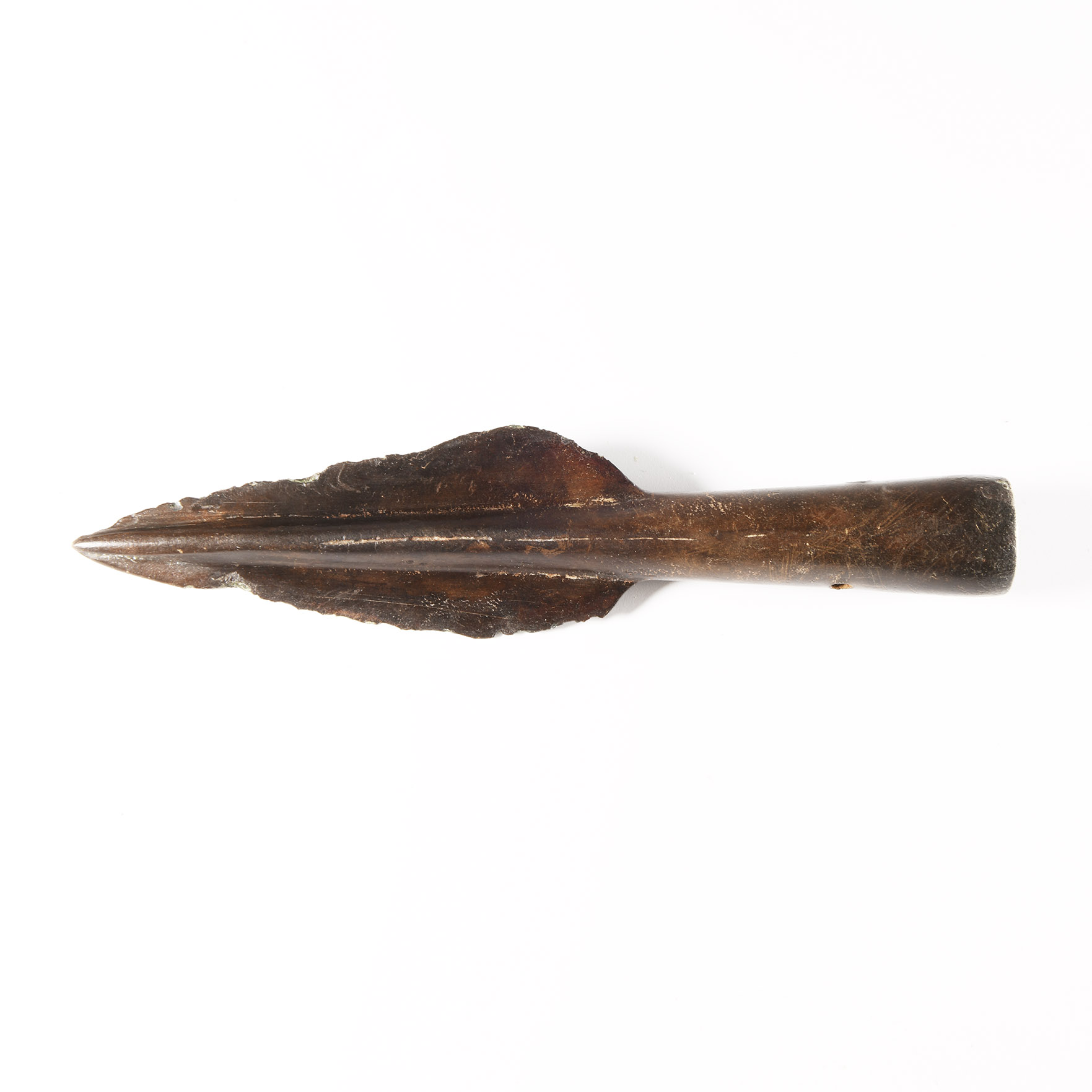
British Late Bronze Age Socketted Spearhead
CIRCA 1100-800 B.C.
6 5/8 in. (130 grams, 16.9 cm).
Davis Group 11 type, comprising a leaf shaped blade with a chamfered edge, and two circular peg holes on both sides of the socket. [No Reserve]
ProvenanceFound whilst searching with a metal detector near Rylstone, North Yorkshire, UK, circa 2018.
Accompanied by a copy of the British Museum's Portable Antiquities Scheme (PAS) report no.YORYM-E5C837.
TimeLine Auctions follows a vetting process to ensure the authenticity and legality of all items, reinforcing our commitment to integrity and responsible trading. Each antiquity, antique, and coin lot undergoes thorough examination by a vetting committee of at least ten external specialists, professional trade association members, scientists, and archaeologists: Our Vetting Process
AUCTIONS:
TimeLine is a leading auction house specialising in antiquities, ancient art, collectables, natural history, coins, medals, and books. Our auctions offer museums, collectors, historians, and enthusiasts the opportunity to acquire unique and historically significant pieces.
-
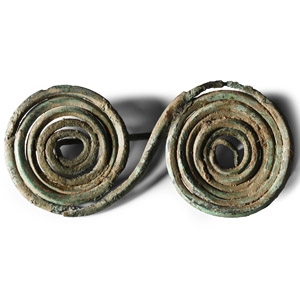
Bronze Age Spectacle Brooch
Circa 10th-6th century B.C.Sold for (Inc. bp): £130
Composed of two coiled wire discs with integral loop between; repaired. 15.4 grams, 80 mm
Acquired on the UK art market before 2000. Property of a Surrey, UK, collector. -
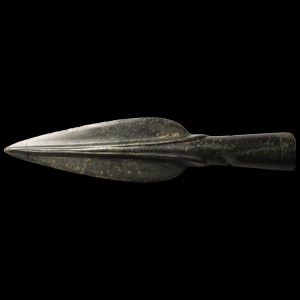
Late Bronze Age Socketted Spearhead
Circa 9th-7th century B.C.Sold for (Inc. bp): £520
Leaf-shaped blade with a ribbed raised central ridge. 118 grams, 17.5 cm
From the collection of Dr Günter Wiedner, Bavaria, Germany, 1980s-2015. Property of an East Sussex, UK, private collector.
These kind of spearheads are similar to the spearheads found in Irish Late Bronze Age hoards of the Dowris period, although there are no channelled blades. -
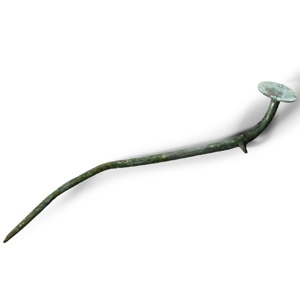
Bronze Age British Flat-Topped Cloak Pin
1500-900 B.C.Sold for (Inc. bp): £65
With curved shank, broad disc finial, loop to the underside. 21.9 grams, 16 cm
Found near York, UK, circa 2010.
