
Loading, please wait...
LOT 1772
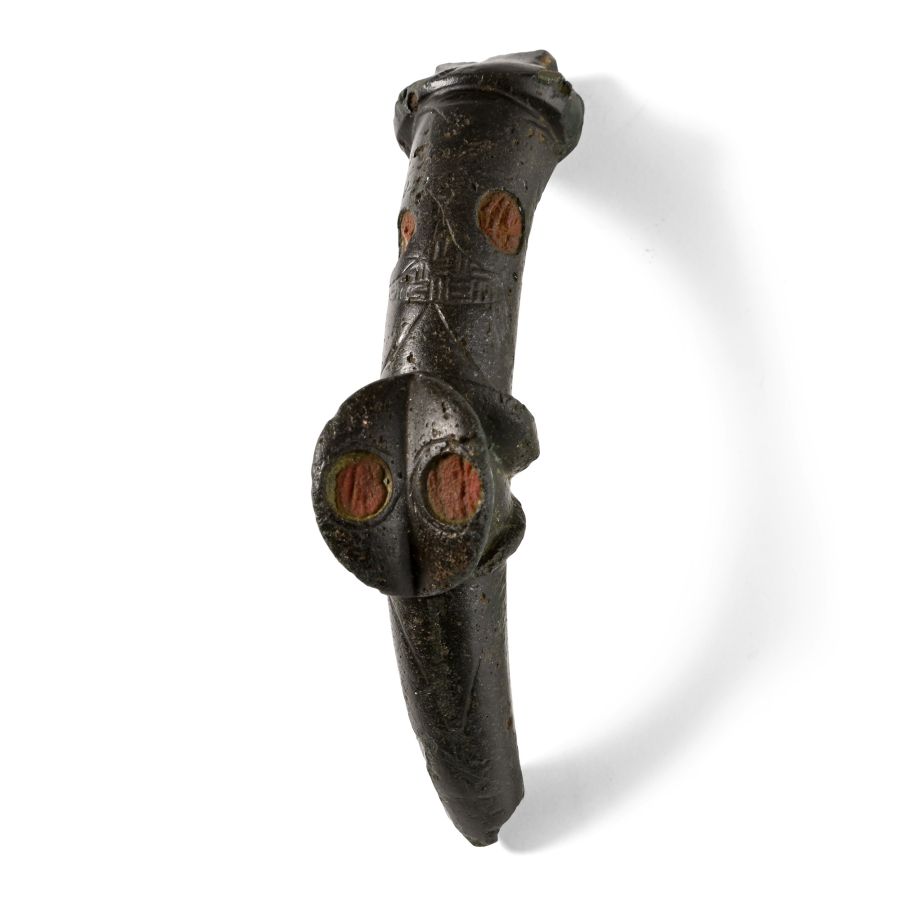
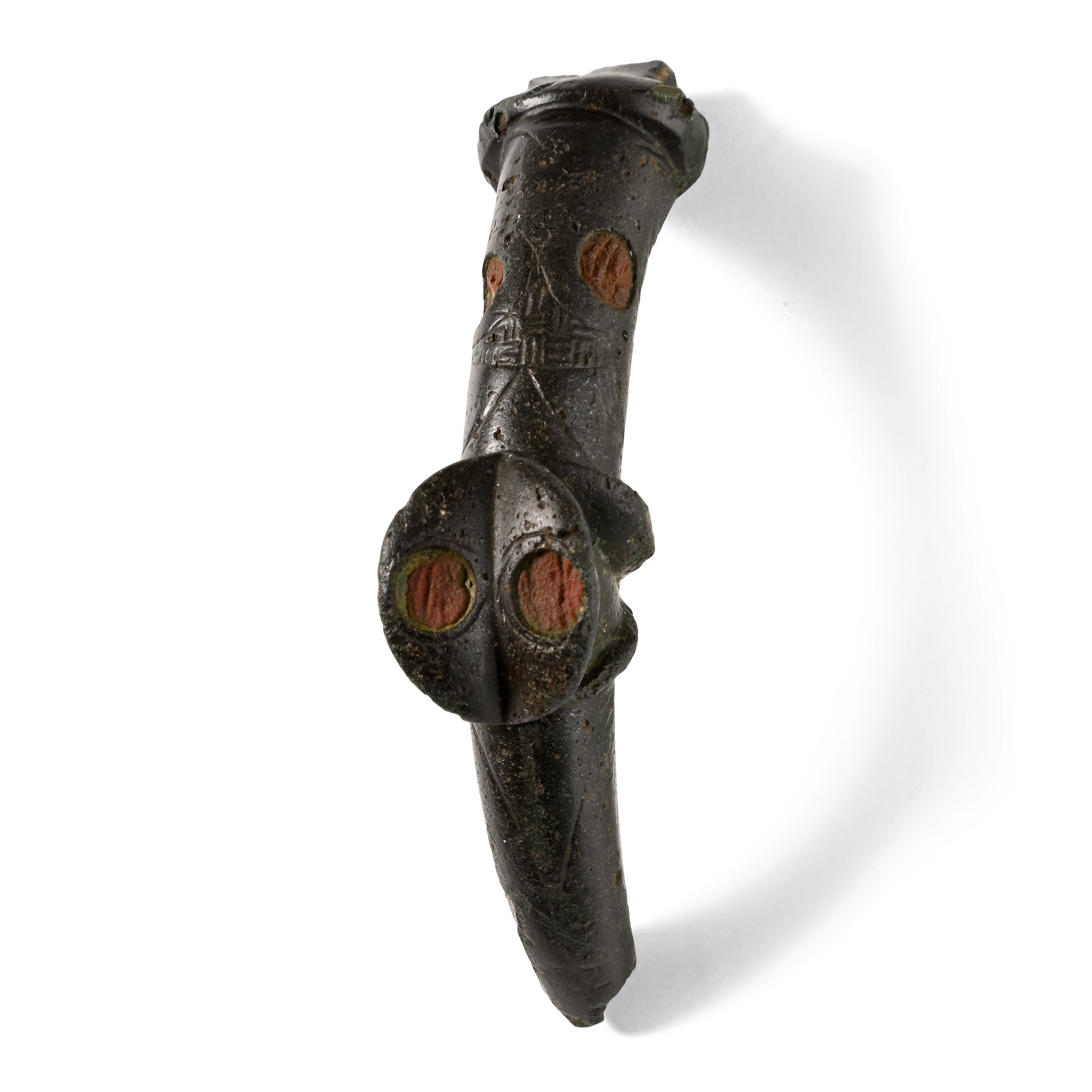
British Celtic Enamelled Bronze Terret Ring Section
IRON AGE, 1ST CENTURY B.C.-1ST CENTURY A.D.
2 5/8 in. (54.9 grams, 68 mm).
Curved in profile and tapering, round in section with complex intersecting curved flanges; panels of hatched and pointillé detailing, recessed roundels with red enamel fill. [No Reserve]
ProvenanceFound UK.
From the collection of a Bedfordshire, UK, lady.
TimeLine Auctions follows a vetting process to ensure the authenticity and legality of all items, reinforcing our commitment to integrity and responsible trading. Each antiquity, antique, and coin lot undergoes thorough examination by a vetting committee of at least ten external specialists, professional trade association members, scientists, and archaeologists: Our Vetting Process
AUCTIONS:
TimeLine is a leading auction house specialising in antiquities, ancient art, collectables, natural history, coins, medals, and books. Our auctions offer museums, collectors, historians, and enthusiasts the opportunity to acquire unique and historically significant pieces.
-
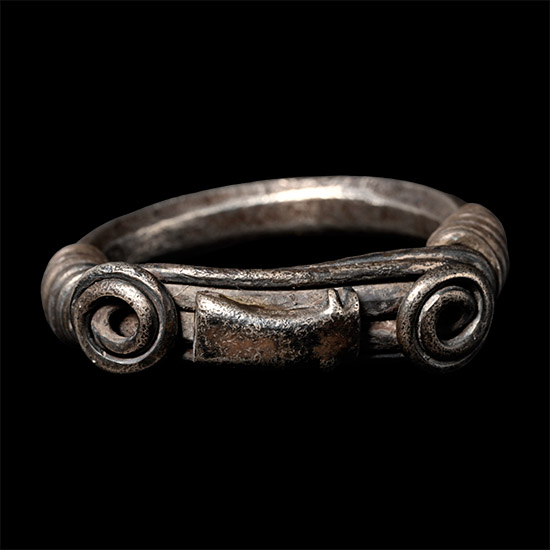
Central Balkans Silver Ring with Spiralled Terminals and Axe Motif Ornament
Iron Age, 1st-2nd century A.D.Sold for (Inc. bp): £845
Robust ring of octagonal section, fashioned from drawn and hammered wire, the hoop terminating in tightly coiled spirals, which flank a rectangular ornament soldered across the bezel, recalling a miniature axe-head; the coils further reinforced with wrapped silver wire, securing the decorative composition. 8.30 grams, 28.40 mm overall, 21.70 x 19.32 mm internal diameter (approximate size British T 1/2, USA 9 3/4, Europe 21.89, Japan 21)
Bonhams, Fine Antiquities, 4 July 1998, no.19. Private collection, UK, 1990s. with Rupert Wace Ancient Art Ltd, London. with Ariadne Galleries, New York and London, acquired from the above at TEFAF 2014, New York. Private American collection, acquired from the above, 23 January 2017.
This ring belongs to the repertoire of autochthonous Balkan silverwork that flourished from the Roman conquest through the mid-3rd century. The type is closely related to ornaments documented in the Tekija and Bare hoards, where bracelets and rings with spiral-wrapped ends and miniature axes appear as apotropaic symbols. While the axe motif was deeply embedded in Dacian and Balkan visual culture, its execution here in silver, combined with wire wrapping and spiralled terminals, reflects the enduring influence of Hellenistic toreutics upon local craftsmanship. Rather than a Viking jewel, the ring finds its most convincing parallels among the Balkan-Danubian silver hoards of the early Roman Empire. -
.jpg)
Balkan Silver Bracelet Group
3rd century B.C.Sold for (Inc. bp): £650
Each round in section with tapering ends formed into a tight coil. 29.8 grams total, 58-59 mm
UK private collection before 2000. Acquired on the UK art market. Private collection, London, UK. -
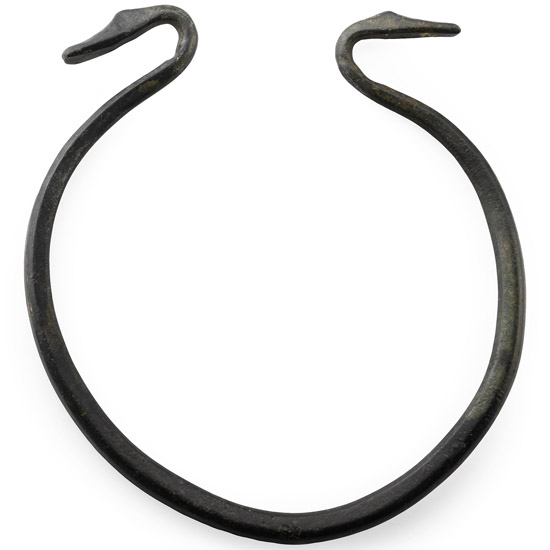
Celtic Bronze Bracelet with Bird Finials
Iron Age, circa 3rd century A.D.Sold for (Inc. bp): £364
Penannular bracelet with two recurving finials formed as bird heads. 38.2 grams, 93 mm
From a Wiltshire, UK, collection, 1990s.
