
Loading, please wait...
LOT 1461
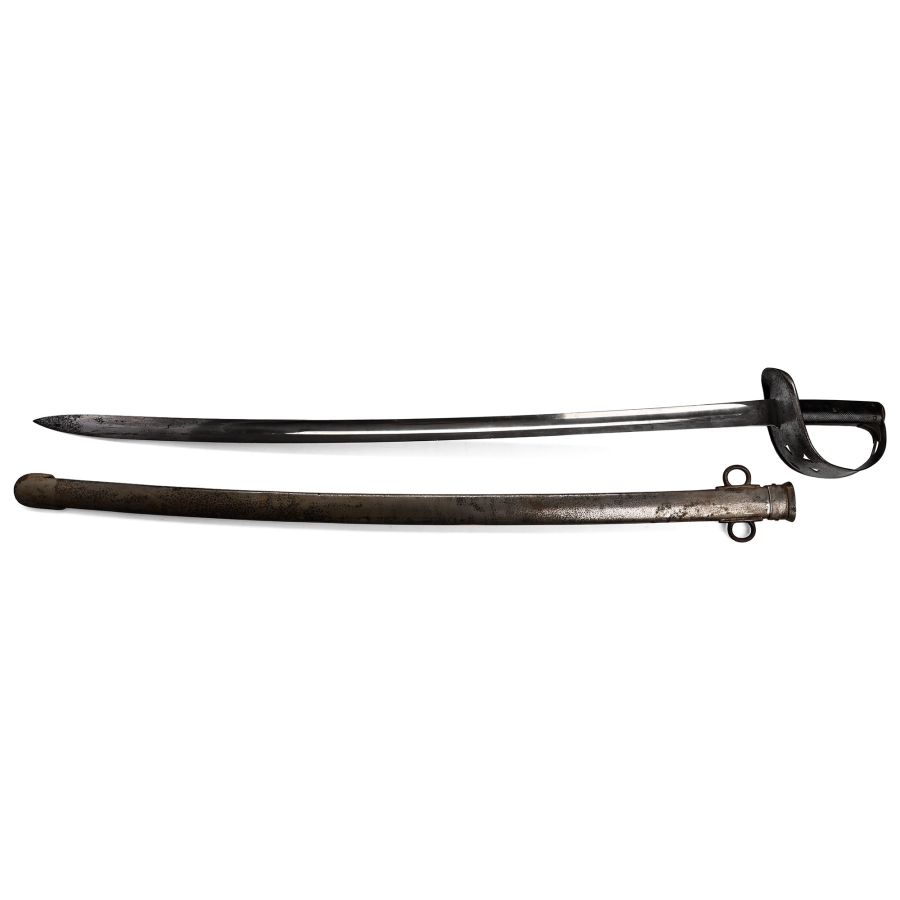
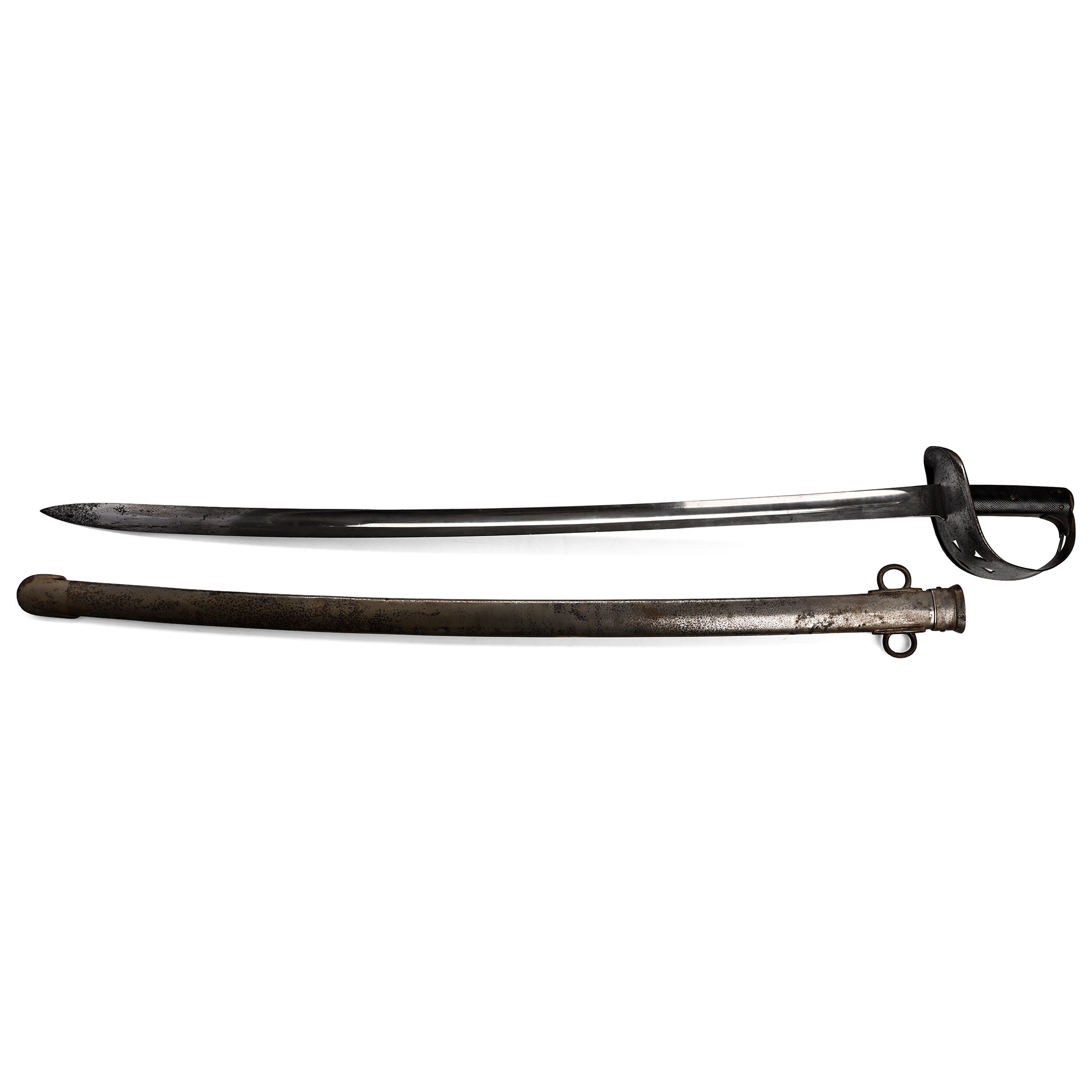
British Cavalry Trooper's Sword
1885 A.D. PATTERN
40 3/4 in. (1.76 kg, 103.5 cm).
A British trooper's backsword comprising a slightly curved single-edged blade with a deep fuller to each face, iron hilt with D-shaped pierced guard, leather-covered grip and bulb pommel; stamped on one face of the blade at the ricasso with 'WD' and broad arrow, crown over 'S12', crown over 'E12 YC' and to the other face '/86' over 'Baum & Co. [Sol]ingen'; scabbard with cast frog with securing srewws and stamped '/88 WD' and arrow; integral reinforced chape. [No Reserve]
ProvenanceFrom a Cambridgeshire, UK, collection.
CONDITIONTimeLine Auctions follows a vetting process to ensure the authenticity and legality of all items, reinforcing our commitment to integrity and responsible trading. Each antiquity, antique, and coin lot undergoes thorough examination by a vetting committee of at least ten external specialists, professional trade association members, scientists, and archaeologists: Our Vetting Process
AUCTIONS:
TimeLine is a leading auction house specialising in antiquities, ancient art, collectables, natural history, coins, medals, and books. Our auctions offer museums, collectors, historians, and enthusiasts the opportunity to acquire unique and historically significant pieces.
-
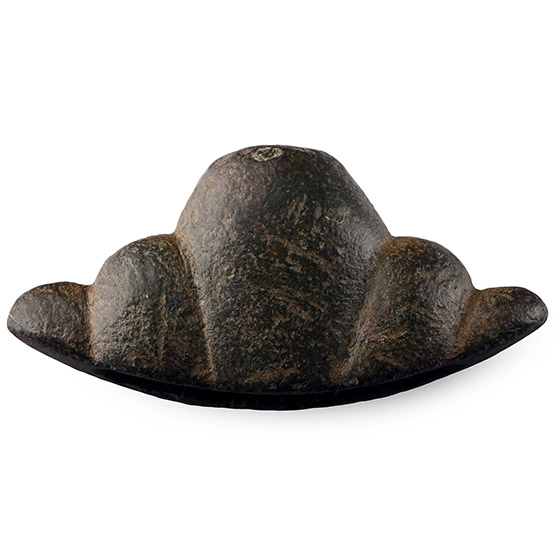
Anglo-Scandinavian Viking Bronze Five-Lobed Sword Pommel
10th-11th century A.D.Sold for (Inc. bp): £390
Of Petersen's Type S (Wheeler Type III) with five graduated lobes; hollow, the lower face a swept arc; pierced through the tallest lobe to accept the tang of the sword's blade. 61 grams, 54 mm
Found UK. From an Colchester, UK, collection. -
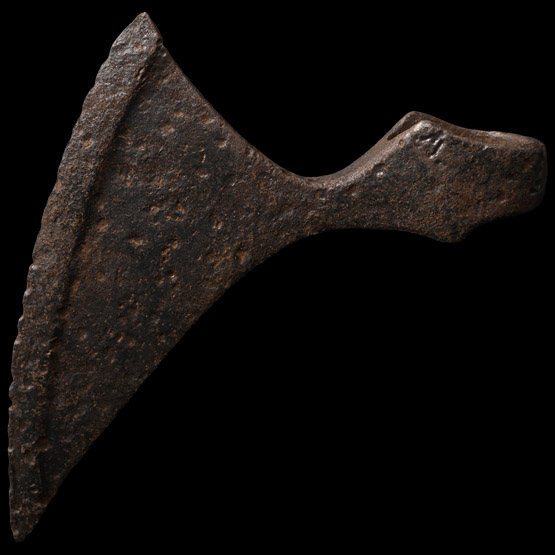
Viking Age Iron Hook-Billed Axehead
Circa 9th-11th century A.D.Sold for (Inc. bp): £312
Broad blade with thickened edge, rounded socket with lateral triangular extensions. 347 grams, 16.5 cm
Ex North American collection, 1970s. -
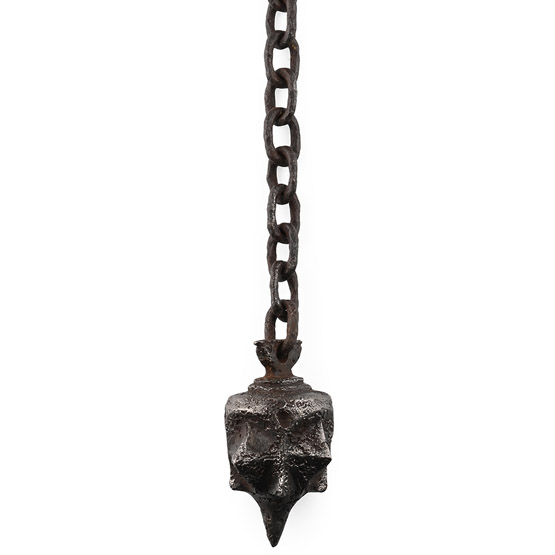
Medieval Socketted Iron Flail
Circa 15th century A.D.Sold for (Inc. bp): £910
Hand-forged tubular socket of conical form and with collar to mouth, substantial loop, chain of oval links and connecting ring; a facetted conical head with lateral spikes. 1.13 kg, 58.5 cm
Ex North American private collection, 1970s.
