
Loading, please wait...
LOT 2054
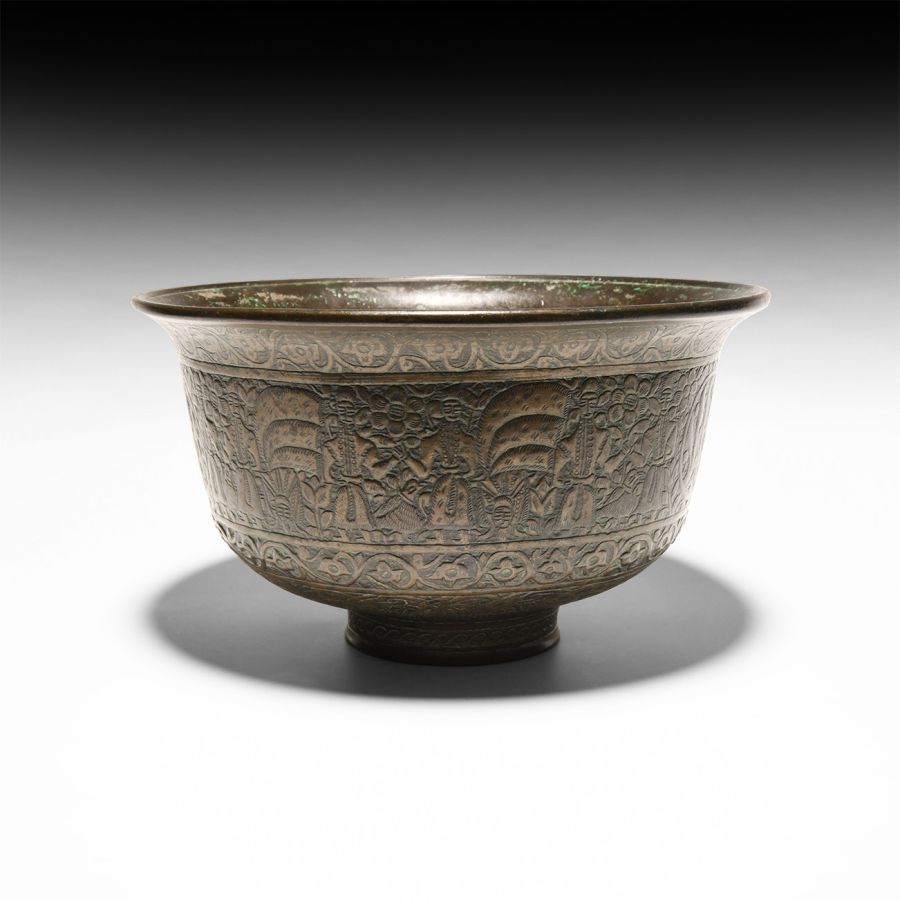
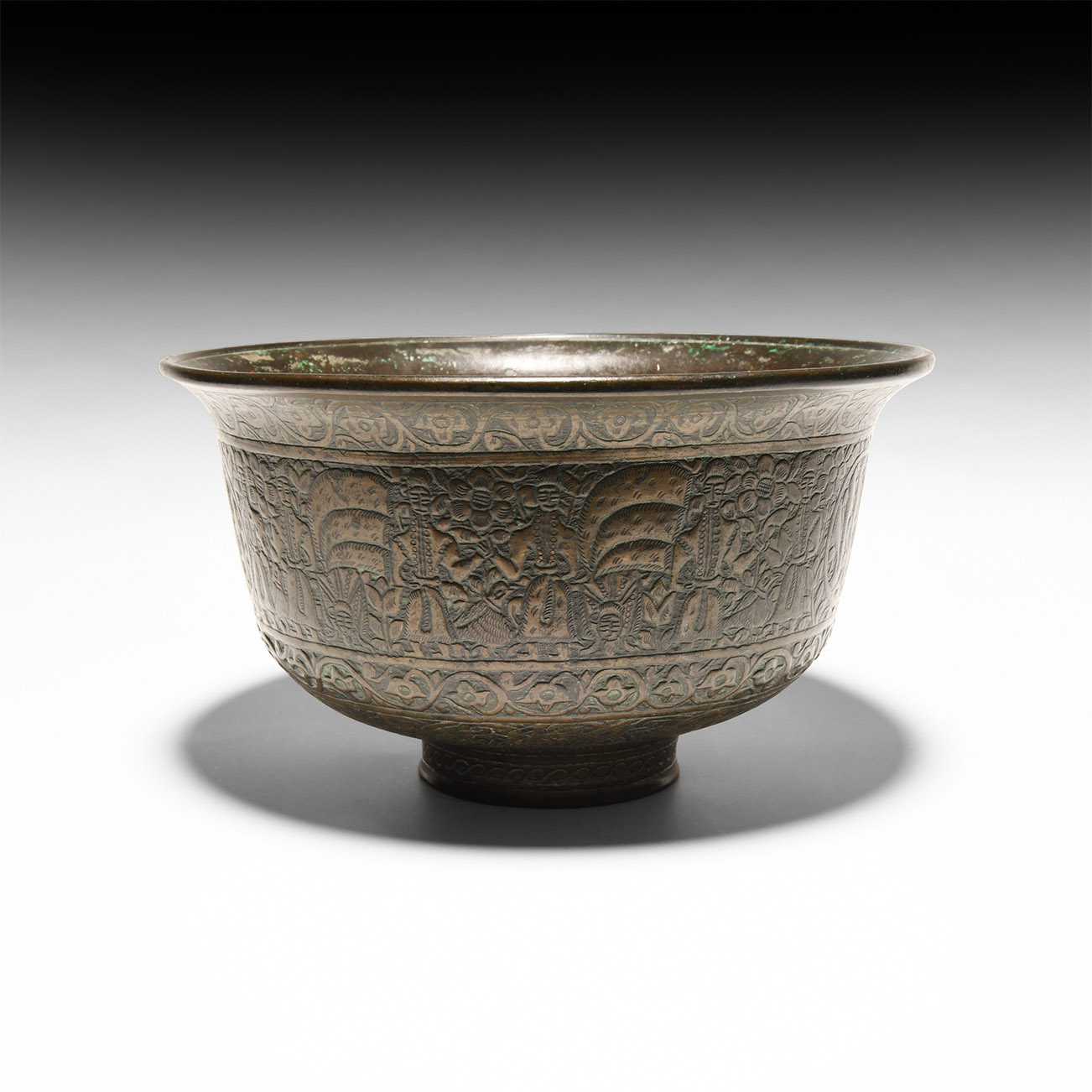
Bowl with Figures and Calligraphy
LATE 19TH CENTURY A.D.
8 in. (1 kg, 20.2 cm wide).
Carinated and decorated with figures and panels of calligraphy between geometric bands. [No Reserve]
ProvenanceAcquired on the UK art market, 2000s.
Property of a Suffolk gentleman.
This lot is accompanied by an illustrated lot declaration signed by the Head of the Antiquities Department, Dr Raffaele D’Amato.
TimeLine Auctions follows a vetting process to ensure the authenticity and legality of all items, reinforcing our commitment to integrity and responsible trading. Each antiquity, antique, and coin lot undergoes thorough examination by a vetting committee of at least ten external specialists, professional trade association members, scientists, and archaeologists: Our Vetting Process
AUCTIONS:
TimeLine is a leading auction house specialising in antiquities, ancient art, collectables, natural history, coins, medals, and books. Our auctions offer museums, collectors, historians, and enthusiasts the opportunity to acquire unique and historically significant pieces.
-
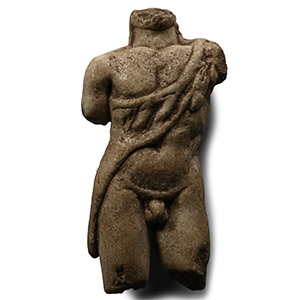
Roman Style Marble Torso with Lionskin
19th century A.D. or earlierSold for (Inc. bp): £221
Modelled as a muscular nude torso with lionskin draped over the left shoulder. 508 grams, 14 cm
Acquired in the 1980s. From an interesting European collection of marbles. Property of a European gentleman. This lot is accompanied by an illustrated lot declaration signed by the Head of the Antiquities Department, Dr Raffaele D’Amato.
Probably intended to depict Hercules, who customarily wore a lionskin. -
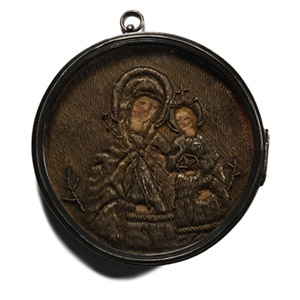
Greek Gold Thread Needle Point with Mary and Jesus in Silver with Inscription to the Archbishop of Jerusalem
Dated 1698 A.D.Sold for (Inc. bp): £520
Depicting Mary holding a lily flower with her right hand and supporting infant Jesus with her left arm; Jesus crowned by a crossed diadem and holding a gospel in his hand; background in gold thread, framed in a circular silver frame with dedicatory inscription to the reverse from a certain Alexander to the Jerusalem’s Archbishop Dositheus, reciting: + Τω ΜΑΚΑΡΙΟΤΑΤω ΚΑΙ CΟΦωΤΑΤω ΠΑΤΡΙΑΡΧΗ ΙΕΡΟCΟΛΥΜωΝ ΔΟCΙΘΕω ΤΙΜΗC ΕΝΕΚΕΝ – μηνι cεπτεμβριω 1698 – Αλεξανδρος – To His Beatitude and Enlighted Patriarch of Jerusalem Dositheus, as a sign of respect – September 1698 – Alexander; internal padding with floral decoration. 82 grams, 10 cm
Property of a London, UK, gentleman collector. This lot is accompanied by an illustrated lot declaration signed by the Head of the Antiquities Department, Dr Raffaele D’Amato.
The art of gold embroidery developed in Constantinople, with its own guild, and continued also after the end of the empire. Important artists like the legendary Despoineta, Mariora, Eusebia and Kokona, were famous in the 'painterly' rendering of religious subjects, not with the brush, but with the needle: red satin, and silver and gold wire created dresses, shadows, volumes with a sense of depth and sculptural quality. The artists conceived their works like a true prayer: a hope, based on human creativity. -
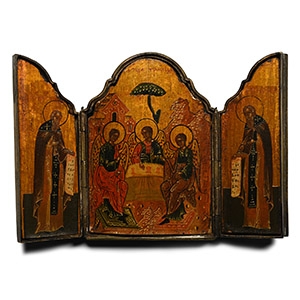
Russian Travelling Triptych Icon with Silver Mounts
Circa 1800 A.D.Estimate: £1,000 - 1,400 (+bp*)
Opening Bid: £450
Comprising: wooden triptych with gilt field and painted figures of St Nikolas and St Charalambos in the lateral panels and SS Konstantine, Helen and Barbara in the central panel, each with red lettering above; house in a purpose-made silver case with engraved scene to the central panel of Maria Theotokos flanked by celestial figures holding a crown above her head; front panels with facing figures of SS Nikolas, Barbara, Konstantine, Helena and Charalambos; in a custom-made wooden travelling case with hooked fastener. 331 grams total, 11.8 x 9.4 cm including case
Ex Iconastas, London SW1, UK, in 1997. Property of a London, UK, gentleman collector. Accompanied by a copy of the Iconastas invoice no.7463 dated 7 April 1997. This lot is accompanied by an illustrated lot declaration signed by the Head of the Antiquities Department, Dr Raffaele D’Amato.
