
Loading, please wait...
LOT 0319
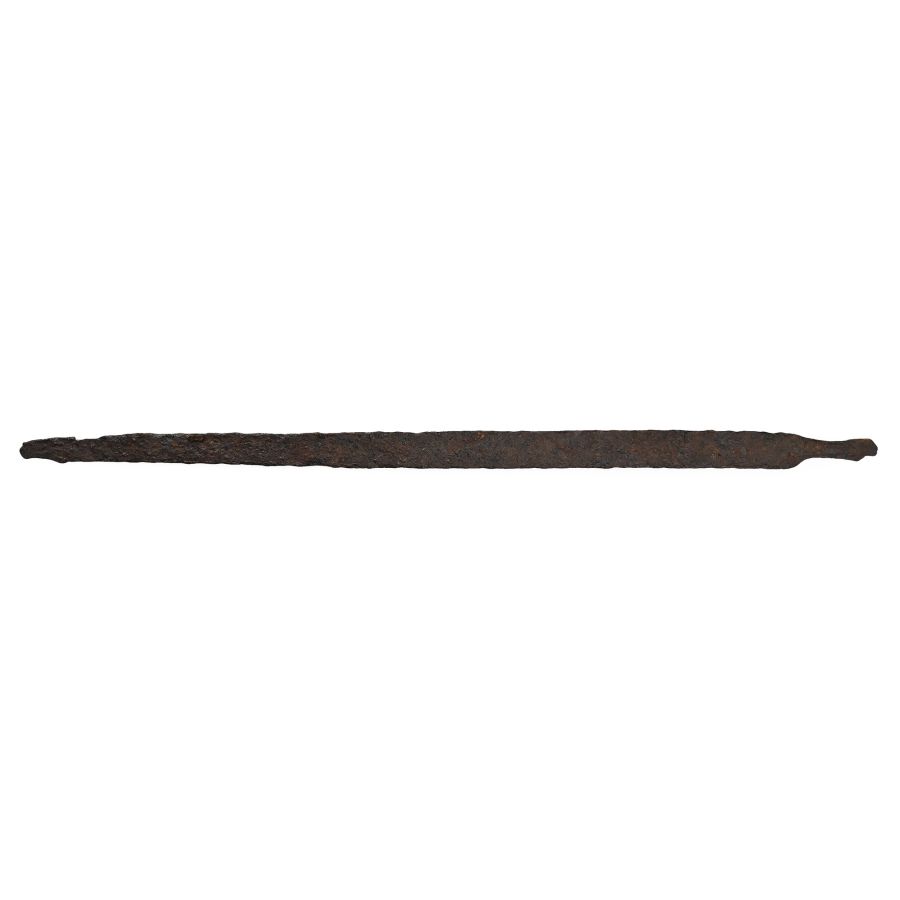
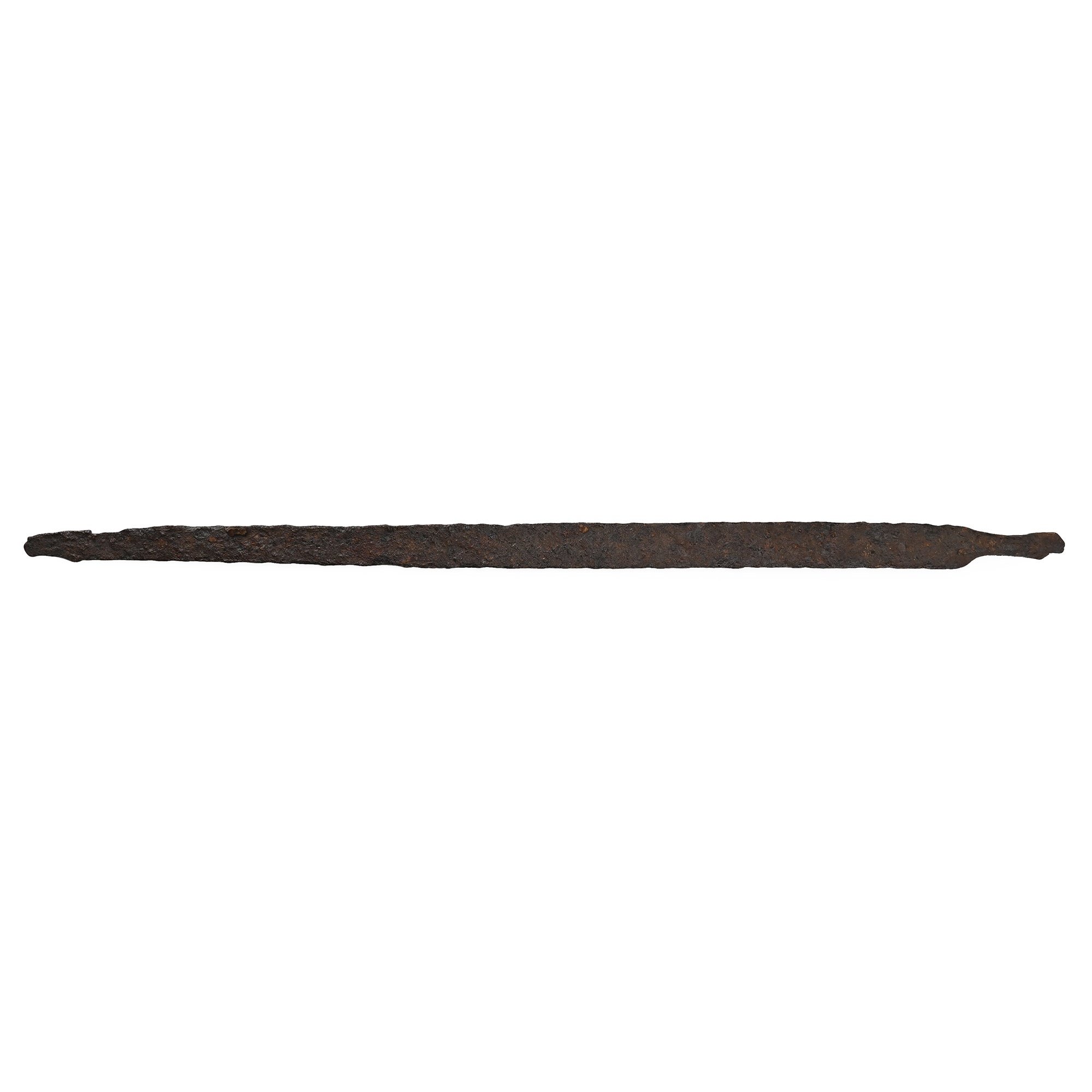
'Bourton-on-the-Water' Celtic Sword-Shaped Iron Currency Ingot
IRON AGE, CIRCA 200 B.C.-1ST CENTURY A.D.
32 1/4 in. (561 grams, 82 cm).
A substantial long iron bar in the shape of a sword with the original short folded-over handle to one end. [No Reserve]
ProvenanceFound Bourton-on-the-Water, Gloucestershire, UK, during the period between WWI and WWII.
Property of the finder's family until sold by regional auction house, Tayler & Fletcher in Bourton-On-The-Water.
From the private collection of a Stratford-upon-Avon, UK, gentleman.
Exhibited at the Harwich Museum, Harwich, Essex, UK, 4th March 2026-7th June 2026; accompanied by a copy of a photograph of the artefacts on display.
LiteratureSee Gresham, Colin, A., Spetisbury Rings, Dorset, Archaeological Journal 96, pp.114-131, which includes details for this and other finds from the site; see also Smith, Reginald, Currency Bars, Proceedings of the Society of Antiquaries, London, 2nd Series, XX, p.182, for comparison between the Spetisbury and Malvern examples; cf. British Museum, accession no.1862,0627.18, for an example from the site (acquired from J. Y. Akerman in 1862; other items were acquired in 1892 from the Durdan, Blandford collection).
FootnotesCurrency bars were standardised units used to trade in Iron Age Britain between circa 200 B.C.-1st century A.D. They were often sword-shaped and were used as a form of early currency or trade commodity in Iron Age Britain before coinage became widespread, serving as a store of wealth and medium of exchange. These high-status objects, requiring significant labour (25 man-days/kg), often featured a socket or hilt, possibly to show quality. Types including spit, sword, plough, and bay-leaf shapes have been found in hoards at hillforts like Hod Hill and Danebury.
CONDITIONTimeLine Auctions follows a vetting process to ensure the authenticity and legality of all items, reinforcing our commitment to integrity and responsible trading. Each antiquity, antique, and coin lot undergoes thorough examination by a vetting committee of at least ten external specialists, professional trade association members, scientists, and archaeologists: Our Vetting Process
AUCTIONS:
TimeLine is a leading auction house specialising in antiquities, ancient art, collectables, natural history, coins, medals, and books. Our auctions offer museums, collectors, historians, and enthusiasts the opportunity to acquire unique and historically significant pieces.
LOT 0319
'Bourton-on-the-Water' Celtic Sword-Shaped Iron Currency Ingot
Sold for (Inc. bp): £338
-
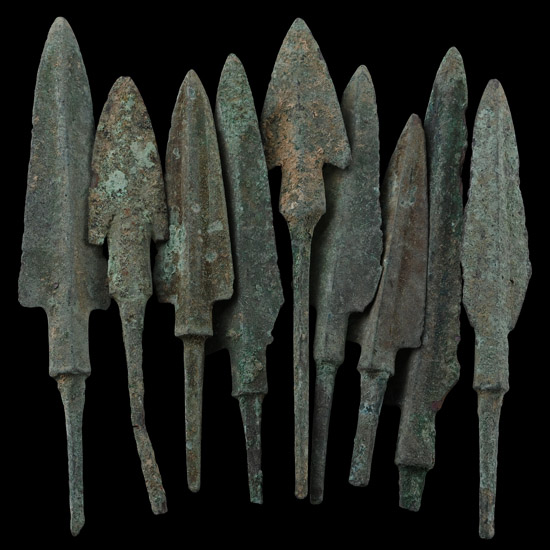
Western Asiatic Bronze Arrowhead Collection
2nd-1st millennium B.C.Sold for (Inc. bp): £195
Comprising tanged arrowheads, seven with large elongated triangular blades and raised midrib, sharp central groove, two with barbed shoulders and cylindrical stem with handle for the shaft. 205 grams total, 9.1-12.3 cm
London, UK, collection, 1990s.
These arrowheads seem to belong to the type V, subcategories C and D, according to the classification of Khorasani and Negahban. In the four categories of triangular bronze arrowheads from Luristan, Marlik, and Northern Iran, individuated by Negahban, subtypes C and D of type V are larger arrow or javelin heads, C with barbed shoulders and D with round shoulders. Most of them were cast in moulds. -
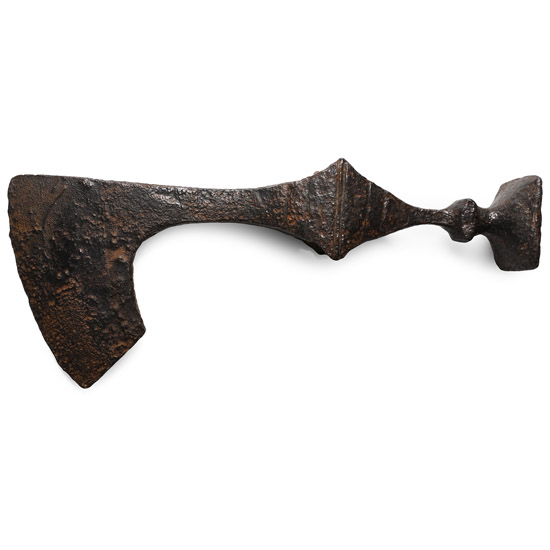
Viking Age Iron Bearded Axe-Hammer
Circa 9th-12th century A.D.Sold for (Inc. bp): £494
With a broad curved blade, a narrow neck, a square hammer extension to the rear; round socket with lateral triangular extensions. 327 grams, 19.6 cm
Ex North American collection, 1970s-1980s. -
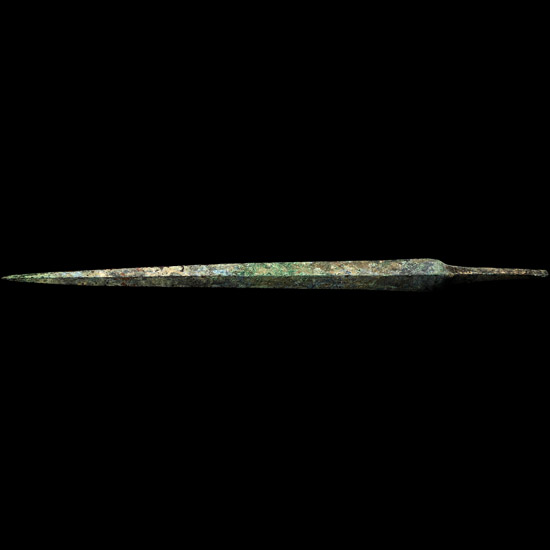
Luristan Bronze Tanged Lancehead
800-600 B.C.Sold for (Inc. bp): £124
With a tapering rectangular-section blade and a short tang. 239 grams, 31 cm
Ex Abelita family collection, 1980s-2000s.
These shoulderless spearheads are introducing the Luristan and Hamadan in the Median and Achaemenid Periods. The bronze type was cast in a mould, and the length suggests it was a throwing weapon or used in conjunction with a chariot.
