
Loading, please wait...
LOT 0364
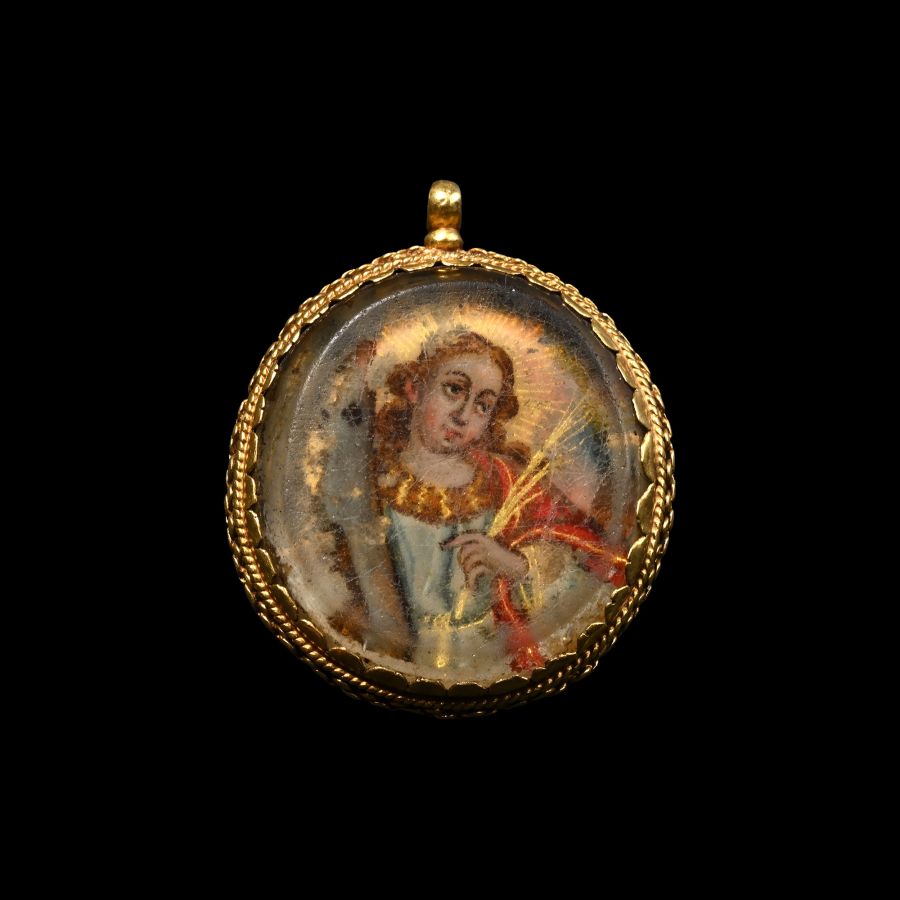
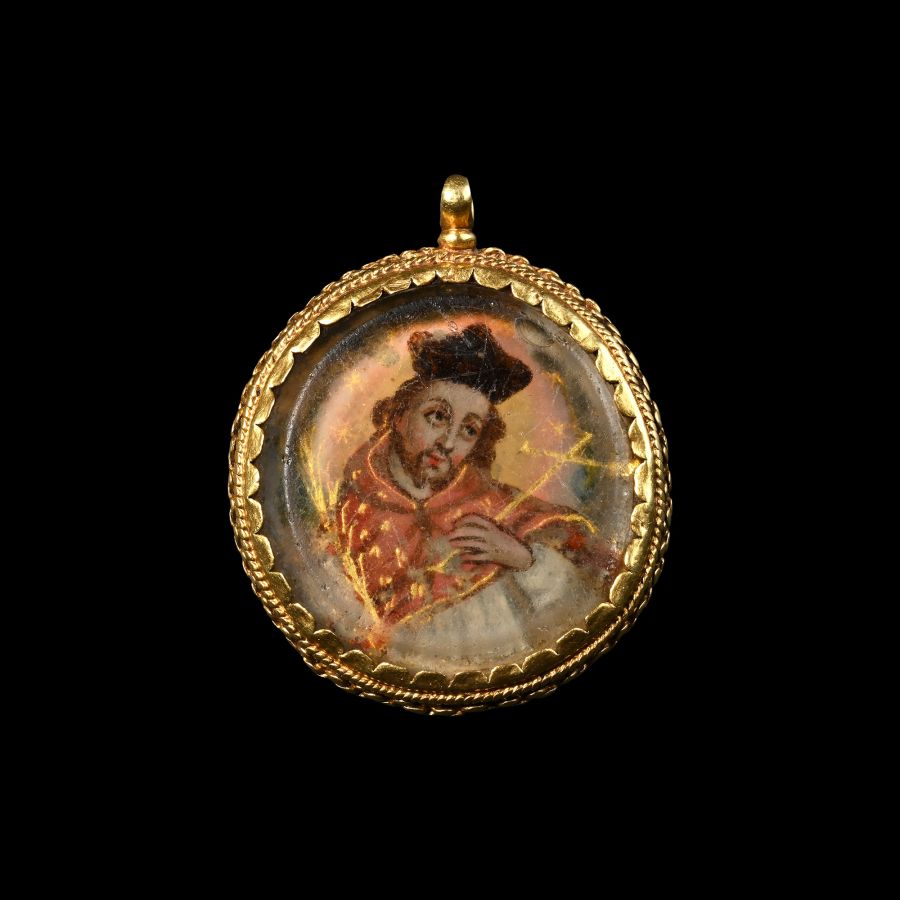
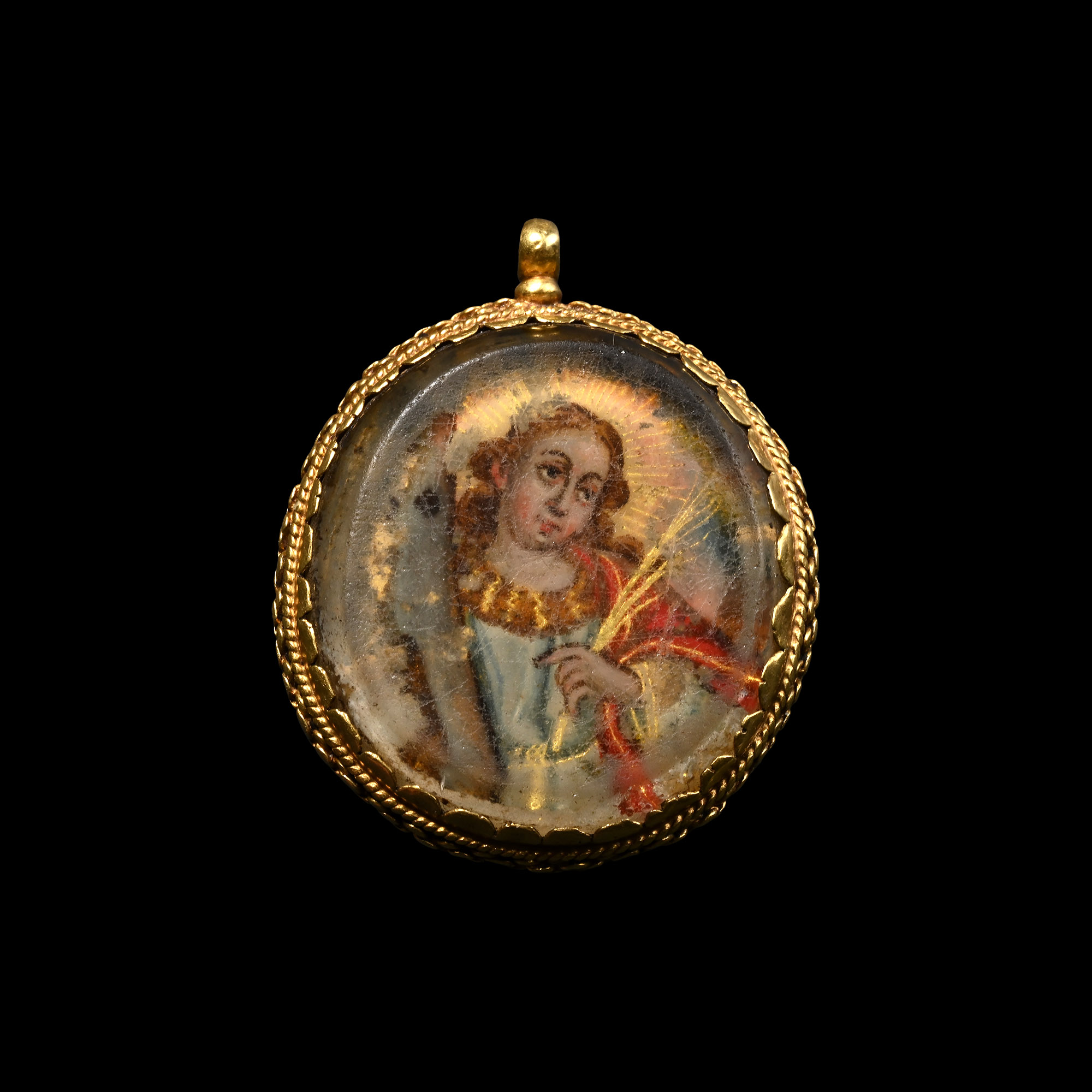
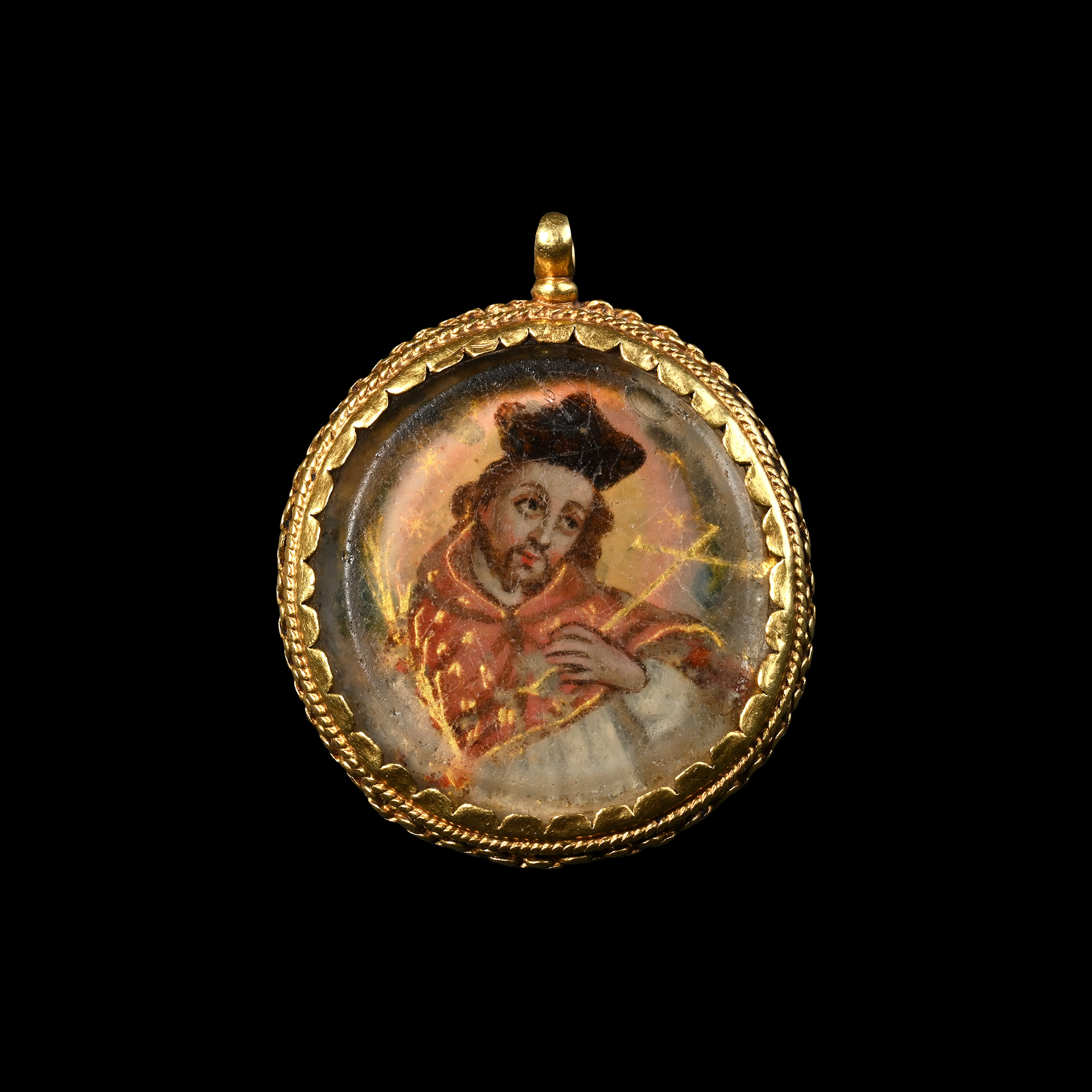
Bourbon Era Gold Devotional Pendant with Verre Eglomise Miniatures of Saint Catherine of Alexandria and Saint John of Nepomuk
SPAIN, CIRCA 1700 A.D.
1 3/4 in. (29.1 grams, 43 mm).
Featuring a gold mount with twisted ropework border and scalloped edges securing bevelled glass coverings, one side depicting nimbate Saint Catherine of Alexandria wearing a pale blue dress with a red cloak, holding a gilt palm frond; the other side with Saint John of Nepomuk dressed in clerical attire and holding a gilt cross and a palm frond.
ProvenanceAcquired on the European art market.
FootnotesSaint Catherine of Alexandria was a Christian saint and virgin who was martyred in the early 4th century at the hands of the Emperor Maxentius. She was both a princess and a noted scholar who became a Christian around the age of 14, converted hundreds of people to Christianity and was martyred around the age of 18. More than 1,100 years after Catherine's martyrdom, Joan of Arc identified her as one of the saints who appeared to and counselled her. Saint John of Nepomuk (c. 1345 – 20 March 1393) was the saint of Bohemia (Czech Republic) who was drowned in the Vltava River at the behest of Wenceslaus IV of Bohemia. Later accounts state that he was the confessor of the queen of Bohemia and refused to divulge the secrets of the confessional. Based on this account, John of Nepomuk is considered the first martyr of the Seal of the Confessional, a patron against calumnies and, because of the manner of his death, a protector from floods and drowning. Verre églomisé is a French term referring to the process of applying both a design and gilding onto the rear face of glass to produce a mirror finish. The name is derived from the 18th-century French decorator and art-dealer Jean-Baptiste Glomy (1711–1786), who was responsible for its revival. Glomy's technique was a relatively simple one of applying decorative designs in a combination of plain colour and gilding, usually to glass picture frames. However, over time, it has come to be used to describe nearly any process involving back-painted and gilded glass, however elaborate.
CONDITIONTimeLine Auctions follows a vetting process to ensure the authenticity and legality of all items, reinforcing our commitment to integrity and responsible trading. Each antiquity, antique, and coin lot undergoes thorough examination by a vetting committee of at least ten external specialists, professional trade association members, scientists, and archaeologists: Our Vetting Process
AUCTIONS:
TimeLine is a leading auction house specialising in antiquities, ancient art, collectables, natural history, coins, medals, and books. Our auctions offer museums, collectors, historians, and enthusiasts the opportunity to acquire unique and historically significant pieces.
LOT 0364
Bourbon Era Gold Devotional Pendant with Verre Eglomise Miniatures of Saint Catherine of Alexandria and Saint John of Nepomuk
Sold for (Inc. bp): £1,170
-
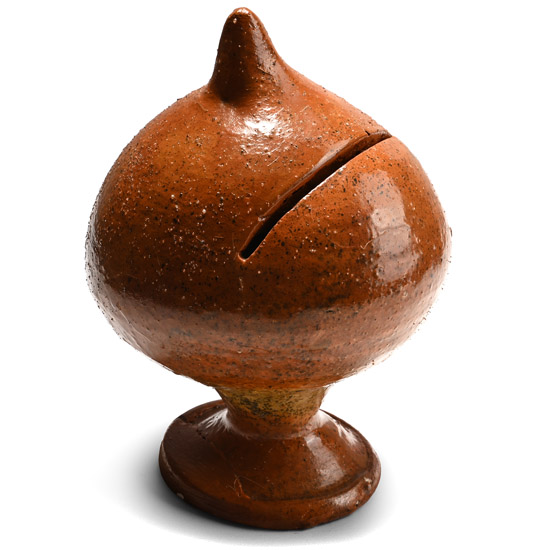
Post Medieval Brown Glazed Money Box
17th-18th century A.D.Sold for (Inc. bp): £59
Hand-thrown pot with bulbous body and a trumpet-shaped foot; a wide slit to the upper part of the body. 297 grams, 12.5 cm
Acquired on the UK art market. Property of a Kent, UK, lady collector. -
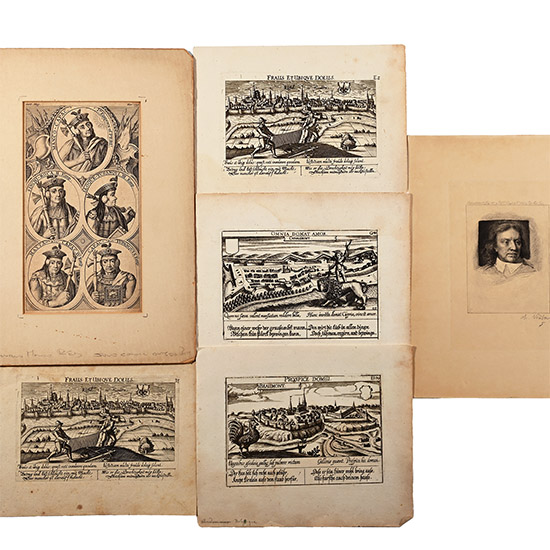
Original Copper Plate Engravings by Daniel Meisner and Others of Inca Rulers and Oliver Cromwell
17th-18th century A.D.Estimate: £80 - 100 (+bp*)
Current Winning Bid: £10
Comprising: buff paper page from Meisner's 'Thesaurus Philo-Politicus' (1625-1630) with engraved image of a city and cockerel in foreground, title 'Prospice Domui E100' and 'Beaumont', Latin and German rhymed couplets below; buff paper page with engraved image of a walled fortress and lion in foreground with Cupid, title 'Omnia Domat Amor G41' and 'Carlemont', Latin and German rhymed couplets below; two examples of buff paper page with engraved image of a city and river with fishermen holding a net in foreground, title 'Fraus et Ubique Dolus' and 'Rüssel', Latin and German rhymed couplets below, one numbered 'Ez' and the other '35'; portrait in three-quarter view of Oliver Cromwell with signature (Walker?) below, and legend above 'London, published 25 July 1881 by P.& D.Colnaghi & Co. 13 & 14 Pall Mall East'; print in card reveal with five busts of rulers, each with an axe and stepped headress, with legend 'Manco-Capac 1st Emperor of Peru', 'Sinchi-Roca. II Emp.', 'Loque-Yupanqui, III Emp.', Mayta-Capac, IV Emp.', 'Capac-Yupanqui. V Emp.', printed titled 'Gent.Mag. Nov.1751'. 114 grams total, 18 x 14 - 29.1 x 22 cm
Acquired on the UK art market. Property of a Harwich, UK, collector. -
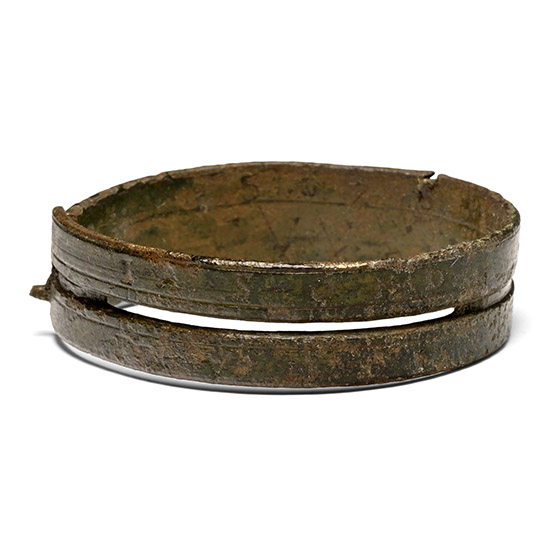
Post Medieval Bronze Inscribed Pocket Ring Sundial
16th-17th century A.D.Sold for (Inc. bp): £338
A ring dial with two bands open to one side at the centre; the outer surface engraved with measurement points and letters along the open mid section; to the inside, a series of incised lines and numbers for the hours of the day. 15.2 grams, 46 mm
From a UK collection formed in the 1980s. Property of an Essex, UK, gentleman.
