
Loading, please wait...
LOT 2120
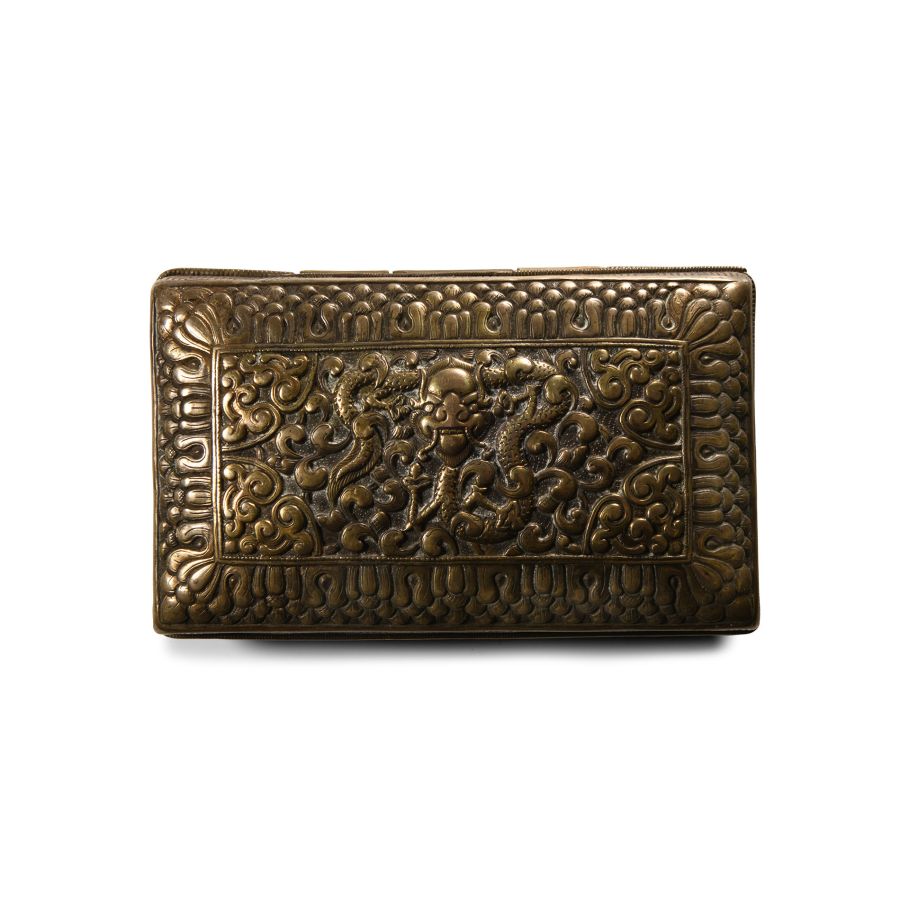
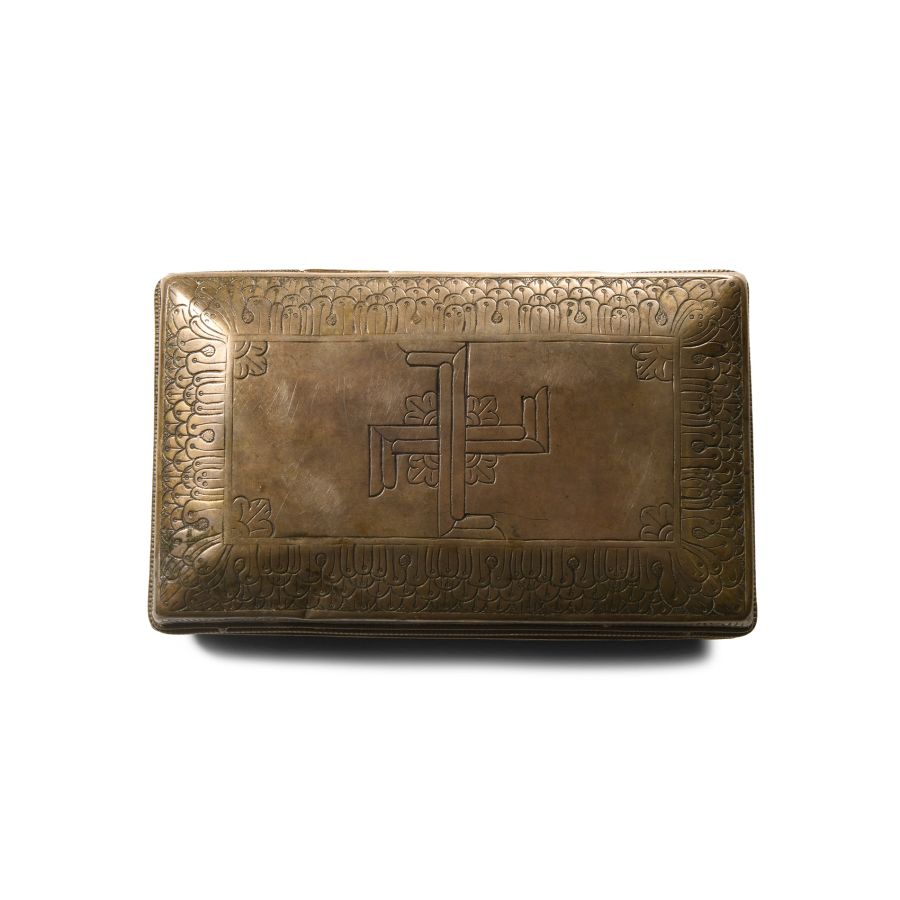
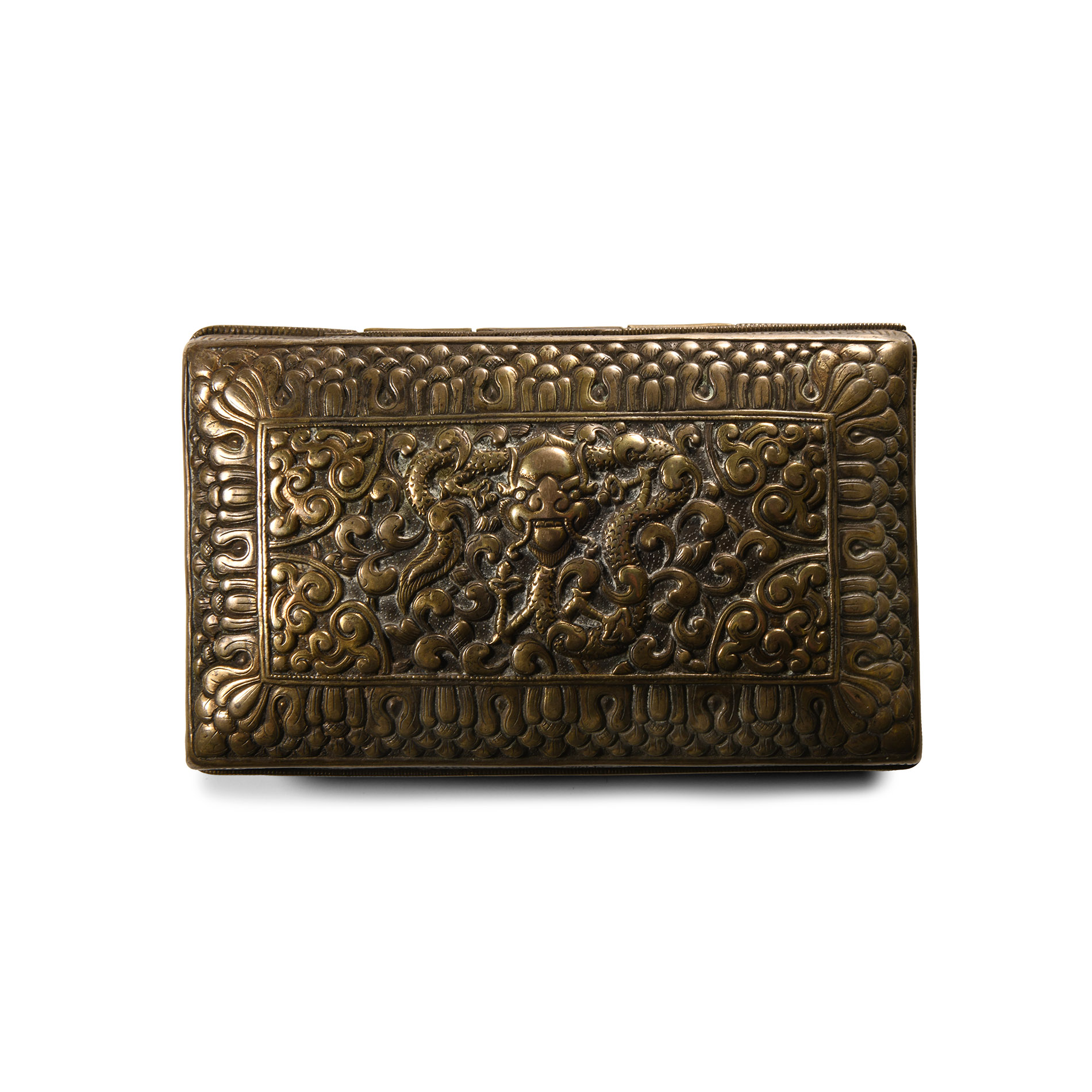
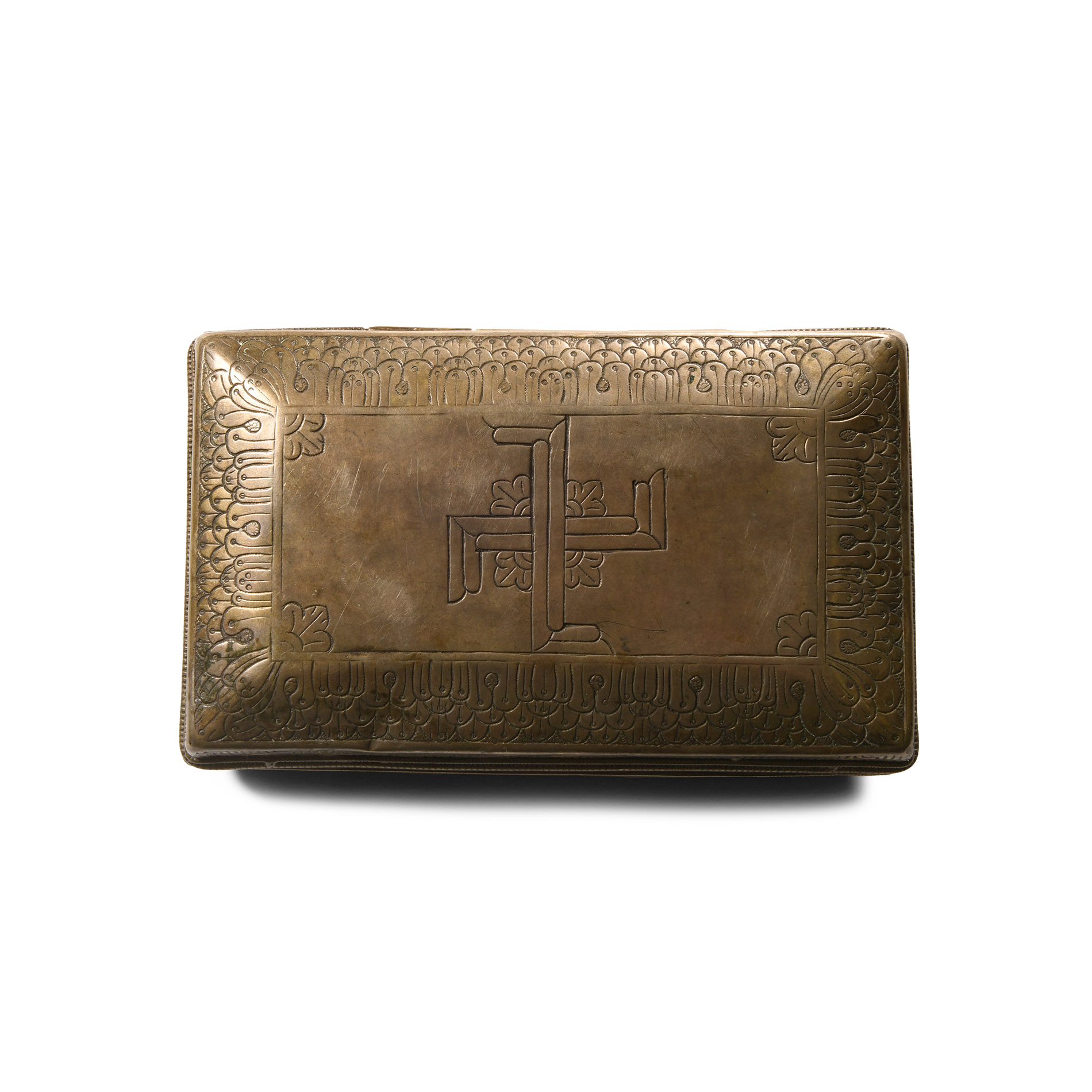
Bhutanese Part Gilded Repousse Betel Nut Box
MID 19TH CENTURY A.D.
5 1/4 in. (250 grams, 13.3 cm).
Rectangular form in silver-coloured metal with a hinged closure, repoussé dragonesque beast amidst swirling clouds to the top face, geometric ornament to the edge faces, base decorated with a central gammadion within a rectangular panel, enclosed by stylised petals. [No Reserve]
ProvenanceAcquired by private treaty from old Belgian collection.
Property of RWM Collection.
TimeLine Auctions follows a vetting process to ensure the authenticity and legality of all items, reinforcing our commitment to integrity and responsible trading. Each antiquity, antique, and coin lot undergoes thorough examination by a vetting committee of at least ten external specialists, professional trade association members, scientists, and archaeologists: Our Vetting Process
AUCTIONS:
TimeLine is a leading auction house specialising in antiquities, ancient art, collectables, natural history, coins, medals, and books. Our auctions offer museums, collectors, historians, and enthusiasts the opportunity to acquire unique and historically significant pieces.
-
Chinese Han Style Bronze Bovine Mask
20th century A.D.Estimate: £120 - 170 (+bp*)
Opening Bid: £60
Formed as the upper half of the head of a horned animal; tapering mounting lug to reverse. 101 grams, 59 mm high
From a Cotswold, UK, collection, 1980-1990s. -
Sino-Tibetan Gilt Bronze Seated Buddha
Circa 19th-20th century A.D.Sold for (Inc. bp): £910
Modelled in the round on a double lotus base, positioned with crossed legs and hands in the Bhumisparsha and dhyana mudras, displaying a number of auspicious lakshanas including extended earlobes, three rings around the neck, urna and ushnisha; floral stamp to base. 989 grams, 15.6 cm high
Ex Empire Auction House, Boston, USA. Property of a Canadian family. -
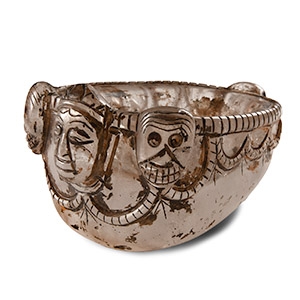
Large Tibetan Rock Crystal Kapala Vessel with Citipati Faces
Late 19th century A.D. or earlierSold for (Inc. bp): £416
A 'skull cup' displaying a crowned head flanked by two monster skulls carved in relief to the front face, a single grinning skull to the rear, notched borders around the vessel rim, swags below; chip to reverse. 1.6 kg, 17 cm
Acquired from an old German collection. Property of RWM Collection.
