
Loading, please wait...
LOT 2007
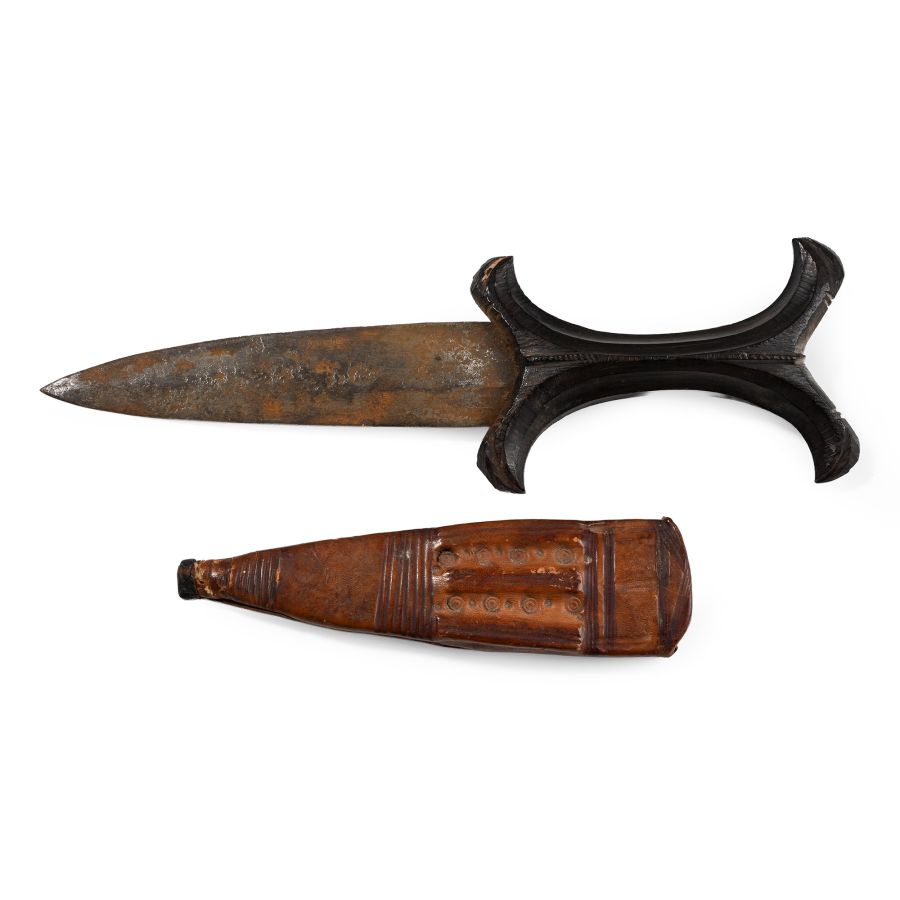
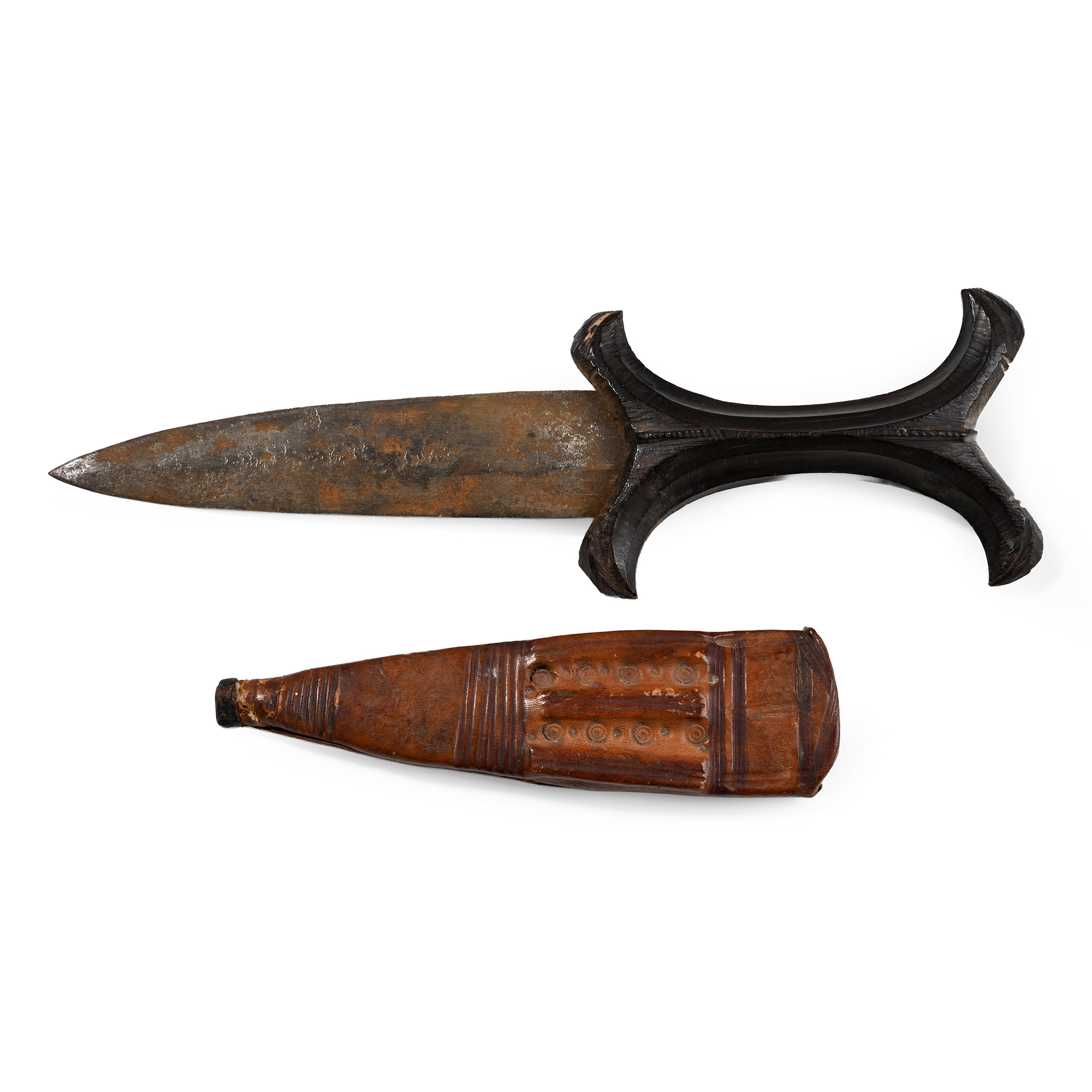
Beja or Hadendoa Dagger with Sheath
SUDAN, LATE 19TH-EARLY 20TH CENTURY A.D.
8 1/2 in. (72 grams, 21.5 cm).
Comprising a thin leaf-shaped two-edged blade in an X-shaped wooden hilt with carved fluting and median rib; leather sheath with moulded detailing and stamped roundels. [No Reserve]
ProvenanceFrom the private collection of Peter Clayton, FCILIP, Dip, Arch, FSA, FRNS, Hemel Hempstead, Hertfordshire, UK; formed since the late 1950s.
CONDITIONTimeLine Auctions follows a vetting process to ensure the authenticity and legality of all items, reinforcing our commitment to integrity and responsible trading. Each antiquity, antique, and coin lot undergoes thorough examination by a vetting committee of at least ten external specialists, professional trade association members, scientists, and archaeologists: Our Vetting Process
AUCTIONS:
TimeLine is a leading auction house specialising in antiquities, ancient art, collectables, natural history, coins, medals, and books. Our auctions offer museums, collectors, historians, and enthusiasts the opportunity to acquire unique and historically significant pieces.
LOT 2007
Beja or Hadendoa Dagger with Sheath
Estimate £60 - 80€70 - 93 (for guidance only)$81 - 108 (for guidance only)
Opening Bid
£5 (EUR 6; USD 7) +BP*
-
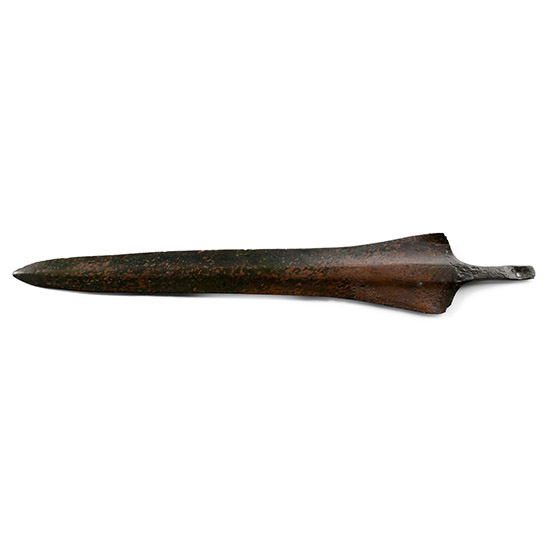
Western Asiatic Bronze Dagger
1800-1600 B.C.Estimate: £150 - 200 (+bp*)
Opening Bid: £83
The blade expanding towards the shoulders, a pierced rectangular-section tang. 174 grams, 29.2 cm
Ex Abelita family collection, 1990s. -
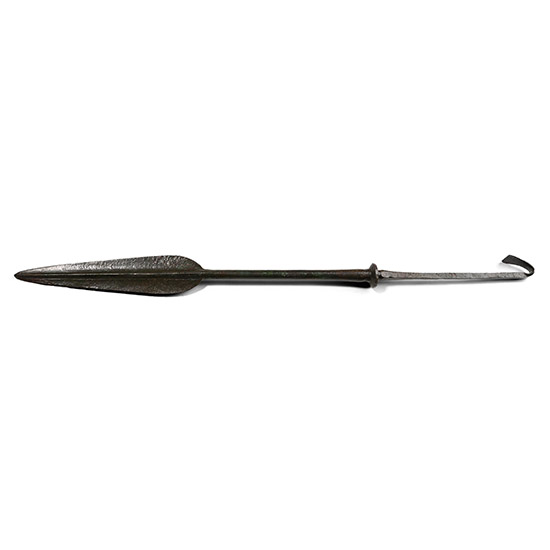
Luristan Bronze Javelin Head
2nd-1st millennium B.C.Estimate: £200 - 300 (+bp*)
Opening Bid: £100
Comprising a slender leaf-shaped two-edged blade with midrib extending to a columnar neck with median bulb and dished collar; square-section tang with bent fish-tail finial. 215 grams, 45.5 cm
Ex Abelita collection, 1980s-2010. -
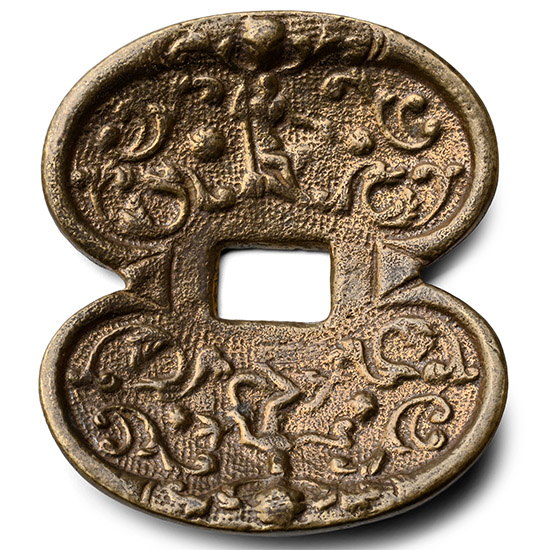
Post Medieval Sword Hilt Plate with Figural Decoration
Probably European, circa late 17th-early 18th century A.D.Estimate: £30 - 40 (+bp*)
Opening Bid: £5
Of broad, lobed outline, pierced centrally with a rectangular aperture, the perimeter forms four rounded lobes, arranged in opposing pairs and separated by inward-curving notches, a raised, rounded border enclosing the decorated field, the principal face densely ornamented in relief with stylised figural forms, grotesque creatures and curling scrollwork, elongated bodies and limbs extend around the central opening, while coiled, serpentine forms fill the outer lobes, small leaves, rounded bosses and subsidiary curls occupy the intervening spaces. 68.3 grams, 71 mm
Acquired on the European art market. UK, private collection.
The lobed form, central aperture and raised perimeter are consistent with a detached shell guard from a sword hilt. Such a guard would have been fitted around the blade at the base of the hilt, forming part of the protection for the hand. Its decoration belongs to the ornamental vocabulary found on late 17th- and early 18th-century sword furniture, in which figures, fantastic creatures and foliage were combined across relatively small cast or chiselled surfaces. A useful comparison is the English smallsword-type infantry hanger dated 1720-1750 in the Colonial Williamsburg collection. Its cast brass hilt incorporates paired shell guards with raised borders and densely arranged classical figures and foliage. The correspondence in construction and treatment supports the present plate’s interpretation as a sword-hilt component and its proposed date.
