
Loading, please wait...
LOT 1950
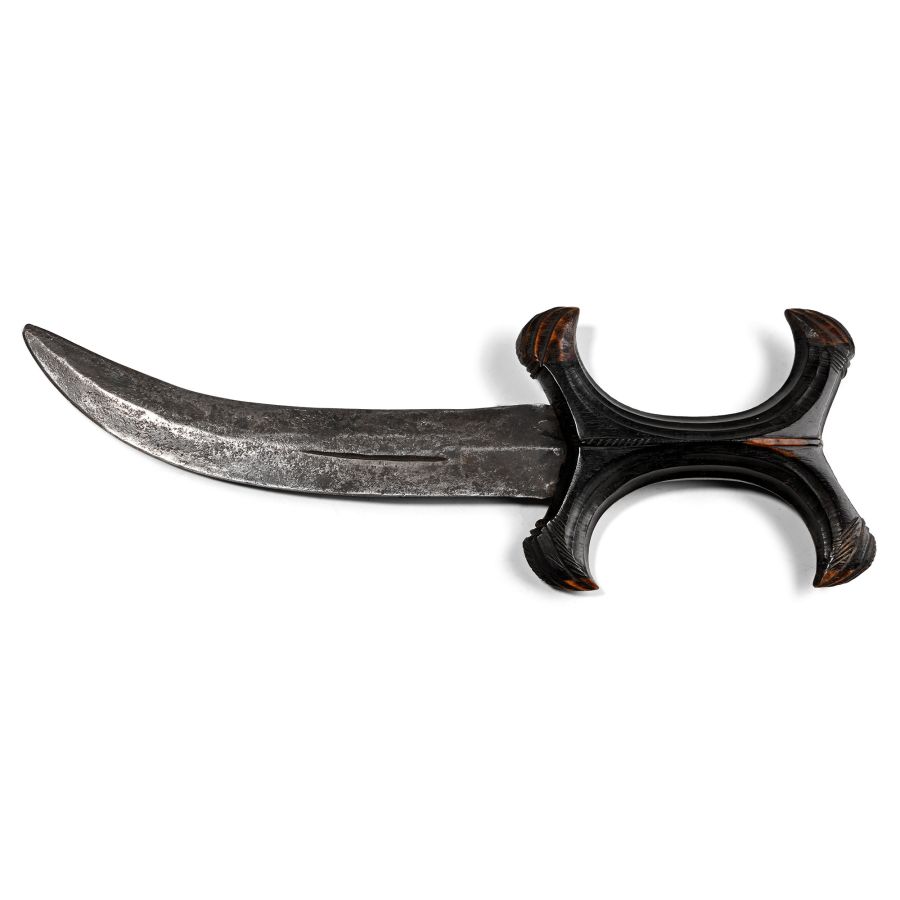
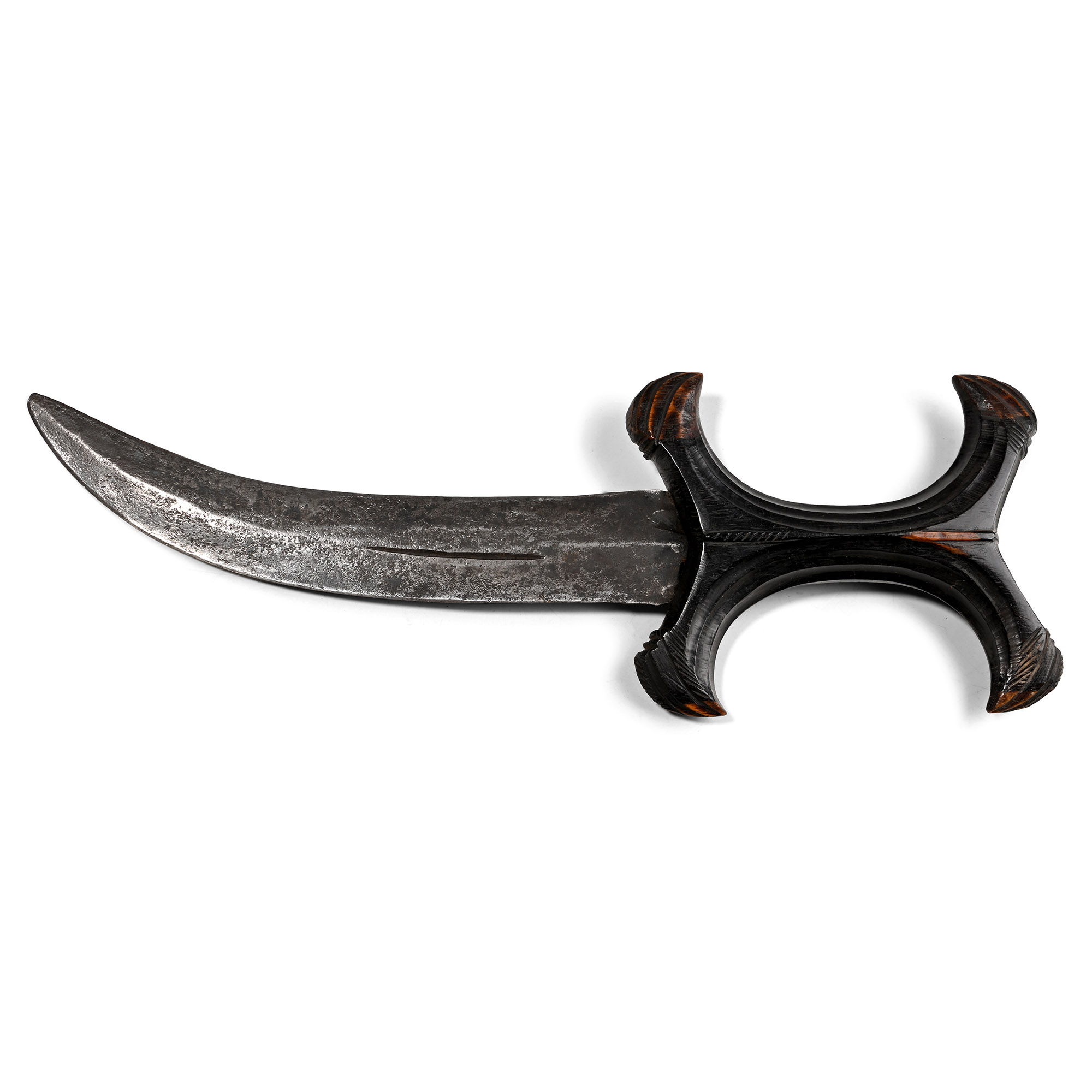
Beja or Hadendoa Curved Dagger
SUDAN, LATE 19TH-EARLY 20TH CENTURY A.D.
11 7/8 in. (188 grams, 30 cm).
Comprising a thin leaf-shaped two-edged blade in an X-shaped wooden hilt with carved fluting and median rib. [No Reserve]
ProvenanceFrom the private collection of Peter Clayton, FCILIP, Dip, Arch, FSA, FRNS, Hemel Hempstead, Hertfordshire, UK; formed since the late 1950s.
CONDITIONTimeLine Auctions follows a vetting process to ensure the authenticity and legality of all items, reinforcing our commitment to integrity and responsible trading. Each antiquity, antique, and coin lot undergoes thorough examination by a vetting committee of at least ten external specialists, professional trade association members, scientists, and archaeologists: Our Vetting Process
AUCTIONS:
TimeLine is a leading auction house specialising in antiquities, ancient art, collectables, natural history, coins, medals, and books. Our auctions offer museums, collectors, historians, and enthusiasts the opportunity to acquire unique and historically significant pieces.
LOT 1950
Beja or Hadendoa Curved Dagger
Estimate £80 - 100€93 - 116 (for guidance only)$108 - 135 (for guidance only)
Opening Bid
£5 (EUR 6; USD 7) +BP*
-
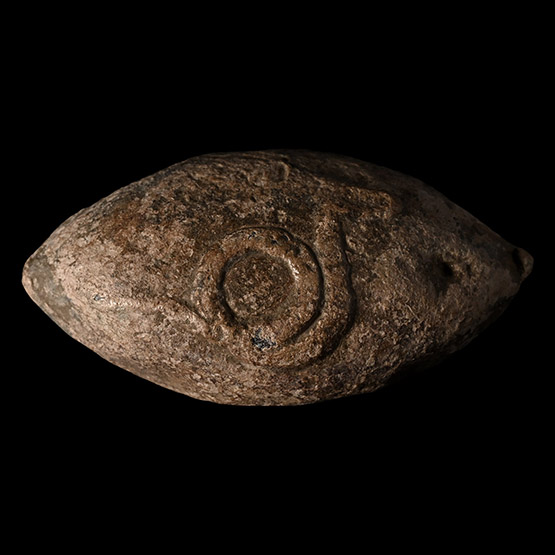
Greek Slingshot with Snake
4th-1st century B.C.Estimate: £200 - 300 (‡+bp*)
Opening Bid: £100
Lentoid in form with raised figure of a coiled snake to one face, possible legend to reverse. 31.2 grams, 31 mm
Private collection, Austria. Private collection, Europe. -
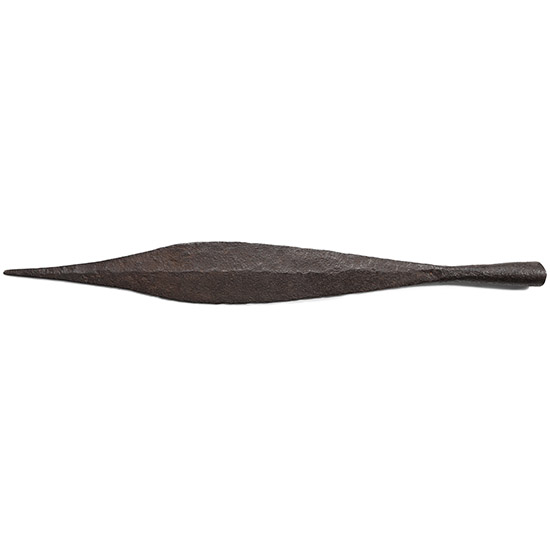
Large Sudanese Socketted Spearhead
Late 19th-early 20th century A.D.Estimate: £60 - 80 (+bp*)
Opening Bid: £5
Large leaf-shaped blade with extended and rounded tip, thick neck, hand-forged split socket with rounded lip. 935 grams, 60 cm
From the private collection of Peter Clayton, FCILIP, Dip, Arch, FSA, FRNS, Hemel Hempstead, Hertfordshire, UK; formed since the late 1950s. -
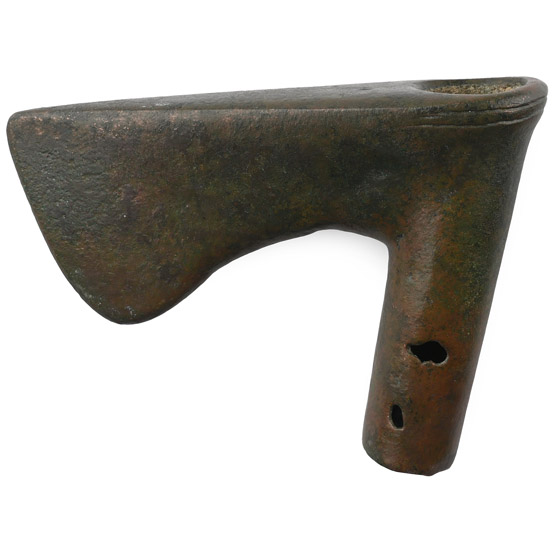
Western Asiatic Bronze Axehead
Late 3rd-early 2nd millennium B.C.Estimate: £150 - 200 (+bp*)
Opening Bid: £80
With a short socketted shaft, the plain rectangular blade broadening towards the cutting edge; side holes on the shaft. 446 grams, 11.4 cm
Ex Abelita family collection, 1980s-2000s.
Unadorned weapons, especially axes, adzes, and picks, were made by Luristan craftsmen using simple clay or stone bivalve moulds, into which a core was inserted to form the socket for the shaft. Typically, the metallic composition consisted of a combination of arsenical bronze and copper, together with a small percentage of lead.
