
Loading, please wait...
LOT 1489
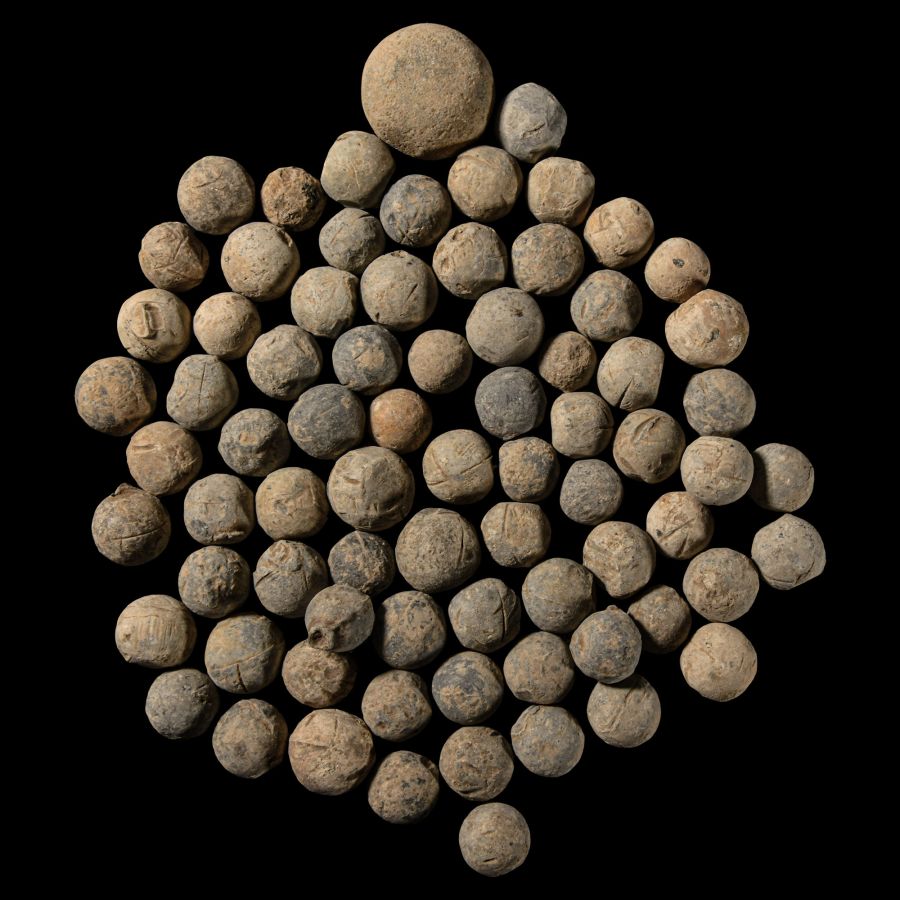
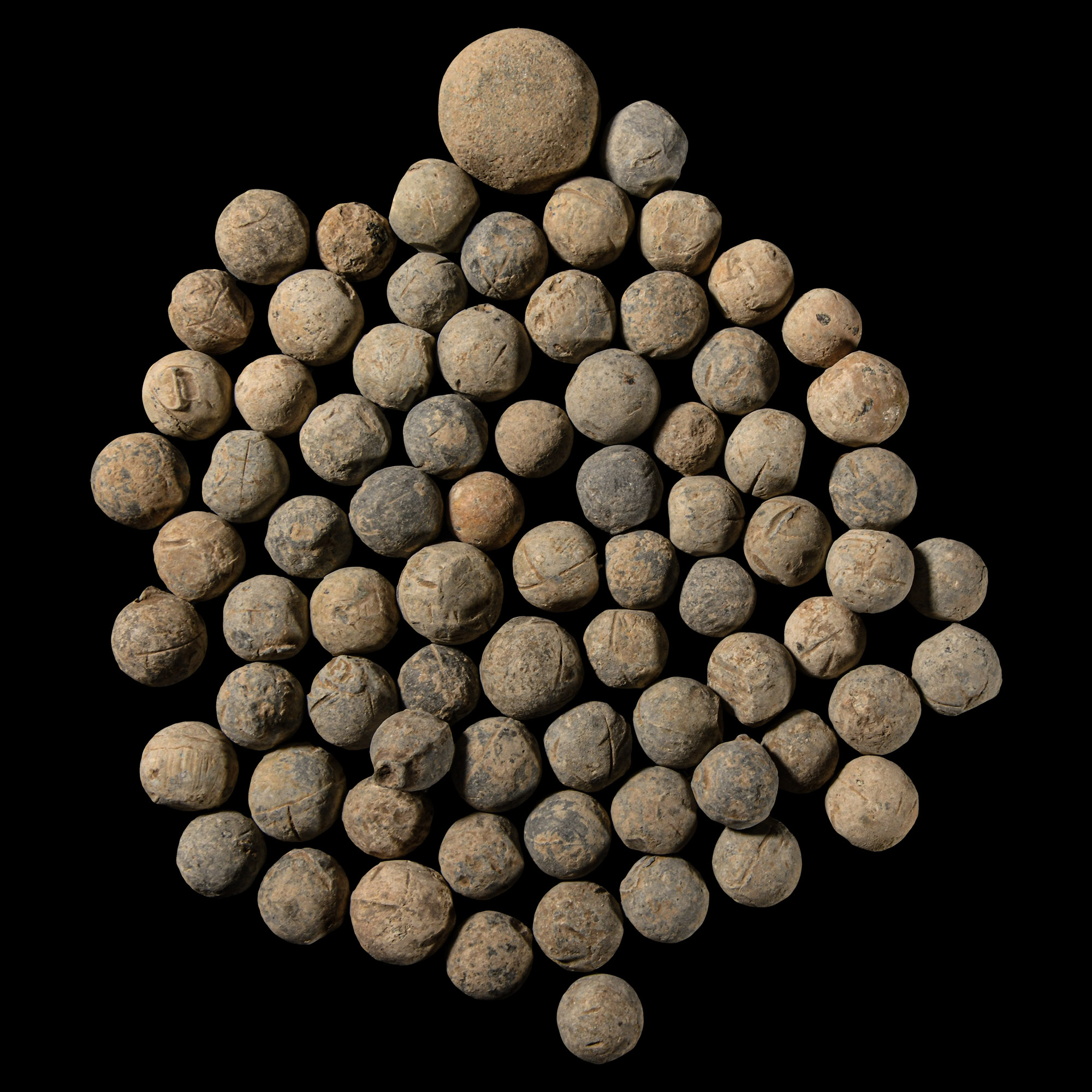
Battle of Waterloo Lead Musket Ball Collection
EARLY 19TH CENTURY A.D.
1/2 - 1 1/8 in. (1.9 kg total, 13-29 mm).
Comprising a quantity of musket balls, some with impact damage or casting sprues. [75, No Reserve]
ProvenanceFound in the vicinity of Waterloo, Belgium.
French family collection, by descent.
Acquired from a private French collector in 2002.
Property of a Nottinghamshire gentleman.
TimeLine Auctions follows a vetting process to ensure the authenticity and legality of all items, reinforcing our commitment to integrity and responsible trading. Each antiquity, antique, and coin lot undergoes thorough examination by a vetting committee of at least ten external specialists, professional trade association members, scientists, and archaeologists: Our Vetting Process
AUCTIONS:
TimeLine is a leading auction house specialising in antiquities, ancient art, collectables, natural history, coins, medals, and books. Our auctions offer museums, collectors, historians, and enthusiasts the opportunity to acquire unique and historically significant pieces.
-
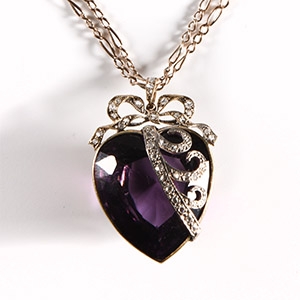
Antique Heart-Shaped Amethyst and Diamond Pendant with Gold Necklace
Circa 1900-1910 A.D.Sold for (Inc. bp): £650
Openwork gold heart-shaped cage pendant comprising a bow, bail and canted retaining band with lateral scrolls all inset with diamond studs; large facetted amethyst; ornate hallmarked 9 carat gold chain in two swags with interstitial spheres and twisted-loop links. 30.53 grams, 76 cm long
Property of an Essex, UK, gentleman. -
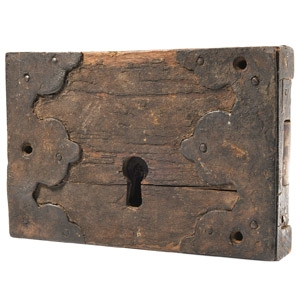
Tudor Period Iron Lock with Mounts
Circa 16th-17th century A.D.Sold for (Inc. bp): £39
Lock with mounting timber structure including keyhole and escutcheon. 1.2 kg, 20.2 x 13.5 cm
Acquired Yarmouth, Suffolk, 1970s. Property of an Essex collector. -
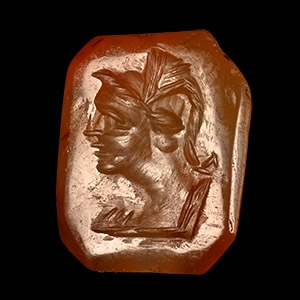
Neoclassical Agate Gemstone with Helmetted Roman Bust
19th century A.D.Sold for (Inc. bp): £52
Sub-rectangular in form, intaglio image of a youthful soldier wearing a high-crested helmet. 2.64 grams, 19 mm
From the property of the late Mr SM, London, UK, 1969-1999.
