
Loading, please wait...
LOT 2092
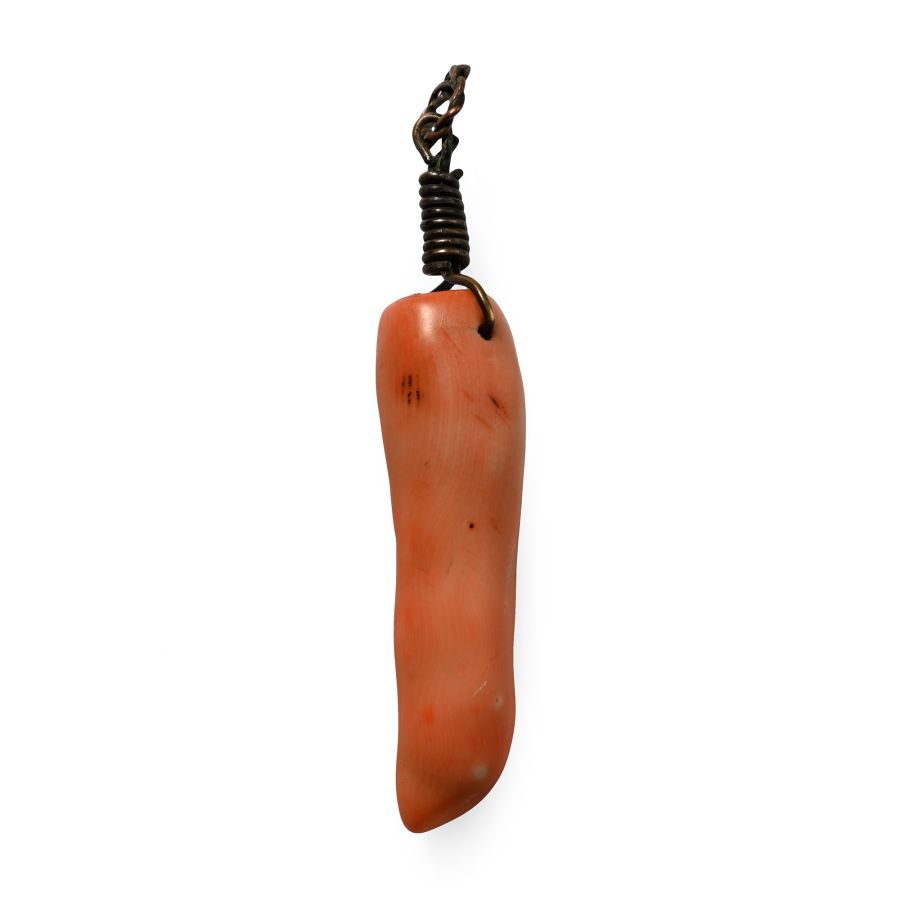
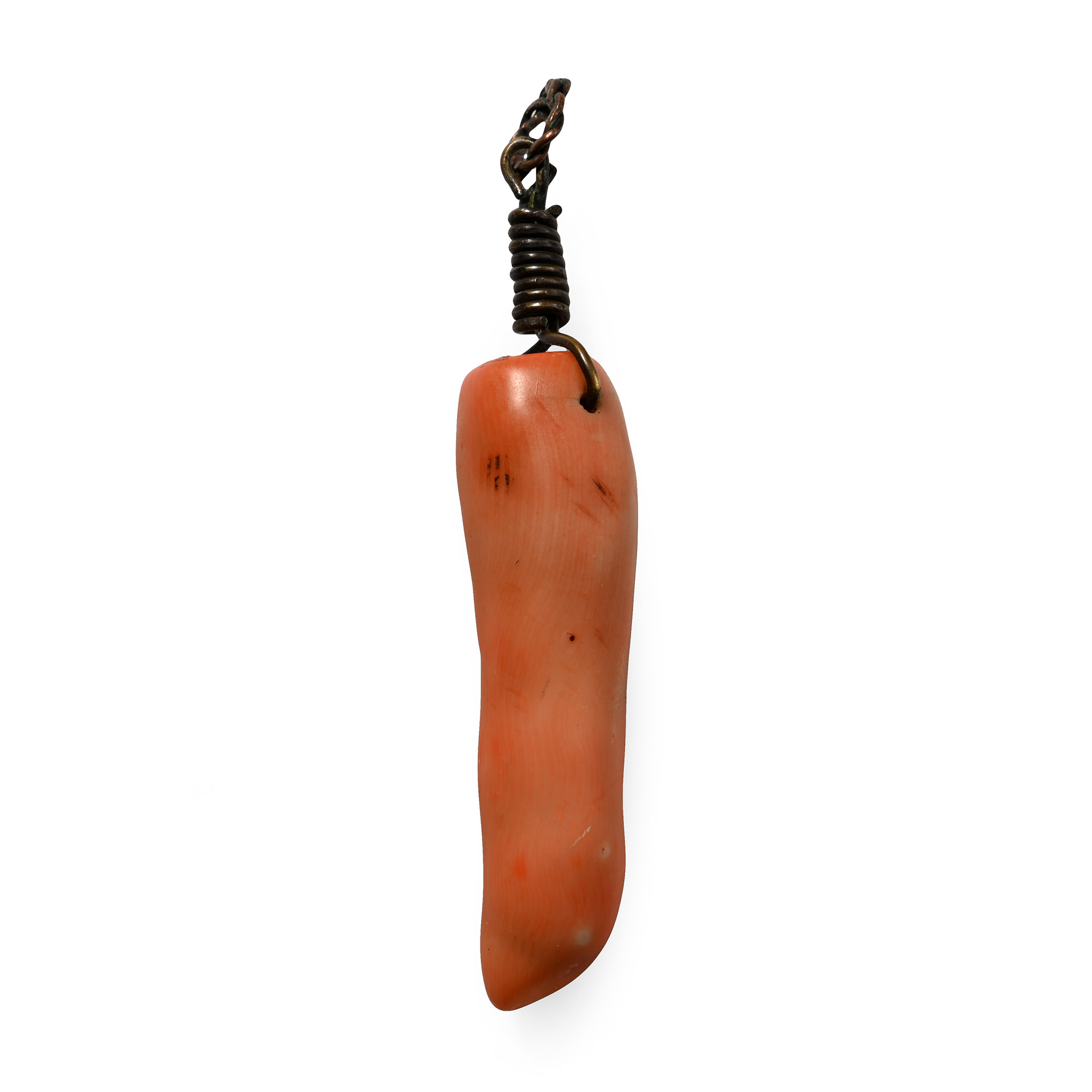
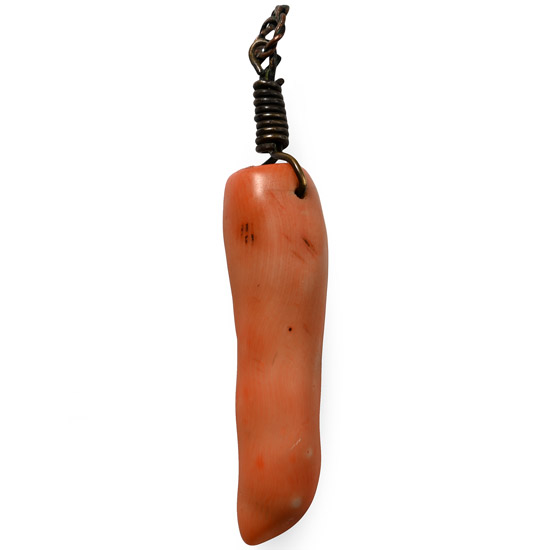
Baroque Style Coral Amulet
17TH-18TH CENTURY A.D.
3 3/8 in. (22.23 grams, 85 mm).
Thick coral branch with natural striations, drilled and set with a silver pendant fitting.
ProvenanceAcquired on the European art market.
CONDITIONTimeLine Auctions follows a vetting process to ensure the authenticity and legality of all items, reinforcing our commitment to integrity and responsible trading. Each antiquity, antique, and coin lot undergoes thorough examination by a vetting committee of at least ten external specialists, professional trade association members, scientists, and archaeologists: Our Vetting Process
AUCTIONS:
TimeLine is a leading auction house specialising in antiquities, ancient art, collectables, natural history, coins, medals, and books. Our auctions offer museums, collectors, historians, and enthusiasts the opportunity to acquire unique and historically significant pieces.
-
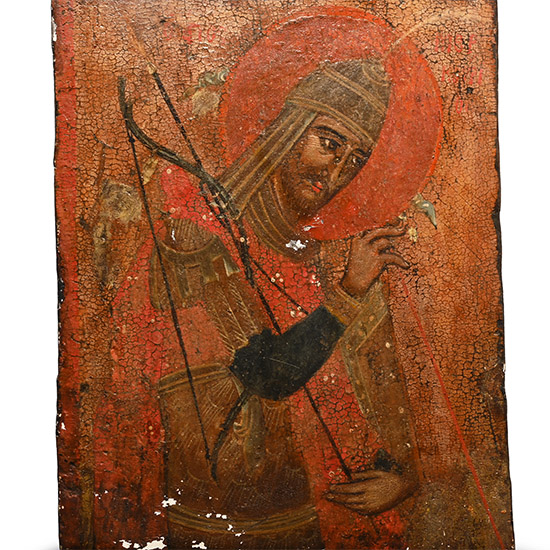
Macedonian Painted Wooden Triptych Panel with Saint Mercury
17th century A.D.Sold for (Inc. bp): £910
Rectangular panel showing a nimbate saint in full armour, supporting a bow and a long spear on his right shoulder, and a shield with his left hand, inscription above; an old handwritten label to the reverse reading 'Judy took it to the British Museum who said it is 17th century from Macedonia. It is only a fragment of the left side of a triptych and is a warrior saint, saint [ ...] os. From George Churchill Xmas 1989'. 127 grams, 14.5 x 11.9 cm
The Cotswold Auction Company, Cheltenham, UK, 14 December 2021, no.97. Private collection, Suffolk. -
.jpg)
Antique Gold Ring with Agate Cameo of an African
Late 17th century A.D.Estimate: £1,500 - 2,000 (+bp*)
Opening Bid: £750
D-section hoop and an oval bezel set with a grey banded agate cameo featuring a mature man in three-quarter view facing left, furrowed brow and short-cropped curly hair. 4.69 grams, 27.33 mm overall, 18.81 mm internal diameter (approximate size British Q 1/2, USA 8 1/2, Europe 18.12, Japan 17)
Acquired on the European art market. -
Baroque Style Coral Amulet
17th-18th century A.D.Sold for (Inc. bp): £117
Thick coral branch with natural striations, drilled and set with a silver pendant fitting. 22.23 grams, 85 mm
Acquired on the European art market.
