
Loading, please wait...
LOT 0337
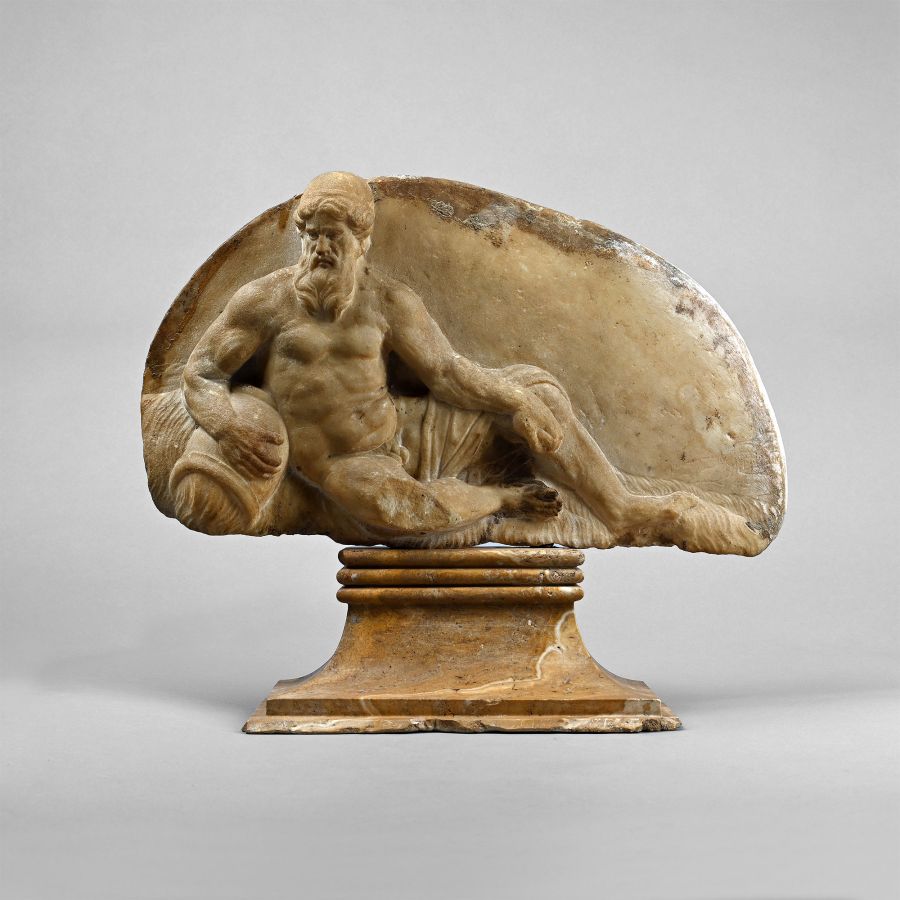
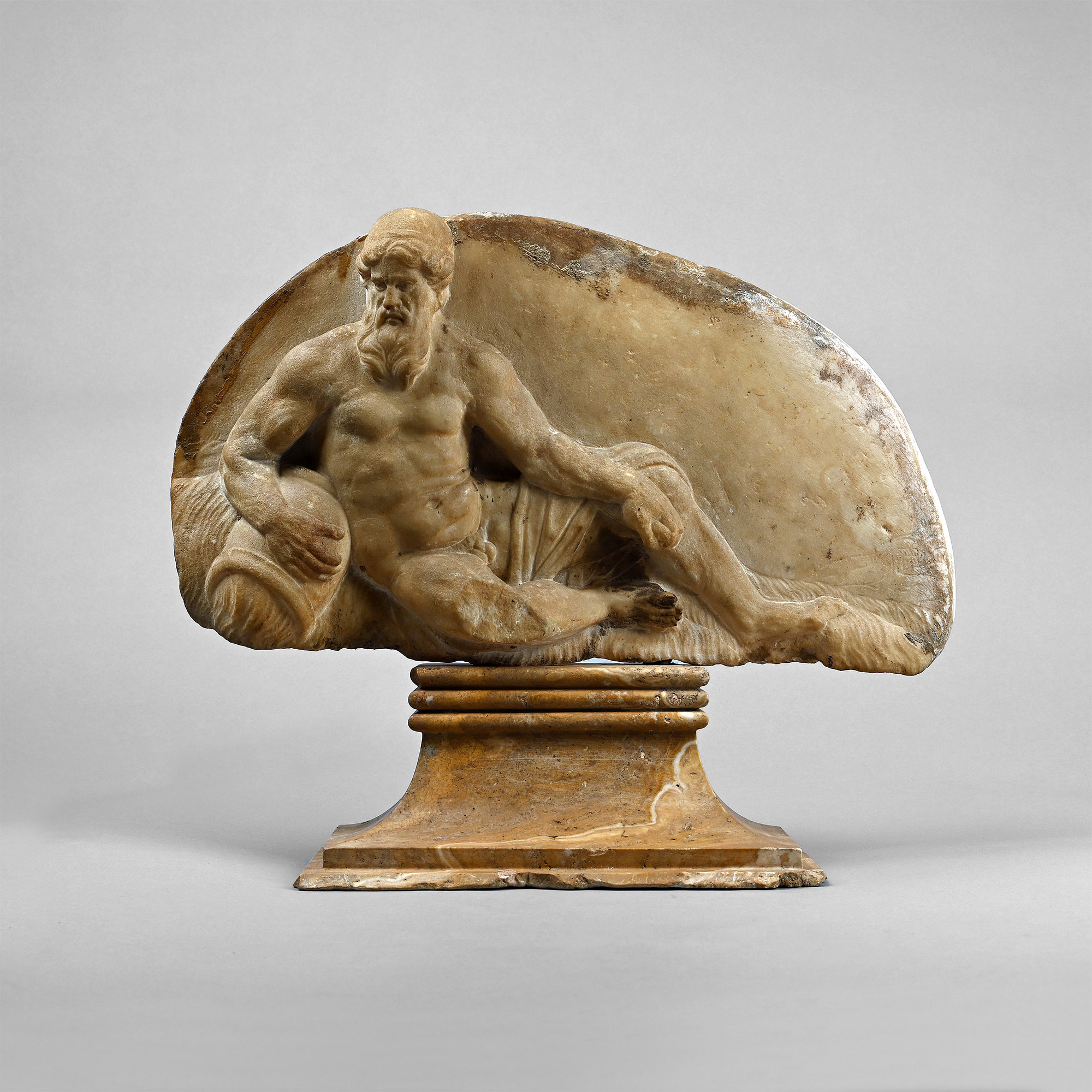
Baroque Period Marble Frieze Depicting a River God
17TH-18TH CENTURY A.D.
17 1/2 in. (13 kg, 44.5 cm wide).
Depicted lying on a riverbed, leaning on his right side, his aged face framed by a rich, flowing beard, his wavy hair held back by a taenia; his body, naked and corpulent, is covered only by a light cloak wrapping his legs; his left hand is stretched forward, his right hand resting on a vase pouring water from the river; the figure stands out against a smooth, semicircular cut wall; mounted on an old collection marble base. [No Reserve]
ProvenancePreviously in an old European collection, probably from the 18th/19th century, based on the old collection marble base and mounting technique.
Private collection, France.
This lot has been checked against the Interpol Database of stolen works of art and is accompanied by search certificate no. 13239-251810.
The representations of river or sea divinities usually depicted them in the same position, with naked torso wrapped only in a wide cloak, and usually bearded. The sculpture bears similarities with the sculpture of a river divinity, in the Archaeological Museum of Napoli (inv. 5977), from Rome and belonging to the Farnese Collection, from the second half of the 2nd century A.D.
CONDITIONTimeLine Auctions follows a vetting process to ensure the authenticity and legality of all items, reinforcing our commitment to integrity and responsible trading. Each antiquity, antique, and coin lot undergoes thorough examination by a vetting committee of at least ten external specialists, professional trade association members, scientists, and archaeologists: Our Vetting Process
AUCTIONS:
TimeLine is a leading auction house specialising in antiquities, ancient art, collectables, natural history, coins, medals, and books. Our auctions offer museums, collectors, historians, and enthusiasts the opportunity to acquire unique and historically significant pieces.
-
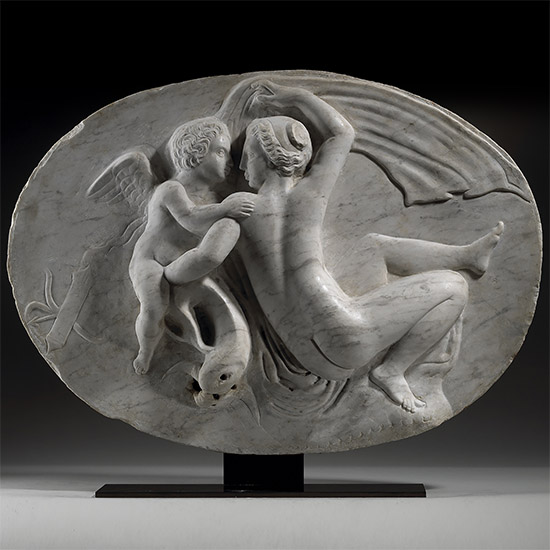
Renaissance Fontainebleau Marble Plaque with Psyche Revived by Eros's Kiss
France, 16th century A.D.Sold for (Inc. bp): £3,380
Ellipsoid plaque with carved high-relief scene depicting Psyche crouching with left leg extended, her right arm raised to support a veil, head turned towards Eros, left arm passing between the legs of Eros, standing nude with wings spread to kiss Psyche, his bow and quiver cast aside in the field. 33.5 kg total including stand, 63 cm wide
Private collection, UK. This lot has been checked against the Interpol Database of stolen works of art and is accompanied by search certificate number no.13396-259009. -
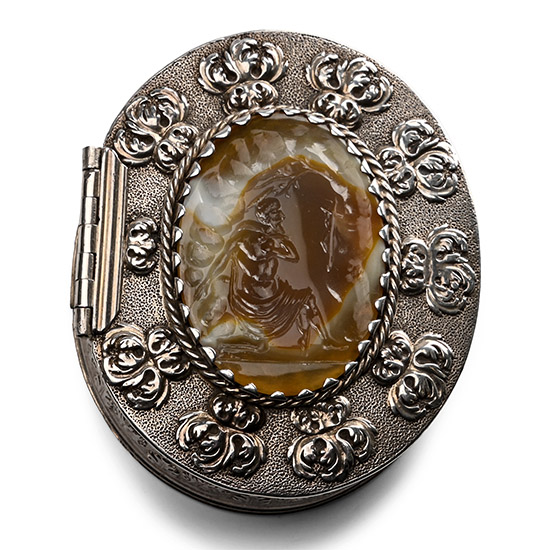
Post Medieval Silver Snuff Box Set with Agate Intaglio of Saint Jerome
Italy, 16th-17th century A.D.Estimate: £1,000 - 1,400 (+bp*)
Opening Bid: £500
Decorated with a repeating motif of acanthus leaves and facing masks of Bacchus; lid of set with an agate intaglio of Saint Jerome kneeling before a crucifix within a rope-twist and dog's tooth border, surrounded by leafy swags on a pounced field; old collector's label 'Walecki Collection 207006' to inner lid. 52.7 grams, 53 mm
Private collection, Europe. Acquired on the English art market. -
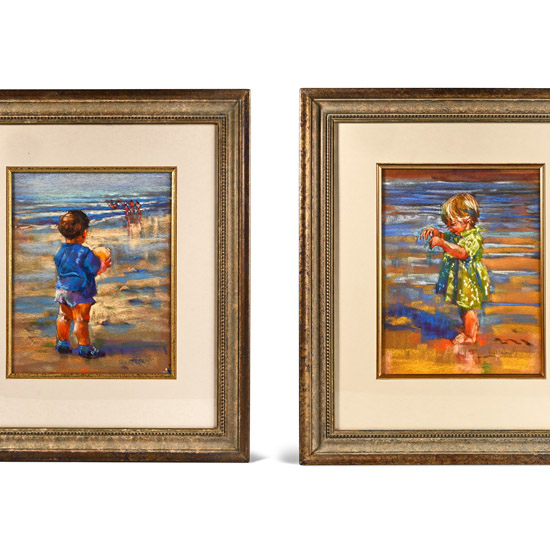
Pair of Pastel Paintings of Children on a Beach by Sue McDough
Circa 1999 A.D.Sold for (Inc. bp): £85
Comprising: a pastel of a young girl dressed in a green dress, playing with sand, her bare feet sinking in the sand, and shallow waves lapping in the background; the other pastel showing a young boy dressed in blue and holding a ball in his hands, gazing into the distance where a group of people are playing in the water; both set in glazed frames and signed to the bottom right-hand corner. 4.65 kg total, 46 x 54 - 47 x 54.5 cm
Property of an Essex, UK, lady. Accompanied by two original receipts from Frinton Gallery.
