
Loading, please wait...
LOT 2108
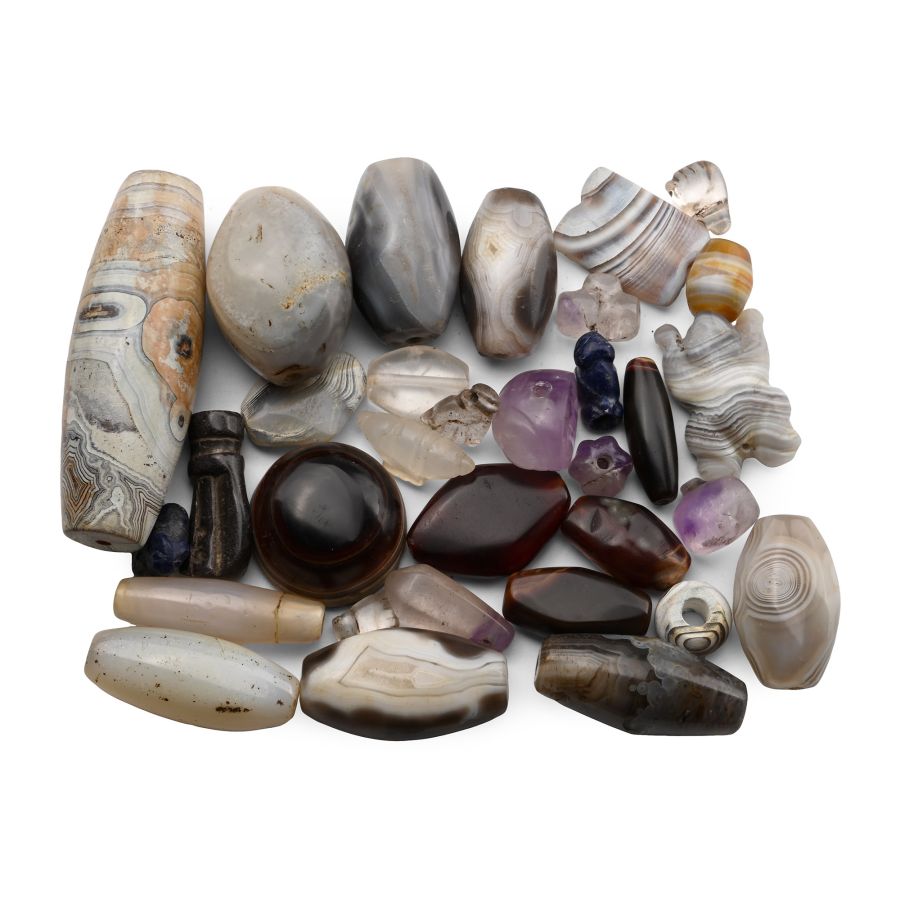
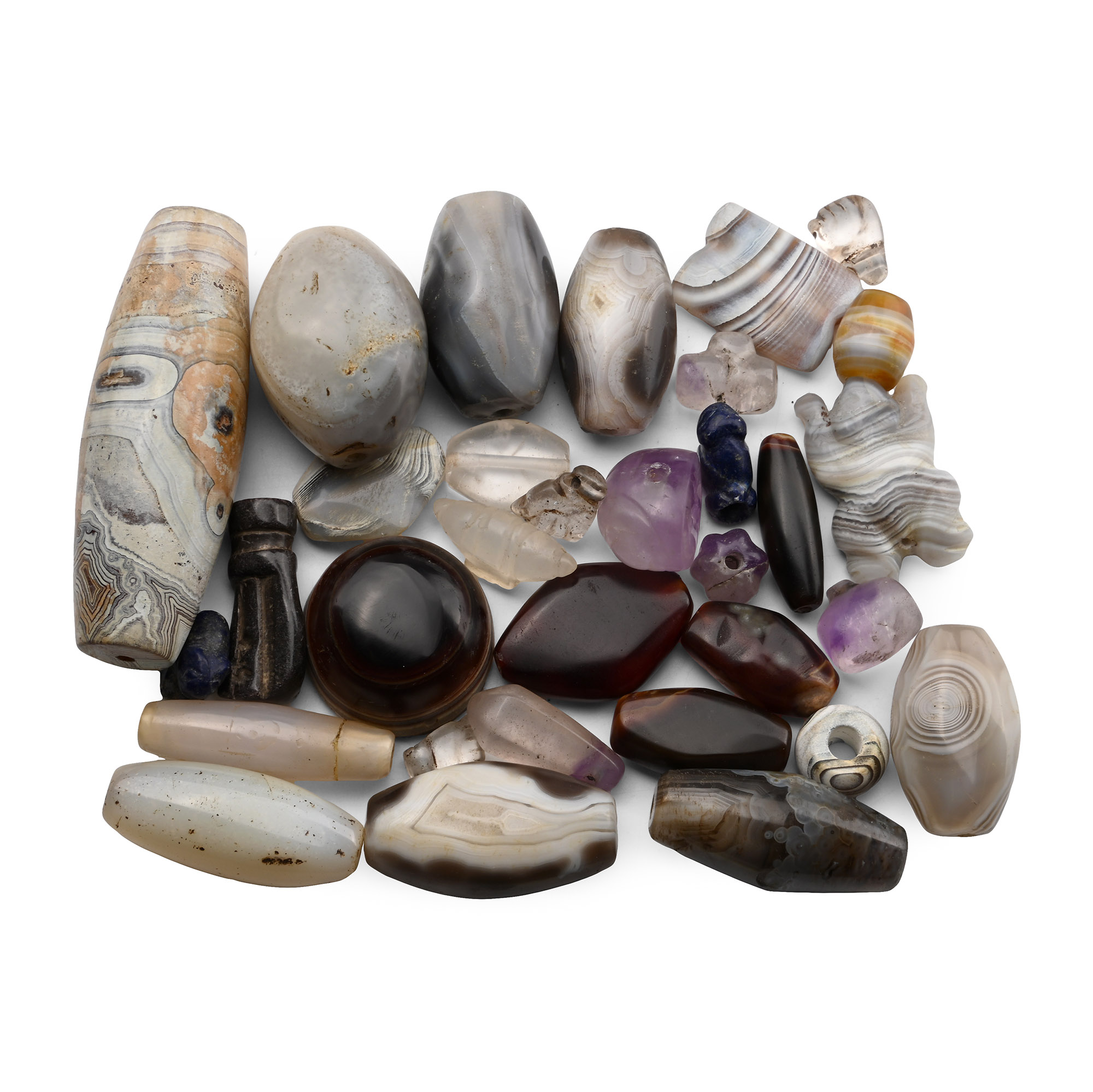
Banded Agate Bead and Amulet Collection
20TH CENTURY A.D.
1/2 - 2 3/4 in. (293 grams total, 12-69 mm).
Comprising fusiform, tabular, barrel-shaped and other types with amethyst and other pendants. [32, No Reserve]
ProvenancePrivate collection, UK.
CONDITIONTimeLine Auctions follows a vetting process to ensure the authenticity and legality of all items, reinforcing our commitment to integrity and responsible trading. Each antiquity, antique, and coin lot undergoes thorough examination by a vetting committee of at least ten external specialists, professional trade association members, scientists, and archaeologists: Our Vetting Process
AUCTIONS:
TimeLine is a leading auction house specialising in antiquities, ancient art, collectables, natural history, coins, medals, and books. Our auctions offer museums, collectors, historians, and enthusiasts the opportunity to acquire unique and historically significant pieces.
-
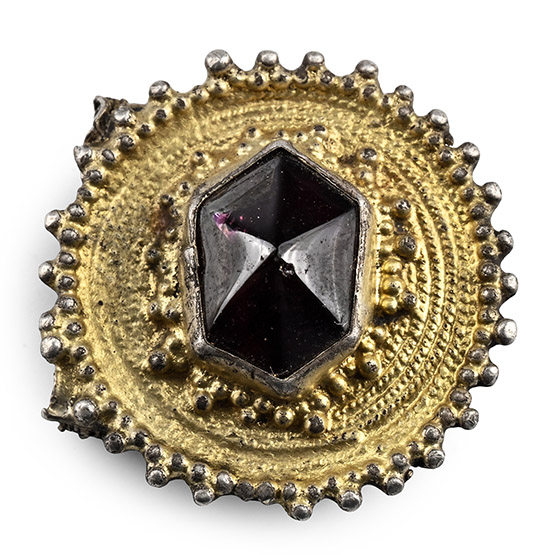
Tudor Period Silver-Gilt Mount with Facetted Garnet
16th-17th century A.D.Sold for (Inc. bp): £169
Discoid plaque with granules to the rim, concentric rings to the face and central hexagonal cell with inset garnet gemstone, mounting loops to reverse. 3.16 grams, 20 mm
Ex German art market, 2000s. Acquired from an EU collector living in London. From the collection of a Surrey, UK, gentleman. -
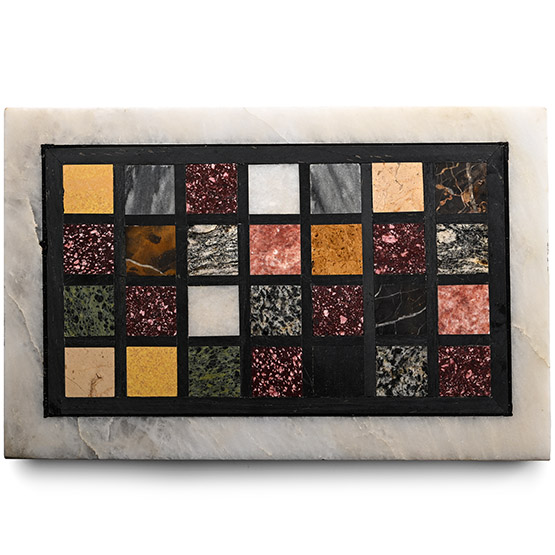
Grand Tour Specimen Marble Panel
Late 19th-early 20th century A.D.Sold for (Inc. bp): £468
A rectangular plaque with four rows and seven columns of various marble and imperial porphyry specimens, from the Grand Tour Set. 2.86 kg, 27.5 x 18 cm
Acquired at Shepton Mallet Fair, Somerset, UK, in 2010. From the private collection of a Somerset gentleman. -
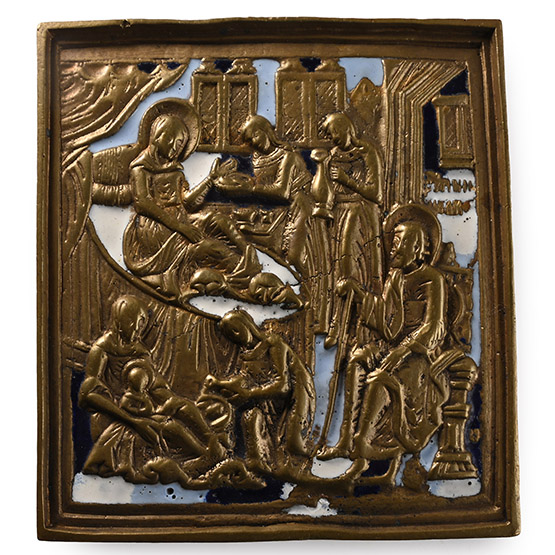
Russian Orthodox Enamelled Bronze Travel Icon with the Birth of the Virgin
19th century A.D.Estimate: £180 - 240 (+bp*)
Opening Bid: £90
Presenting an architectural setting with figures in two chambers framed with cornices, columns and furnitures; the upper chamber showing Saint Anna in birthing bed with two attendants; the lower room with two attendants bathing an infant; on the right Saint Joachim seated upon a cathedra; Old Slavonic inscription reciting ‘The birth of the most holy mother of God’. 230 grams, 98 mm
Acquired from Chris Martin-Zakheim, Iconastas, 5 Piccadilly Arcade, London SW1. From the private collection of a West London, UK, gentleman, formed since the early 2000s.
According to the Protoevangelium of James, Mary's parents were called Anna and Joachim and conceived Mary at a late age.
