
Loading, please wait...
LOT 1181
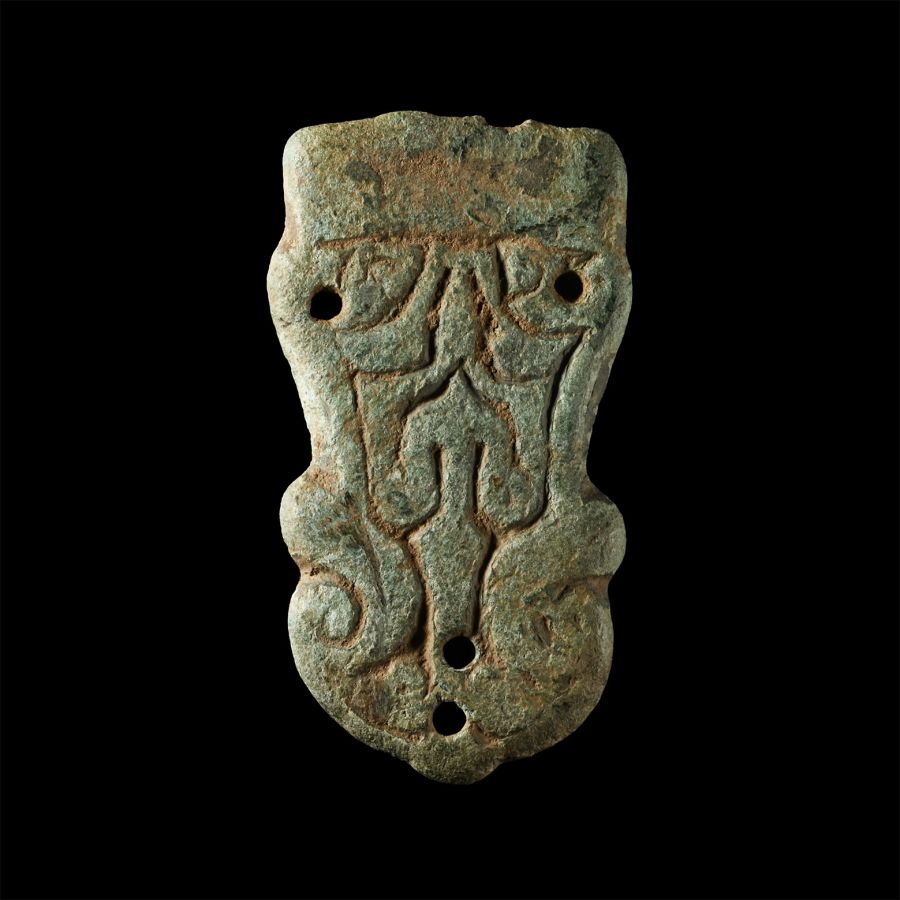
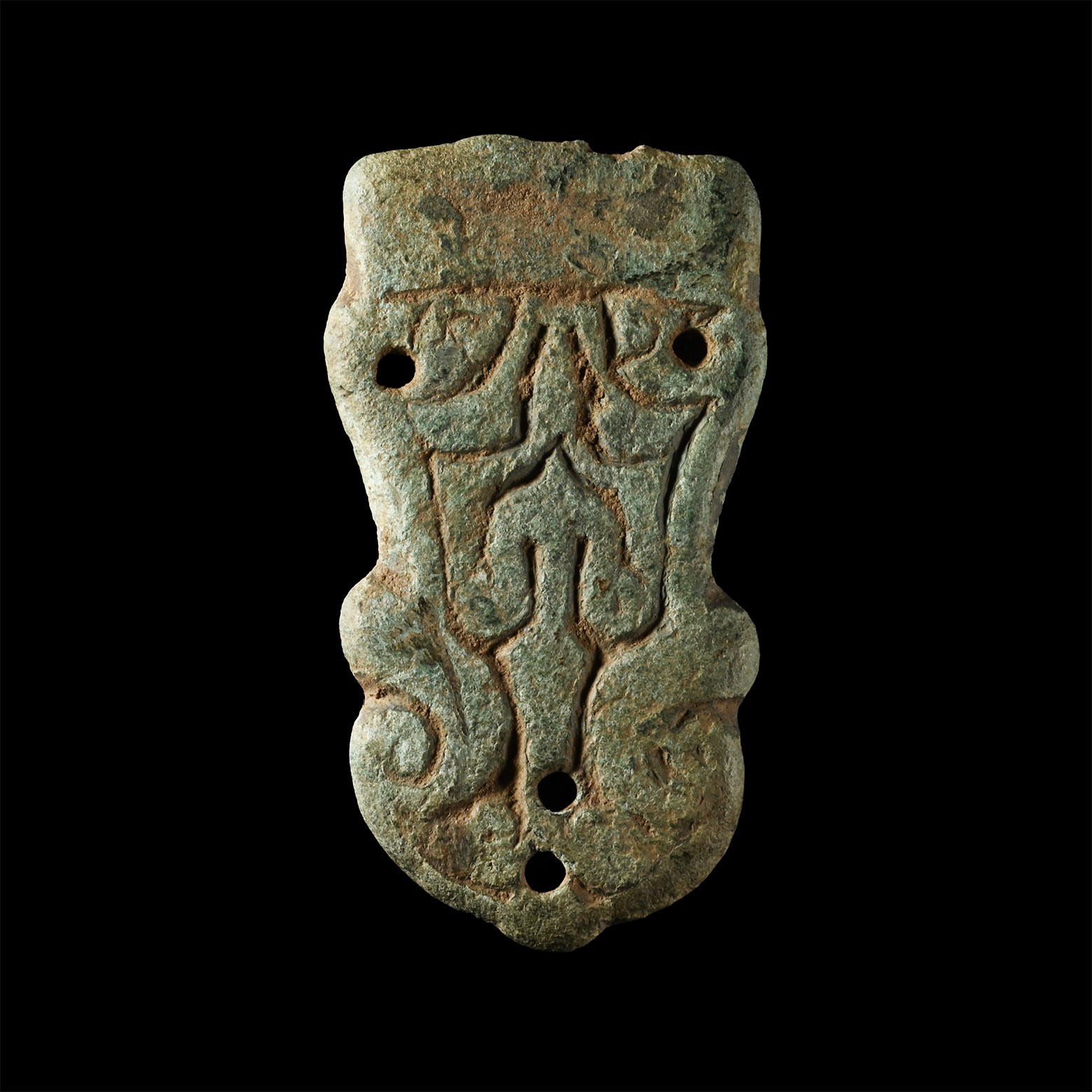
Baltic Viking Bronze Strap End
9TH-11TH CENTURY A.D.
2 in. (18.8 grams, 51 mm).
Tongue-shaped plaque with fixing lug to the reverse and four rivet-holes; Byzantine-inspired design of fleshy vegetation within segmented border. [No Reserve]
ProvenanceUK private collection formed before 2000.
Ex North London, UK, gallery.
Cf. Sedov, B.B., Finno-Ugri i Balti v Epokhi Srednevekovija, Moscow, 1987, pl.LX(40,41), pl.LXXXI (14,15).
CONDITIONTimeLine Auctions follows a vetting process to ensure the authenticity and legality of all items, reinforcing our commitment to integrity and responsible trading. Each antiquity, antique, and coin lot undergoes thorough examination by a vetting committee of at least ten external specialists, professional trade association members, scientists, and archaeologists: Our Vetting Process
AUCTIONS:
TimeLine is a leading auction house specialising in antiquities, ancient art, collectables, natural history, coins, medals, and books. Our auctions offer museums, collectors, historians, and enthusiasts the opportunity to acquire unique and historically significant pieces.
-
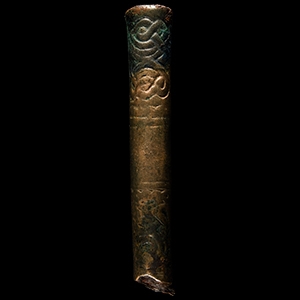
Viking Age Bronze Knife Handle
9th-10th century A.D.Sold for (Inc. bp): £143
Composed of a tubular bronze handle with engraved interlaced geometric design. 59.4 grams, 10 cm
From the collection of a North American gentleman, formed in the 1990s.
A similar knife can be seen in a female grave from Tuukkala, Mikkeli, Finland, still with its blade and housed in a magnificent bronze openwork scabbard. Knives were used by men and women in many different ways, including for war. -
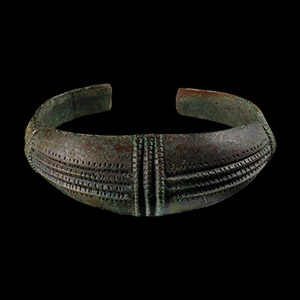
Viking Age Bronze Decorated Bracelet
9th-11th century A.D.Sold for (Inc. bp): £520
With penannular hoop with tapering arms, cross motif composed of three horizontal and three vertical notched ribs, carinated arms. 63.8 grams, 71 mm
From the collection of a North American gentleman, formed in the 1990s.
Similar bracelets were found in pair on the remains of the left forearm bones of a female, in grave 83 of Hemlanden cemetery in Birka. These bracelets, as visible in this grave, were usually worn in pairs on both arms. -
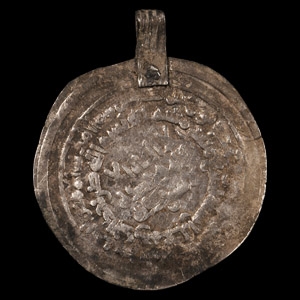
Large Viking Age Plundered Islamic Silver Coin Pendant
9th-11th century A.D.Sold for (Inc. bp): £104
Islamic dirham coin pendant with ribbed suspension loop attached. 2.9 grams, 36 mm
From the collection of a North American gentleman, formed in the 1990s.
