
Loading, please wait...
LOT 1457
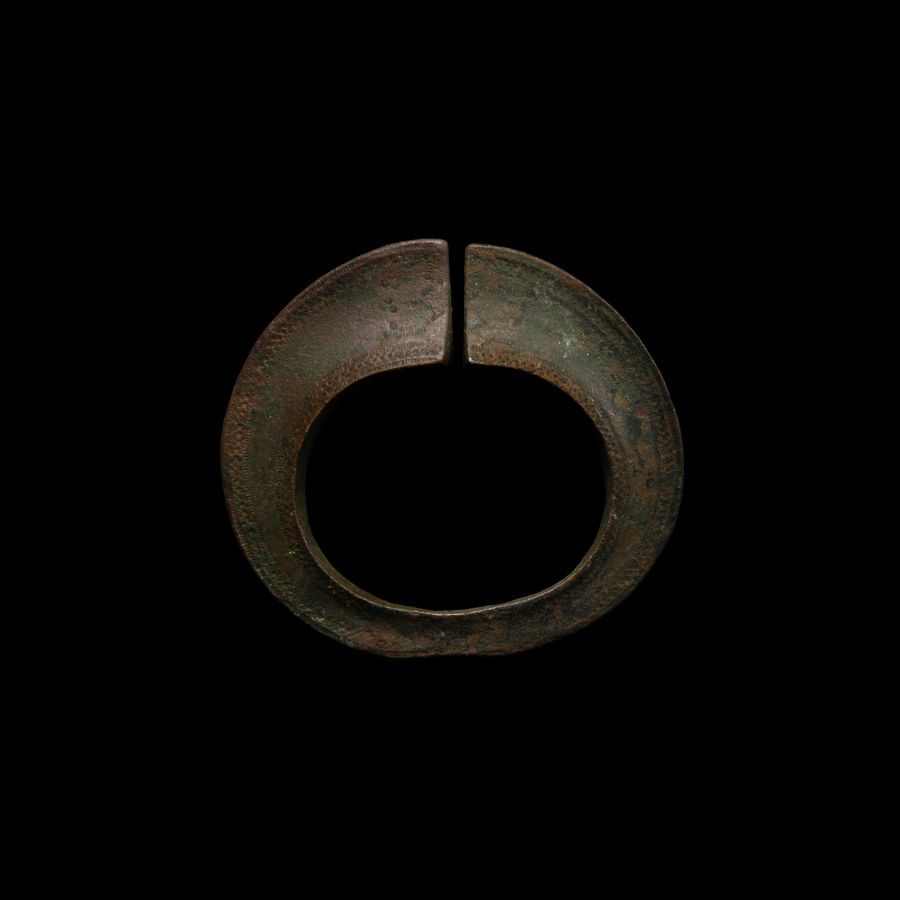
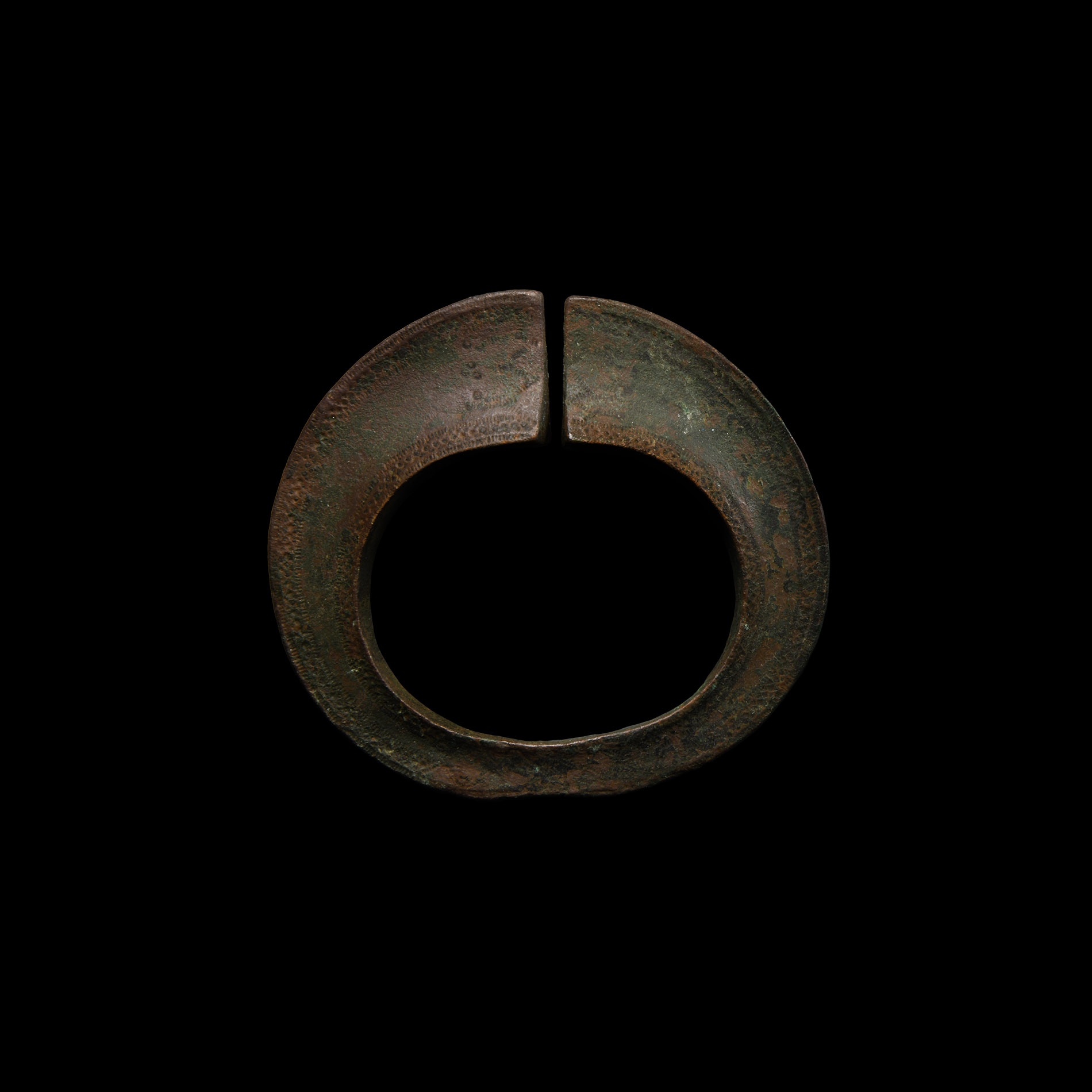
Baltic Decorated Bronze Bracelet
9TH-10TH CENTURY A.D.
3 3/4 in. (157 grams, 95 mm).
With flange to both rims and bifacial ornament, bands of punched pellet and saltire detailing to the edges of each face and the outer rim, pointillé chevron, pellet and other motifs flanking the gap and on the hoop opposite; Latvian-Baltic type. [No Reserve]
ProvenanceFrom the collection of a North American gentleman, formed in the 1990s.
LiteratureCf. Sedov, B.B., Finno-Ugri i Balti v Epokhi Srednevekovija, Moscow, 1987, pl.CVII (28); Latvian Academy of Culture, Catalogue of Endangered Latvian Archaeological Artefacts, Riga, 2016, p.6, no.9.
FootnotesThe warrior bracelets were very often decorated with symbols of divinities. The zig-zag line here visible are the symbol of Mara, the deity of earth and water and all the creatures within. An insight into her position within the ancient beliefs abound in dainas, and are just as often visually reflected in Latvian ornamental design. This symbol dates back to the Iron Age.
CONDITIONTimeLine Auctions follows a vetting process to ensure the authenticity and legality of all items, reinforcing our commitment to integrity and responsible trading. Each antiquity, antique, and coin lot undergoes thorough examination by a vetting committee of at least ten external specialists, professional trade association members, scientists, and archaeologists: Our Vetting Process
AUCTIONS:
TimeLine is a leading auction house specialising in antiquities, ancient art, collectables, natural history, coins, medals, and books. Our auctions offer museums, collectors, historians, and enthusiasts the opportunity to acquire unique and historically significant pieces.
-
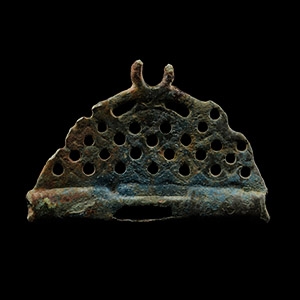
Viking Age Openwork Bronze Pendant
9th-11th century A.D.Sold for (Inc. bp): £20
With tubular bar, semi-circular plate with decorative circular piercings and remains of suspension loop. 20.9 grams, 62 mm
From the collection of a North American gentleman, formed in the 1990s. -
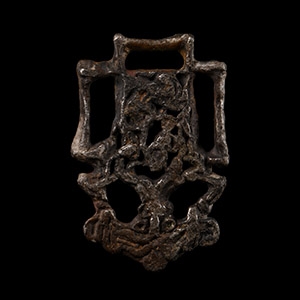
Viking Age Silver Openwork Strap End
9th-11th century A.D.Sold for (Inc. bp): £52
With stylised hammer motif and three surrounding brackets to accept straps. 16.4 grams, 43 mm
From the collection of a North American gentleman, formed in the 1990s. -
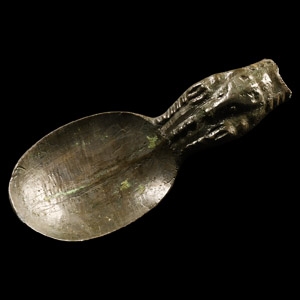
Viking Age Bronze Ceremonial Spoon with Bear's Head and Paws
Circa 8th century A.D.Sold for (Inc. bp): £182
The oval bowl with gently curved handle formed as a stylised bear in relief, displaying head and paw detailing. 12.9 grams, 71 mm
From the private collection of a London gentleman, from his grandfather's collection formed before the early 1970s.
