
Loading, please wait...
LOT 2051
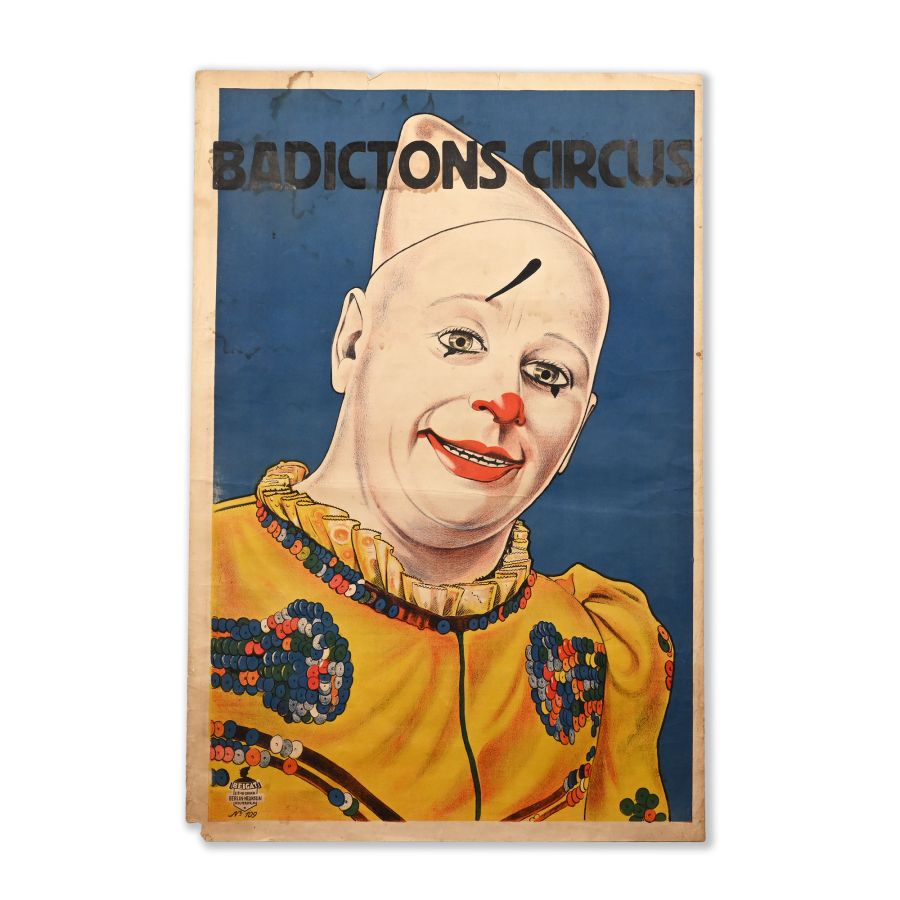
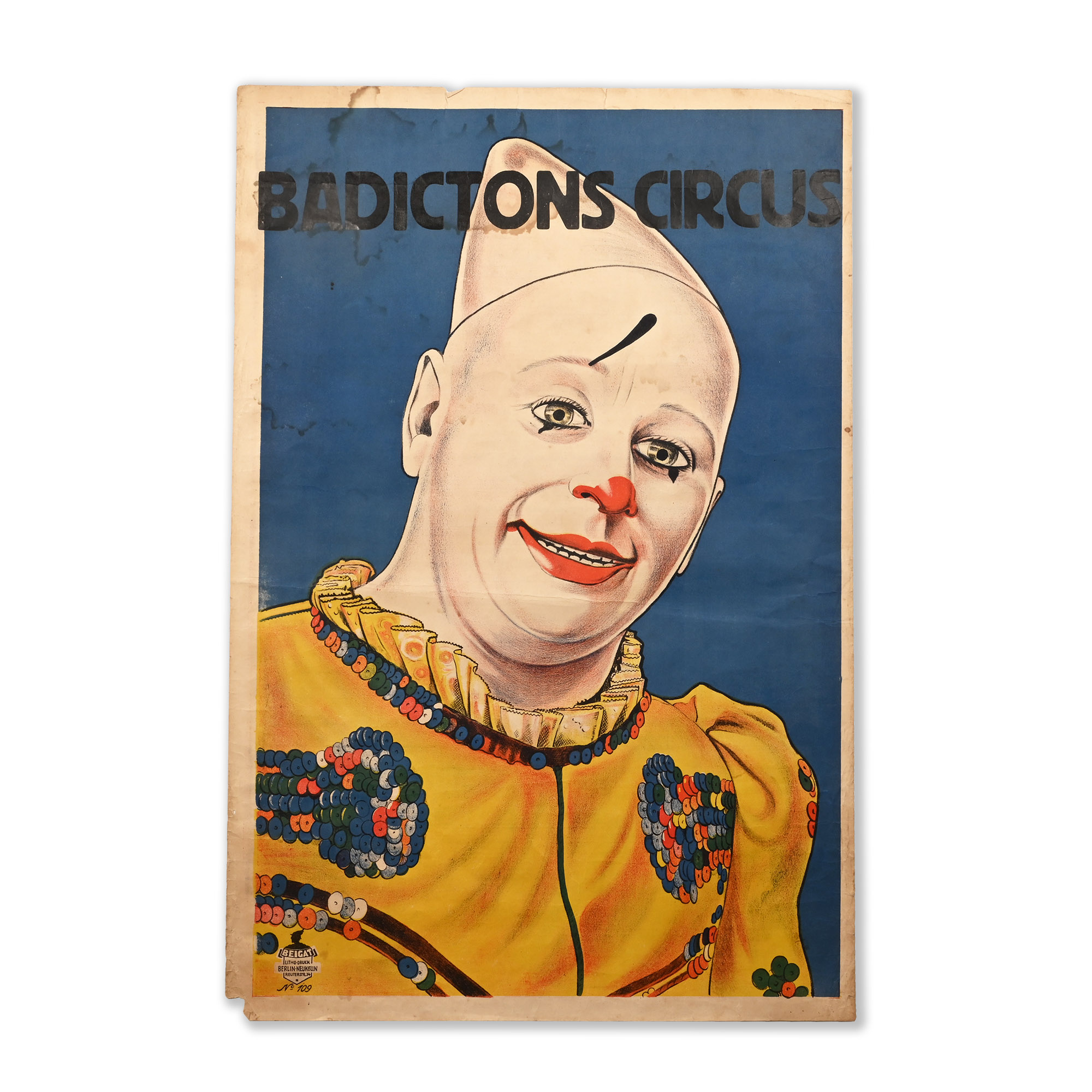
Badictons Circus Original Advertising Poster
1920S A.D.
27 3/4 x 18 1/4 in. (22 grams, 70.5 x 46.5 cm).
Off-white ground with overprinted pierrot image, 'Badictons Circus' title; printer's logo bottom left 'Beigat Litho-Druck / Berlin-NeuKolln / Reuterstr.34' and reference 'No.109'. [No Reserve]
ProvenanceAcquired on the UK art market.
Property of a Harwich, UK, collector.
TimeLine Auctions follows a vetting process to ensure the authenticity and legality of all items, reinforcing our commitment to integrity and responsible trading. Each antiquity, antique, and coin lot undergoes thorough examination by a vetting committee of at least ten external specialists, professional trade association members, scientists, and archaeologists: Our Vetting Process
AUCTIONS:
TimeLine is a leading auction house specialising in antiquities, ancient art, collectables, natural history, coins, medals, and books. Our auctions offer museums, collectors, historians, and enthusiasts the opportunity to acquire unique and historically significant pieces.
-
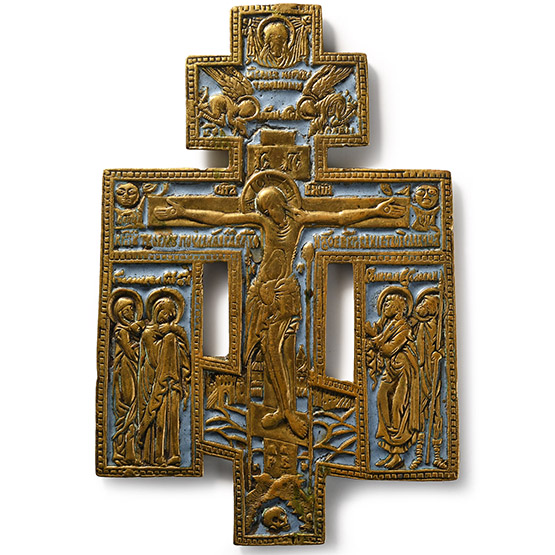
Russian Orthodox Enamelled Bronze Travel Icon with Christ Flanked by Mary, Maria, and Saint John
19th century A.D.Sold for (Inc. bp): £312
Representing the Saviour on the cross, the titulum inscribed with the letters 'ΙC ΧΡ' (Jesus Christ); Cyrillic inscriptions over the sun (Солнце) and the moon (Луна), flanking Jesus and above the heads of the figures: Mary of Magdala (Мария Магдала), the Mother of God ('ΜΡ ϴΥ'), Saint John the Theologian (Св Иоанн) and Saint Longinus (Св Лонгин); on the background the symbols of the Passion (sponge on reed, spear and a skull set on stones marking the site as Golgotha, twisted cords or wire, skan) and the city of Jerusalem; on the upper part of the cross the Archangels Michael and Gabriel with cloth-covered hands, the Mandylion above them. 270 grams, 16.6 cm
Acquired from Chris Martin-Zakheim, Iconastas, 5 Piccadilly Arcade, London SW1. From the private collection of a West London, UK, gentleman, formed since the early 2000s.
Orthodox travel icons were used by the faithful to carry a sacred representation with them during their journeys, offering protection and a constant spiritual connection. The icon features meticulous craftsmanship with intricate details of the Passion and Death of the Saviour, according to the Byzantine iconography. -
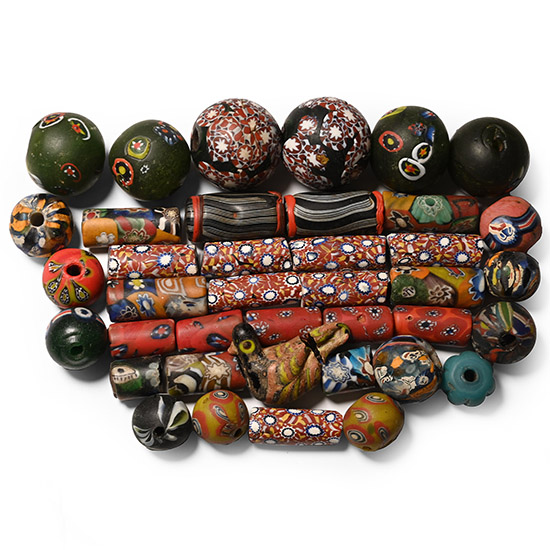
Mixed Elaborate Glass Bead Collection
20th century A.D.Sold for (Inc. bp): £195
Comprising a colourful mix of cylindrical and spherical beads, including some millefiori examples. 454 grams total, 18-32 mm
From the family collection of a Hampstead gentleman; formerly acquired in the 1980s. -
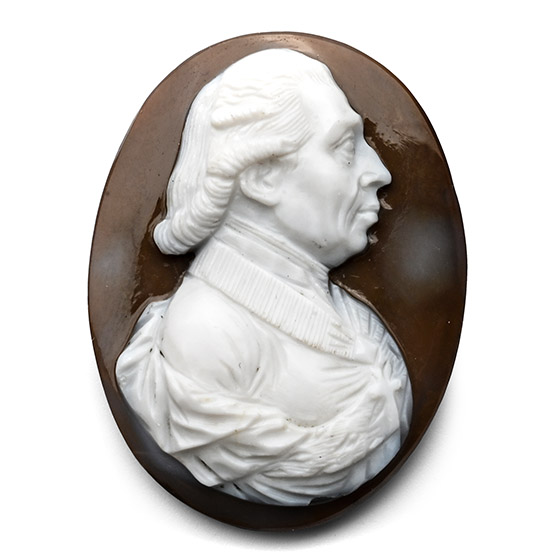
Post Medieval Agate Cameo of Bishop Karl Theodor Anton Maria Von Dalberg
Germany, 19th century A.D.Estimate: £350 - 450 (+bp*)
Opening Bid: £175
Ellipsoid with reserved profile of Karl Theodor Anton Maria Von Dalberg facing left, attributed to Johann Martin Bückle (1742-1811). 3.52 grams, 25 mm
Private collection, Europe. Acquired on the English art market.
Karl Theodor Anton Maria von Dalberg (February 8, 1744 - February 10, 1817) was a Catholic German bishop and statesman. Throughout his career, he held various significant positions, including Prince-Archbishop of Regensburg, Arch-Chancellor of the Holy Roman Empire, Bishop of Constance and Worms, Prince-Primate of the Confederation of the Rhine, and Grand Duke of Frankfurt.
