
Loading, please wait...
LOT 2153
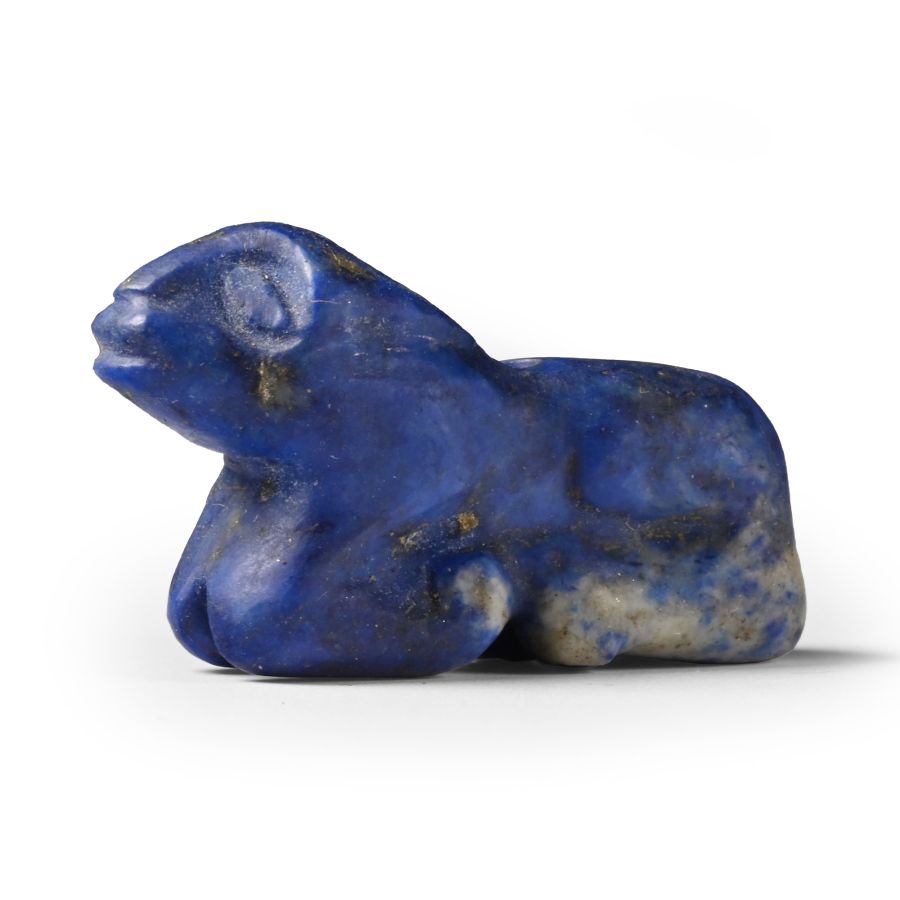
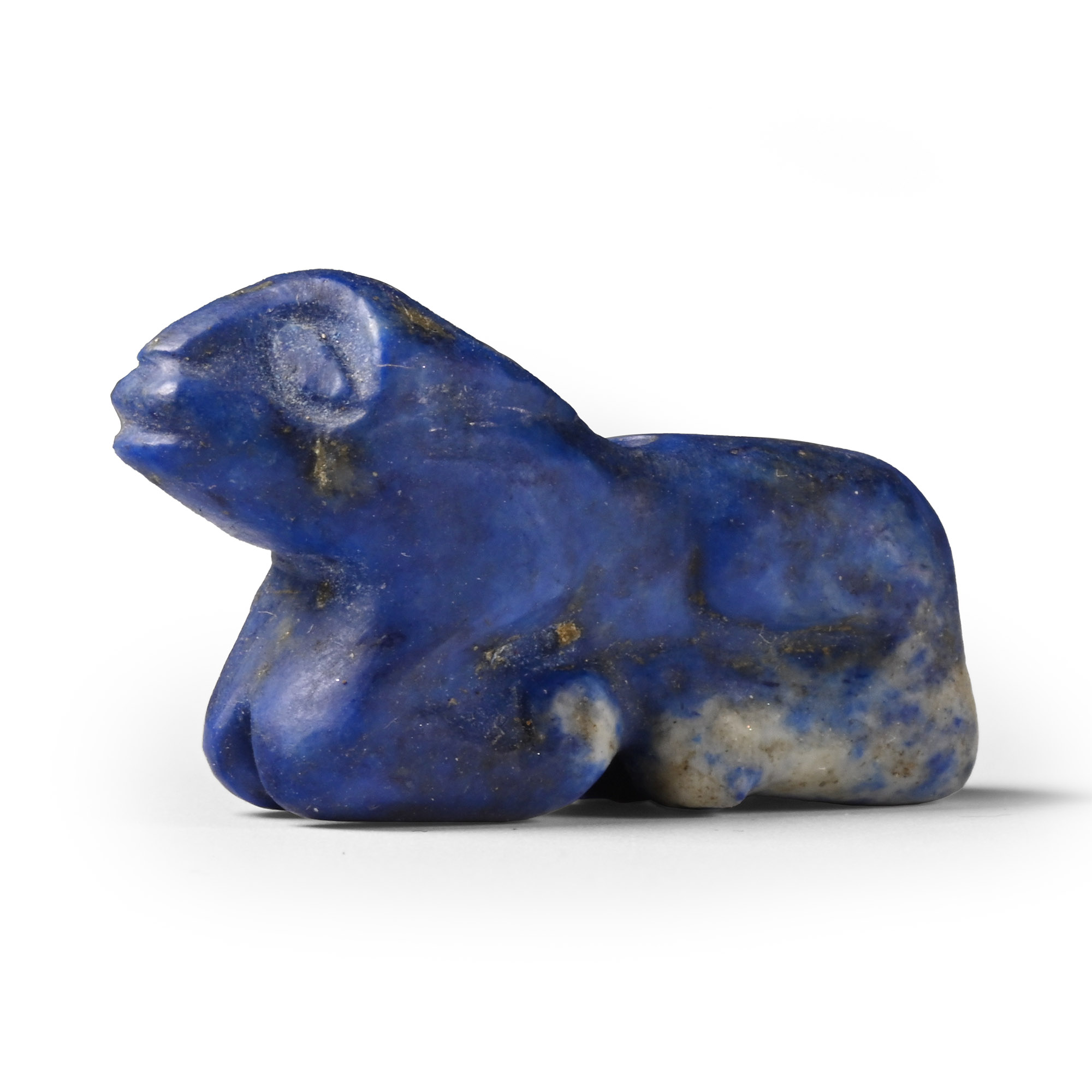
Bactrian Style Sodalite Sheep Amulet
20TH CENTURY A.D.
1 3/8 in. (11.4 grams, 34 mm).
Modelled in the round laying down with the legs tucked beneath the body, and long ears resting along the neck; pierced vertically through the back. [No Reserve]
ProvenanceEx London, UK, collection, 1990s.
CONDITIONTimeLine Auctions follows a vetting process to ensure the authenticity and legality of all items, reinforcing our commitment to integrity and responsible trading. Each antiquity, antique, and coin lot undergoes thorough examination by a vetting committee of at least ten external specialists, professional trade association members, scientists, and archaeologists: Our Vetting Process
AUCTIONS:
TimeLine is a leading auction house specialising in antiquities, ancient art, collectables, natural history, coins, medals, and books. Our auctions offer museums, collectors, historians, and enthusiasts the opportunity to acquire unique and historically significant pieces.
-
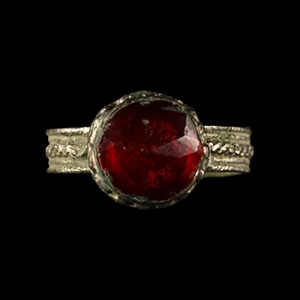
Silver Ring with Facetted Gem
Circa 18th century A.D.Sold for (Inc. bp): £65
Comprising a wide hoop with moulded ropework, tall bezel set with red glass. 3.84 grams, 26.69 mm overall, 17.88 mm internal diameter (approximate size British O 1/2, USA 7 1/4, Europe 15.61, Japan 15)
From an English collection formed before 2000. This lot is accompanied by an illustrated lot declaration signed by the Head of the Antiquities Department, Dr Raffaele D’Amato. -
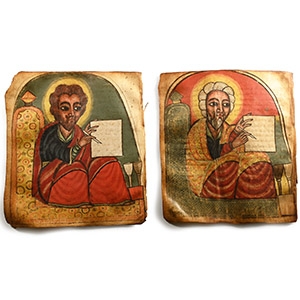
Ethiopian Painted Parchment of Two Evangelist Portraits from a Gospel
Circa 1650-1700 A.D.Sold for (Inc. bp): £1,235
Two leaves from a vellum manuscript, each with a hand-coloured image of a male figure (Evangelists) seated on low stools, covered with embroidered cloths, holding a vellum page in one hand and quill in the other, nimbus around their head; dressed in blue, red and green garments, in front of them two cups in brown and white colour. 19 grams total, 22.5 x 19.8 cm each
Ex central London gallery. This lot is accompanied by an illustrated lot declaration signed by the Head of the Antiquities Department, Dr Raffaele D’Amato.
During the Aksumite period, the Greek text of the Gospels was brought to Ethiopia and translated into Geez. Along with the Greek text came a standard method of Gospel manuscript production, as well as the Eusebian canon tables with their characteristic decoration and tholos miniature, and portraits of the evangelists. In the Gondar period, the tradition continued: usually the four Evangelists were portrayed as a series. Evangelist portraits serve as an introduction, and narrative illustrations were placed within the Gospel texts. -
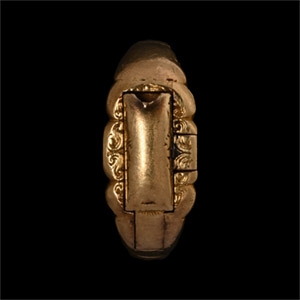
Civil War Period Gold Poison Ring
17th century A.D.Sold for (Inc. bp): £3,380
With expanding shoulders, scrolled outline to the plaque, hinged folding tube below the central panel. 7.49 grams, 22.28 mm overall, 18.87 mm internal diameter (approximate size British N 1/2, USA 6 3/4, Europe 14.35, Japan 13)
From the private collection of N.Thomas, 1979-1987. This lot has been checked against the Interpol Database of stolen works of art and is accompanied by search certificate number no.12481-229481. This lot has been cleared against the Art Loss Register database, and is accompanied by an illustrated lot declaration signed by the Head of the Antiquities Department, Dr Raffaele D’Amato.
