Loading, please wait...

Use mousewheel to zoom in and out, click to enlarge

Details

LOT 1483

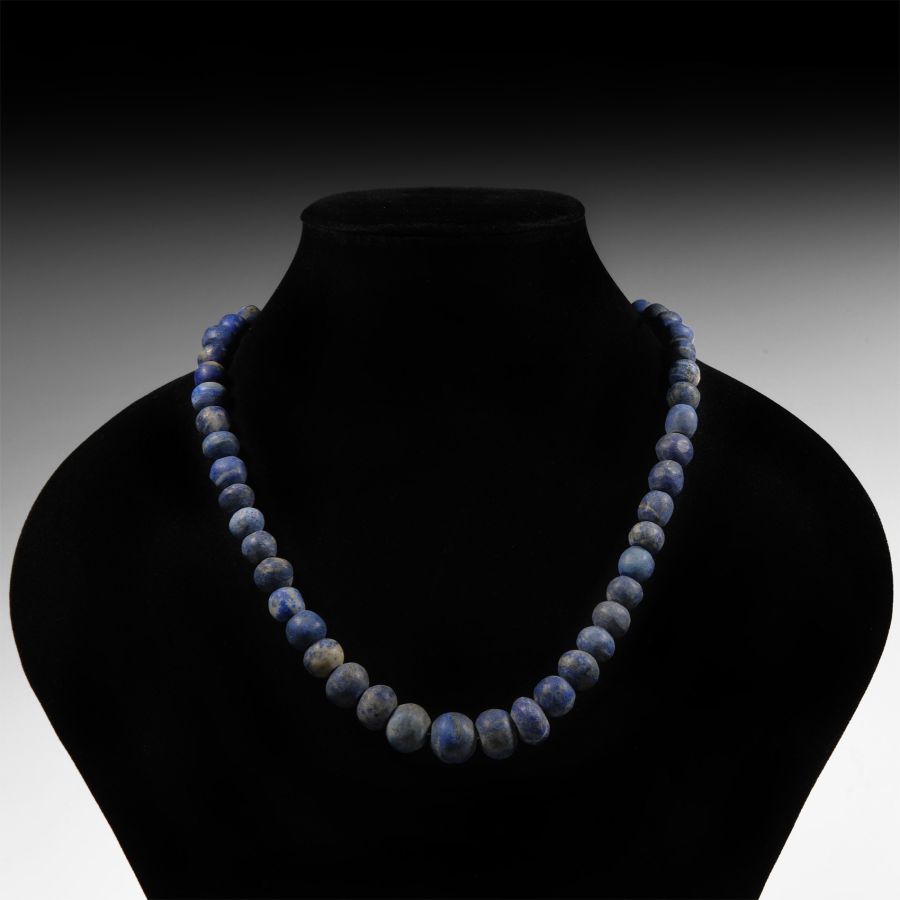
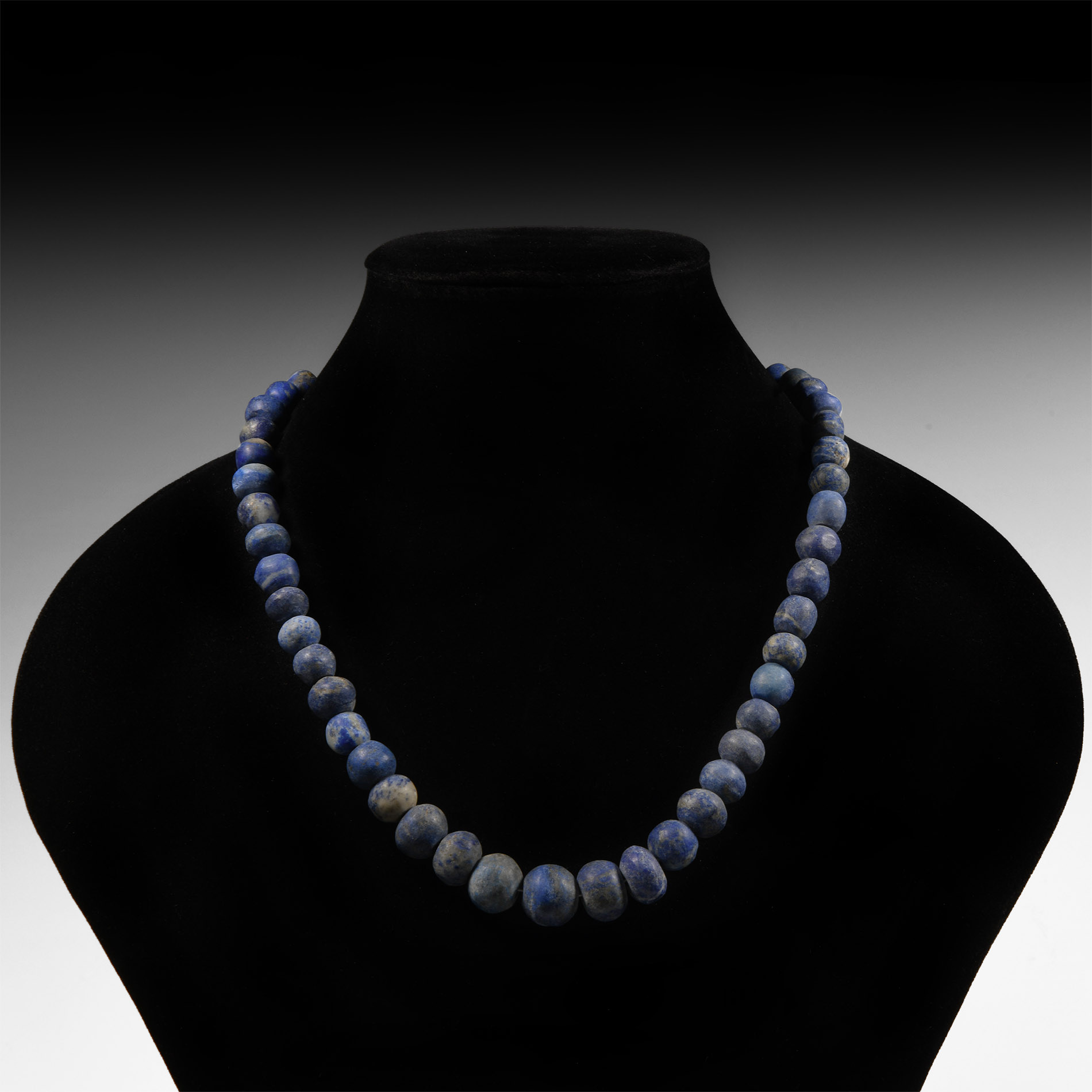
Bactrian Style Lapis Lazuli Bead Necklace

20TH CENTURY A.D.

22 7/8 in. (98 grams, 58 cm long).

A string of graduated oblate lapis lazuli beads. [No Reserve]

Provenance

Acquired 1980-2015.
Ex Abelita family collection.

CONDITION

VETTING:

TimeLine Auctions follows a vetting process to ensure the authenticity and legality of all items, reinforcing our commitment to integrity and responsible trading. Each antiquity, antique, and coin lot undergoes thorough examination by a vetting committee of at least ten external specialists, professional trade association members, scientists, and archaeologists: Our Vetting Process


AUCTIONS:

TimeLine is a leading auction house specialising in antiquities, ancient art, collectables, natural history, coins, medals, and books. Our auctions offer museums, collectors, historians, and enthusiasts the opportunity to acquire unique and historically significant pieces.

LOT 1483

Bactrian Style Lapis Lazuli Bead Necklace

Sold for (Inc. bp): £33

Print page

RELATED LOTS

  • Ethiopian Icon with St George and Virgin
    Ethiopian Icon with St George and Virgin
    16th-17th century A.D.

    Sold for (Inc. bp): £1,235

    A portable wooden diptych icon depicting Bet Giyorgis on horseback on the left, dressed in red mauve riding coat, green cloak and carrying a shaft with iron head; on the right the Nativity scene with Virgin and the Child escorted by the angels. 562 grams, 20 x 15.5 cm


    Acquired on the London art market, 2006. UK private collection.

    The presence of angels dressed in western garments, the uncovered head of the Virgin and the swords of the angels, could suggest that the diptych is strongly influenced by Italian Renaissance painters. However, the chopping tool used here is particularly Ethiopian, as is the depiction of the Virgin and Child, lacking the care visible in Ethiopian works copied from Italian paintings. Ethiopian paintings influenced by European art can be split into two groups according to Stanislaw Chojnacki: paintings that directly relate to an identified painting, and paintings which borrow themes and details from Western art. In both, however, the Western forms have been simplified to the Ethiopian mode of expression. The horse harness can suggest dating to 16th-17th century A.D.

    Lot Details

  • Victorian Gold Ring with Victory Gemstone
    Victorian Gold Ring with Victory Gemstone
    19th-20th century A.D. or earlier

    Estimate: £600 - 800 (+bp*)

    Opening Bid: £300

    A gold finger ring with beaded wire to the rim of the hoop and applied pellets, ellipsoid bezel with beaded wire border, inset carnelian cloison with figure of Victory on a plinth between rearing snakes. 3.54 grams, 20.07 mm overall, 15.50 mm internal diameter (approximate size British I, USA 4 1/4, Europe 7.44, Japan 7)


    English private collection.

    Lot Details

  • Stuart Period Gold Renaissance Memento Mori Signet Ring with C.L. and Skull
    Stuart Period Gold Renaissance Memento Mori Signet Ring with C.L. and Skull
    17th century A.D.

    Sold for (Inc. bp): £19,500

    A substantial gold signet ring composed of a lentoid-section hoop, expanding capital style shaped shoulders and irregular octagonal bezel engraved with a skull, two flowers below separating the reversed initials in capitals: 'CL', framed by a beaded border. 15.65 grams, 27.14 mm overall, 22.68 mm internal diameter (approximate size British X, USA 11 1/2, Europe 26.29, Japan 25)


    Acquired in the 1980s. Property of a London gentleman. This lot has been checked against the Interpol Database of stolen works of art and is accompanied by search certificate no.11664-197587.

    Signet rings were jewellery items serving practical functions, and were pressed into hot wax to seal letters and packets. Personal seals or secreta acted as a legal safeguard, since they were used to witness wills, loans, commercial, personal and other documents. Such rings were often engraved with a coat of arms, initials, merchant's mark or some other personal symbol. Painted portraits of this period portray the wearer with the signet ring on the thumb or forefinger, allowing for practical use. Skulls on rings were potent symbols of mortality. 'Memento mori' or 'remember that you must die' imagery served as a reminder to the Christian of the need to keep their soul in good order for the final judgment.

    Lot Details

Stay up-to-date with the latest from TimeLine Auctions by joining our mailing list