Loading, please wait...

Use mousewheel to zoom in and out, click to enlarge

Details

LOT 1451

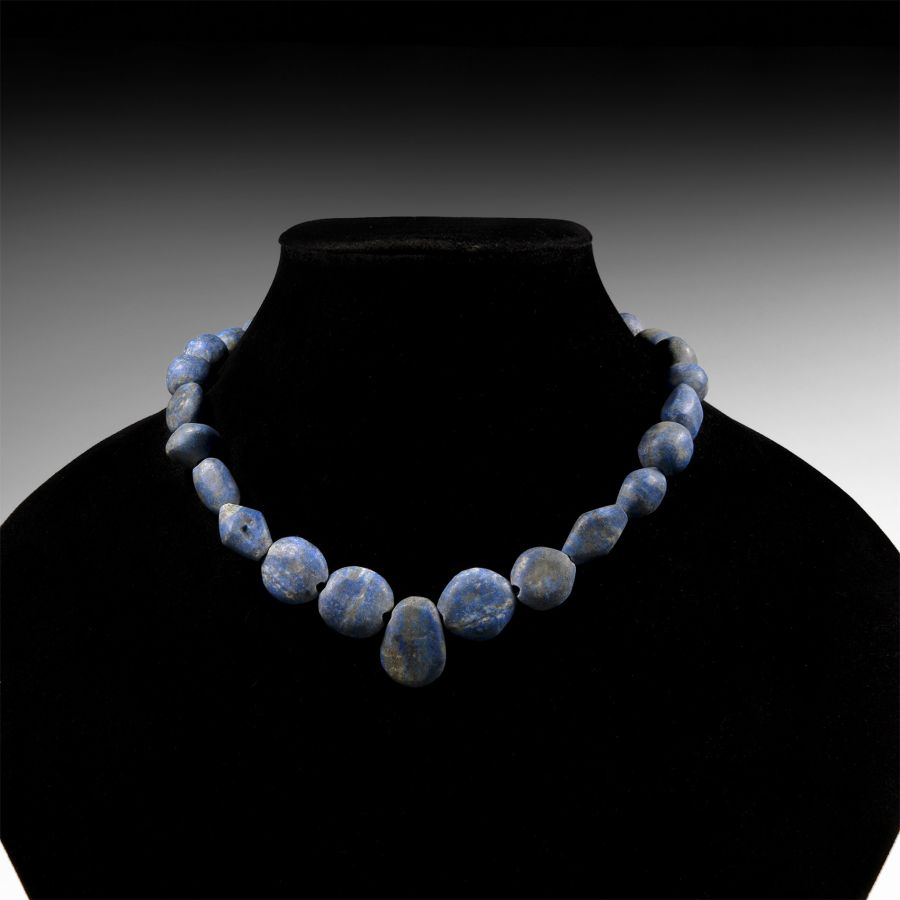
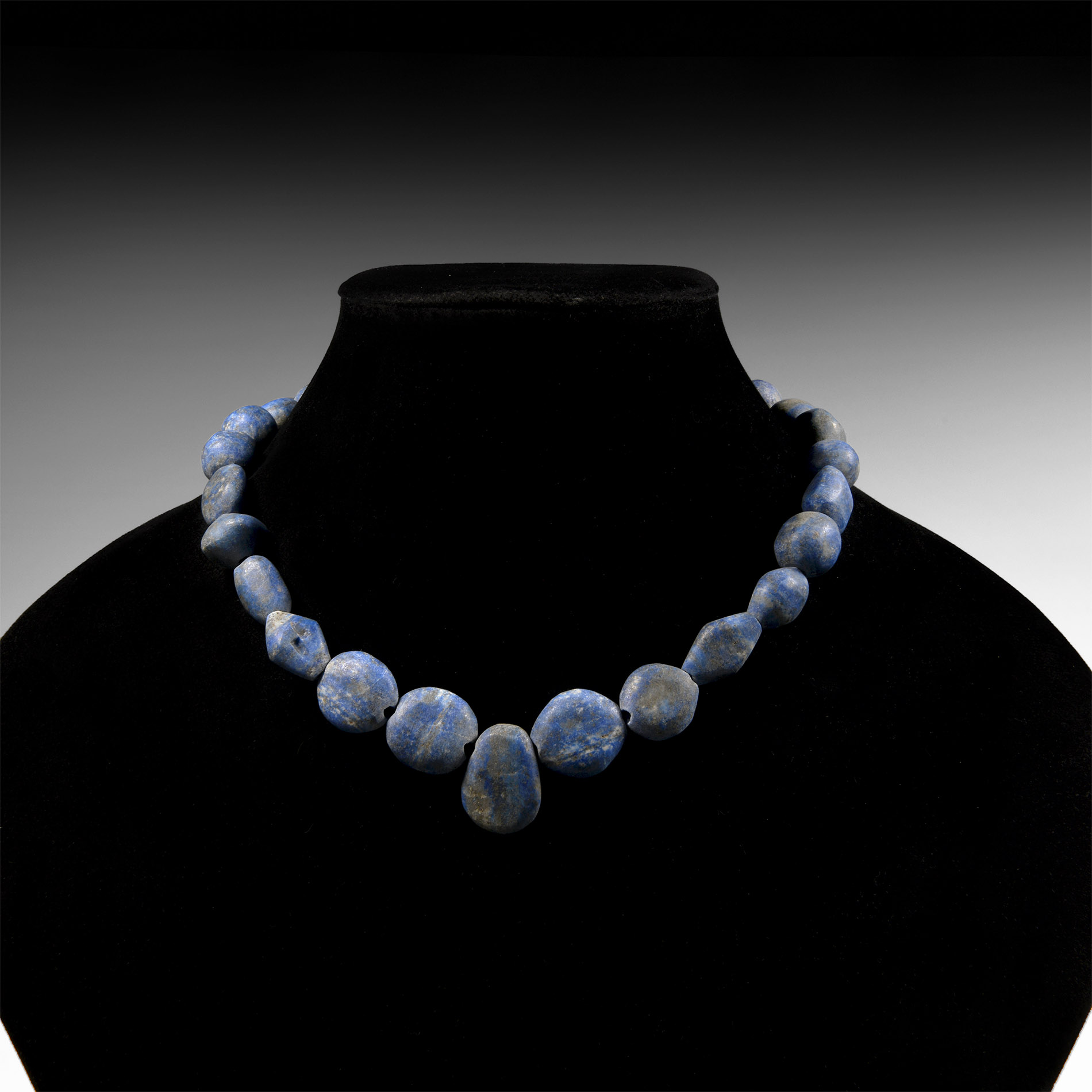
Bactrian Style Lapis Lazuli Bead Necklace

20TH CENTURY A.D.

16 1/2 in. (102 grams total, 42 cm long).

A string of lapis lazuli beads of various types. [No Reserve]

Provenance

Acquired 1980-2015.
Ex Abelita family collection.

CONDITION

VETTING:

TimeLine Auctions follows a vetting process to ensure the authenticity and legality of all items, reinforcing our commitment to integrity and responsible trading. Each antiquity, antique, and coin lot undergoes thorough examination by a vetting committee of at least ten external specialists, professional trade association members, scientists, and archaeologists: Our Vetting Process


AUCTIONS:

TimeLine is a leading auction house specialising in antiquities, ancient art, collectables, natural history, coins, medals, and books. Our auctions offer museums, collectors, historians, and enthusiasts the opportunity to acquire unique and historically significant pieces.

LOT 1451

Bactrian Style Lapis Lazuli Bead Necklace

Sold for (Inc. bp): £46

Print page

RELATED LOTS

  • Bronze Statue of an Etruscan Warrior
    Bronze Statue of an Etruscan Warrior
    20th century A.D.

    Estimate: £3,000 - 4,000 (+bp*)

    Opening Bid: £1,500

    A hollow-formed bronze copy of the Mars of Todi, a figure of an Etruscan warrior wearing segmented armour to the chest and shoulders, crested helmet, short tunic; the hands in animated pose with left hand open to accept a weapon; holes beneath feet for mounting. 7.6 kg, 61.5 cm high


    French collection, 1960s-early 2000s. From an important Paris gallery, France. with Galerie Athena, Brussels, 9 May 2019, lot 393. This lot has been checked against the Interpol Database of stolen works of art and is accompanied by search certificate number no.11691-199344.

    The "Mars of Todi" figure is a large, almost life-sized bronze statue of a warrior in armour. It dates from the late 5th - early 4th century B.C., and is believed to have been produced by an Etruscan workman for an Umbrian patron. The figure was probably a votive offering for a religious sanctuary, perhaps sacred to Laran, the Etruscan god of war. It had been buried ritually and left undisturbed until its modern discovery in 1835. It lacks a helmet, and the hands are empty; possibly a patera plate was originally in the open right hand, and a spear gripped in the clenched left hand. The sculptor of the figure followed the Greek contrapposto posture accentuating the carefully modelled lamellar plate armour. The statue bears a short inscription in Umbrian "Ahal Trutitis dunum dede" (Ahal Trutitis gave this gift).

    Lot Details

  • Italian Virgin of Tenderness Icon
    Italian Virgin of Tenderness Icon
    Circa 19th century A.D.

    Estimate: £700 - 900 (+bp*)

    Opening Bid: £300

    A painting on wood of the Virgin of Tenderness, copying an earlier work, depicting Mary dressed in blue robe ornamented with gold stars with an off-white veil delicately framing her face; gently supporting the Child dressed in red tunic; both figures nimbate and affectionately leaning towards each other with their cheeks touching; the scene enclosed in a gilt pseudo-Gothic crenelated frame, an inscription in new Gothic uncial style to the bottom reading 'AVE GRATIA PLENA' for 'hail full of grace'; mounted on a 19th century crenelated wooden pedestal fitted with candle holder to each side in the shape of a flower. 279 grams, 29.5 cm high


    Property of a London lady, part of her family's collection.

    The panel has many stylistic similarities with that of Icilio Federico Joni (1866-1946) assigned to the style of Sano di Pietro. Compared to that, the head of the Virgin has been realised in a more archaic Gothic style. With their faces gently pressed together, the interaction between the Virgin and the Child evokes a tender intimacy. This motif appears in numerous works by Sano di Pietro and his workshop (for example, in another painting in the Lehman Collection in MET, 975.1.39). The particular manner of concealing the Child’s right cheek behind the Virgin’s face was probably inspired by Madonna painted by the Sienese master Ambrogio Lorenzetti (Pinacoteca Nazionale, Siena).

    Lot Details

  • Stuart Period Large Gold Signet Ring with Arm and Floral Spray
    Stuart Period Large Gold Signet Ring with Arm and Floral Spray
    17th century A.D.

    Sold for (Inc. bp): £13,000

    A gold signet ring composed of a D-section hoop and facetted oval bezel, engraved with crest depicting a forearm and hand oriented right, holding a floral spray composed of three five-petalled flowers and four leaves, set within a beaded octagonal border. 9.78 grams, 24.40 mm overall, 20.51 mm internal diameter (approximate size British V, USA 10 1/2, Europe 23.77, Japan 22)


    Acquired in the 1980s. Property of a London gentleman. This lot has been checked against the Interpol Database of stolen works of art and is accompanied by search certificate no.11663-197588.

    Signet rings were jewellery items serving practical functions, and were pressed into hot wax to seal letters and packets. Personal seals or secreta acted as a legal safeguard, since they were used to witness wills, loans, commercial, personal and other documents. Such rings were often engraved with a coat of arms, initials, merchant's mark or some other personal symbol. Painted portraits of this period portray the wearer with the signet ring on the thumb or forefinger, allowing for practical use.

    Lot Details

Stay up-to-date with the latest from TimeLine Auctions by joining our mailing list