
Loading, please wait...
LOT 1492
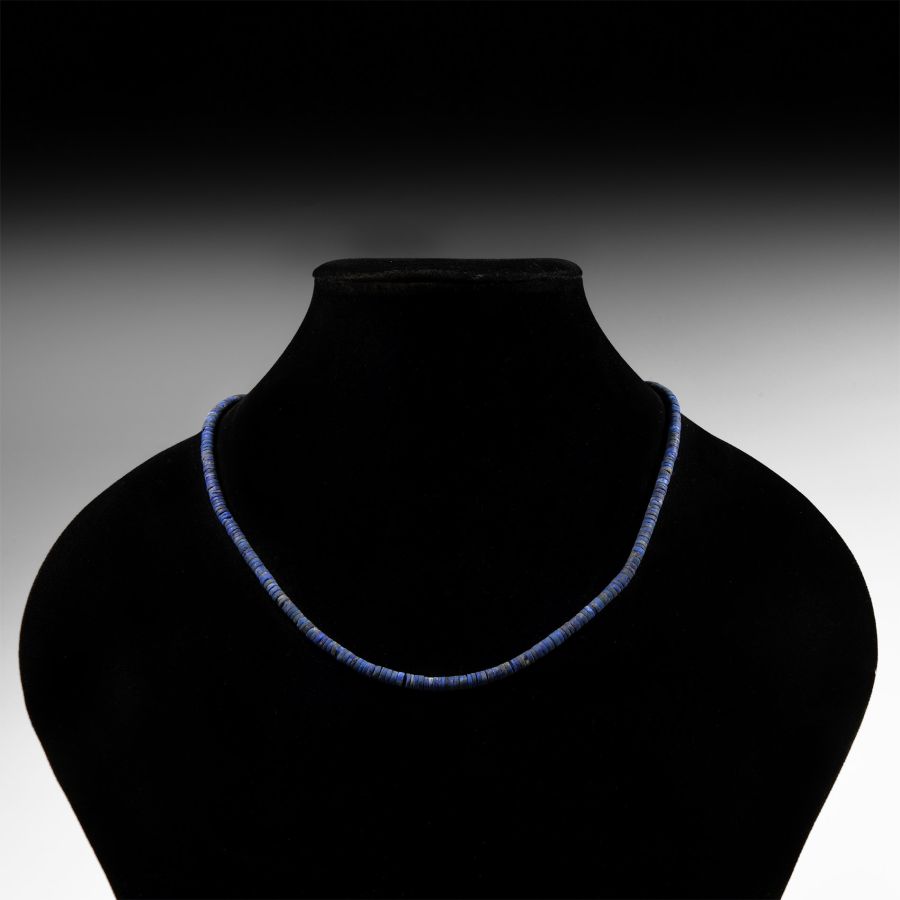
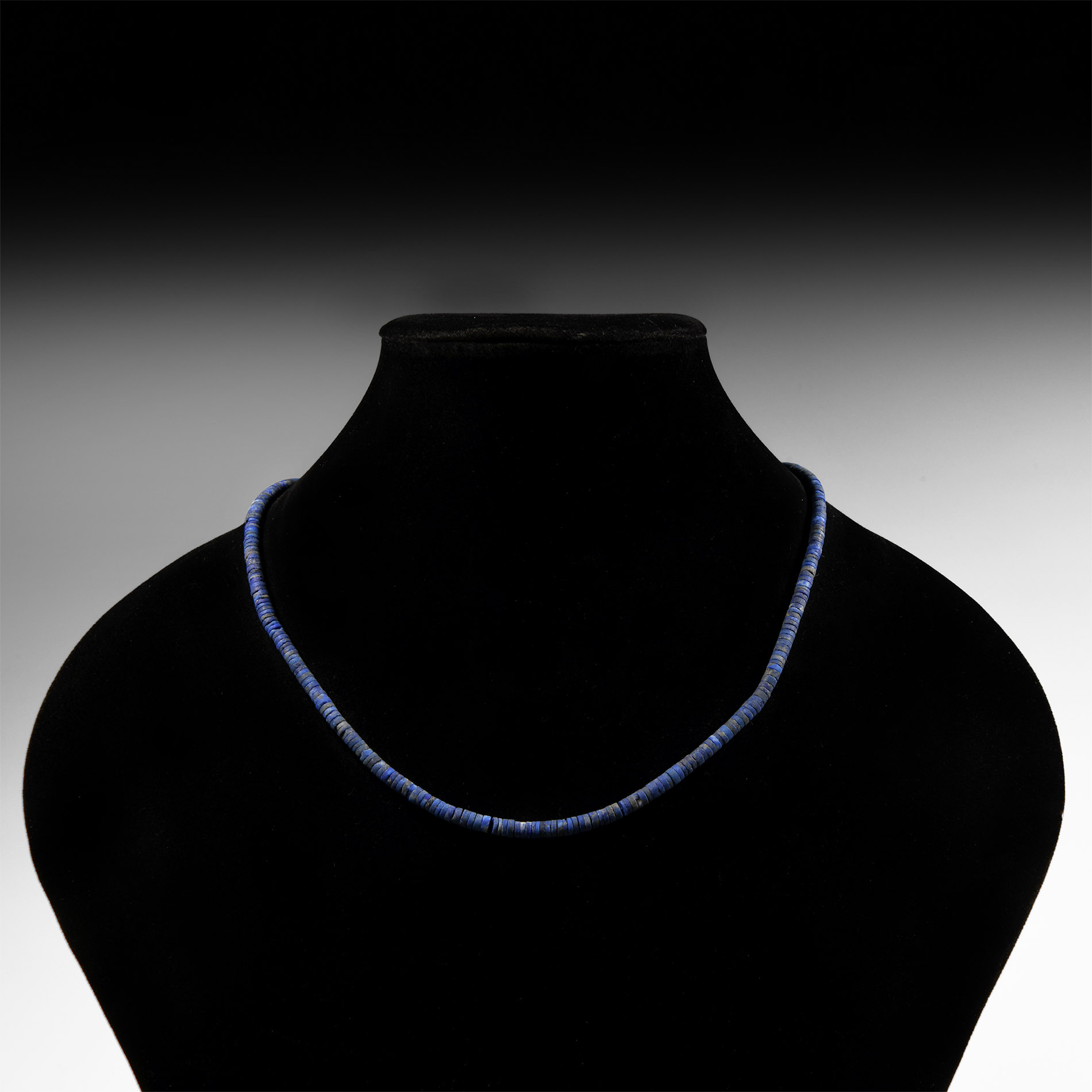
Bactrian Style Lapis Lazuli Bead Necklace
20TH CENTURY A.D. OR EARLIER
31 1/2 in. (14.8 grams, 80 cm long).
A lapis lazuli necklace composed of coin-shaped beads. [No Reserve]
ProvenanceAcquired 1980-2015.
Ex Abelita family collection.
TimeLine Auctions follows a vetting process to ensure the authenticity and legality of all items, reinforcing our commitment to integrity and responsible trading. Each antiquity, antique, and coin lot undergoes thorough examination by a vetting committee of at least ten external specialists, professional trade association members, scientists, and archaeologists: Our Vetting Process
AUCTIONS:
TimeLine is a leading auction house specialising in antiquities, ancient art, collectables, natural history, coins, medals, and books. Our auctions offer museums, collectors, historians, and enthusiasts the opportunity to acquire unique and historically significant pieces.
-
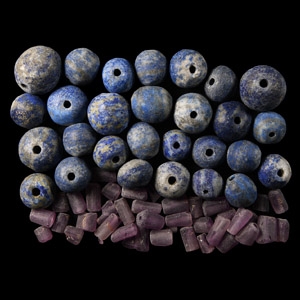
Lapis Lazuli and Other Bead Group
20th century A.D.Estimate: £100 - 140 (+bp*)
Opening Bid: £50
A mixed group of beads, mainly large spherical lapis lazuli and cylindrical amethyst types. 238 grams total, 8-22 mm
Acquired 1980-2015. Ex Abelita family collection. -
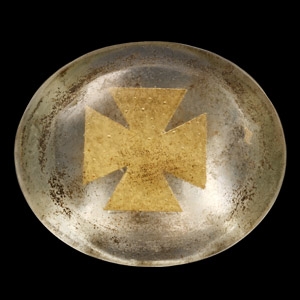
Glass Ring with Inlaid Gold Cross
20th century A.D. or earlierSold for (Inc. bp): £234
A translucent, colourless glass finger ring composed of a D-section hoop, expanding at the shoulders to an oval bezel, displaying an encapsulated gold foil cross with expanding arms. 9.73 grams, 29.44 mm overall, 18.16 mm internal diameter (approximate size British P, USA 7 1/2, Europe 16.23, Japan 15)
Acquired 1969-1999. London collection of the late Mr S.M., thence by descent. -
.jpg)
Post Medieval Reclining Female Statue
Late 19th-early 20th century A.D.Sold for (Inc. bp): £1,300
A bronze study of a reclining nymph on a draped chaise longue, nude with head tilted back and lips sensuously parted, left hand stroking her luxuriant hair, right hand lifting a fold of the cloth cover, left leg bent and held beneath the right leg, cushioned headrest with tassel; hollow to the underside; unsigned. 5.4 kg, 34 cm long
English private collection.
