
Loading, please wait...
LOT 2428
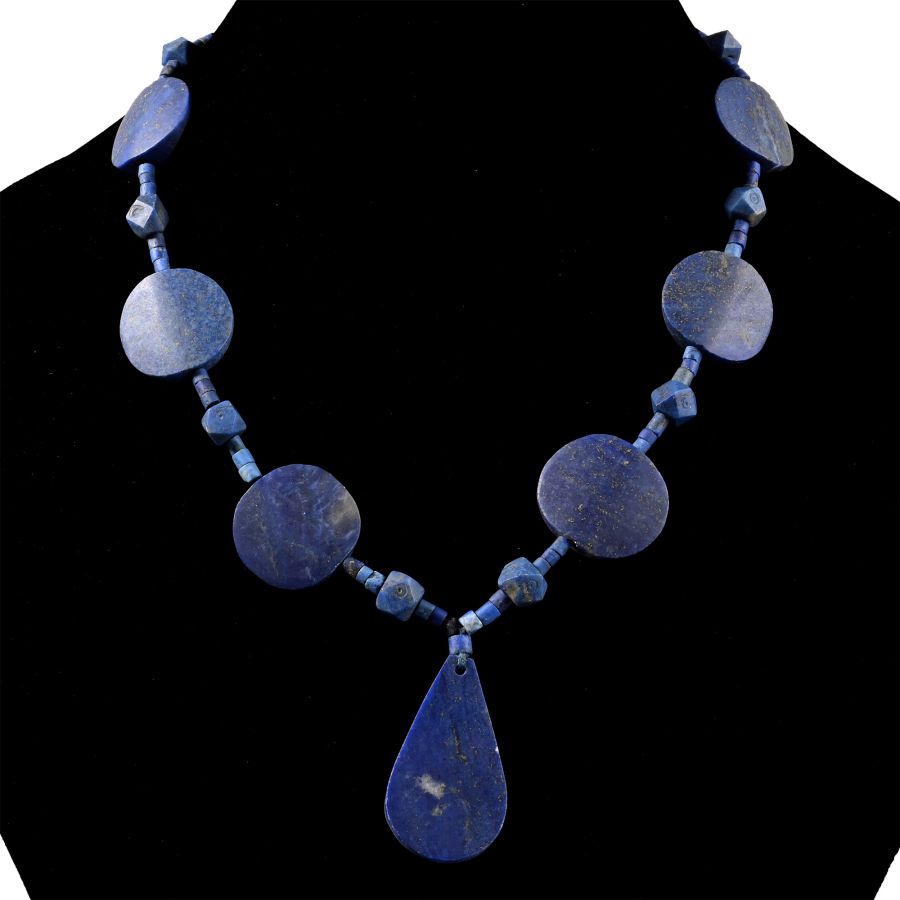
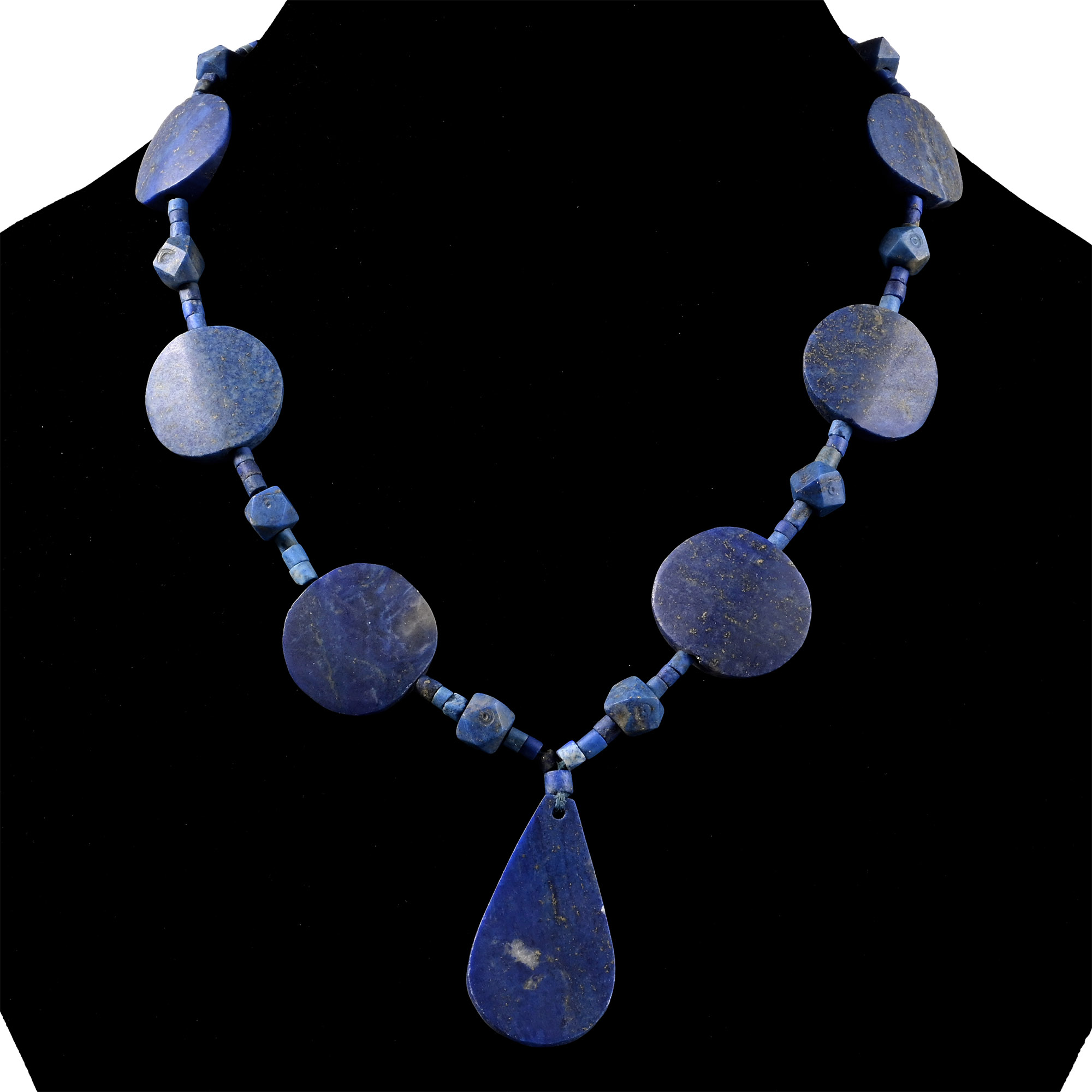
Bactrian Style Lapis Lazuli Bead Necklace String
15 3/4 in. (70.9 grams, 40 cm).
Composed of tubular, polygonal, and coin-shaped beads with a teardrop-shaped pendant, restrung. [No Reserve]
ProvenanceAcquired in the 1990s-early 2000s.
Ex London, UK, collection.
TimeLine Auctions follows a vetting process to ensure the authenticity and legality of all items, reinforcing our commitment to integrity and responsible trading. Each antiquity, antique, and coin lot undergoes thorough examination by a vetting committee of at least ten external specialists, professional trade association members, scientists, and archaeologists: Our Vetting Process
AUCTIONS:
TimeLine is a leading auction house specialising in antiquities, ancient art, collectables, natural history, coins, medals, and books. Our auctions offer museums, collectors, historians, and enthusiasts the opportunity to acquire unique and historically significant pieces.
-
![Group of Four [4] Cut and Polished Fossilised Wood Slices](https://timelineauctions.com/upload/images/items/small/256021-s.jpg)
Group of Four [4] Cut and Polished Fossilised Wood Slices
Triassic Period, 251-199 million years B.P.Sold for (Inc. bp): £26
Comprising four thick slices, each showing agatized patterns and one with a small crystal-lined cavity. 253 grams total, 9-12.1 cm
From Madagascar. Ex Mineral Imports, London, UK. Gregory, Bottley & Lloyd (Gregory's), Harwich, UK. -
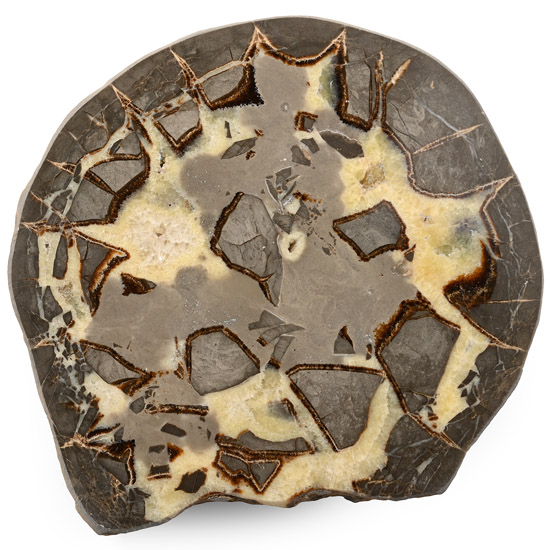
Very Large Cut and Polished 'Septarian Egg' Nodule Half
Sold for (Inc. bp): £104
The attractive internal structure filled with yellow calcite, brown aragonite, and grey limestone. 2.78 kg, 19.7 cm
Ex Mineral Imports, London, UK. Gregory, Bottley & Lloyd (Gregory's), Harwich, UK. -
![Large Group of Forty-Two [42] Cleaved Optical Calcite Specimens](https://timelineauctions.com/upload/images/items/small/255972-s.jpg)
Large Group of Forty-Two [42] Cleaved Optical Calcite Specimens
Sold for (Inc. bp): £59
Comprising forty-two calcite rhombs displaying characteristic double refraction. 1.54 kg total, 24-42 mm
Ex Mineral Imports, London, UK. Gregory, Bottley & Lloyd (Gregory's), Harwich, UK.
