Loading, please wait...
LOT 1971
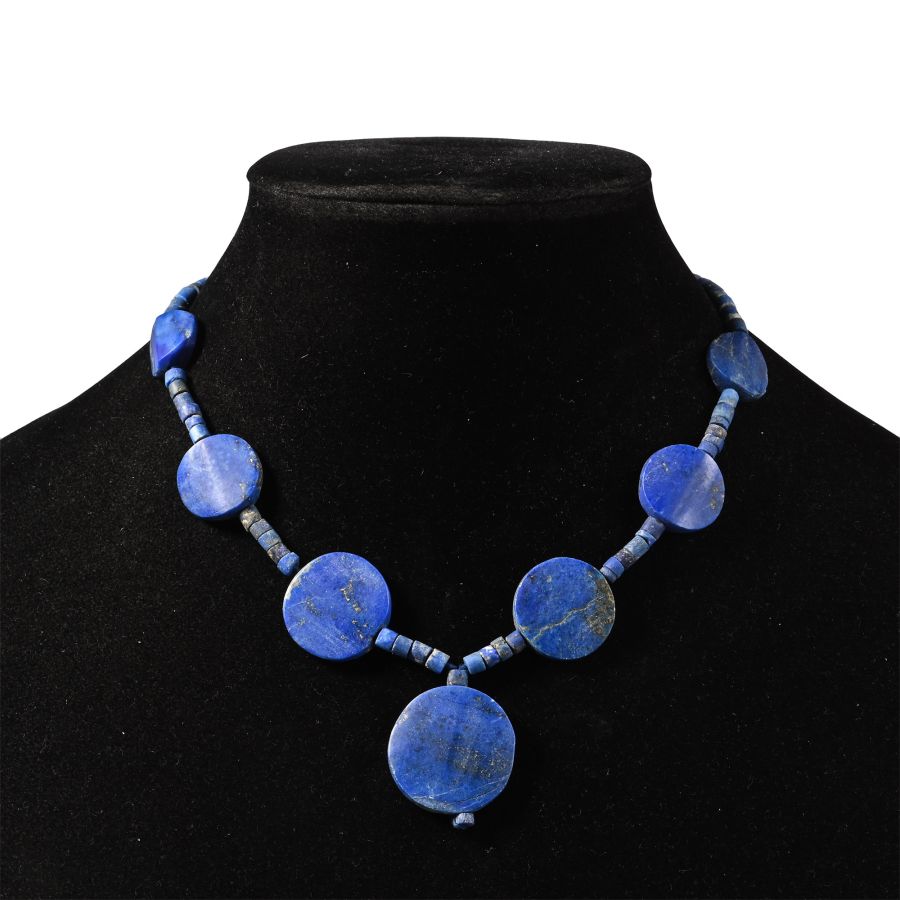
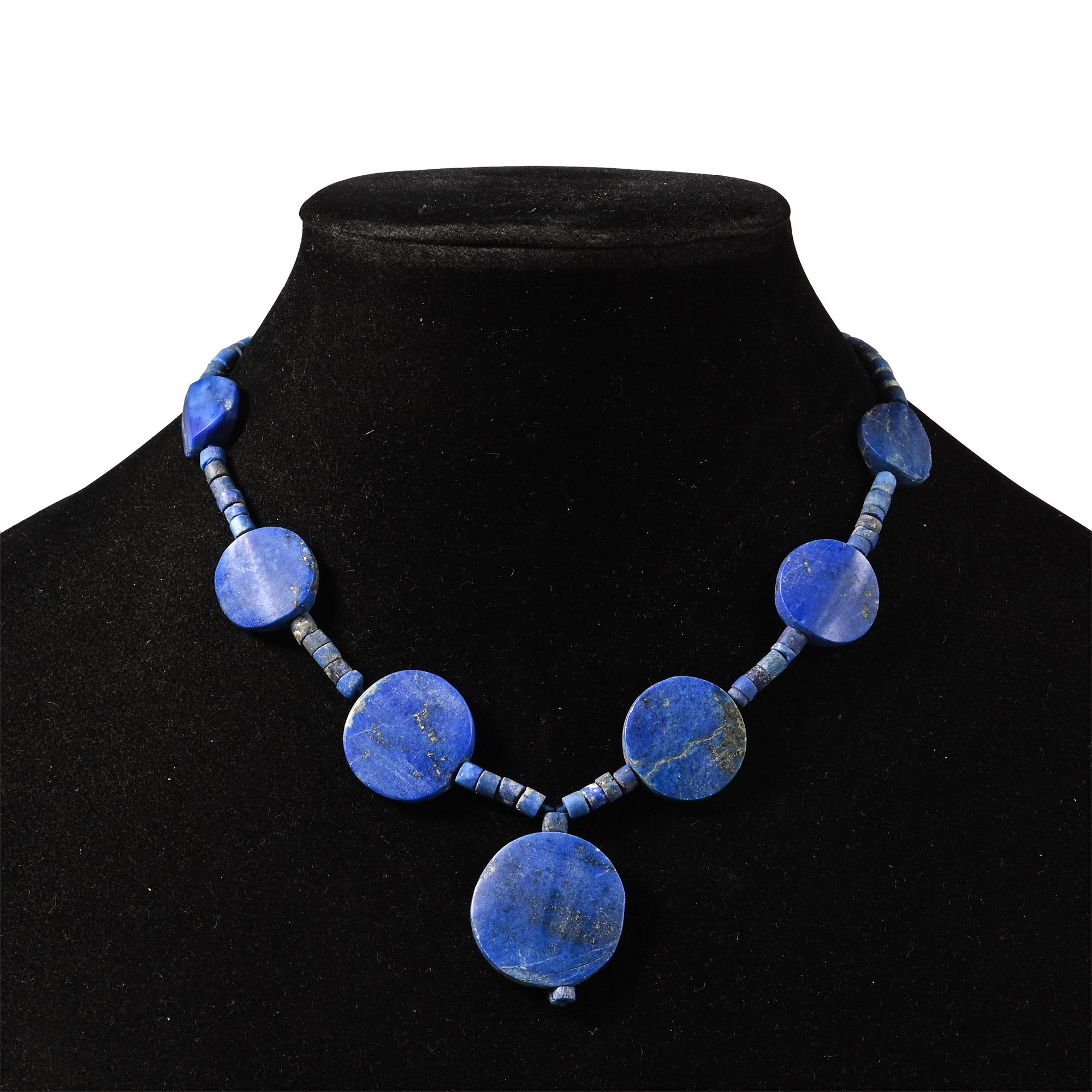
Bactrian Style Lapis Lazuli Bead Necklace String
20TH CENTURY A.D.
11 3/8 in. (38 grams, 29 cm).
Composed of tubular and coin-shaped beads, restrung. [No Reserve]
ProvenanceAcquired in the 1990s-early 2000s.
Ex London, UK, collection.
TimeLine Auctions follows a vetting process to ensure the authenticity and legality of all items, reinforcing our commitment to integrity and responsible trading. Each antiquity, antique, and coin lot undergoes thorough examination by a vetting committee of at least ten external specialists, professional trade association members, scientists, and archaeologists: Our Vetting Process
AUCTIONS:
TimeLine is a leading auction house specialising in antiquities, ancient art, collectables, natural history, coins, medals, and books. Our auctions offer museums, collectors, historians, and enthusiasts the opportunity to acquire unique and historically significant pieces.
LOT 1971
Bactrian Style Lapis Lazuli Bead Necklace String
Estimate £50 - 70€58 - 81 (for guidance only)$68 - 95 (for guidance only)
Opening Bid
£5 (EUR 6; USD 7) +BP*
-
Tudor Gold 'BE . TRVE . IN . HART' Posy Ring
Circa 16th century A.D.Estimate: £1,000 - 1,400 (+bp*)
Opening Bid: £400
Featuring a smooth exterior and D-shaped in cross-section, a flat internal face with an inscription in upper case Roman letters, reading 'BE . TRVE . IN . HART' for 'Be true in heart' with the stops formed as small crosses and the N reversed. 4.25 grams, 20.66 mm overall, 18.06 mm internal diameter (approximate size British P, USA 7 1/2, Europe 16.23, Japan 15)
Found whilst searching with a metal detector near Edgmond, Telford & Wrekin, UK, by George Elymn, on 27 October 2024. Recorded with the British Museum's Portable Antiquities Scheme (PAS) with reference no.HESH-B237EA; handed in as Treasure under the Treasure Act, and subsequently disclaimed and returned to the finder. Accompanied by a copy of the Report for H M Coroner on finding of Potential Treasure, with reference no.2025T1645. Accompanied by a copy of a letter from the British Museum explaining that the Crown's interest in this find has been disclaimed.
The 'posy' name is derived from the 'poesy' (motto) engraved around the hoop. In medieval examples, the posy is usually found around the hoop exterior, although on later examples, inscriptions were more usually engraved on the interior. Rings with amatory inscriptions can be found from the 14th century AD onwards, when they served as love gifts, betrothal and wedding rings. Posy rings were also given to friends or used to mark significant occasions. Posies were composed by the giver, kept in stock by goldsmiths, or could be selected from published compendiums or commonplace books such as 'The Mysteries of Love or the Arts of Wooing' (1658 AD), or 'Love's Garland or Posies for Rings, Hand-kerchers and Gloves and such pretty tokens that Lovers send their Loves' (1674 AD). Rings were one genre of personal item amongst many to be adorned with posies at this time. -
German Carnelian Cameo of Maria Theresa Mounted in a Brooch
18th century A.D.Estimate: £1,000 - 1,400 (+bp*)
Opening Bid: £500
Skilfully carved cameo depicting the jewelled profile bust of Maria Theresa facing right, the background is highly polished, whilst the relief is rendered with contrasting polished and matt elements; the high-carat gold brooch setting likely original to the jewel and set with a border of blister pearls. 9.69 grams, 37 mm
Acquired on the European art market.
Maria Theresa Walburga Amalia Christina (c.1717-80) was ruler of the Habsburg dominions from 1740 until she died in 1780, and the only woman to hold the position suo jure. She was the sovereign of Austria, Hungary, Croatia, Bohemia, Transylvania, Mantua, Milan, Lodomeria and Galicia, the Austrian Netherlands, and Parma. -
Painting of a Saint by a Follower of Giovanni Bellini
Italy, 1430-1516 A.D.Estimate: £300 - 400 (+bp*)
Opening Bid: £150
Depicting a bust of a bearded mature man, probably a saint, wearing a yellow cloak and a lighter undergarment, looking to the side with a pensive expression, with a small tuft of grey hair on top of his head; oil on copper panel and set in a moulded frame, an old label on the reverse 'Italian School: 'Study of a Man with a Grey Beard' oil on copper, 7 x 5ins.' 1.26 kg total, 32 x 27.5 cm
Private collection, London, UK.