
Loading, please wait...
LOT 2119
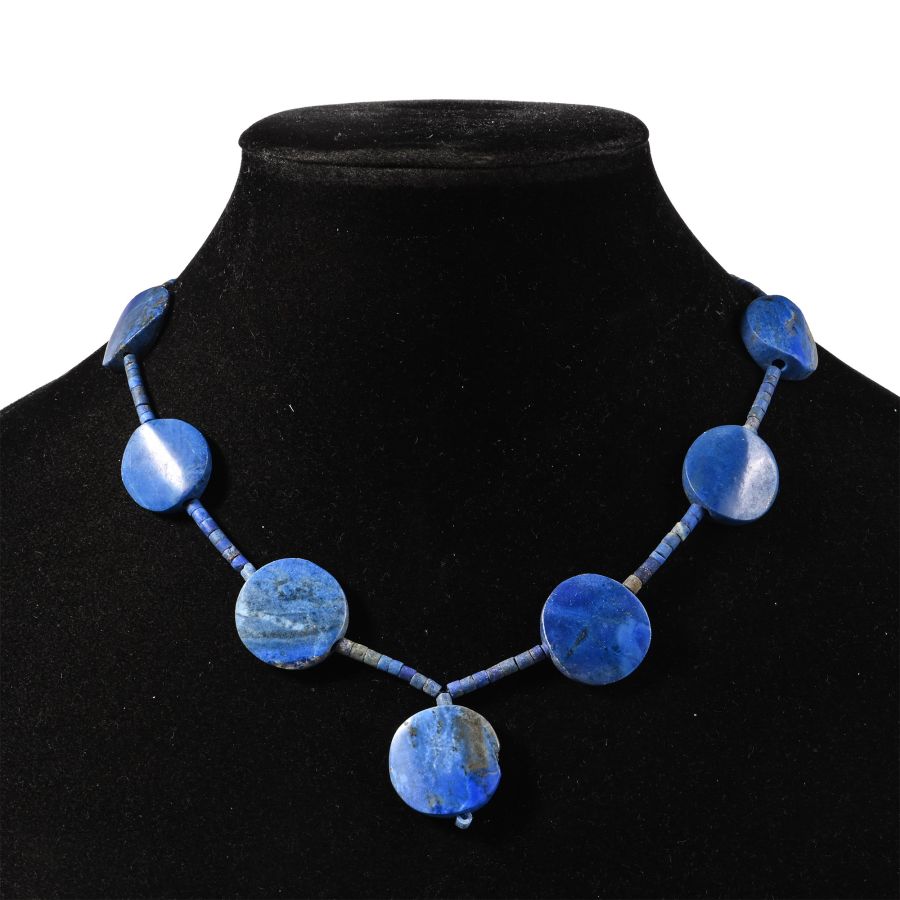
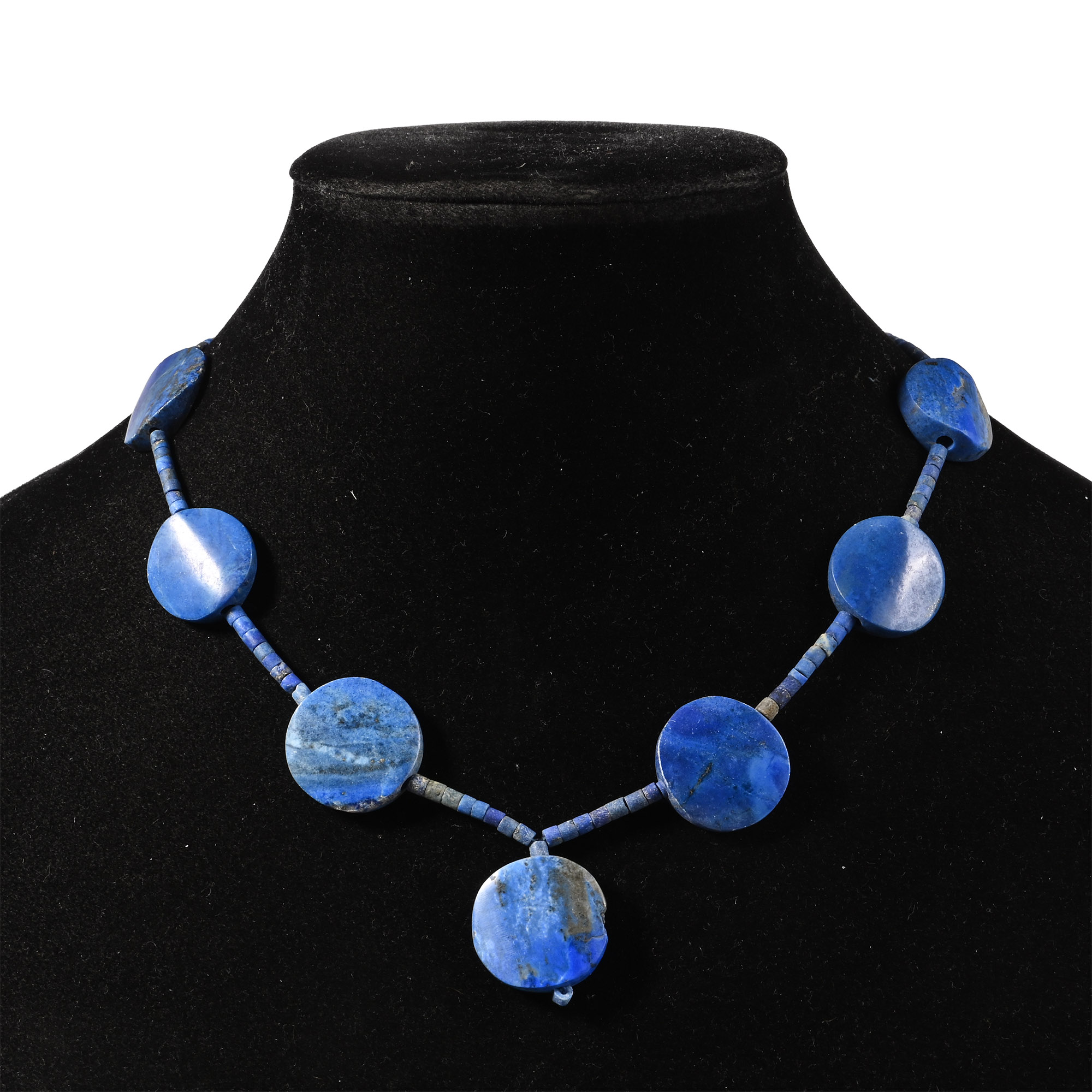
Bactrian Style Lapis Lazuli Bead Necklace String
20TH CENTURY A.D.
12 3/8 in. (45.8 grams, 31.5 cm).
Composed of coin-shaped and tubular beads, restrung. [No Reserve]
ProvenanceAcquired in the 1990s-early 2000s.
Ex London, UK, collection.
TimeLine Auctions follows a vetting process to ensure the authenticity and legality of all items, reinforcing our commitment to integrity and responsible trading. Each antiquity, antique, and coin lot undergoes thorough examination by a vetting committee of at least ten external specialists, professional trade association members, scientists, and archaeologists: Our Vetting Process
AUCTIONS:
TimeLine is a leading auction house specialising in antiquities, ancient art, collectables, natural history, coins, medals, and books. Our auctions offer museums, collectors, historians, and enthusiasts the opportunity to acquire unique and historically significant pieces.
-
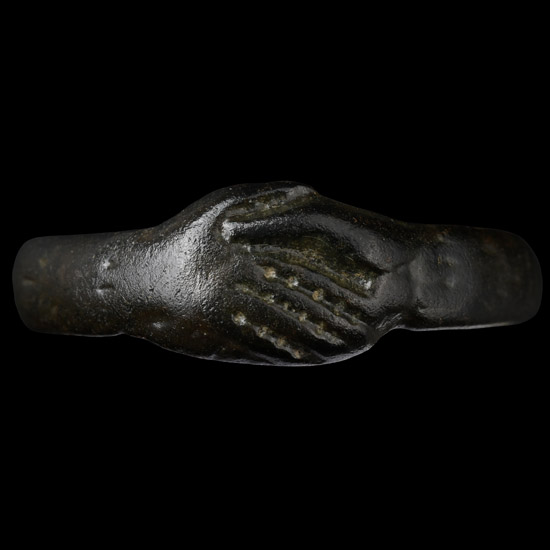
Stuart Period Clasped Hands Ring
Circa 17th century A.D.Sold for (Inc. bp): £59
Comprising a slender hoop with two clasping hands. 2.41 grams, 21.62 mm overall, 18.40 mm internal diameter (approximate size British Q, USA 8, Europe 17.49, Japan 16)
Ex German art market, 2000s. Acquired from an EU collector living in London. From the collection of a Surrey, UK, gentleman. -
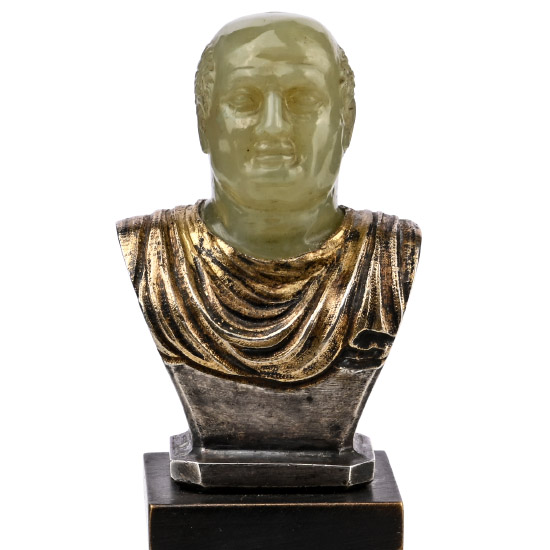
Chalcedony and Silver-Gilt Bust of the Emperor Vespasian
Italy, 17th-18th century A.D.Estimate: £1,500 - 2,000 (+bp*)
Opening Bid: £750
The head, carved from pale green chalcedony, polished to a smooth lustre and with a drilled aperture at the crown, the hair in tight curls around the nape and crown; the silver-gilt torso dressed in a draped toga carefully chased with deep folds and traces of gilding across the high points; mounted on a later patinated bronze column stand in the neoclassical manner. 208 grams total, 10.9 cm high including stand
Acquired on the European art market.
This small-scale portrait evokes the Roman tradition of imperial portraiture and the early modern fascination with the ancient world. From the seventeenth century onwards, artists and collectors revived classical subjects through hardstone and gilt-metal compositions, often intended for display in Kunstkammer or Grand Tour contexts. The combination of a reused ancient or earlier element with a later mount was a practice typical of the Renaissance and Baroque periods, reflecting the period’s reverence for antiquity and its imaginative recontextualisation of ancient forms. -
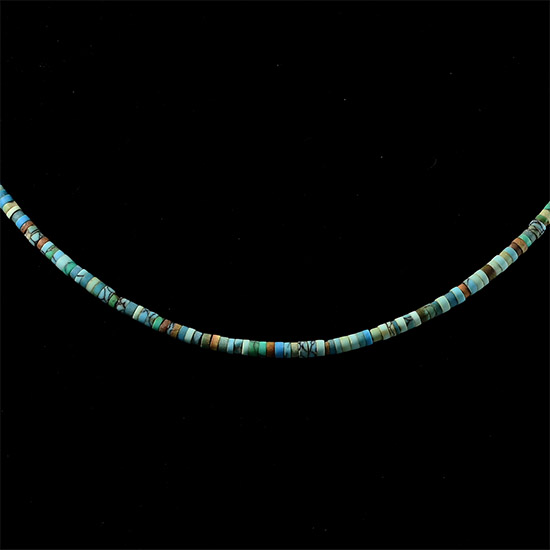
Egyptian Style Stone Bead Necklace String
20th century A.D.Sold for (Inc. bp): £33
Group of small annular turquoise and other stone beads. 4.6 grams, 36.2 cm
Acquired in the 1990s. Ex London, UK, collection.
