
Loading, please wait...
LOT 1387
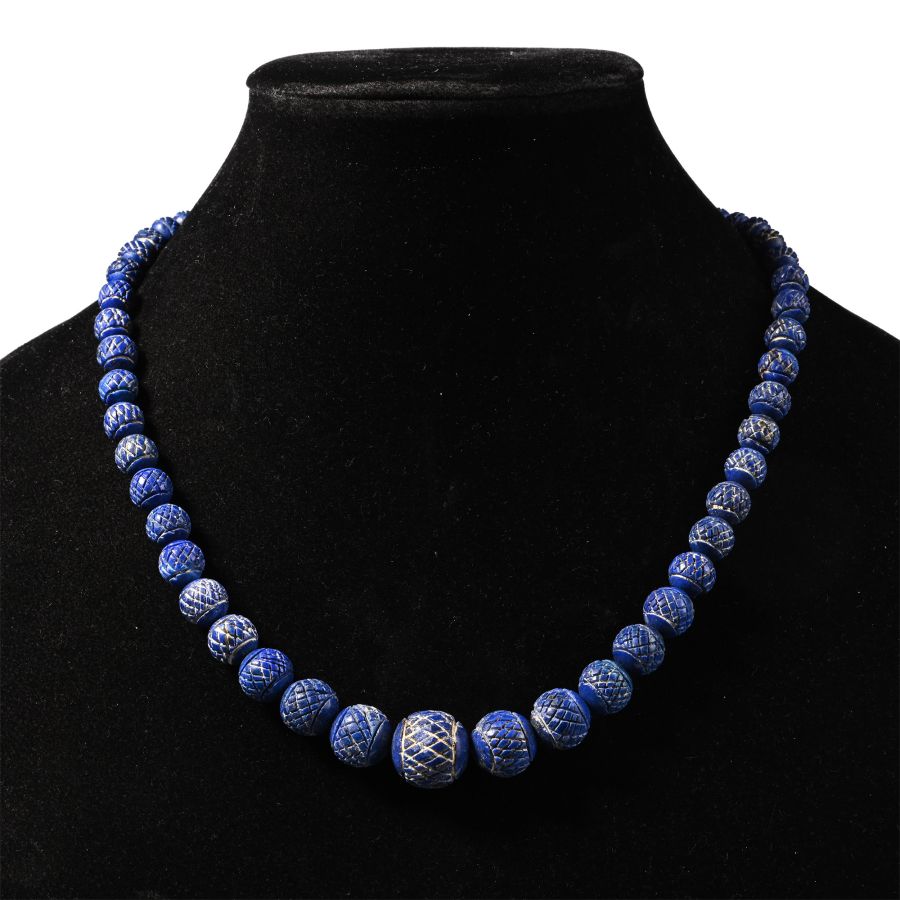
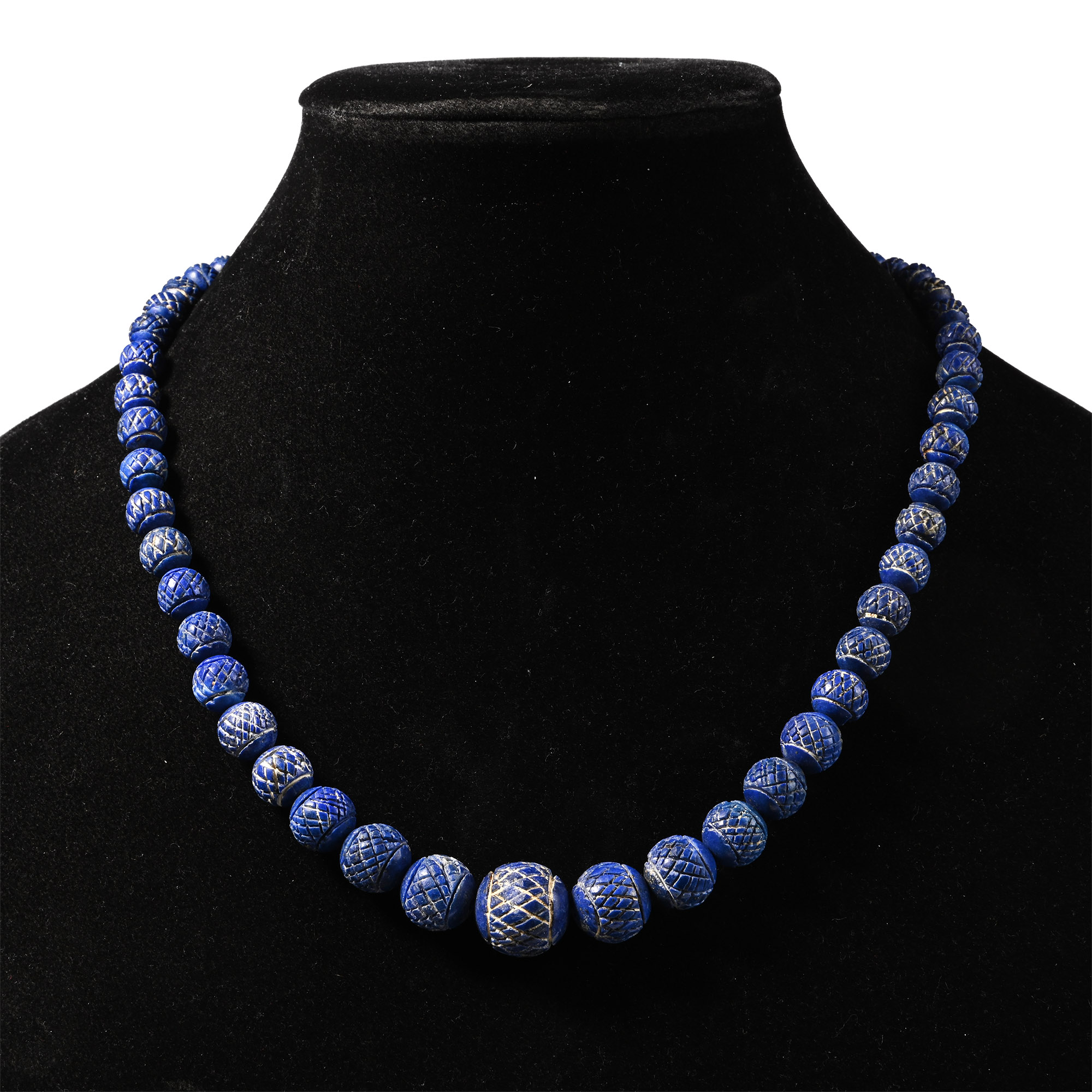
Bactrian Style Lapis Lazuli Bead Necklace String
20TH CENTURY A.D.
16 1/2 in. (61.5 grams, 42 cm).
Composed of graduated spherical beads with a hatched design, restrung. [No Reserve]
ProvenanceAcquired in the 1990s-early 2000s.
Ex London, UK, collection.
TimeLine Auctions follows a vetting process to ensure the authenticity and legality of all items, reinforcing our commitment to integrity and responsible trading. Each antiquity, antique, and coin lot undergoes thorough examination by a vetting committee of at least ten external specialists, professional trade association members, scientists, and archaeologists: Our Vetting Process
AUCTIONS:
TimeLine is a leading auction house specialising in antiquities, ancient art, collectables, natural history, coins, medals, and books. Our auctions offer museums, collectors, historians, and enthusiasts the opportunity to acquire unique and historically significant pieces.
-
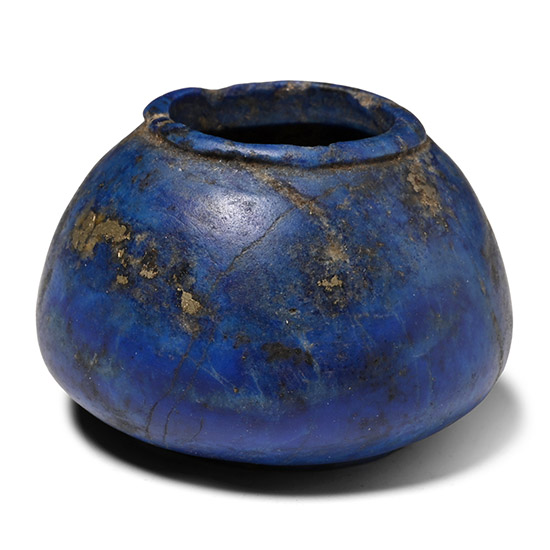
Western Asiatic Lapis Lazuli Cosmetic Vessel
2nd millennium B.C.Sold for (Inc. bp): £1,430
Conical body tapering towards a narrow mouth with a raised rim, low foot. 37.1 grams, 37 mm
UK private collection, acquired on the UK art market. -
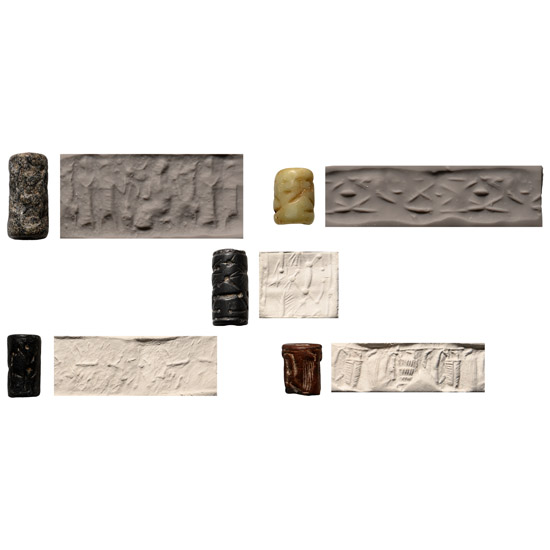
Western Asiatic Stone Cylinder Seal Group
2nd-1st millennium B.C.Sold for (Inc. bp): £169
Comprising: a steatite seal with three figures to the right offering to a deity on a throne, filler motifs including a sun disc; a light green soapstone with a stylised eagle or a winged sun disc; a red jasper seal with four people in varied clothing; a steatite seal with two gazelles back to back, and a tree as a filler motif; a hematite seal with a stag looking back, fish and other motifs; supplied with museum-quality impressions. 21 grams total, 14-24 mm
From the private collection of a European gentleman (1942-2024), formed since the 1970s. Accompanied by previous typed catalogue slips with collection nos.33, 35, 40, 66 & 77. -
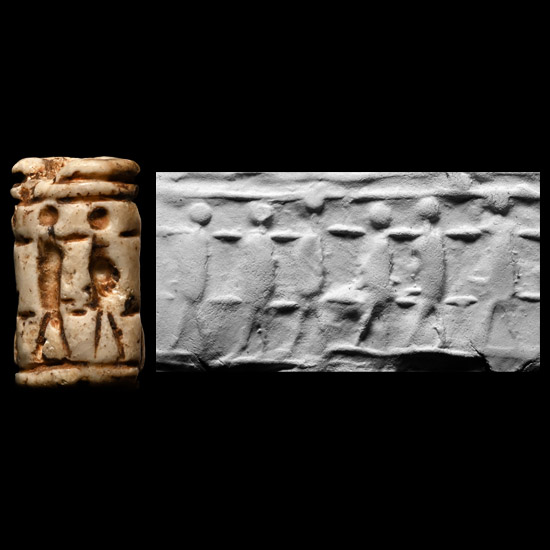
Western Asiatic White Stone Cylinder Seal with Figures
2nd-1st millennium B.C.Sold for (Inc. bp): £65
Frieze comprising a tall standing figure facing, flanked by five similar figures, all joined by horizontal bars at shoulders and hips, doubled borders; supplied with a museum-quality impression. 4.56 grams, 21 mm
From the private collection of a European gentleman (1942-2024), formed since the 1970s.
