
Loading, please wait...
LOT 1283
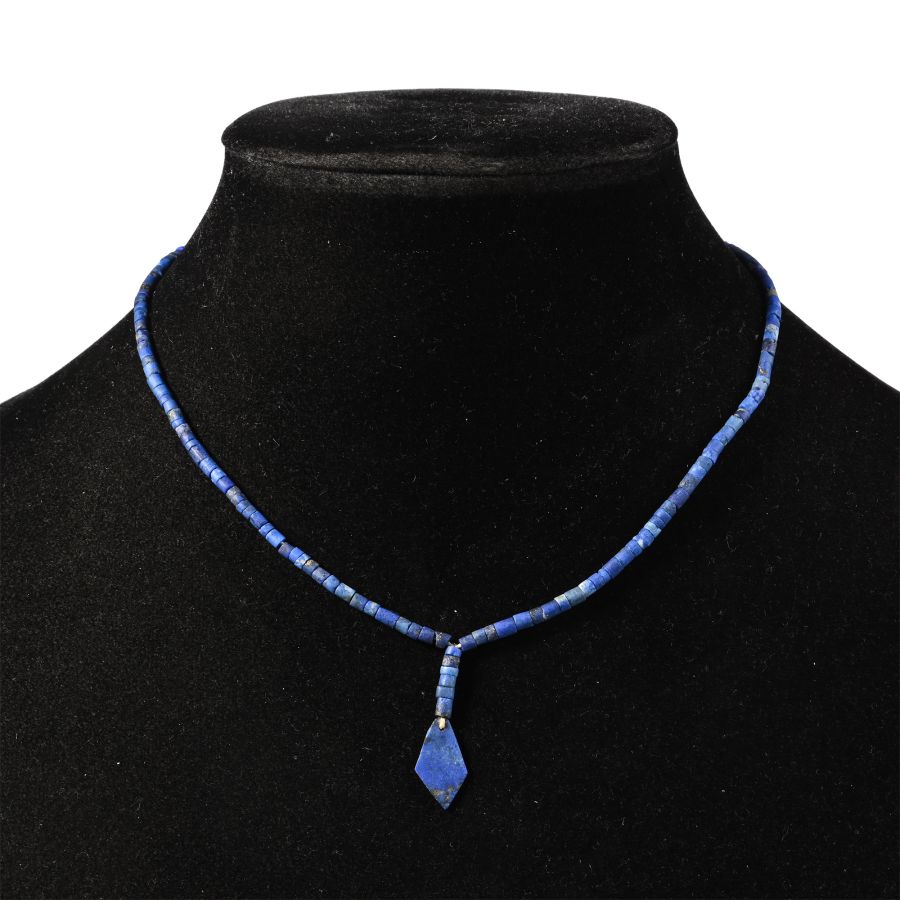
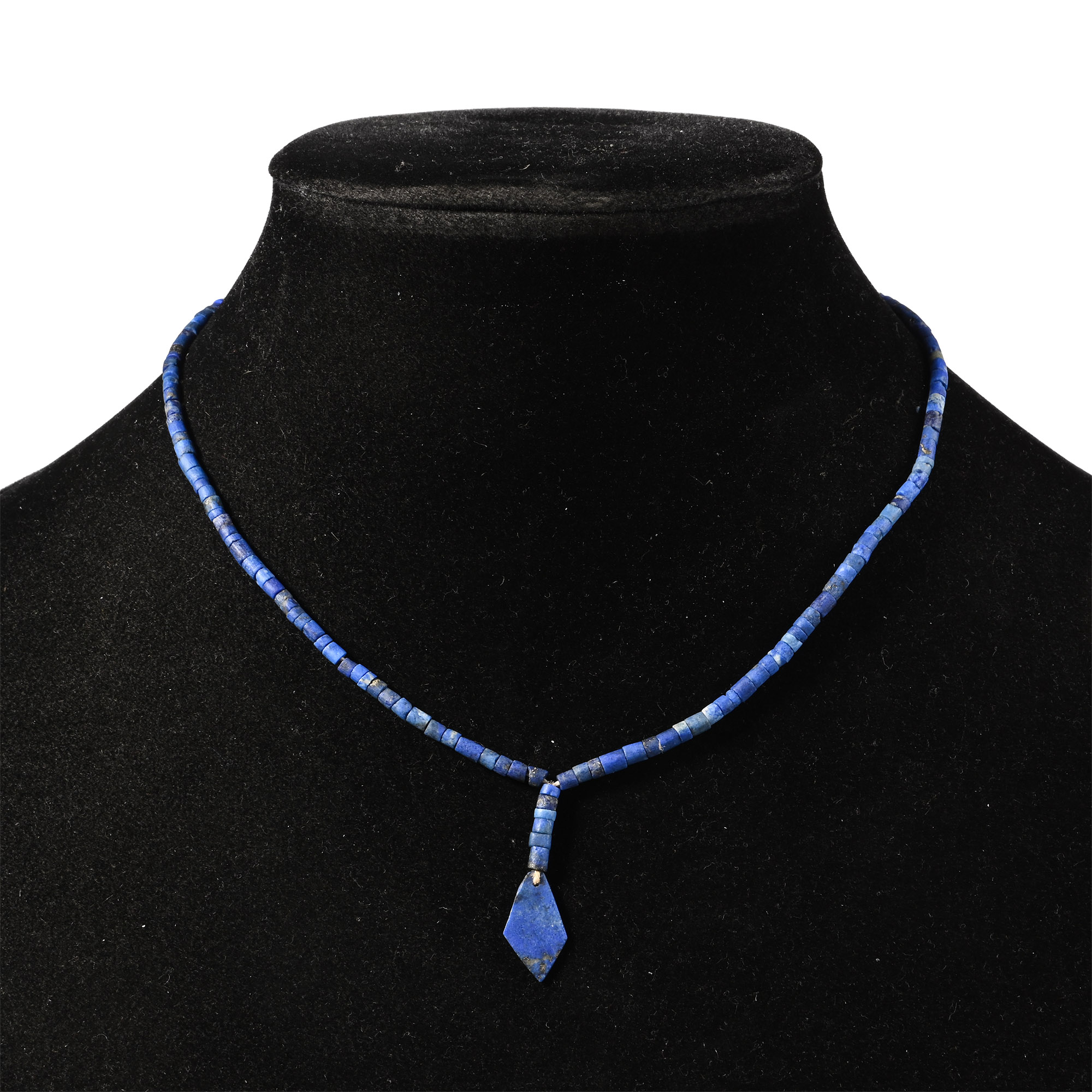
Bactrian Style Lapis Lazuli Bead Necklace String
20TH CENTURY A.D.
12 1/4 in. (5.44 grams, 31 cm).
Composed of tubular beads with a lozenge-shaped pendant, restrung. [No Reserve]
ProvenanceAcquired in the 1990s-early 2000s.
Ex London, UK, collection.
TimeLine Auctions follows a vetting process to ensure the authenticity and legality of all items, reinforcing our commitment to integrity and responsible trading. Each antiquity, antique, and coin lot undergoes thorough examination by a vetting committee of at least ten external specialists, professional trade association members, scientists, and archaeologists: Our Vetting Process
AUCTIONS:
TimeLine is a leading auction house specialising in antiquities, ancient art, collectables, natural history, coins, medals, and books. Our auctions offer museums, collectors, historians, and enthusiasts the opportunity to acquire unique and historically significant pieces.
-
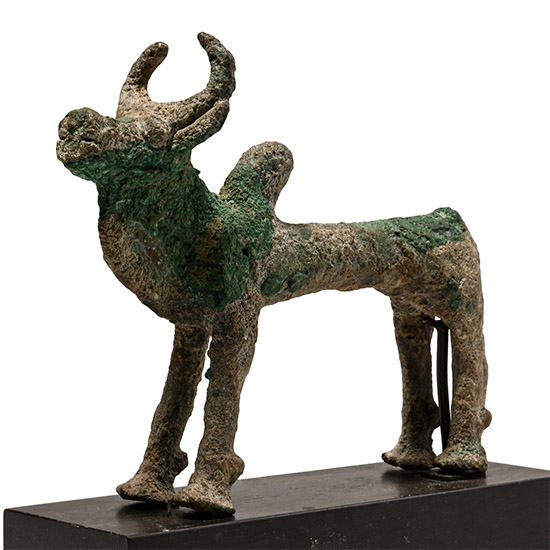
Bactrian Copper Standing Zebu
3rd-2nd millennium B.C.Estimate: £1,200 - 1,700 (+bp*)
Opening Bid: £600
Standing with head raised, dewlap to the chin and chest, angled hump behind the shoulders; mounted on a custom-made stand. 215 grams, 11.1 cm wide (351 grams total, 11.7 cm including stand)
Acquired before 1972. with a London, UK gallery. Private collection, UK. -
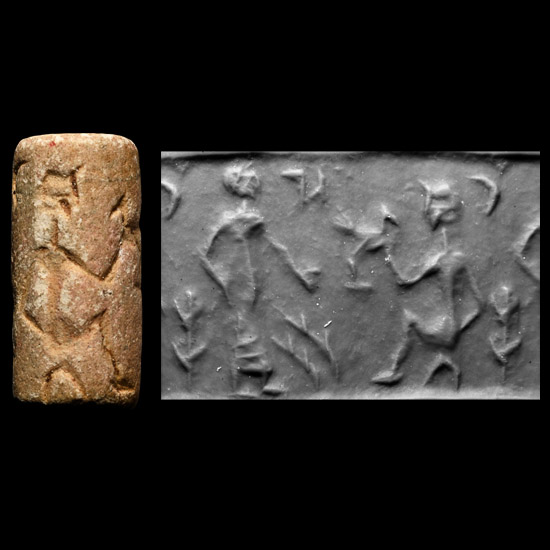
Western Asiatic Cream Stone Cylinder Seal Figural Scene
Circa 1400-1300 B.C.Sold for (Inc. bp): £111
With a frieze depicting a standing figure in a knee-length kilt, one arm extended towards a seated figure with a bent arm and perching bird; supplied with an old collector's record card and a museum-quality impression. 5.82 grams, 27 mm
From the private collection of a European gentleman (1942-2024), formed since the 1970s. Accompanied by a previous handwritten catalogue note card. -
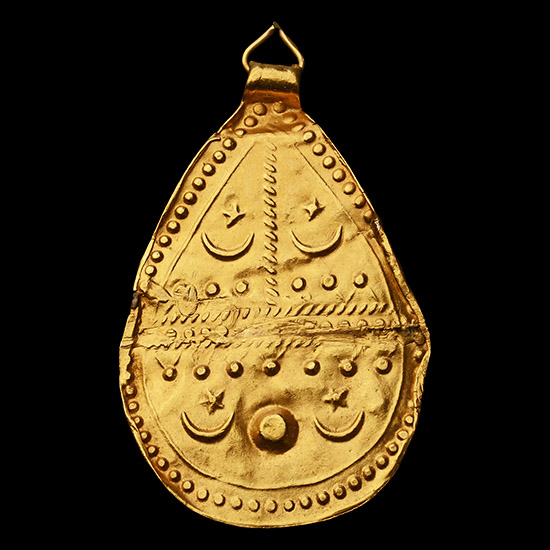
Sasanian Gold Pendant with Three Registers
6th-7th century A.D.Sold for (Inc. bp): £975
Ovoid in plan with a loop to the narrow end, repoussé pellets to the rim, star-and-crescent motifs, and ropework borders. 3.47 grams, 45 mm
Acquired by a Swiss family in the mid-1980s to late 1990s, thence by descent. Private collection, Switzerland, since the late 1990s.
The crescent is often illustrated in the clan symbols (neshan) of aristocratic Sasanian families. On the reliefs of Naghsh-e-Rustam, the crescent moon is linked to aristocratic clans, and on various monuments, it is linked with military units.
