
Loading, please wait...
LOT 2011
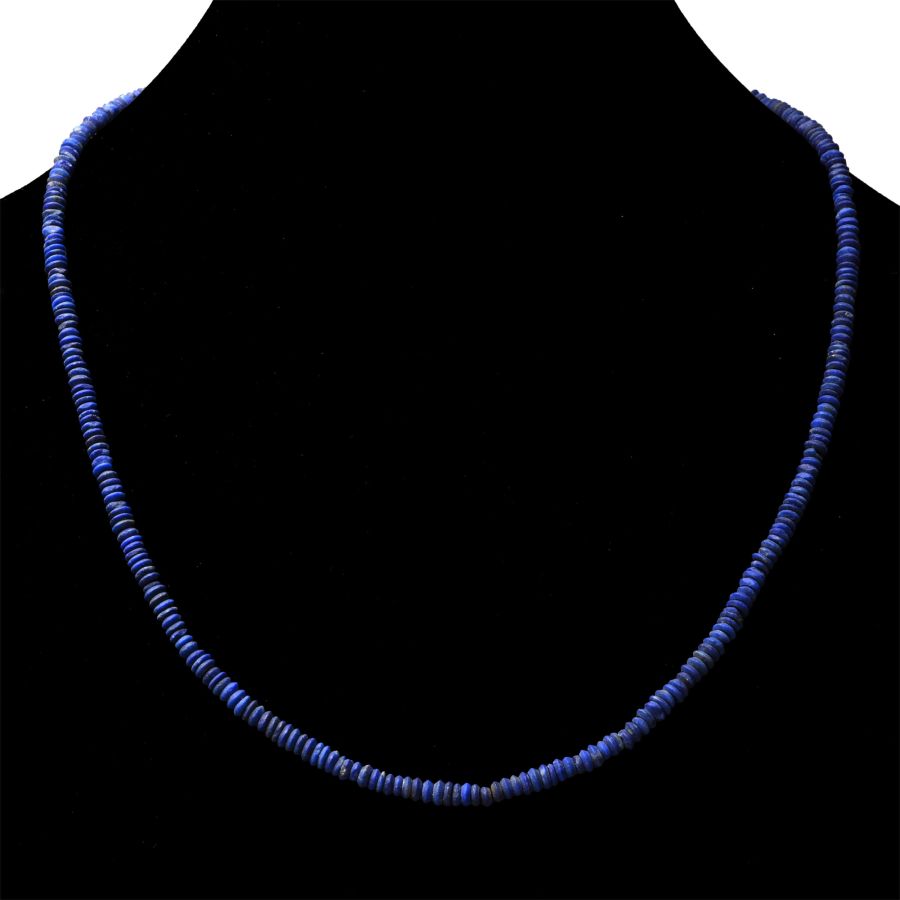
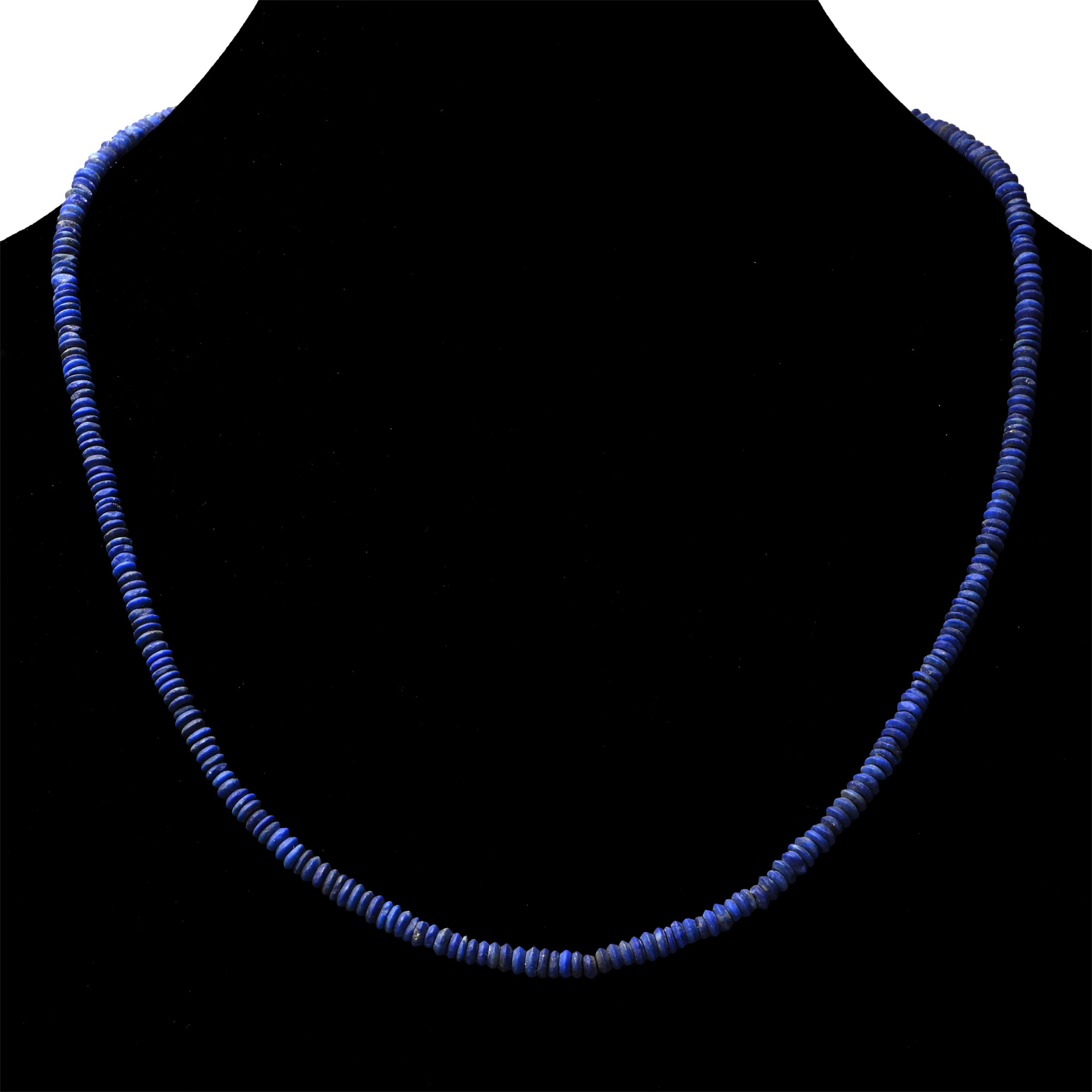
Bactrian Style Lapis Lazuli Bead Necklace String
20TH CENTURY A.D.
18 1/8 in. (17.5 grams, 46 cm).
Composed of small lenticular beads; restrung. [No Reserve]
ProvenanceFrom the London, UK, art market in the 1990s.
This lot is accompanied by an illustrated lot declaration signed by the Head of the Antiquities Department, Dr Raffaele D'Amato.
TimeLine Auctions follows a vetting process to ensure the authenticity and legality of all items, reinforcing our commitment to integrity and responsible trading. Each antiquity, antique, and coin lot undergoes thorough examination by a vetting committee of at least ten external specialists, professional trade association members, scientists, and archaeologists: Our Vetting Process
AUCTIONS:
TimeLine is a leading auction house specialising in antiquities, ancient art, collectables, natural history, coins, medals, and books. Our auctions offer museums, collectors, historians, and enthusiasts the opportunity to acquire unique and historically significant pieces.
-
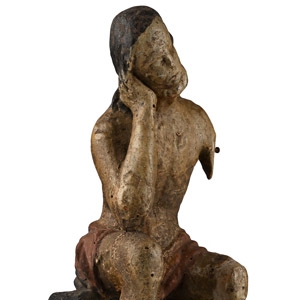
Post Medieval Painted Wooden Statue of Pensive Christ
18th-19th century A.D.Sold for (Inc. bp): £169
Seated figure of Christ on a rock, right hand supporting head, left hand absent; remains of black, cream and red colour. 665 grams, 30 cm
From the private family collection of Ersula Barter-Hemmerich, the longest serving member of staff working at the United Nations, her private collection formed in the 1950s and 1960s; thence by descent to her grandson. This lot is accompanied by an illustrated lot declaration signed by the Head of the Antiquities Department, Dr Raffaele D'Amato. -
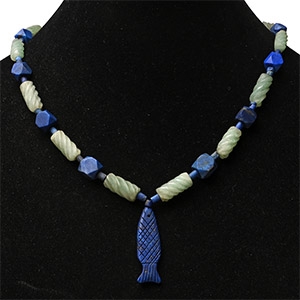
Bactrian Style Lapis Lazuli and Green Stone Bead Necklace String
20th century A.D.Sold for (Inc. bp): £20
Composed of large cylindrical beads with spiral-decoration, interspersed with cornerless cube and small tubular beads, central feature a fish-shaped pendant. 47.9 grams, 40 cm
From the London, UK, art market in the 1990s. This lot is accompanied by an illustrated lot declaration signed by the Head of the Antiquities Department, Dr Raffaele D'Amato. -
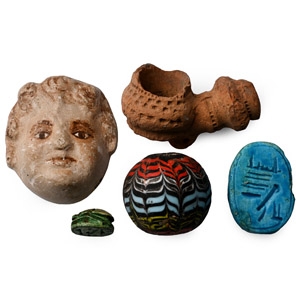
Post Medieval Artefact Collection
19th-20th century AD.Sold for (Inc. bp): £7
Including a polychrome hot-worked Javan bead, pipe bowl, scarabs and other items. 127 grams total, 17-54 mm
From the private collection of Kenneth Machin (1936-2020), Buckinghamshire, UK; his collection of antiquities and natural history was formed since 1948; thence by descent. This lot is accompanied by an illustrated lot declaration signed by the Head of the Antiquities Department, Dr Raffaele D'Amato.
