
Loading, please wait...
LOT 1491
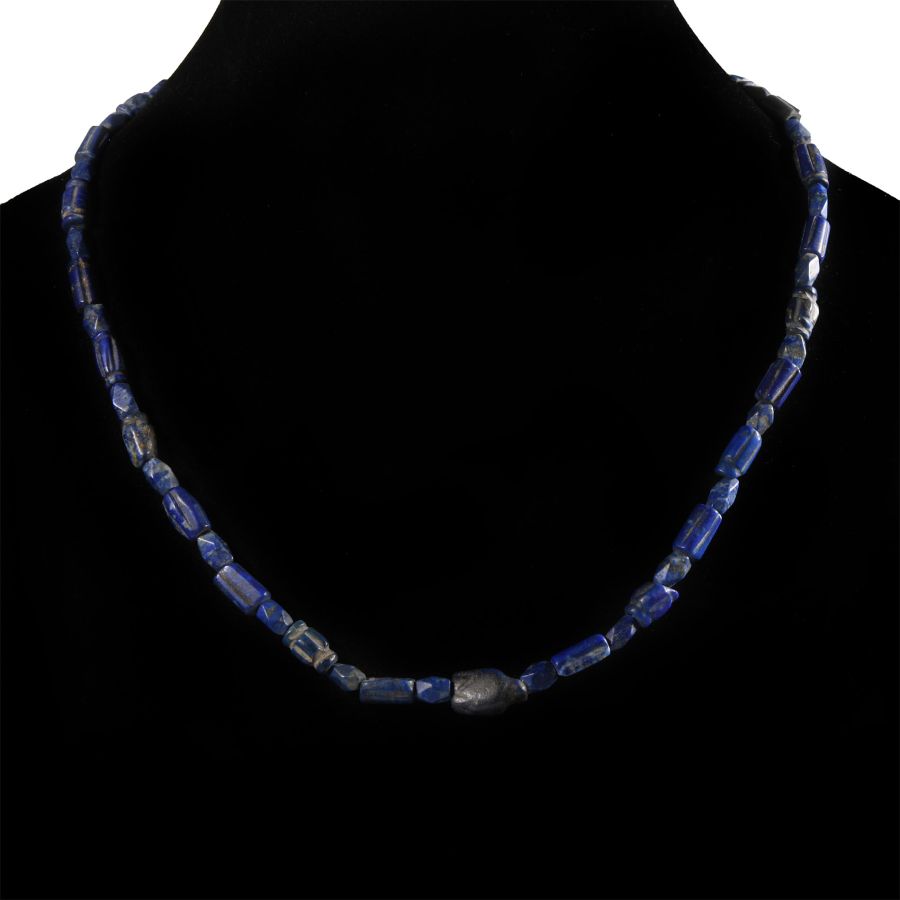
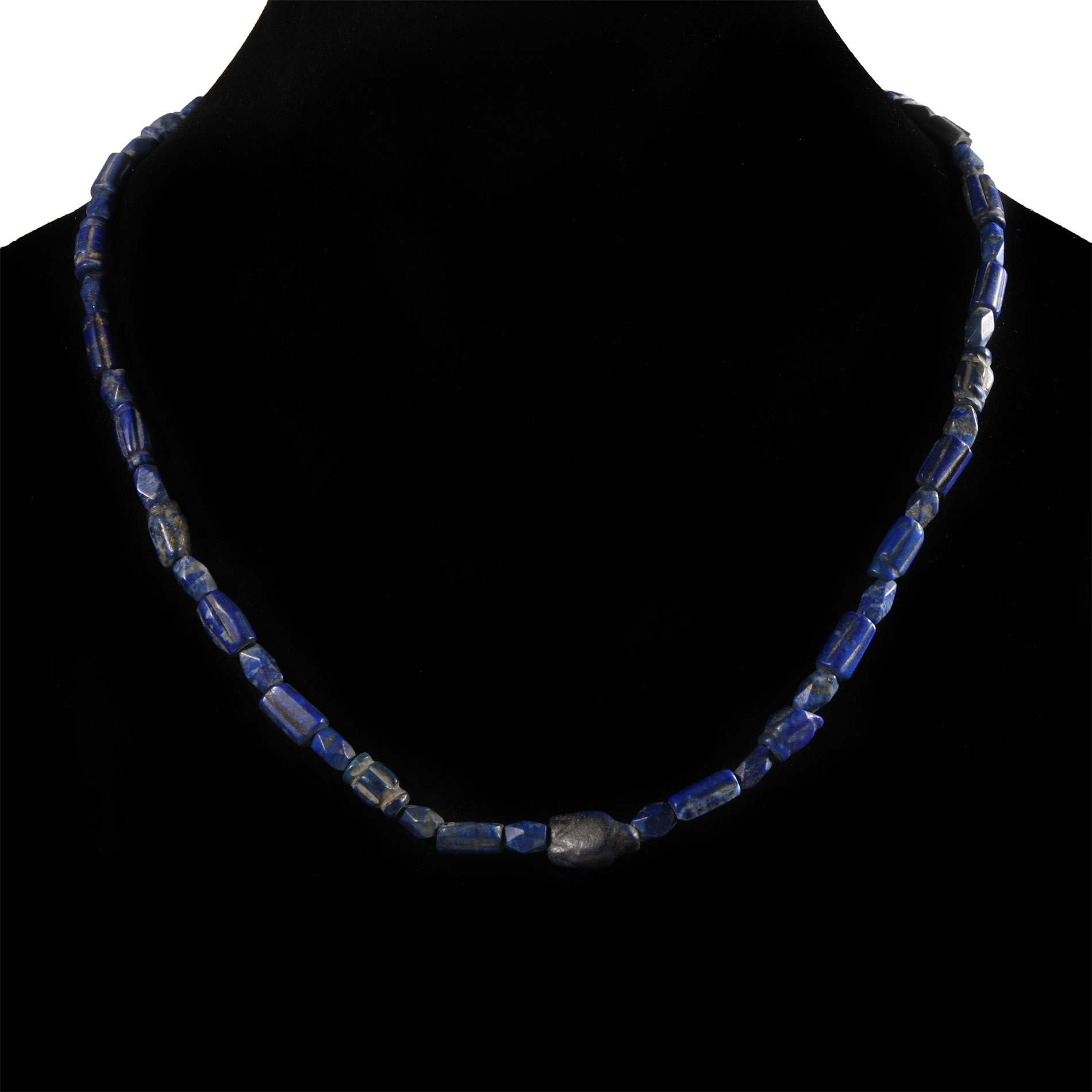
Bactrian Style Lapis Lazuli Bead Necklace String
20TH CENTURY A.D.
25 1/4 in. (28.6 grams, 64 cm long).
Restrung group of graduated polyhedral, fusiform tubular and other beads with a large poppy-head bead to the centre. [No Reserve]
ProvenanceAcquired 1980-2015.
Ex Abelita family collection.
TimeLine Auctions follows a vetting process to ensure the authenticity and legality of all items, reinforcing our commitment to integrity and responsible trading. Each antiquity, antique, and coin lot undergoes thorough examination by a vetting committee of at least ten external specialists, professional trade association members, scientists, and archaeologists: Our Vetting Process
AUCTIONS:
TimeLine is a leading auction house specialising in antiquities, ancient art, collectables, natural history, coins, medals, and books. Our auctions offer museums, collectors, historians, and enthusiasts the opportunity to acquire unique and historically significant pieces.
-

Post Medieval Bronze Ring with Bust Intaglio
Circa 18th century A.D.Estimate: £180 - 240 (+bp*)
Opening Bid: £90
With three cells to each shoulders, inset blue glass cabochons; bezel with intaglio profile female bust, initials 'DY[.]' before the face. 3.61 grams, 25.86 mm overall, 21.38 mm internal diameter (approximate size British X, USA 11 1/2, Europe 26.29, Japan 25)
Acquired on the UK art market before 2000. Property of a Surrey, UK, collector. -
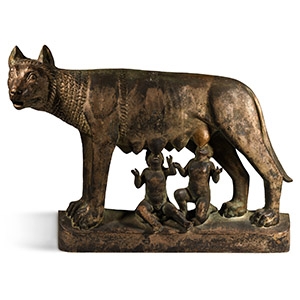
Large Bronze Roman Romulus and Remus Plaque
Late 19th-early 20th century A.D.Estimate: £1,500 - 2,000 (+bp*)
Opening Bid: £750
Modelled in the half-round and hollow to the reverse; the lupa she-wolf standing with head turned, infant twins suckling beneath on a chamfered base. 14.9 kg, 72 cm wide
Ex Weser auction, Germany. Ex French gallery, Paris.
The plaque is modelled on the famous Lupa Capitolina "the Capitoline Wolf", believed to be an Etruscan-inspired bronze of the 5th century B.C. with modifications in the 15th century AD by Antonio del Pollaiuolo. The twin boys are Romulus and Remus, abandoned by their mother and kept alive by the wolf. They went on to be founders of Rome; Romulus killed Remus in a dispute over the most appropriate hill (Palatine or Aventine) on which to base the city's layout. -

Large 'Thames' Charles I Period Lead Seal Pair
Dated 1633 A.D.Sold for (Inc. bp): £59
Two halves of a flat lead-alloy seal, one with advancing cockerel and legend to the rim 'WALTER NICKOLES MAKING', the other with sun-in-splendour motif and legend 'COXALL 100 BAYES 1633'. 13.9 grams total, 62-71 mm
Found on the Thames foreshore, London, UK, circa mid 1980s. Property of an Essex collector.
