
Loading, please wait...
LOT 1594
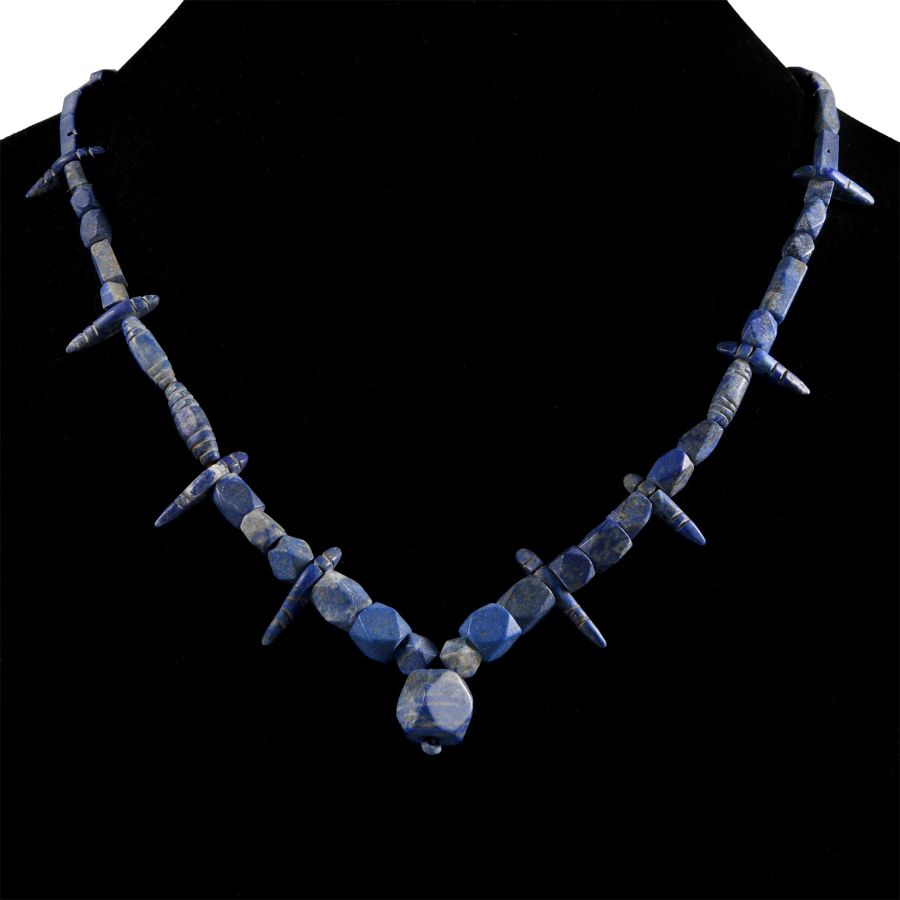
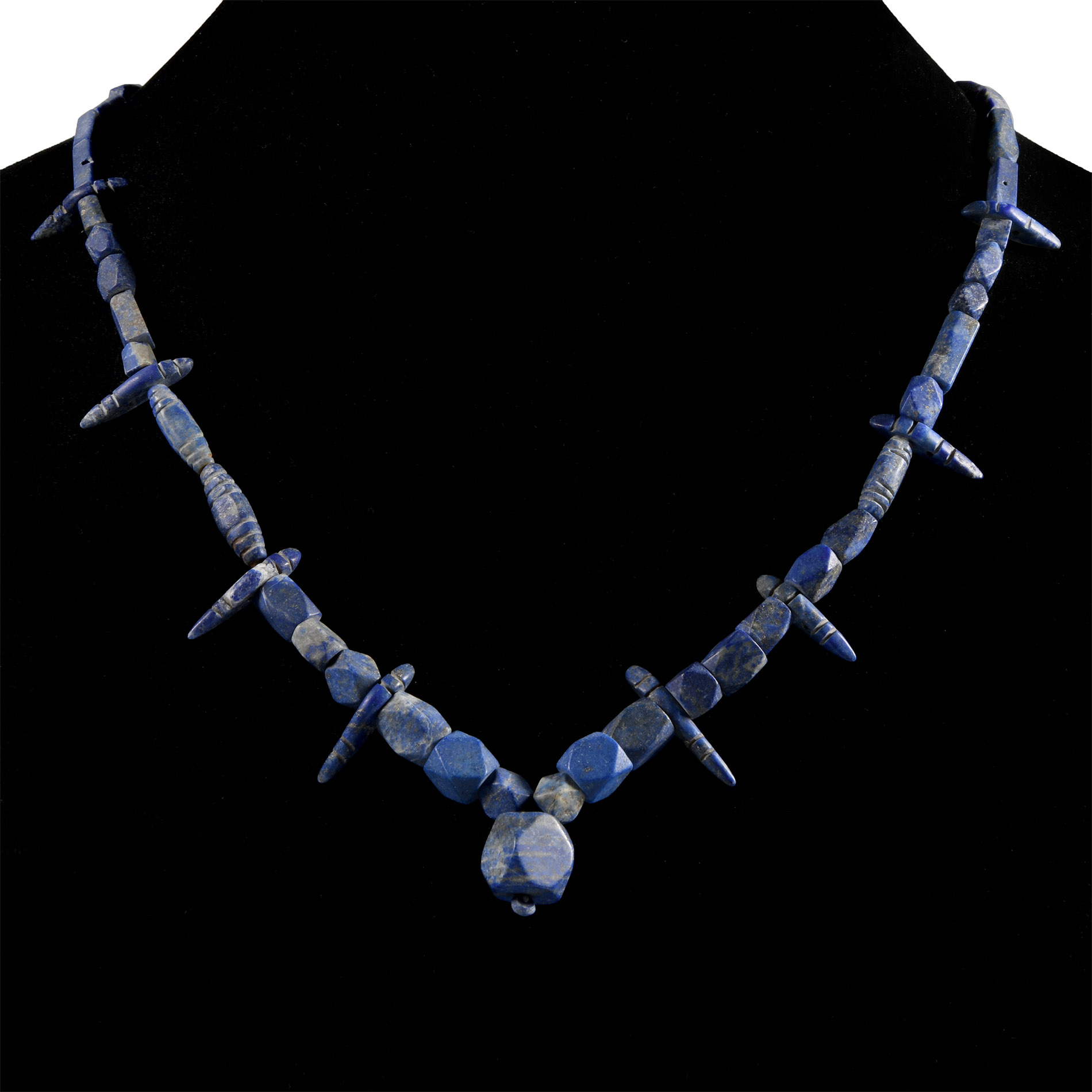
Bactrian Style Lapis Lazuli Bead Necklace String
20TH CENTURY A.D.
26 in. (40.4 grams, 66 cm long).
Restrung group of lapis lazuli beads, tubular, polyhedral, fusiform and other types. [No Reserve]
ProvenanceAcquired 1980-2015.
Ex Abelita family collection.
TimeLine Auctions follows a vetting process to ensure the authenticity and legality of all items, reinforcing our commitment to integrity and responsible trading. Each antiquity, antique, and coin lot undergoes thorough examination by a vetting committee of at least ten external specialists, professional trade association members, scientists, and archaeologists: Our Vetting Process
AUCTIONS:
TimeLine is a leading auction house specialising in antiquities, ancient art, collectables, natural history, coins, medals, and books. Our auctions offer museums, collectors, historians, and enthusiasts the opportunity to acquire unique and historically significant pieces.
-
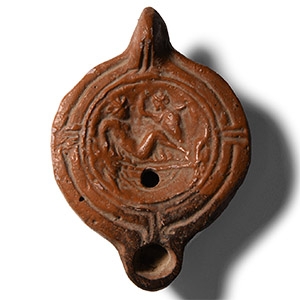
Roman Style Erotic Oil Lamp
20th century A.D.Sold for (Inc. bp): £59
Squat lamp with broad discus, D-shaped nozzle and stub handle to the rear; tondo with low-relief erotic scene, maker's name 'ATHEI' to the underside. 131 grams, 12 cm
From the collection of an London antiquarian. -
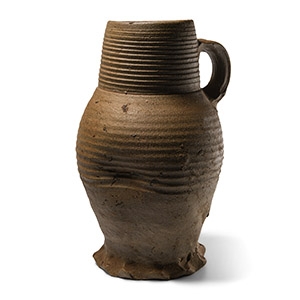
Tudor Period Terracotta Flagon
16th century A.D.Sold for (Inc. bp): £104
With a tall, gently tapering body with circumferential ribbing and piecrust foot; tall ribbed neck and strap handle to the rear. 859 grams, 21.5 cm high
Acquired on the UK art market in the 1980s. From an East Anglian private collection. -
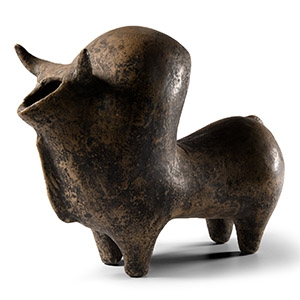
Anatolian Style Terracotta Rhyton
20th century A.D.Sold for (Inc. bp): £845
Modelled in the round, a zebu with characteristic hump to the shoulders, pouring spout on the head flanked by horns. 474 grams, 21.5 cm wide
From the celebrated personal collection of art formed by the famous anthropologist, artist, and television presenter Desmond Morris. Desmond Morris, author of The Naked Ape, Manwatching, The Naked Eye, and countless other books concerning human and animal behaviour, a professional zoologist, surrealist artist, lecture and television celebrity.
