Loading, please wait...
LOT 2062
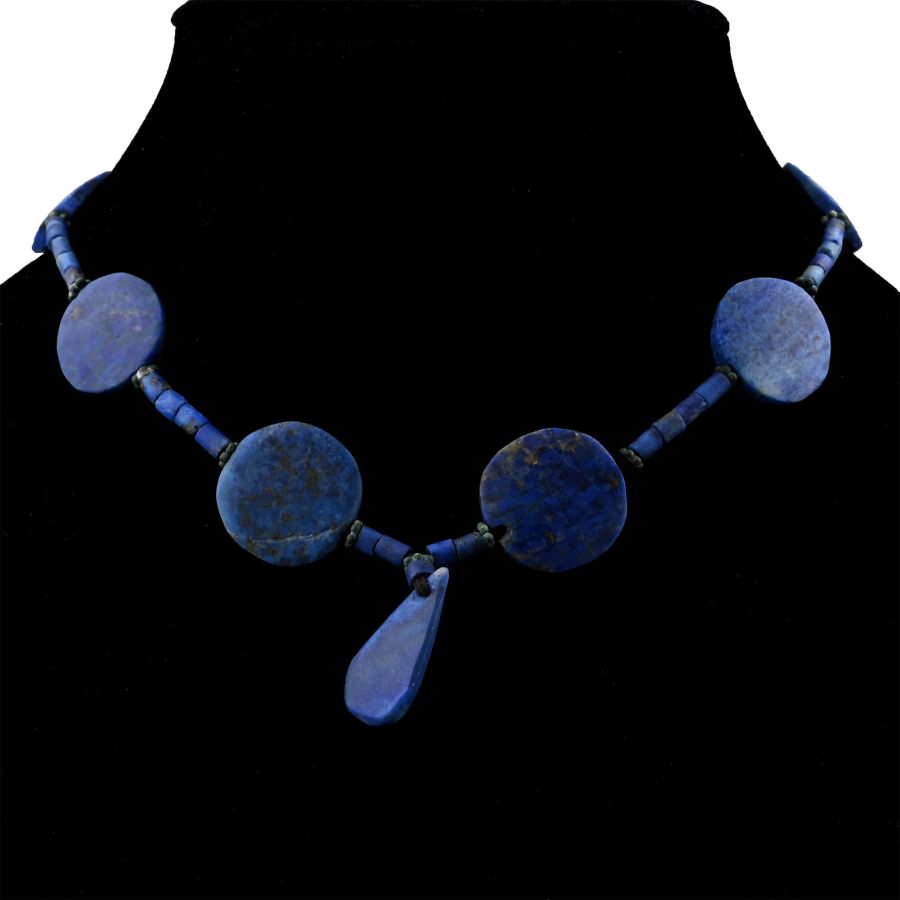
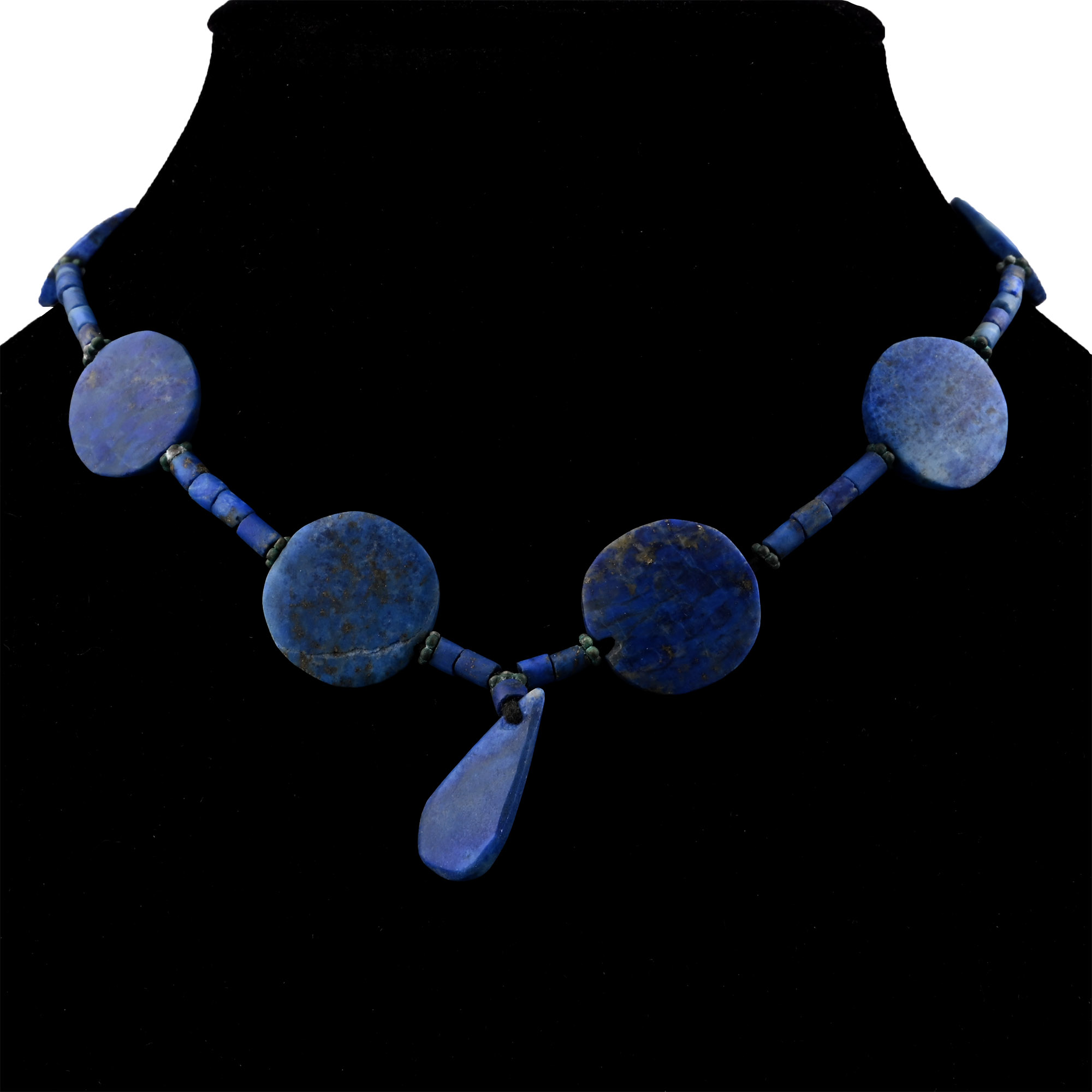
Bactrian Style Lapis Lazuli and Other Bead Necklace String
20TH CENTURY A.D.
12 3/8 in. (27 grams, 31.3 cm).
Restrung group of annular and tabular beads with a teardrop-shaped pendant. [No Reserve]
ProvenanceFrom London, UK, gallery collection, 1990s.
CONDITIONTimeLine Auctions follows a vetting process to ensure the authenticity and legality of all items, reinforcing our commitment to integrity and responsible trading. Each antiquity, antique, and coin lot undergoes thorough examination by a vetting committee of at least ten external specialists, professional trade association members, scientists, and archaeologists: Our Vetting Process
AUCTIONS:
TimeLine is a leading auction house specialising in antiquities, ancient art, collectables, natural history, coins, medals, and books. Our auctions offer museums, collectors, historians, and enthusiasts the opportunity to acquire unique and historically significant pieces.
LOT 2062
Bactrian Style Lapis Lazuli and Other Bead Necklace String
Sold for (Inc. bp): £13
-
Large Post Medieval Merchant’s Seal Ring Engraved with 'BG' and Shield
Germany, 16th century A.D.Sold for (Inc. bp): £12,350
Engraved with the owner's initials ‘B G’ above a tilting shield with flanche; merchant's mark motif of capital 'A' and a cross. 20.03 grams, 28.33 mm overall, 23.00 x 18.47 mm internal diameter (approximate size British T 1/2, USA 9 3/4, Europe 21.89, Japan 21)
Private collection, Europe. Acquired on the English art market. This lot has been checked against the Interpol Database of stolen works of art and is accompanied by a search certificate number no.13051-248349.
Merchants' marks were chosen by their owners as a form of personal cypher, and so it is almost impossible to decipher the owner of many merchants' marks, as they were not governed by the strict regulation and recording that heraldry laws dictated. Merchants' rings were engraved with geometric symbols used to mark their goods or personal belongings and used instead of a coat of arms for those not entitled to them. Most merchants in the sixteenth and seventeenth centuries had marks, easily identifiable and formed with a few strokes. Many such rings also bear religious or talismanic inscriptions or imagery, combining a spiritual with a commercial function. The shape of the shield on this example draws direct parallels to the heraldic shields and jewels of this period in Germany. -
Silver-Coloured Metal Ring with Bead Gem
Late 20th-21st century A.D.Sold for (Inc. bp): £33
With a broad hoop, applied scroll to each shoulder, filigree collar to the cell, inset ellipsoid synthetic ruby cabochon with wheel-cut fluting. 23.94 grams, 36.11 mm overall, 20.36 mm internal diameter (approximate size British V, USA 10 1/2, Europe 23.77, Japan 22)
Private collection, UK. -
Original Timber Removed from HMS Victory in 1888 with Provenance Letter
Letter dated 5th June 1888 A.D.Sold for (Inc. bp): £312
Irregular fragment of timber, supplied with a handwritten provenance letter with wax seal; the letter states: 'Parish of Sidlow Bures Manor. Know all men, and if ladies particularly, by these presents, that of the fifth day of April 1888 the undersigned Poulteney Bigelow did in the company with an officer of H.M Service secure the accompanying piece of timber belonging to the ever famous frigate Victory, the same that fought at Trafalgar and received the precious life blood of the immortal Nelson on the 21st of October 1805. This piece of timber was cut out of the Hull of the Victory while undergoing repairs on the dry dock of Portsmouth. It is herewith presented to Miss Mabel Nicholson as a precious heirloom for distant generations of such as may love liberty and cherish the memory of valiant men. Witness the annexed signature seal, Poulteney Bigelow, Bures Manor, June 5 1888.' 141 grams total, 15.6-26.5 cm
From the collection of a Sussex noble lady, by descent from 1888, directly from the gifting of the item, as stated in the letter.
The HMS Victory underwent various refits throughout her long service, but a significant one occurred in 1888, when she was converted for use as a training ship. This refit included modifications to her structure and interior to accommodate her new role, although she was primarily preserved as a historic vessel. The hull and internal structures were reinforced to address wear and tear from years of service. The HMS Victory is currently the oldest British naval vessel still in commission, with 248 years of service as of 2026.