Loading, please wait...

Bactrian Style Lapis Lazuli and Carnelian Bead Necklace String Bactrian Style Lapis Lazuli and Carnelian Bead Necklace String Bactrian Style Lapis Lazuli and Carnelian Bead Necklace String
Use mousewheel to zoom in and out, click to enlarge
Details

LOT 1206

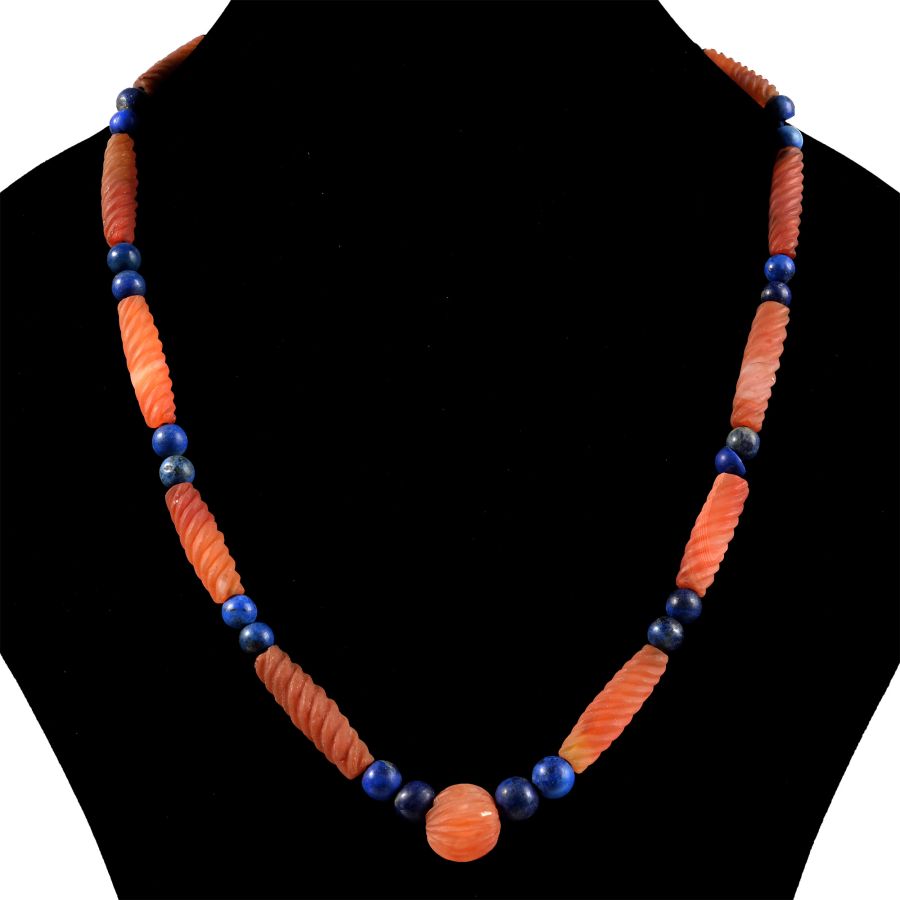
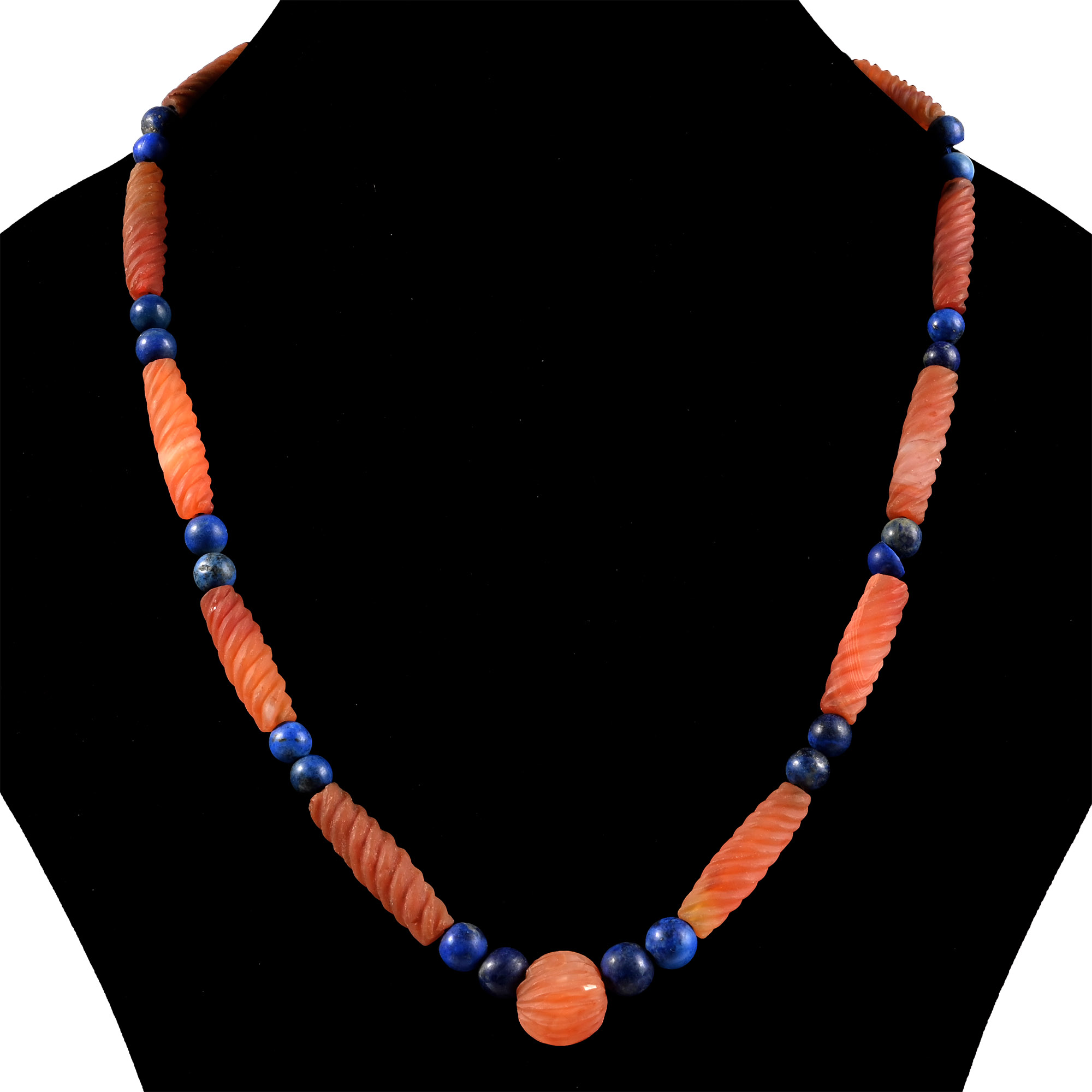
Bactrian Style Lapis Lazuli and Carnelian Bead Necklace String

20TH CENTURY A.D.

20 3/4 in. (66.5 grams, 52.5 cm).

Designer necklace composed of spherical beads interspersed with barley twist beads; restrung. [No Reserve]

Provenance

Acquired in the 1990s-early 2000s.
Ex London, UK, collection.

CONDITION
VETTING:

TimeLine Auctions follows a vetting process to ensure the authenticity and legality of all items, reinforcing our commitment to integrity and responsible trading. Each antiquity, antique, and coin lot undergoes thorough examination by a vetting committee of at least ten external specialists, professional trade association members, scientists, and archaeologists: Our Vetting Process


AUCTIONS:

TimeLine is a leading auction house specialising in antiquities, ancient art, collectables, natural history, coins, medals, and books. Our auctions offer museums, collectors, historians, and enthusiasts the opportunity to acquire unique and historically significant pieces.

LOT 1206

Bactrian Style Lapis Lazuli and Carnelian Bead Necklace String

Sold for (Inc. bp): £39

Print page

RELATED LOTS
  • Western Asiatic Cylinder Seal Group
    Western Asiatic Cylinder Seal Group
    2nd-1st millennium B.C.

    Sold for (Inc. bp): £111

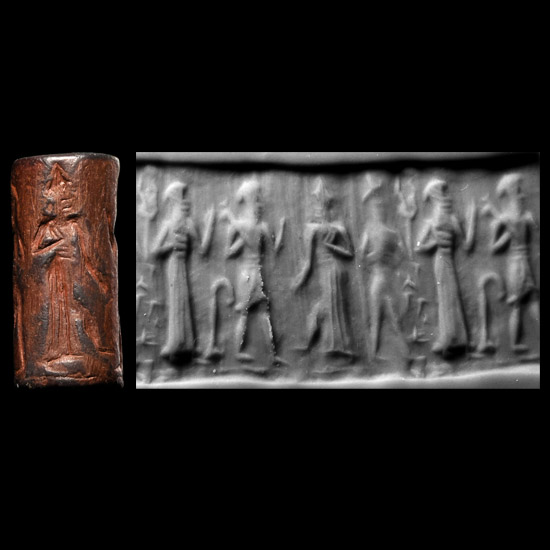
    Comprising: one slender with frieze of incuse facing and profile figures; one squat with winged figure. 6.38 grams total, 16-27 mm


    From the collection of David Donlan (1947-2025), a dedicated and lifelong collector with a passion for the ancient world and the natural sciences, forming his collection from 1960s onwards, using many reputable dealers across the United Kingdom, including the well-regarded Coincraft and The Parthenon Gallery.

    Lot Details

  • Large West Central Asian Bronze Six-Spoked Wheel Seal Matrix
    Large West Central Asian Bronze Six-Spoked Wheel Seal Matrix
    Circa 2300-2000 B.C.

    Sold for (Inc. bp): £124

    Openwork seal formed as a spoked wheel, accompanied by an old scholarly note, typed and signed by W.G. Lambert, late Professor of Assyriology, University of Birmingham, 1970-1993, which states: 'Stamp Seal of Bronze, 43 x 43 x 12 mm. This is round, with flat face and flat back, on which a loop handle is mounted. The design, which is both compartmented and open-work, consists of a rosette, with six 'rays' off a central small circular band, and a plain outer band surrounded the whole, divided into 17 segments. This comes from west central Asia and dates to c. 2300-2000 B.C. There is some wear and denting, but the piece is generally in fair condition, the metal having been conserved.' 27.9 grams, 45 mm


    Acquired in the late 1980s-early 1990s. Ex property of a West London businessman. Academically researched and catalogued by the late Professor Lambert in the early 1990s. Accompanied by a copy of a scholarly report, numbered T-871, typed and signed by Professor Wilfrid George Lambert.

    Lot Details

  • Western Asiatic Bronze Statuette of a Kneeling Priest
    Accompanied by a report written by Metallurgist Dr Brian Gilmour
    Western Asiatic Bronze Statuette of a Kneeling Priest
    Late 3rd millennium B.C.

    Sold for (Inc. bp): £5,720

    Modelled as a kneeling priest wearing a knee-length kilt, the long hair combed back from the face and extending down the back, arms bent, and fists clenched, resting on the belt, recessed to the underside. 359 grams, 83 mm


    Ex London family collection, since the 1970s. Accompanied by a report of metallurgical analytical results, written by Metallurgist Dr Brian Gilmour of the Research Laboratory for Archaeology and the History of Art, University of Oxford. This lot has been checked against the Interpol Database of stolen works of art and is accompanied by search certificate number no.13313-258236.

    This powerful figure was probably lost-wax cast in arsenical copper, as were many Near Eastern bronzes of the 3rd millennium. He is muscular with broad shoulders, a strong chest and a well-toned, rippling abdomen. The pleated long garment is typical of the Mesopotamian men. Very interesting is his praying gesture, which is typical of the statuette of Ur culture.

    Lot Details

Stay up-to-date with the latest from TimeLine Auctions by joining our mailing list