
Loading, please wait...
LOT 0212
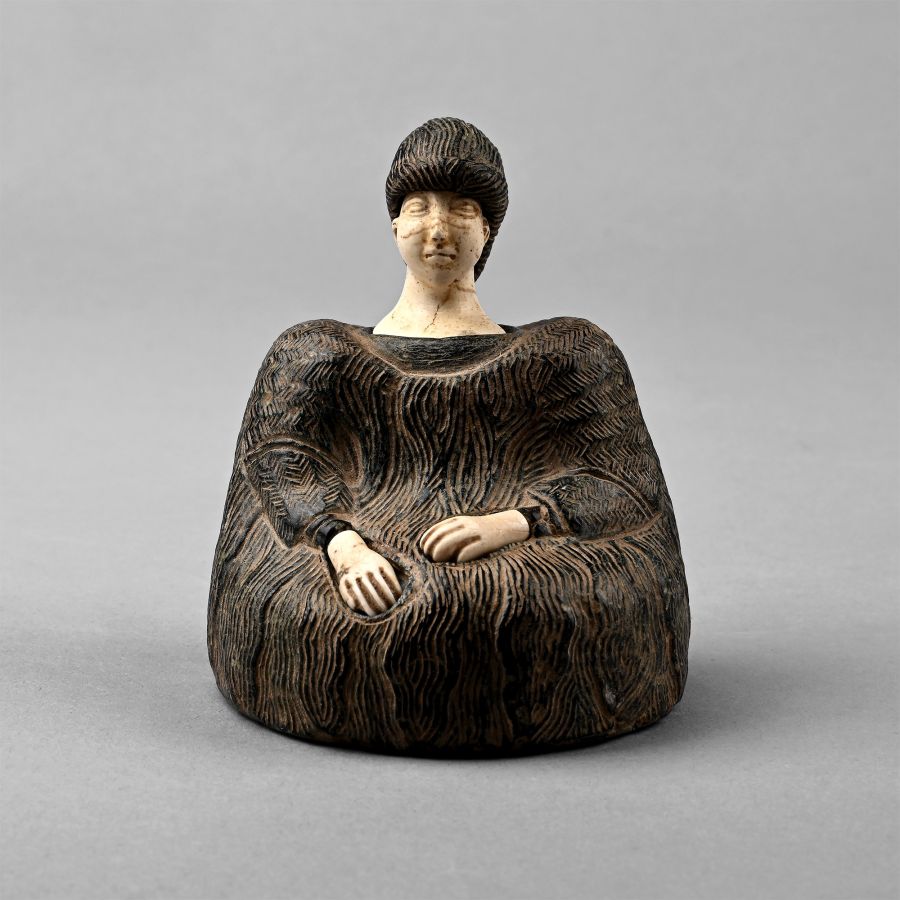
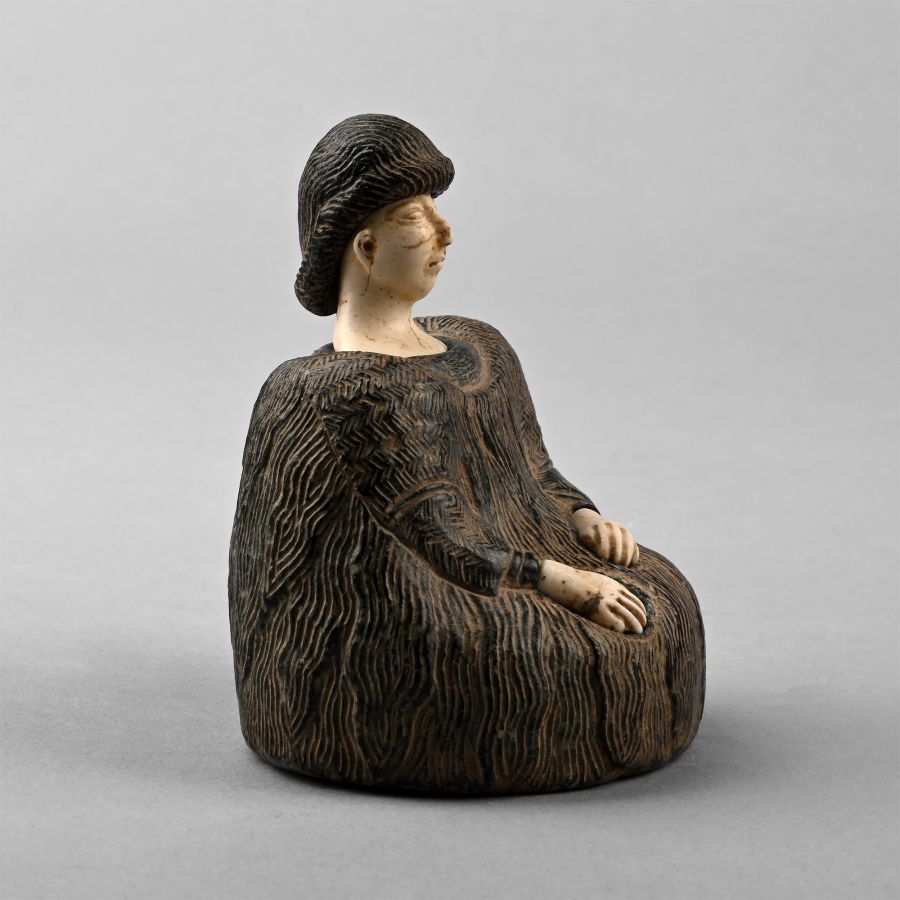
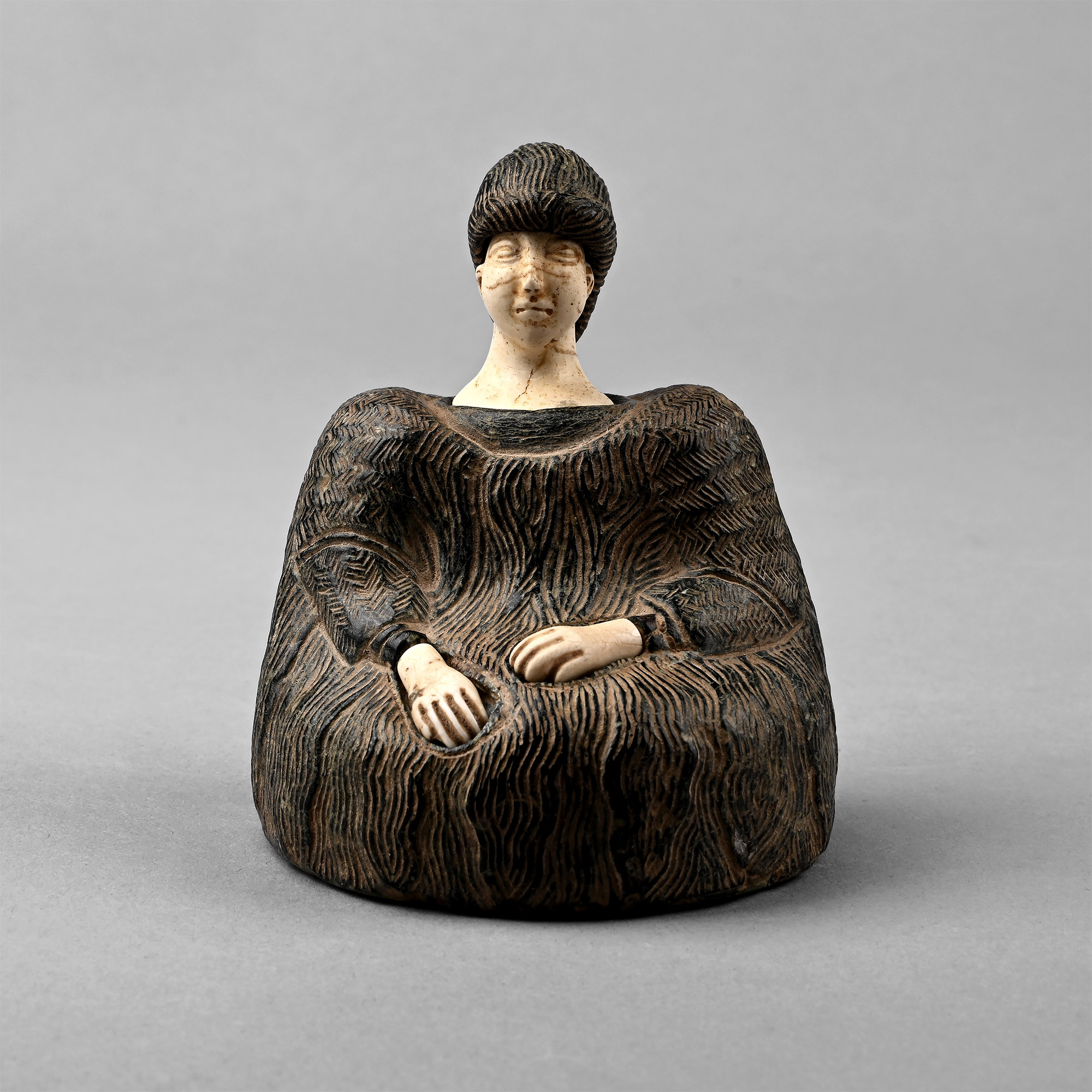
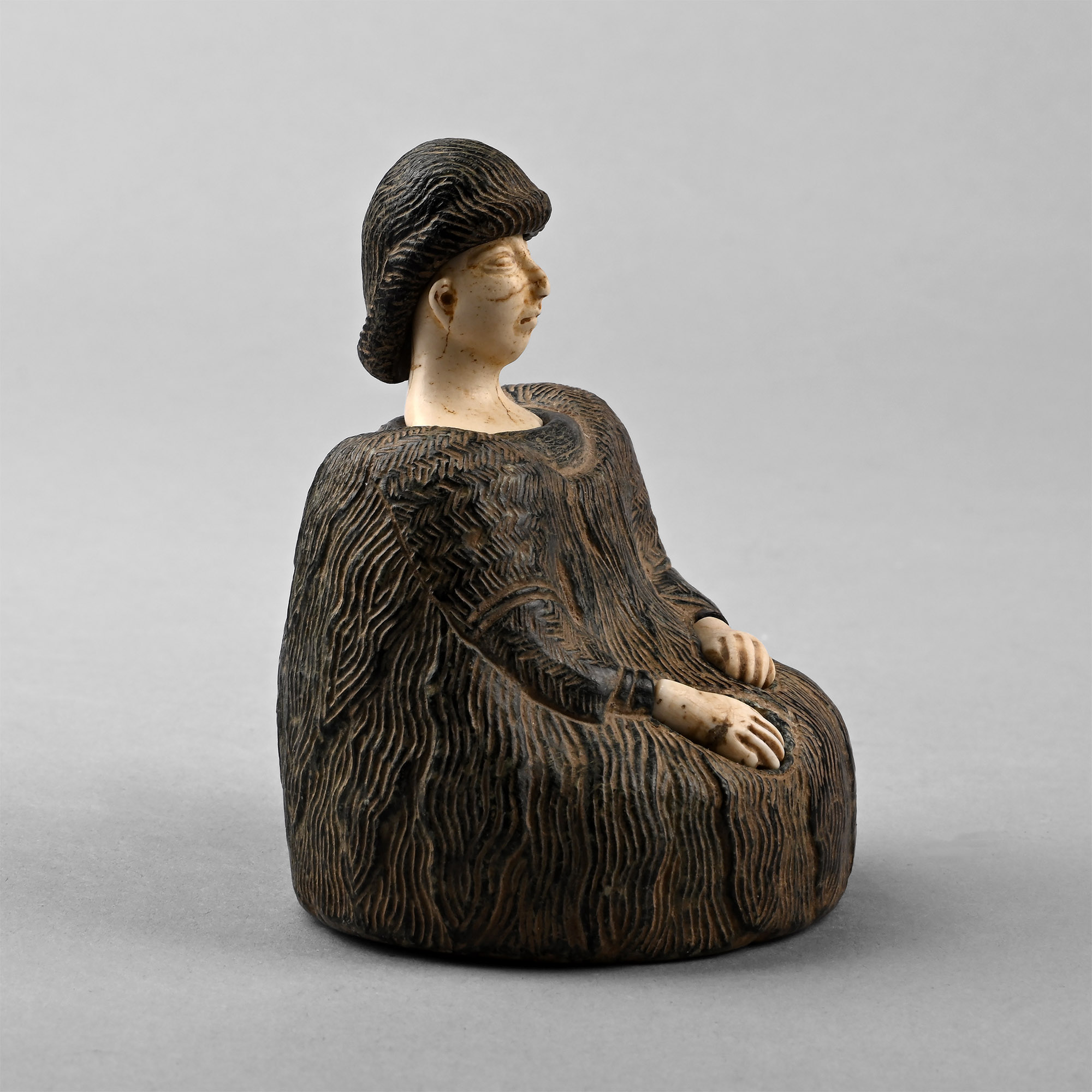
Bactrian Stone Female 'Princess' Idol
BACTRIA-MARGIANA, LATE 3RD-2ND MILLENNIUM B.C.
3 3/4 in. (540 grams total, 95 mm high).
Carved as a seated human figure, body with rows of overlapping tufts of fur, set with a bald head carved from cream stone with semi-naturalistic detailing to the face; a separate wig with wavy hair, and separately modelled hands.
ProvenancePalace Galleries, New York, early 2000s.
Acquired by the current owner from the above.
Private collection of a North American lady.
This lot has been checked against the Interpol Database of stolen works of art and is accompanied by search certificate number no.13372-256950.
See Aruz, J., Art of The First Cities: The Third Millennium B.C. from the Mediterranean to the Indus, The Metropolitan Museum of Art, 2003, pp. 367-368, for discussion and similar examples; cf. Hiebert, F. and Cambon, P. eds., Afghanistan: Crossroads of the Ancient World, The British Museum Press, 2011, pp.71-76, for discussion and comparable objects.
FootnotesThis wonderful composite stone sculpture of a seated female figure with finely carved features is typical of the area of Bactria-Margiana, from the late 3rd to early 2nd millennium B.C. Among the few three-dimensional images assigned to this period in Central Asia are a group of stone female figures seated or squatting on a platform and wearing a pattern-decorated robe, perhaps imitating sheep's fleece.
CONDITIONTimeLine Auctions follows a vetting process to ensure the authenticity and legality of all items, reinforcing our commitment to integrity and responsible trading. Each antiquity, antique, and coin lot undergoes thorough examination by a vetting committee of at least ten external specialists, professional trade association members, scientists, and archaeologists: Our Vetting Process
AUCTIONS:
TimeLine is a leading auction house specialising in antiquities, ancient art, collectables, natural history, coins, medals, and books. Our auctions offer museums, collectors, historians, and enthusiasts the opportunity to acquire unique and historically significant pieces.
-
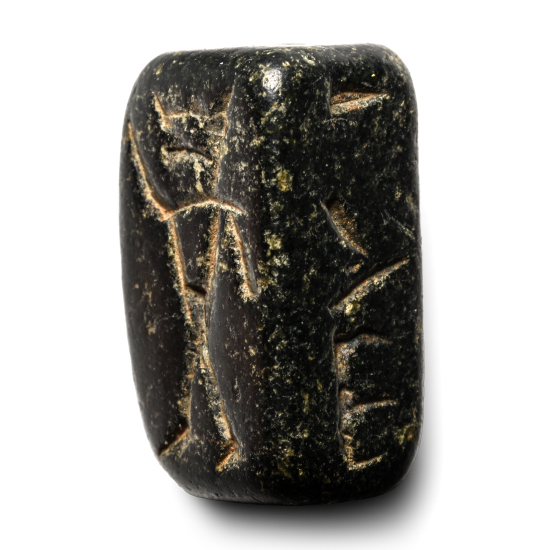
Assyrian Steatite Four-Sided Seal with Figures and Magical Symbols
Circa 600-400 B.C.Sold for (Inc. bp): £111
Rectangular in plan with longitudinal piercing, incuse decoration to the long faces: advancing figure with canine mask; undulating line (serpent); standing figure in flounced robe with arms raised; three glyphs or symbols; usage wear, 7.46 grams, 22 mm
From the private collection of Mr Brian Edwards, New Malden, Surrey, UK, formed from the late 1970s-early 1980s; thence by descent. Accompanied by the original collector's data sheet(s) with reference no.A8. -
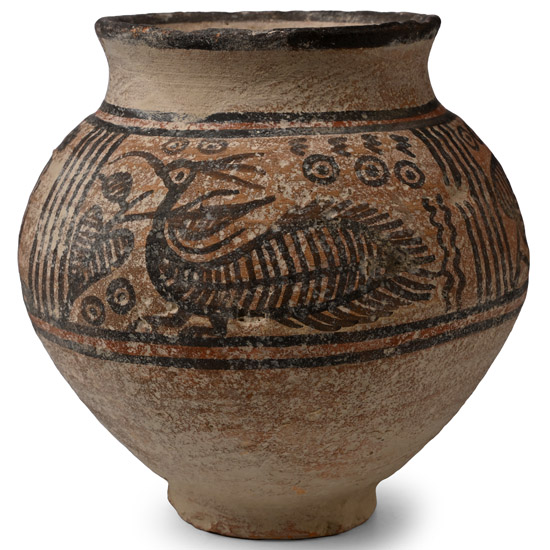
Western Asiatic Terracotta Vessel with Zebu and Peepal Leaves
1st millennium B.C.Sold for (Inc. bp): £416
Bulbous body with a narrow foot and short tubular neck, polychrome band with a peacock, peepal leaves, and a standing zebu. 505 grams, 13.9 cm
Ex Abelita collection, 1990s. -
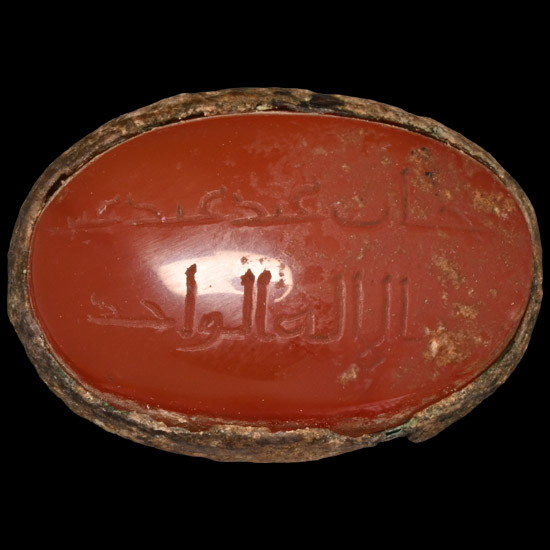
Sasanian Silver Ring with Carnelian Calligraphic Gemstone
Circa 4th-5th century A.D. and laterSold for (Inc. bp): £260
Comprising a slender D-section hoop and a large oval bezel with a later carnelian cabochon engraved with a two-line inscription. 6.28 grams, 27.36 mm overall, 18.70 mm internal diameter (approximate size British Q, USA 8, Europe 17.49, Japan 16)
From the private collection of a European gentleman (1942-2024), formed since the 1970s.
