
Loading, please wait...
LOT 1102
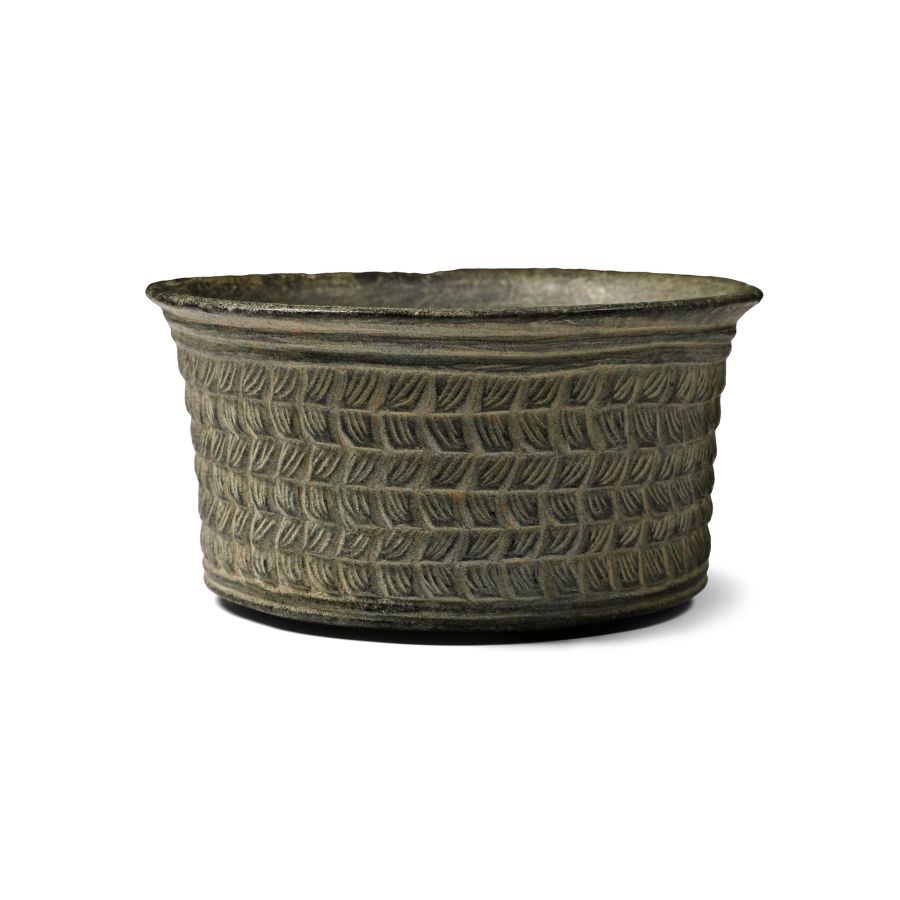
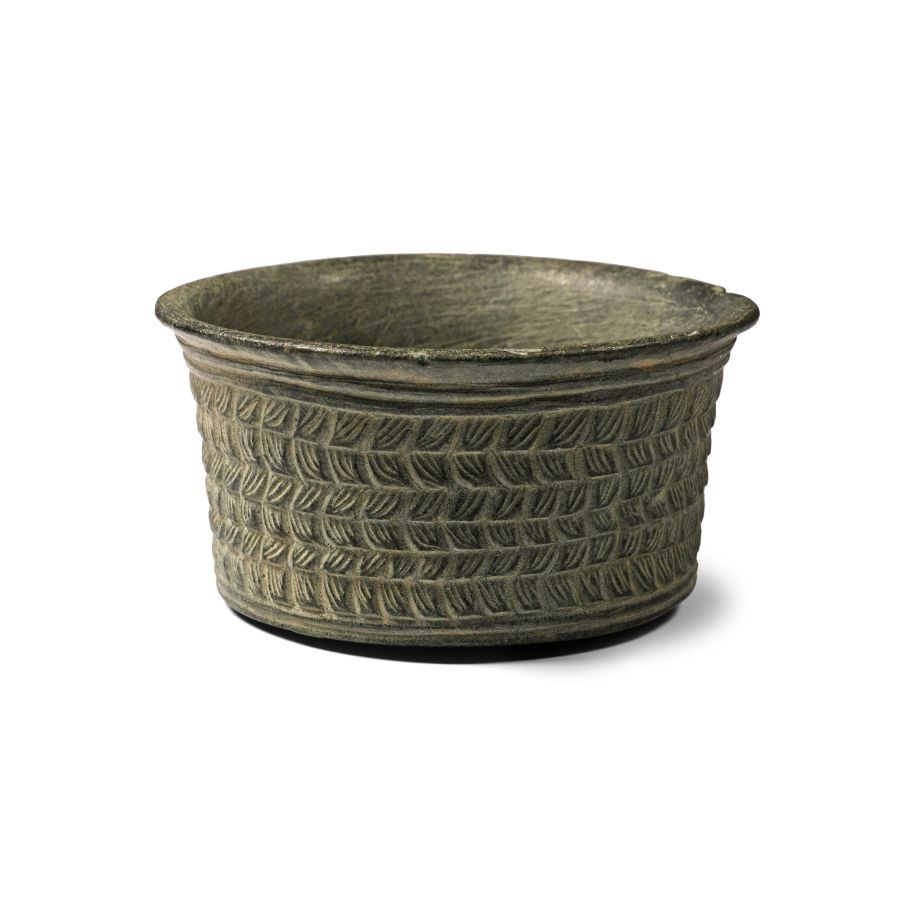
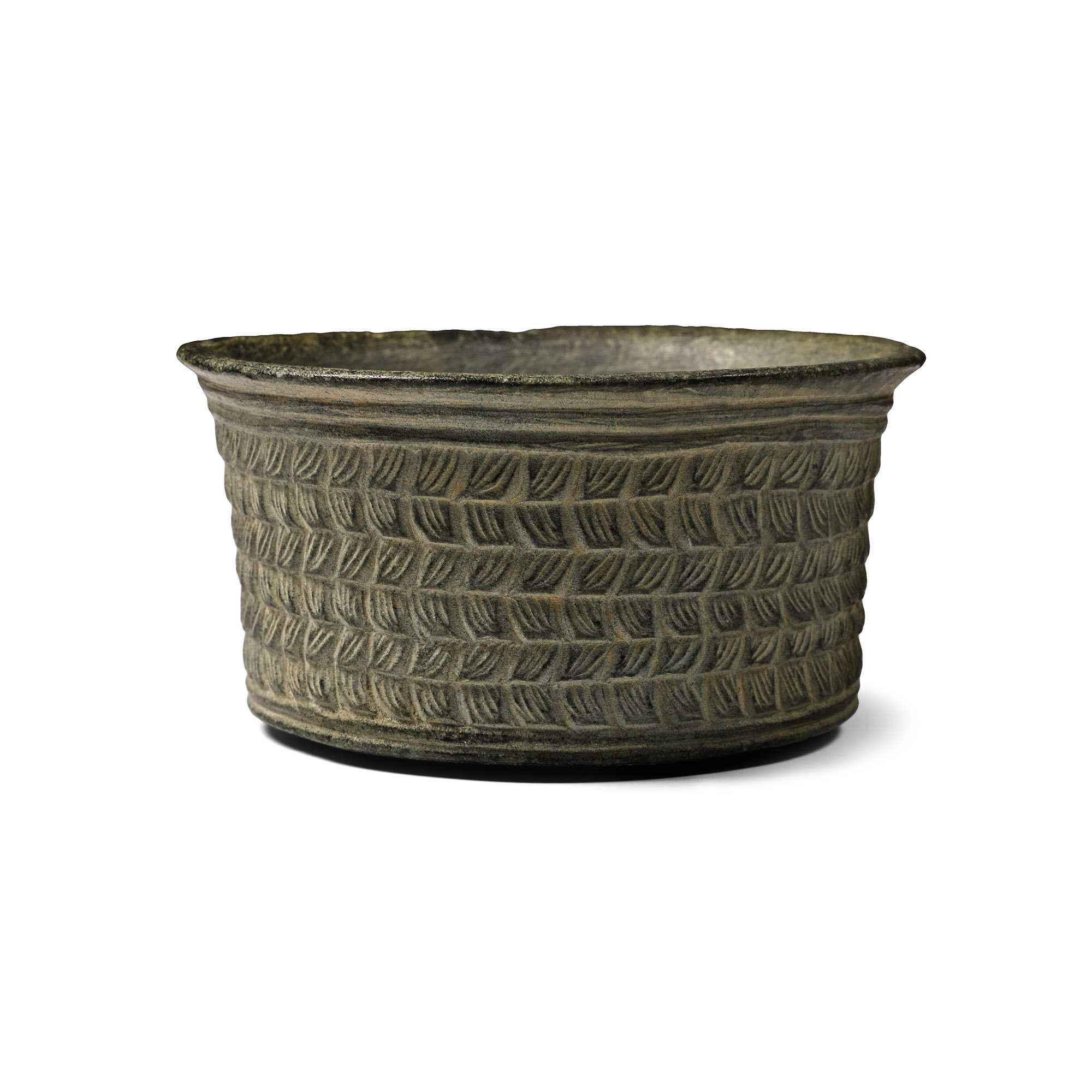
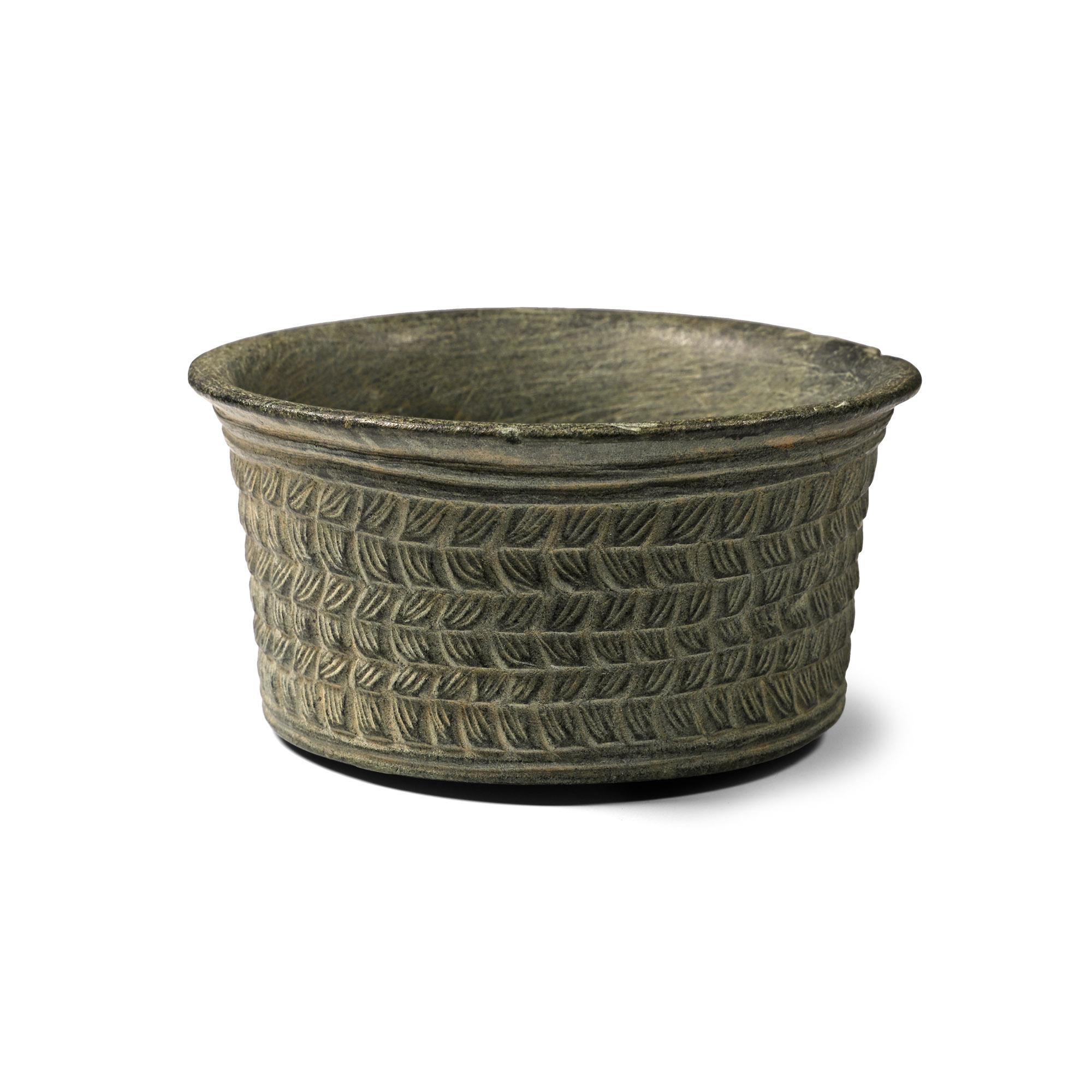
Bactrian Stone Bowl with Wavy Design
LATE 3RD-EARLY 2ND MILLENNIUM B.C.
3 in. (152 grams, 78 mm).
Drum-shaped body with everted rim, the body decorated with six bands of densely arranged wavy motifs.
ProvenancePrivate collection of Mr K.A., acquired in the 1990s-early 2000s.
This lot has been cleared against the Art Loss Register database, and is accompanied by an illustrated lot declaration signed by the Head of the Antiquities Department, Dr Raffaele D'Amato.
TimeLine Auctions follows a vetting process to ensure the authenticity and legality of all items, reinforcing our commitment to integrity and responsible trading. Each antiquity, antique, and coin lot undergoes thorough examination by a vetting committee of at least ten external specialists, professional trade association members, scientists, and archaeologists: Our Vetting Process
AUCTIONS:
TimeLine is a leading auction house specialising in antiquities, ancient art, collectables, natural history, coins, medals, and books. Our auctions offer museums, collectors, historians, and enthusiasts the opportunity to acquire unique and historically significant pieces.
-
.jpg)
Early Dynastic Clay Cylinder Seal with Wheel Pattern
3rd millennium B.C.Estimate: £250 - 350 (+bp*)
Opening Bid: £125
With geometric pattern including a segmented octofoil, two vesica motifs with pellets to the centre and concentric bands outside, lozenge with parallel bands and others. 6.32 grams, 30 mm
From the 'S' collection, acquired 1970-1990s. The collection was seen and studied by W.G.Lambert, late Professor of Assyriology at the University of Birmingham, 1970-1993. This lot has been cleared against the Art Loss Register database, and is accompanied by an illustrated lot declaration signed by the Head of the Antiquities Department, Dr Raffaele D'Amato. -
Western Asiatic White Stone Bead Necklace String
1st millennium B.C. and laterSold for (Inc. bp): £26
Composed of mainly oblate beads in stone and shell; restrung. 20 grams, 42 cm
From the London, UK, art market in the 1990s. This lot has been cleared against the Art Loss Register database, and is accompanied by an illustrated lot declaration signed by the Head of the Antiquities Department, Dr Raffaele D'Amato. -
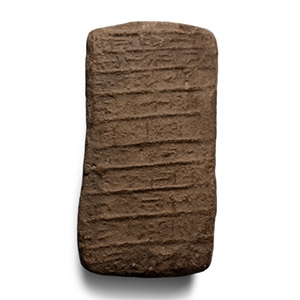
Sumerian Terracotta Cuneiform Tablet with Relief Inscription
Ur III, 22nd-21st century B.C.Sold for (Inc. bp): £169
Plano-convex in section with low-relief legend in ten lines with interstitial lineation. 111 grams, 85 mm
London, UK, art market, 1980s. From the collection of G.M.R.H., London, UK. This lot has been cleared against the Art Loss Register database, and is accompanied by an illustrated lot declaration signed by the Head of the Antiquities Department, Dr Raffaele D'Amato.
